Lumen Vietnam Fund

Blog

Vietnam-China trade exceeds US$122 bln in five months

Vietnam-China trade exceeds US$122 bln in five months

VOV.VN - Trade between Vietnam and China maintained strong growth over the five-month period of 2026, reaching nearly US$122.7 billion and helping lift Vietnam’s total import-export turnover to nearly US$500 billion.

According to Vietnam’s Import-Export Department under the Ministry of Industry and Trade, exports to China hit US$30.10 billion in the January-May period, up 28.2% year-on-year, while imports from the neighboring country’s market rose 33.6% to US$92.57 billion. Vietnam recorded a trade deficit of about US$62.46 billion with China throughout the reviewed period.

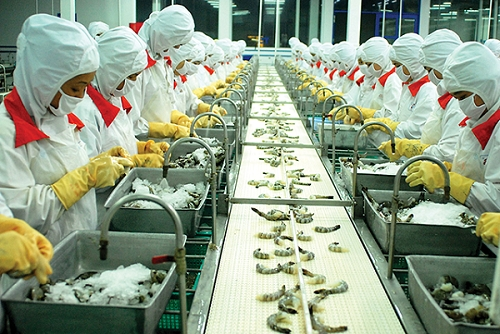
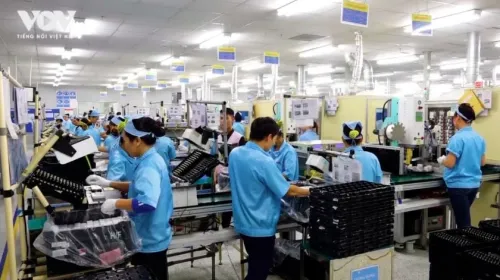
Exports to China posted strong growth in both manufactured goods and agro-forestry-fishery products. Key export items included computers and electronic products, phones, machinery, fruit and vegetables, seafood, and wood products.

On the import side, goods from China remained concentrated in raw materials, electronic components, machinery and other production inputs. Notably, imports of computers, electronic products and components surged 65.4%, while auto parts and fully built-up vehicle imports also recorded strong growth, reflecting the rising presence of Chinese cars and electric vehicles in the Vietnamese market.

In 2025, bilateral trade between the two nations stood at about US$252 billion, up 26.5% from a year earlier, reaffirming China as Vietnam’s largest trading partner.


Source: VOV

Photo: Illustrative image

Latest Posts

For better development of the International Financial Center in Vietnam

For better development of the International Financial Center in Vietnam

Vietnam needs to make comprehensive and well-coordinated preparations in order to successfully develop its International Financial Center and secure a competitive position on the regional financial map.

The Vietnam International Financial Center (VIFC) is widely regarded as one of the key strategic directions the country is actively promoting in order to reposition its role within the global financial network. In the context of increasingly-deep global financial integration and intensifying competition between regional financial hubs, the VIFC is expected to serve as a critical platform for attracting international capital, enhancing financial connectivity, and strengthening Vietnam’s role in global value chains.

The recent establishment of the VIFC in two of the country’s major economic hubs - Ho Chi Minh City and Da Nang - is not only an institutional step forward but also a strategic choice driven by practical development needs. Ho Chi Minh City, as Vietnam’s largest economic and financial center, offers a strong foundation in banking, capital markets, and corporate activity, while Da Nang provides strategic advantages in terms of geographic positioning, governance flexibility, and potential for developing a modern, innovation-driven financial ecosystem.

Improving the legal framework

The development of the VIFC in Ho Chi Minh City (VIFC HCMC) and in Da Nang (VIFC DN) reflects a dual-pillar approach aimed at balancing scale with innovation and domestic strengths with international connectivity. The initiative is therefore not merely about establishing financial infrastructure, but about creating a comprehensive ecosystem capable of supporting long-term economic transformation, improving capital allocation efficiency, and elevating Vietnam’s position in the global financial architecture.

One of the key roles of the VIFC is to establish a legal framework and business environment capable of attracting global capital flows. At the same time, it aims to form an ecosystem operating in accordance with international standards, enabling foreign investors to access a familiar, transparent, and predictable environment, thereby increasing confidence in investing in Vietnam.

When investment funds, financial institutions, and international investors are present in Ho Chi Minh City or Da Nang, domestic enterprises, not only in these two localities but around the country, will have greater opportunities to access capital more easily and directly. Instead of having to seek funding in international markets, enterprises can connect immediately within a financial ecosystem located in Vietnam.

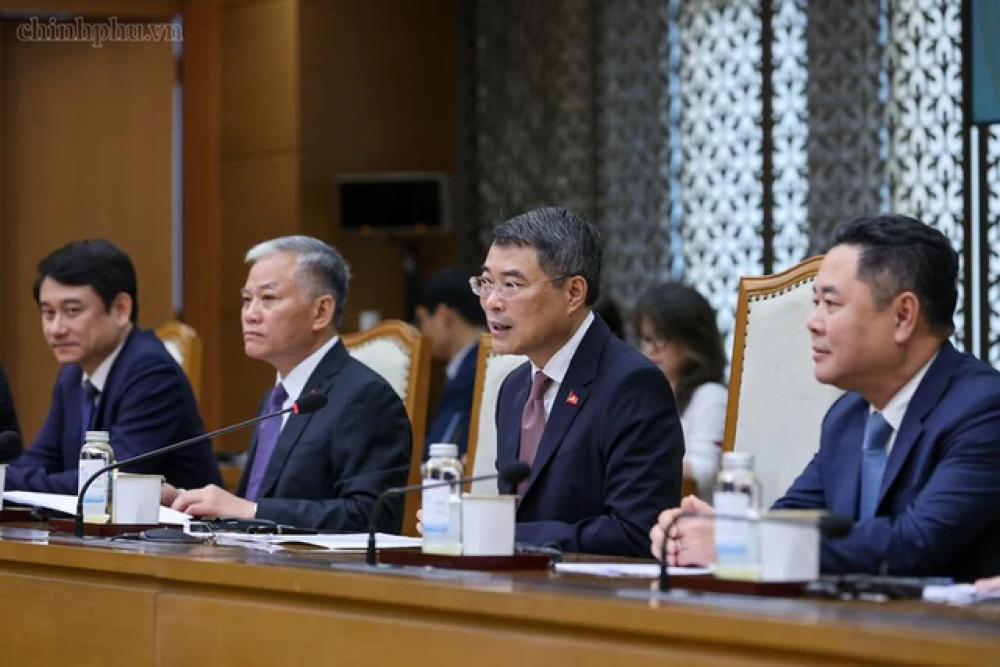
However, according to experts at the “VIFCs Unlocked: Vietnam’s Play to Become Asia’s Next Financial Hub” seminar, held on June 17, the VIFC is still in its early stages of development, while leading financial centers in the region such as Singapore and Hong Kong (China) have gone through decades of building reputation, institutional development, and global network expansion. Therefore, the current priority is not only to establish the model but, more importantly, to transform the initial “momentum of recognition” into substantive and sustainable progress.

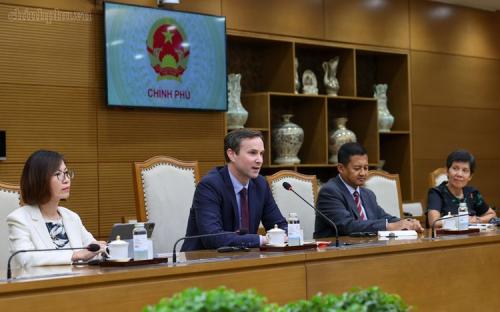
According to Mr. Oscar Njuguna, Director of the Membership Department at VIFC DN, Vietnam’s top priority at the moment is to build a regulatory system that meets international standards, thereby creating familiarity, transparency, and trust for global investors.

In parallel, it is necessary to strengthen cooperation with other international financial centers in order to expand connectivity, attract cross-border capital flows, and facilitate more efficient and smoother investment activities. New technologies such as blockchain and Web3 are also opening opportunities to form a new-generation financial infrastructure, thereby helping Vietnam connect more quickly and more deeply with global financial markets.

Building the VIFC will be a long journey that requires persistence and gradual trust-building with the market. If the right mechanisms and orientation are established, the benefits of the VIFC will not be limited to Ho Chi Minh City or Da Nang, but will extend to enterprises, projects, and investors around Vietnam.”

Mr. Richard D. McClellan, CEO of the Vietnam International Financial Center in Ho Chi Minh City (VIFC HCMC)

The country currently possesses several distinct competitive advantages, such as high economic growth, improving quality of life, competitive costs, and long-term development potential. The issue is to combine these advantages with an international-standard governance framework in order to form a financial center with credibility, competitiveness, and long-term sustainable development. “The VIFC is not a project of one or two years,” Mr. Njuguna emphasized. “Building an international financial center is a long-term journey that requires persistence, continuous improvement, and extensive cooperation with domestic and international partners.”

Moreover, Mr. Richard D. McClellan, CEO of VIFC HCMC, said Vietnam’s top priority at present is to complete the institutional foundation and legal framework for the VIFC. In that regard, the regulatory system must ensure transparency and predictability, accompanied by efficient licensing procedures and dispute resolution mechanisms aligned with international practices. This is considered a core factor in building investor confidence.

In addition, promoting capital flows and financial integration also plays an important role. Issues such as foreign exchange convertibility, capital repatriation rights, and the level of integration with the international banking system are factors that investors particularly care about when considering market participation.

Finally, it is necessary to comprehensively develop the financial market and ecosystem. This includes areas such as capital markets, asset management, private investment, and financial technology. Though many initiatives have been implemented, it is agreed that no single project can create a complete financial center without a synchronized, interconnected, and efficient operating ecosystem.

Human resources readiness

In addition to institutional and legal frameworks, the readiness of human resources is considered one of the key conditions determining the success and sustainable development of the VIFC. An international financial center can only operate effectively when it has a sufficiently large, high-quality workforce that meets international standards.

The VIFC is not a project of one or two years. Building an international financial center is a long-term journey that requires persistence, continuous improvement, and extensive cooperation with domestic and international partners.

Mr. Oscar Njuguna, Director of the Membership Department at the Vietnam International Financial Center in Da Nang (VIFC DN)

Currently, human resources remain one of the biggest challenges. In order to operate the VIFC effectively, Vietnam will need tens of thousands of experts in international finance in the years to come. However, there is still a noticeable gap between the current workforce and the practical requirements of a regional and international-scale financial center. To narrow this gap, Mr. McClellan proposed that Vietnam implement synchronized solutions in both the short and long term.

In the short term, the main focus is to invest strongly in structured education and training at the undergraduate and postgraduate levels. The VIFC should work closely with domestic universities specializing in economics and finance, international training institutions, and the private sector to develop curricula aligned with global standards and closely linked to the practical needs of the financial market.

In the long term, vocational training programs and international certification schemes also play a particularly important role. Cooperation with reputable professional training organizations from the UK and other developed countries will help rapidly enhance the capabilities of the domestic workforce, while also providing globally-recognized certifications. Through this, Vietnamese professionals can more quickly access international professional standards.

In addition, attracting foreign experts is also very important to fill the gap in skills and experience during the initial phase. According to the development orientation of the VIFC, Vietnam needs to create favorable conditions for international financial institutions to bring experts to work in the country. These experts will not only directly operate systems but also help train and transfer experience to domestic personnel. However, the development of human resources for the VIFC cannot rely on a single stakeholder; it requires the coordinated participation of many parties, from universities and training institutions to financial enterprises, recruitment companies, professional associations, and State regulatory agencies.

“Building the VIFC will be a long journey that requires persistence and gradual trust-building with the market,” Mr. McClellan said. “If the right mechanisms and orientation are established, the benefits of the VIFC will not be limited to Ho Chi Minh City or Da Nang, but will extend to enterprises, projects, and investors around Vietnam.”

Logistics emerges as new growth engine for Việt Nam’s marine economy

Logistics emerges as new growth engine for Việt Nam’s marine economy

There are currently 320 port terminals with a combined berth length of 102 kilometres, while cargo throughput reached 1.17 billion tonnes in 2025.

HÀ NỘI — As Việt Nam looks to tap the potential of its marine economy, logistics is increasingly emerging as a key driver of growth for coastal regions.

According to the Ministry of Agriculture and Environment, the marine economy currently contributes around 50 per cent of the country's gross regional domestic product (GRDP), with many coastal localities ranking among the nation's top performers in terms of income per capita.

The structure of the marine economy is also evolving.

While offshore oil and gas and fisheries remain important pillars, emerging sectors such as offshore renewable energy, industrial-scale aquaculture and maritime logistics are opening new opportunities for growth.

Among them, logistics is attracting growing attention as Việt Nam seeks to strengthen its position in regional and global supply chains.

The country's maritime sector has expanded rapidly in recent years. There are currently 320 port terminals with a combined berth length of 102 kilometres, while cargo throughput reached 1.17 billion tonnes in 2025.

The national fleet ranks tenth globally in cargo transport capacity, operating 1,434 vessels with a combined deadweight tonnage (DWT) of about 9.4 million tonnes.

Major ports such as Cát Lái and Cái Mép–Thị Vải have helped strengthen Việt Nam's position in regional supply chains. While Cát Lái has become the country's largest container port, Cái Mép–Thị Vải is among the few ports in the region capable of handling ultra-large container vessels and offering direct services to Europe and North America.

Experts say these assets provide a strong foundation for developing a modern logistics ecosystem capable of supporting trade, manufacturing and emerging marine industries.

Several coastal localities are already positioning logistics as a key pillar of their development strategies.

In Khánh Hòa Province, authorities are promoting plans to build a modern, green and smart logistics ecosystem centred on Vân Phong, Cam Ranh and major transport gateways.

The province aims to leverage its seaport system, Cam Ranh International Airport and links with the Central Highlands and south-central coastal region to become a logistics hub for central Việt Nam.

Huỳnh Tấn Hải, deputy director of the provincial Department of Industry and Trade, said the logistics development plan would help translate the province's marine economic ambitions into concrete projects while enhancing competitiveness and creating new growth momentum.

According to Hải, the strategy aims to develop a smart and sustainable logistics ecosystem that is aligned with digital transformation trends and deeper international economic integration.

Further south, HCM City is pursuing even bigger ambitions through the planned Cần Giờ International Transhipment Port, a project widely viewed as a strategic gateway for integrating Việt Nam more deeply into global shipping networks.

The US$5.45 billion port is designed to handle vessels of up to 250,000 DWT and process around 16.9 million TEU annually. When completed, it is expected to become one of the largest transhipment hubs in the region.

According to Lê Văn Danh, deputy director of the city's Department of Industry and Trade, HCM City is promoting the development of the Cái Mép–Thị Vải–Cần Giờ port cluster under a digital mega-port model to improve operational efficiency and strengthen the competitiveness of the logistics sector.

For the city, logistics is no longer simply a supporting service but a strategic industry that can reinforce its role as an international trade and transport hub.

Push from FTZs

The logistics push is also being reinforced by plans to establish free trade zones (FTZs) along the coastline.

Hải Phòng and Đà Nẵng have been at the forefront of efforts to pilot FTZ models associated with seaports and logistics services, while HCM City and Khánh Hòa are studying similar initiatives tied to the Cần Giờ and Vân Phong development plans.

Economists say such zones could transform ports from cargo-handling facilities into integrated logistics, manufacturing and services hubs capable of attracting global investment and generating higher-value economic activity.

Nguyễn Đình Hòa, an expert at the HCM City Institute for Economic and Management Research, said Việt Nam's logistics development reflected a broader shift in planning thinking, from fragmented local development towards regional connectivity and integration with international supply chains.

He pointed to the evolution of the southern port system, from the historic Sài Gòn Port to Cát Lái and later the Cái Mép–Thị Vải deep-water port complex, as evidence of increasingly coordinated regional planning.

According to Hòa, the planned Cần Giờ transshipment port could become another milestone, helping Việt Nam compete more effectively with established logistics hubs such as Singapore and Malaysia's Tanjung Pelepas.

However, experts caution that infrastructure investment alone will not be enough.

A review by the Ministry of Agriculture and Environment found that current marine spatial planning regulations do not clearly allocate sea areas for specific activities such as offshore wind power, oil and gas development, aquaculture, tourism and maritime transport. The lack of clear zoning can create overlapping interests, increase investment risks and delay project implementation.

Vũ Mạnh Hùng, director general of the Department of Sectoral Economics under the Party Central Committee’s Policy and Strategy Commission, said future marine economic development would depend on a more integrated approach to marine governance, stronger legal frameworks and better coordination between ports, logistics centres, industrial zones and coastal cities.

According to analysts, the challenge now is to turn ambitious plans into an integrated logistics ecosystem that connects ports, industries and markets. If successful, logistics could help transform Việt Nam's coastline into a stronger driver of growth in the decades ahead.

Vietnam targets 11.9% GDP growth in H2 to achieve double-digit expansion in 2026

Vietnam targets 11.9% GDP growth in H2 to achieve double-digit expansion in 2026

Vietnam's government has set a target of 11.9% economic growth in the second half of 2026 to achieve its goal of expanding GDP by at least 10% for the full year, according to a government resolution issued on Saturday.

The target was outlined in Resolution 168, which updates the country's growth scenario and sets out key policy measures for the remainder of the year while maintaining macroeconomic stability.

On April 24, the National Assembly - the country's legislature - set a 2026-2030 agenda targeting at least 10% average annual GDP growth.

Based on reports from ministries and local governments, Vietnam's economy is currently projected to grow 8.7% in 2026. To raise full-year growth to double digits (10%), the government said GDP must expand 11.9% in H2.

Under the updated scenario, several sectors are expected to post particularly strong growth, including electricity production at 16.9%, construction at 17.6%, and accommodation and food services at 17.3%.

Among Vietnam's major economic centers, Ho Chi Minh City is targeting 10.2% growth in gross regional domestic product (GRDP) in H2, while Hanoi aims for 11%, compared with estimated first-half growth of 8.47% and 7.87%, respectively.

Other localities targeting robust growth include Hai Phong and Quang Ninh at 13%, Bac Ninh at 12.5%, Hung Yen at 11.5%, and Danang at 11.22%.

The government acknowledged that achieving growth of at least 10% this year will be challenging amid global uncertainties, particularly geopolitical tensions in the Middle East, which have affected Vietnam's economy during H1.

To support the growth target, the government asked ministries and provincial authorities to accelerate implementation of development plans and adopt more proactive approaches to economic management.

The Ministry of Finance was instructed to pursue an appropriately expansionary fiscal policy, including submitting proposals to adjust fuel and jet fuel taxes in line with global price movements.

The ministry will also prepare plans for allocating additional central government budget revenue, medium-term public investment capital for 2026-2030, and funding for the increase in the statutory base salary from July 1.

The government also instructed ministries and local authorities to fully disburse this year's public investment budget, requiring detailed weekly, monthly and quarterly disbursement schedules to improve implementation and allow for early intervention if delays arise.

The State Bank of Vietnam was directed to maintain a flexible monetary policy, stabilize interest rates, contain inflation, and improve credit quality by directing lending towards manufacturing, priority sectors and key economic development projects.

The government also called for measures to promote the healthy development of the property market, instructing major localities including Hanoi, Ho Chi Minh City, Hai Phong, Danang, Dong Nai, Quang Ninh, Bac Ninh, Hung Yen and Ninh Binh to assess demand for rental housing across market segments to support future urban planning and resource allocation.

Vietnam’s economic growth slowed to 7.83% year-on-year in Q1/2026 from 8.46% in Q4/2025. Growth was supported by manufacturing, construction and services, underpinned by strong export demand (19.1% year-on-year) and realized FDI inflows (up 9.1% year-on-year to $5.41 billion), as firms continued diversifying supply chains amid changing global trade rules.

The government has directed a study on increasing the proportion of State Treasury deposits held at banks to boost system liquidity.

The Ministry of Finance and the State Bank of Vietnam have been instructed to further examine increasing the share of State Treasury term deposits at commercial banks.

This move aims to inject liquidity into the system, thereby supporting the goal of achieving economic growth of 10% or higher in 2026, in accordance with the newly issued Resolution 168.

Temporarily idle State Treasury funds are prioritized for providing advances to the central and local budgets. Any remaining funds are to be used for government bond repurchase transactions or term deposits at commercial banks.

Under Resolution 168, the government authorizes the Ministry of Finance to proactively determine the limit for placing temporarily idle state treasury funds in term deposits at commercial banks. If necessary, this limit may exceed 50% of the total temporarily idle funds.


See all blog