Resolution 10: Turning ESG commitments into action for quality FDI
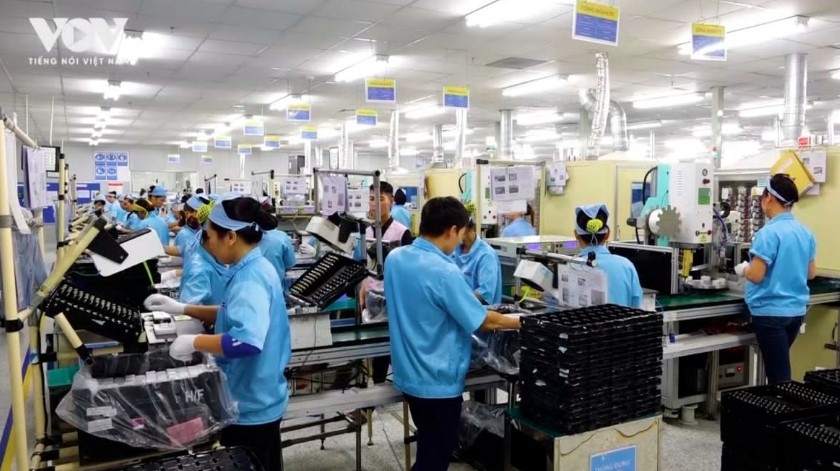
VOV.VN - Moving beyond mere GDP growth, global capital now demands Environmental, Social, and Governance (ESG) standards for high-quality FDI in Vietnam. Yet, a clear gap persists between the country's ESG commitments and its actual implementation.
Current state of ESG implementation
ESG serves as a set of criteria evaluating corporate sustainability across three pillars: Environmental, Social, and Governance. No longer a mere compliance requirement, ESG has become an essential benchmark for investors assessing risk and allocating capital.
According to PwC’s 2025 survey on ESG progress in Vietnam, roughly 89% of surveyed enterprises have established or plan to establish ESG commitments within the next two to four years; 61% have formulated structured ESG strategies; and 41% have integrated ESG into their core business models. This indicates a marked shift in corporate awareness regarding sustainable development, moving from short-term growth mindsets toward long-term orientation. ESG is gradually becoming a central component of governance and investment strategy.
However, experts note that the proportion of businesses truly embedding ESG into core operations, governance, and long-term strategy remains low.
Dr. Tran Van Khai, Vice Chairman of the National Assembly’s Committee on Science, Technology and Environment, points out that Vietnamese enterprises face numerous hurdles in implementing ESG.
"ESG remains a new field in Vietnam. Although adoption has accelerated in recent years, the country still lacks a unified nationwide guidance framework and criteria. Financial constraints, technological limitations, and a shortage of high-quality human resources pose major barriers to corporate ESG practice," Khai says.
For small and medium-sized enterprises (SMEs), practicing ESG presents an obstacle and is often seen as a compliance cost rather than a strategic investment, while short-term profit pressures leave many hesitant to allocate resources for transformation.
In addition, Vietnam’s legal framework and supporting ecosystem for ESG are not yet fully developed, while fragmented guidelines and oversight mechanisms make it difficult for businesses to adopt ESG systematically, effectively, and in line with international standards.
Dr. Nguyen The Binh, Director of the Banking Science and Technology Research Institute at Banking University of Ho Chi Minh City, points out a wide divide between making ESG commitments and actually putting them into practice.
"About 60% of businesses report a lack of expertise due to numerous unapplied guidelines and frameworks; 46% cite enterprise size as an obstacle; and 28% indicate a lack of transparent information. Measuring and evaluating ESG performance in Vietnam is also difficult due to the absence of unified assessment tools and standardized criteria. Balancing environmental, social, and governance factors is a tough challenge, as ESG demands a comprehensive transformation of core internal elements, from corporate culture and strategic thinking to actual operations," Binh stresses.
Refining institutions to turn ESG into competitive edge
With international investors sharply focused on sustainable development and risk transparency, ESG has become an entry ticket for capital allocation.

Dr. Le Xuan Nghia, Director of the Center for Development Consultation (CODE), emphasizes that Vietnamese businesses have no choice but to pursue green growth and meet ESG criteria.
"Vietnamese enterprises rely almost entirely on commercial bank credit without alternative funding sources. Although global green capital and energy transition funds are abundant, domestic firms face very limited access. In an environment where investment capital grows increasingly cautious and international requirements become stricter, ESG is no longer a superficial bonus to polish profiles, but a mandatory condition to enter global supply chains and access long-term, low-cost capital," Nghia states.
As Vietnam integrates deeper into the global market, businesses must stop treating ESG as a compliance burden and instead leverage it as a competitive advantage through practical action. Craig Martin, Executive Chairman of Dynam Capital, says that ESG is a prerequisite for Vietnamese firms to access international capital. International investors no longer look at paper commitments; they evaluate actual execution, transparency, and operational capability.
Resolution No.10 on foreign investment development sets the goal of positioning Vietnam as a competitive destination for high-quality, medium- and long-term foreign capital. Translating the resolution into concrete policies that support and invest in effective ESG practice is key to making Vietnamese firms attractive to foreign investors.
Dr. Tran Van Khai outlined three immediate priorities to ensure genuine ESG adoption:
First, build tailored ESG criteria and implementation guidelines for specific business groups and sectors, with the Government and National Assembly guiding and supervising implementation.
Second, given the substantial investment costs of ESG, appropriate financial mechanisms must be created to help enterprises, especially SMEs, access green capital and sustainable finance. Third, train and develop high-quality human resources, a key factor enabling businesses to execute ESG in practice, from strategy building and operations to measurement and reporting, ensuring ESG moves beyond guidelines into concrete action.
Vietnam holds significant advantages in attracting international capital, but funds will flow to the most trusted destinations rather than the fastest-growing ones. Genuine and effective ESG adoption serves as the "pass" for both the economy and domestic enterprises to enhance competitiveness and draw high-quality FDI. Achieving this requires supportive state policies to help businesses narrow the gap between commitments and sustainable ESG practice.
Source: VOV