Lumen Vietnam Fund

Blog

Supporting industries set to drive Việt Nam's next phase of industrial growth

Supporting industries set to drive Việt Nam's next phase of industrial growth

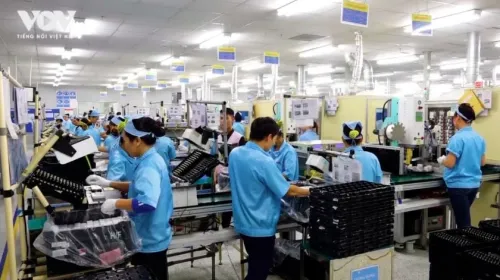
Strengthening supporting industries is essential to enhancing Việt Nam's industrial competitiveness, increasing localisation and reducing reliance on imported inputs, officials and industry leaders said at a forum in HCM City on July 2.

HCM CITY — Strengthening supporting industries is essential to enhancing Việt Nam's industrial competitiveness, increasing localisation and reducing reliance on imported inputs, officials and industry leaders said at a forum in HCM City on July 2.

Organised by the Investment and Trade Promotion Centre of HCM City (ITPC) and the HCM City Supporting Industry Association (HASI), the forum brought together businesses, policymakers and experts to discuss ways to strengthen manufacturing capacity, deepen supply-chain integration and expand partnerships with strategic investors, financial institutions and foreign-invested enterprises.

Opening the event, ITPC Deputy Director Cao Thị Phi Vân said global supply chains are being reshaped by geopolitical tensions, strategic competition among major economies, green and digital transformation, tighter sustainability requirements and the relocation of high-tech investment.

"Supporting industries are no longer simply auxiliary manufacturing sectors. They have become the foundation for enhancing industrial self-reliance, increasing localisation, improving competitiveness and enabling businesses to integrate more deeply into regional and global supply chains," she said.

According to Vân, a sustainable industrial base cannot rely solely on assembly and processing but must gradually master the production of components, materials, technologies and quality standards while building a strong domestic supplier network.

Việt Nam continues to benefit from the global diversification of supply chains, she noted. Registered foreign direct investment (FDI) reached US$24.81 billion in the first five months of 2026, up 34.9 per cent year-on-year, with manufacturing and processing attracting $8.06 billion, the largest share of total FDI.

Meanwhile, the country's total trade reached nearly $496.7 billion as of June 15. Electronics, computers and components led exports at $63.5 billion, followed by machinery and equipment at nearly $30 billion and phones and components at $29 billion.

"These figures show that Việt Nam remains an attractive destination as global supply chains are restructured. At the same time, the country's heavy imports of components, machinery and intermediate goods highlight both the enormous growth potential for domestic supporting industries and the urgent need to strengthen local supply chains and reduce dependence on imported inputs," Vân said.

She also highlighted the Government's Supporting Industry Development Programme for 2026-35, which aims to raise average localisation rates in key industries to 40-45 per cent by 2030 and place Việt Nam among ASEAN's three most competitive industrial economies. By 2035, most supporting industry sectors are expected to achieve advanced technological capabilities and participate more deeply in global value chains.

For HCM City, the country's economic, commercial and innovation hub, developing supporting industries remains a strategic priority. The city is pursuing a growth model centred on productivity, technology, digital transformation and regional connectivity while promoting industry clusters, expanding domestic supplier networks and helping small and medium-sized enterprises (SMEs) improve production capacity and meet international standards.

Nguyễn Minh Tâm, head of the Industrial Management Division under the HCM City Department of Industry and Trade, said the city now has 105 export processing zones and industrial parks covering more than 50,000 hectares, including 58 in operation.

Supporting industries have been identified as a key pillar for strengthening industrial competitiveness and domestic production capacity, she said.

The Saigon High-Tech Park has attracted 26 supporting industry projects worth more than $512 million, while localisation has increased from about 10 per cent in 2010 to over 20 per cent.

However, imports of computers, electronic products and components still reached $6.62 billion, highlighting significant opportunities for domestic manufacturers to replace imported inputs. The ongoing "China+1" supply-chain strategy is also creating opportunities for Vietnamese companies to become second- and third-tier suppliers to multinational corporations.

Nguyễn Ngọc Đăng Khoa, deputy director of business development at SMC Phú Mỹ Precision Mechanical Co Ltd said compliance with international standards is essential for companies seeking to join global supply chains.

In addition to widely adopted certifications such as ISO 9001, ISO 14001, ISO 45001 and the Responsible Business Alliance (RBA) standard, manufacturers increasingly need sector-specific certifications such as IATF 16949 for automotive production, AS9100 for aerospace and ISO 13485 for medical devices.

"These certifications are not simply customer requirements. They provide the framework for standardised production systems that ensure consistent product quality across different factories," Khoa said.

The forum also saw HASI sign three strategic memoranda of understanding with domestic and international partners. The agreements include cooperation with the Industrial Development Support Centre under the Ministry of Industry and Trade and the Centre for Industrial and Supporting Industries Development of HCM City to improve business competitiveness, develop industry databases and strengthen supply-chain connectivity.

HASI also signed an agreement with the Vietnamese Business Association in the Benelux to help supporting industry firms expand into European markets, while another partnership with MISA Group will support businesses in adopting digital management solutions.

During a panel discussion, participants agreed that raising the competitiveness of Vietnamese manufacturers will require stronger collaboration among SMEs, better access to financing, closer cooperation with multinational corporations, and wider adoption of digital technologies.

Experts also highlighted digital transformation, data and artificial intelligence as emerging competitive advantages that can help manufacturers improve productivity, reduce costs and meet increasingly demanding international standards.

Source: VNS

Photo: Photo courtesy of ITPC

Latest Posts

Vietnam's economy grows 8.39% in Q2, first-half expansion tops 8%

Vietnam's economy grows 8.39% in Q2, first-half expansion tops 8%

VOV.VN - Vietnam's gross domestic product (GDP) expanded an estimated 8.39% year on year in the second quarter of 2026, lifting economic growth in the first half of the year to 8.18%, according to the National Statistics Office (NSO) under the Ministry of Finance on July 2.

The strong performance was driven mainly by industry and construction, which grew 10.51% in the second quarter and accounted for just over half of overall GDP growth. The services sector expanded 7.87%, while agriculture, forestry and fisheries posted growth of 4.06%.

During the first six months of the year, industry and construction grew 9.81%, contributing 47.2% to overall economic growth, while services expanded 8.09%, accounting for 47.14%. Agriculture, forestry and fisheries increased 3.87%, contributing the remaining 5.66%.

Manufacturing was the economy's main growth engine, with manufacturing and processing rising 10.23% and contributing 33.07% to overall GDP growth.

Industrial output maintained solid momentum, supported by strengthening growth drivers, a recovery in export orders and the spillover effects of public investment. Value added in the industrial sector rose 9.86% year on year in the first six months of 2026, generating 40.35% of the economy's overall value-added growth.

The agriculture, forestry and fisheries sector also recorded steady growth, supported by resilient domestic demand and continued expansion of agricultural export markets. Value added in agriculture increased 3.57% in the first half, contributing 3.83% to overall growth. Forestry expanded 3.98%, making up 0.27%, while fisheries rose 4.88%, accounting for 1.56%.

The services sector also posted robust growth as stronger consumer demand boosted trade, transportation and tourism activity.

According to the NSO, value added in services increased 8.09% year on year in the first half of 2026. Several major service industries continued to post solid gains and remained important contributors to economic growth. Transportation and warehousing expanded 10.18%, or 7.73% of overall growth, while wholesale and retail trade grew 9.67%, representing 13.51%. Accommodation and food services rose 8.05%, contributing 2.73%, and finance, banking and insurance activities increased 7.97%, making up 4.71%.

In terms of GDP composition during the first half of 2026, agriculture, forestry and fisheries accounted for 10.61% of the economy, industry and construction 37.66%, services 43.52%, and taxes less subsidies on products 8.21%.

On the expenditure side, final consumption increased 8.15%, gross capital formation rose 15.20%, exports of goods and services climbed 20.18%, while imports increased 26.44% compared with the same period last year.


Vietnam's manufacturing recovery gaining traction: S&P

Vietnam's manufacturing recovery gaining traction: S&P

The S&P Global Vietnam Manufacturing Purchasing Managers' Index posted 51.8 in June, down from 52.8 in May but still above the 50.0 no-change mark, reflecting an improvement in the health of the sector.

Business conditions have now strengthened on a monthly basis throughout the past year, S&P Global stated in a release on July 1.

Andrew Harker, economics director at S&P Global Market Intelligence wrote: "The Vietnamese manufacturing sector ended the first half of 2026 on a positive note, with sustained expansions of new orders and output recorded."

"Encouragingly, anecdotal evidence from the latest PMI survey suggested that growth was more driven by improving customer demand than the efforts to build safety stocks which supported growth in May. Reduced stockpiling efforts potentially reflected a marked easing of inflationary pressures during the month," he added.

Output rose for the 14th successive month, and at a marked pace that was the fastest since February. Higher new orders and rising output requirements encouraged manufacturers to expand their purchasing activity for the second month running in June.

But continued supply-chain delays meant that stocks of inputs fell sharply. Staffing levels were also down amid ongoing evidence of spare capacity in the sector.

In fact, the fall in stocks of inputs was the most marked for a year. In some cases, inputs had been used to support production growth rather than being held in stock, while challenges importing goods were also mentioned.

Indeed, sourcing inputs in general again proved difficult for firms as suppliers' delivery times lengthened further. The latest deterioration in vendor performance was only modest and the least marked in four months, however.

Input costs continued to rise sharply in June, but the rate of inflation was much softer than that seen in May and the lowest since the start of the year. Where input prices increased, panellists linked this to material supply shortages and higher transportation costs. Similarly, the rate of output price inflation also eased in June and was at a six-month low.

Contrasting with the generally positive picture in June, employment continued to decrease, the fourth month running in which this has been the case. Although modest, the latest fall was sharper than that seen in May as a number of firms reported employee resignations.

Despite lower workforce numbers, outstanding business decreased again, and at a solid pace. Manufacturers remained optimistic that output will rise over the coming year, and confidence ticked up to the highest in four months.

Hopes for further increases in new orders, new product development and efforts to expand operations were among the factors supporting optimism. That said, sentiment remained below the level seen prior to the outbreak of war in the Middle East.

"Overall, the sector goes into the second half of the yearon a positive footing, and firms should be well placed toremain in growth territory should we see a more stableinternational environment during the remainder of 2026," said Andrew Harker.

Vietnam's government has set a target of 11.9% economic growth in the second half of 2026 to achieve its goal of expanding GDP by at least 10% for the full year, according to a government resolution issued on June 27.

The target was outlined in Resolution 168, which updates the country's growth scenario and sets out key policy measures for the remainder of the year while maintaining macroeconomic stability.

On April 24, the National Assembly - the country's legislature - set a 2026-2030 agenda targeting at least 10% average annual GDP growth.

Vietnam's agro-forestry-fishery exports reach $35.9 billion in 1H

Vietnam's agro-forestry-fishery exports reach $35.9 billion in 1H

China remained Vietnam's largest individual export market for the products, representing 21.3% of total agro-forestry-fishery exports.

Vietnam's agro-forestry-fishery exports maintained steady growth in the first half of 2026, with total export turnover reaching an estimated $35.88 billion, up 6% from the same period last year, according to the Ministry of Agriculture and Environment.

The sector's export value in June alone was estimated at $6.34 billion, representing a 3% increase from May and a 10.1% rise year-on-year.

Agricultural products remained the largest export category, generating $18.59 billion in the first six months of the year, up 0.2% from a year earlier. Seafood exports reached $5.7 billion, increasing 11.4%, while forestry products earned $9.2 billion, up 4.6%.

Asia continued to be Vietnam's largest export market for agro-forestry-fishery products, accounting for 44.4% of total export value during the period. The Americas ranked second with a 21.4% share, followed by Europe at 14.4%. Africa and Oceania accounted for 2.4% and 1.5%, respectively.

China remained Vietnam's largest individual export market for the products, representing 21.3% of total agro-forestry-fishery exports. The US ranked second with a 19% share, followed by Japan at 6.8%.


See all blog