Lumen Vietnam Fund

Blog

Beyond FDI, Vietnam leverages foreign resources to build up domestic capacity

Beyond FDI, Vietnam leverages foreign resources to build up domestic capacity

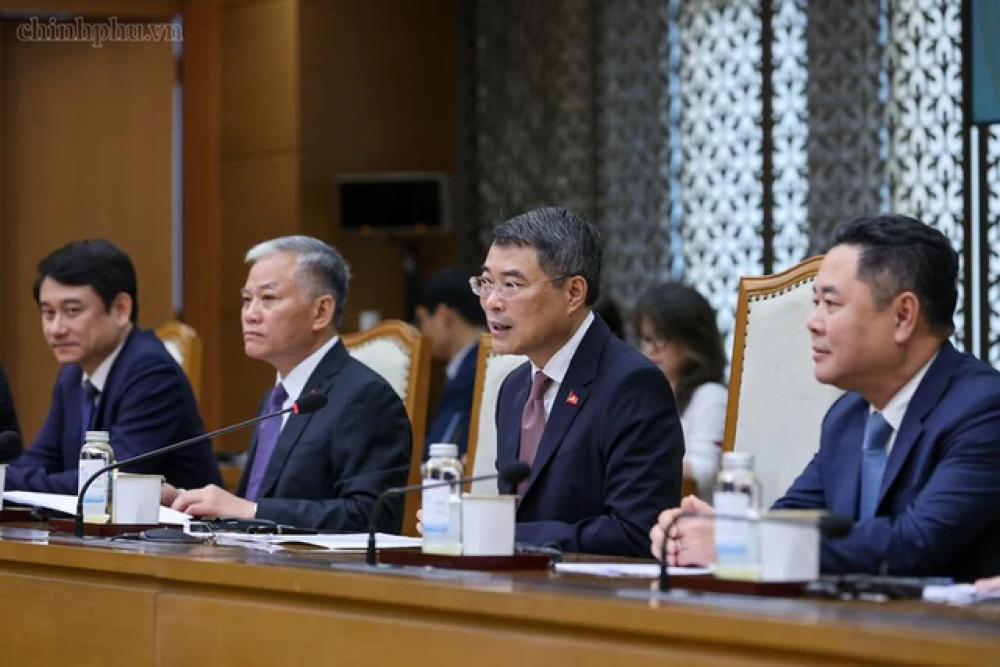
Nearly 40 years after opening its economy to tap international resources for national development, Vietnam is shifting its focus from simply attracting more foreign investment to using it more effectively to strengthen domestic capacity, the central message of the Politburo’s Resolution No. 10-NQ/TW.

The adoption of the Foreign Investment Law in 1987 ushered in a new development vision for Vietnam. Moving away from a largely closed economy, the country embraced integration into the world as part of the Doi Moi (Renewal) process. The immediate priorities were to break the blockade and embargo, and attract capital, technology and management expertise to gradually revive the economy and put it on a path toward dynamic growth.

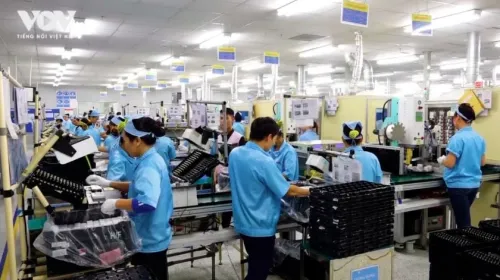
The past four decades have validated that decision. Vietnam has transformed from a capital-starved economy dependent on external assistance into one of the world’s most open economies, deeply connected to regional and global markets. Foreign trade turnover now exceeds 180% of GDP, and the foreign-invested sector contributes around 75% of the total. Tens of thousands of investment projects have fuelled growth, accelerated industrialisation, generated employment, expanded export markets, and brought in advanced technology and modern management practices.

At the same time, those achievements have highlighted a new challenge: how to turn external resources into stronger domestic capacity, greater technological capability, improved competitiveness and a more self-reliant economy.

This shift reflects not only demands in reality but also an evolution in Vietnam’s development thinking. As national objectives change, development policies must change with them.

With that in mind, the Politburo issued Resolution No. 10-NQ/TW on developing the foreign-invested economic sector. Instead of concentrating mainly on attracting foreign capital, the resolution emphasises building a foreign-invested sector that is closely integrated with the domestic sector to create new growth drivers for the country.

While foreign investment was once regarded primarily as a supplementary source of capital, the foreign-invested sector is now recognised as an organic component of the Vietnamese economy, developing alongside the state, private and cooperative sectors in support of national development. This marks not only a broader policy framework but also a fundamental change in how the FDI sector is viewed in the country’s new stage of development.

That thinking is embodied in six major shifts set out in Resolution No. 10-NQ/TW: from attracting foreign investment to developing the foreign-invested sector; from prioritising capital volume to prioritising quality, efficiency and value added; from input-based incentives to performance-based incentives; from developing isolated FDI projects to forming a comprehensive ecosystem for international capital flows; from managing investment to creating a favourable environment for investment and development; and from competition in investment attraction among localities to nationally coordinated development.

Together, these six shifts pursue a single goal: transforming the foreign-invested sector into a force that strengthens national capacity and competitiveness rather than merely adding more capital to the economy.

The resolution sets targets for 2030 and a vision for 2045, placing less emphasis on the sheer scale of FDI inflows.

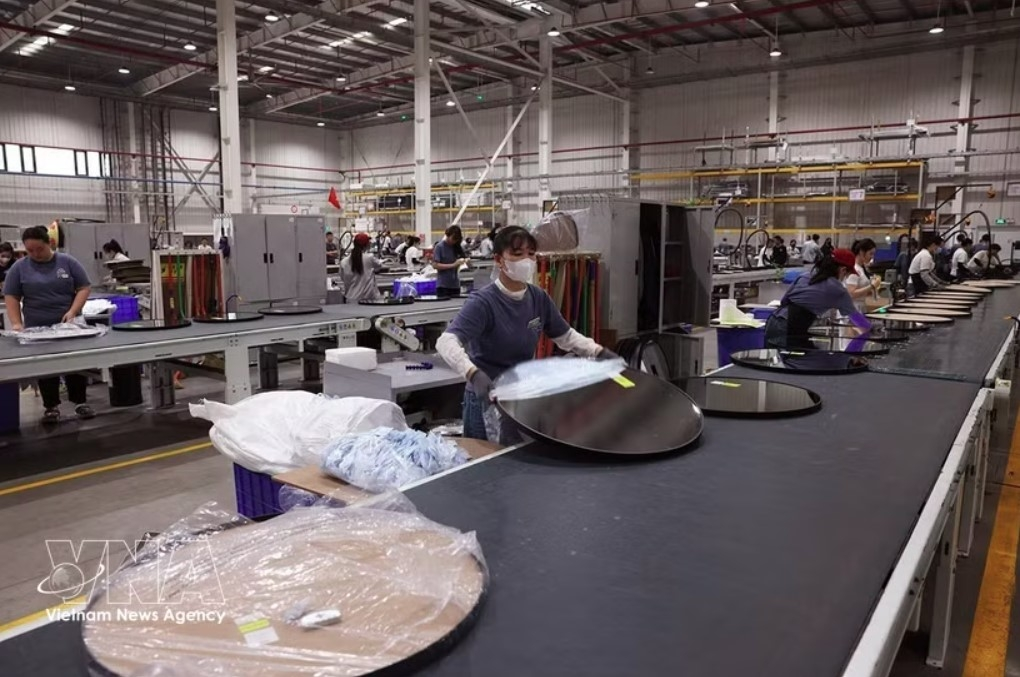
Vietnam aims to attract US$200–300 billion in registered FDI by 2030, including US$150–200 billion in disbursed capital. More significantly, 75% of newly registered capital is expected to come from developed economies with strengths in advanced technology and modern governance. Localisation rates in key industries are targeted at 45–50% while around 10,000 Vietnamese firms are expected to join the supply chains of foreign-invested enterprises. The country also aims to upgrade its stock market to emerging-market status before 2030.

These targets indicate that success will no longer be measured simply by the number of projects or the amount of capital attracted. Instead, it will be assessed by the extent of technology transfer, the rise of Vietnamese businesses within global value chains, and the share of value added retained in the domestic economy.

Experience has shown that chasing project numbers alone can trigger competition based on incentives, land and low costs while placing pressure on the environment. Domestic firms have often remained outside higher-value segments, technology transfer has been limited, and localisation rates have stayed below the level needed for sustainable development.

That is why Party General Secretary and State President To Lam emphasised that the spirit of Resolution No. 10-NQ/TW is clear: foreign investment is intended not to replace domestic strength, but to reinforce it and enhance self-reliance; not merely to deliver fast growth, but to achieve sustainable, inclusive and high-quality development.

As Vietnam enters a new stage of development with a renewed mindset, it is determined not to pursue investment at all costs. Instead, the country will proactively select and work closely with high-quality investors that are committed to long-term operations, comply with the law, respect the legitimate interests of workers, communities and the nation, share technology, develop human resources, support Vietnamese enterprises and help elevate Vietnam’s position in global value chains.


Source: VNA

Photo: VNA
Latest Posts

ADB keeps Vietnam’s growth forecast unchanged, highest in Southeast Asia

ADB keeps Vietnam’s growth forecast unchanged, highest in Southeast Asia

Vietnam's GDP growth projection remains unchanged at 7.2 percent in 2026 amid global energy crisis.

The Asian Development Bank (ADB) has maintained its growth forecast for Vietnam, projecting that the country will remain the fastest-growing economy in Southeast Asia, with GDP growth of 7.2 percent in 2026 and 7.0 percent in 2027, the Government News quoted the bank’s Asian Development Outlook (ADO) July 2026 report as reporting on July 9.

Vietnam's positive outlook is underpinned by sustained growth in the manufacturing sector, resilient exports and investment, and steady domestic demand.

Vietnam's growth projections are among the highest in developing Asia and the Pacific, where economic growth is forecast at 4.9 percent in 2026, down from the ADB's 5.1 percent forecast in April due to the downside risks stem primarily from prolonged disruptions in energy market caused by the conflict in the Middle East.

For 2027, ADB raised its regional growth forecast to 5.1 percent, up from 4.8 percent in its late-April update and matching its April projection.

The ADB warned of significant downside risks to the regional growth outlook, including a renewed escalation of geopolitical conflicts, prolonged uncertainty in energy markets, tighter global financial conditions, a re-pricing of AI-related stocks, and a deeper property market downturn in China.

Regional inflation is projected to accelerate to 4.6 percent in 2026, compared with the ADB's 3.6 percent forecast in April, though lower than the 5.2 percent projection in the late-April update. Inflation is expected to ease to 3.4 percent in 2027.


Germany's VFT Bio Fuels UG eyes $3.1 bln green steel complex in southern Vietnam

Germany's VFT Bio Fuels UG eyes $3.1 bln green steel complex in southern Vietnam

Vietnamese industrial park developer IMG Phuoc Dong and Germany’s VFT Bio Fuels UG have signed a memorandum of understanding to study the development of a $3.1 billion green steel complex in the southern province of Tay Ninh.

The deal was signed as part of an investment promotion program between Tay Ninh authorities and German businesses last month.

Under the proposal, the project will cover 250 hectares at Tan Lan 3 Industrial Park and have an annual production capacity of 11 million tons of steel, targeting both the Vietnamese and European markets.

The project is planned to be developed in two phases and will employ advanced technologies to establish an integrated production process aimed at improving energy efficiency, reducing emissions, and meeting international environmental standards.

Once fully operational, the complex is expected to create between 500 and 10,000 jobs, contributing to local socio-economic development and supporting the formation of a green industrial ecosystem in Tay Ninh.

In addition to producing high-quality steel, the project is expected to generate around $100 million in annual revenue from carbon credits by significantly reducing carbon emissions during production.

The proposed investment comes as IMG Phuoc Dong develops Tan Lan 3 Industrial Park as a green and modern industrial zone designed to meet the requirements of international investors.

The industrial park’s development strategy focuses on attracting high-tech manufacturing, supporting industries and high value-added sectors, while encouraging the use of renewable energy, energy-saving solutions, and environmentally friendly infrastructure.

Beyond its infrastructure and planning advantages, Tan Lan 3 Industrial Park is expected to develop into a modern manufacturing ecosystem that could strengthen southern Vietnam’s competitiveness in attracting foreign investment.

The current Tay Ninh province was formed following an administrative merger with the former Long An province last year. According to the Ministry of Finance, Tay Ninh received nearly $2 billion in newly-registered foreign direct investment, ranking fourth nationwide. By far, the province has had 2,190 valid foreign-invested projects valued at $27.5 billion.

Public investment disbursement accelerates in June

Public investment disbursement accelerates in June

Public investment disbursement in June estimated at VND137.6 trillion ($5.3 billion), marking the highest monthly figure so far this year.

Vietnam's public investment disbursement gathered pace in June, with the value of funds released nearly doubling from the previous month as many major infrastructure projects entered peak construction, according to the Ministry of Finance.

Public investment disbursement in June was estimated at VND137.6 trillion ($5.3 billion), marking the highest monthly figure so far this year, as a result.

As of June 30, total public investment disbursement nationwide had reached VND356.9 trillion, equivalent to 35.5% of the annual plan assigned by the Prime Minister. While the disbursement rate was broadly unchanged from the same period last year, the total amount disbursed increased by more than VND38.4 trillion, reflecting the expansion of public investment.

Monthly data showed a clear acceleration in implementation during the first half of the year. Disbursement rose from VND34.0 trillion in April to VND75.1 trillion in May before surging to nearly VND137.6 trillion in June.

Transport infrastructure development remained one of the government's top priorities. By the end of June, disbursement for key transport projects had reached VND59.3 trillion, equivalent to 24.2% of the allocated annual budget, as authorities sought to accelerate the construction of strategic infrastructure to support long-term economic growth.


See all blog