Lumen Vietnam Fund

Blog

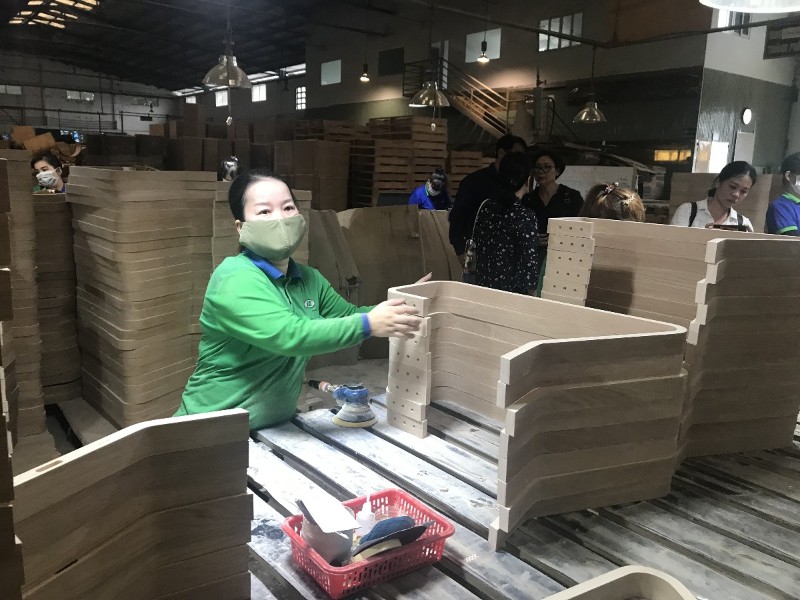
Wood sector aims for $19 bln export goal

Wood sector aims for $19 bln export goal

The industry will focus on maintaining its presence in key traditional markets, with a particular emphasis on the United States, and expanding into Japan, China, South Korea, the EU, India, Canada, Australia, the Middle East, and other emerging markets.

The Vietnam Timber and Forest Product Association (VIFOREST) has set an ambitious export target exceeding $18.5 billion for 2026.

To realize the goal, the industry plans to implement five core groups of solutions while simultaneously petitioning the Government to remove tax, credit, and administrative bottlenecks to create a more favorable environment for businesses.

First, the industry will focus on maintaining its presence in key traditional markets, with a particular emphasis on the United States.

Second, VIFOREST aims to diversify its export footprint by expanding into Japan, China, South Korea, the EU, India, Canada, Australia, the Middle East, and other emerging markets.

Third, the industry intends to effectively tap into the domestic market. By providing wooden furniture and materials for social housing projects, schools, hospitals, offices, hotels, and infrastructure developments, businesses aim to maintain production capacity, preserve jobs, and ensure steady cash flow.

Fourth, the sector will focus on enhancing value-added products. This involves developing products with superior design, established branding, and higher levels of deep processing. Additionally, the industry will utilize by-products to produce wood pellets, biomass, and other circular economy products.

Fifth, there will be a push for sustainable raw material development. This includes increasing the use of domestic plantation timber, certified wood, and legally imported timber.

The industry will also accelerate the digitalization of traceability records to meet EU Deforestation Regulation (EUDR) requirements and strengthen linkages with forest owners and cooperatives to transition toward large-timber forestry.

Recommendations for Government support

To ensure these solutions are effective, VIFOREST has requested that the Ministry of Agriculture and Environment, along with other central agencies, focus on five areas of support.

First, establish a regular exchange mechanism with US agencies and associations to provide transparent information regarding labor, the environment, and Vietnam’s plantation materials. This aims to protect the legitimate interests of Vietnamese businesses against tax measures and trade defense investigations.

Second, the Association proposes abolishing the 25% export tax on sawn timber produced from imported roundwood and the 5% export tax on black pellets and sawdust charcoal. VIFOREST estimates that resolving these tax issues could boost annual export turnover by $500–700 million.

Third, VIFOREST suggests creating tailored credit packages for wood processing enterprises and forest owners. Furthermore, it recommends restructuring debt repayment schedules for businesses significantly impacted by the tax policies of major international markets.

Fourth, increase resources for trade promotion, supporting businesses in attending international fairs and connecting with global distribution networks. This includes promoting the national brand: "Legal, Sustainable, and Responsible Vietnamese Wood."

Fifth, the Association calls for the continued digitalization and integration of procedures for planting area identification, CITES licensing, and origin certification. They also recommend the "single-declaration" use of data to eliminate duplicate inspections and shorten customs clearance times.


Source: Chu Khôi

Photo: Chu Khôi
Latest Posts

Foreign investors return as net buyers, giving VN-Index momentum for August breakout?

Foreign investors return as net buyers, giving VN-Index momentum for August breakout?

Foreign investors have returned as net buyers for three consecutive sessions, while improving liquidity and more attractive valuations are providing additional support for Vietnam’s stock market outlook in August.

After falling to 1,651 points, the VN-Index rebounded to 1,776 points in just six trading sessions. Liquidity also improved significantly, with matching value on the Ho Chi Minh Stock Exchange (HoSE) returning to around VND19-20 trillion ($761.88 million) per session.

Notably, foreign investors returned as net buyers on HoSE for three consecutive sessions, with total net purchases reaching VND2,446 billion ($93.18 million), focusing on stocks such as FPT, VHM, VIC, MBB, HPG and PNJ.

The move was seen as a positive signal after the market experienced a sharp correction in July.

According to MB Securities (MBS), seasonal factors are supporting the market. Statistics show that the probability of the VN-Index gaining in August is around 80%. Over the past six years, the market has risen every August, with an average gain of 3.9% - the highest average monthly increase of the year.

In terms of valuation, the sharp decline in July has brought the VN-Index’s valuation to an attractive level. Excluding Vingroup-related stocks, the index’s price-to-earnings (P/E) ratio has fallen to around 10.5 times, equivalent to the level seen when the market was affected by tariff-related concerns. Lower valuations are expected to encourage cash inflows back into the market, including foreign capital.

MBS expects the VN-Index to target 1,800 points in its base-case scenario and 1,850 points in a more positive scenario, while placing support at the 1,600-1,650 point range. The brokerage recommends investors prioritize stocks that have undergone deep corrections, including securities firms, real estate companies, retailers, state-owned banks, oil and gas firms, steelmakers and logistics companies.

Meanwhile, An Binh Securities (ABS) forecasts the VN-Index could return to an uptrend and test the 20-day moving average, corresponding to the 1,760-1,763 point range. The market is also entering a short-term consolidation phase, with downside risks gradually easing. Investors may consider gradually increasing stock exposure to a maximum of 50% of their portfolios and prioritizing purchases during market corrections.

Five drivers supporting the market in August

According to MBS, several favourable factors could help the market continue its recovery momentum in August.

First, the easing of regulations on counting State Treasury deposits in the loan-to-deposit ratio (LDR).

Starting from August 1, adjustments to the treatment of State Treasury deposits when calculating LDR are expected to provide banks with additional lending capacity. State-owned lenders, particularly Vietcombank (VCB), BIDV (BID) and VietinBank (CTG), are expected to benefit the most.

MBS said the measure is a necessary policy tool to support the Government’s target of economic growth above 10%, while also encouraging banks to improve capital management capabilities.

Second, the first extraordinary session of the 16th National Assembly.

The session, taking place from August 3-24, 2026, will discuss many important issues, including 24 draft laws and resolutions. Notably, amendments to the Land Law, Housing Law and Real Estate Business Law are expected to help remove legal bottlenecks and unlock resources for the property market.

Third, the FTSE Russell index review.

On August 21, 2026, FTSE Russell is expected to announce the official list of Vietnamese stocks meeting criteria for inclusion in the FTSE Global Equity Index Series (FTSE GEIS) during its September semi-annual review. The event has attracted significant attention from investors as it could affect foreign capital flows.

Fourth, positive second-quarter earnings growth.

As of July 29, 2026, 672 out of 1,525 listed companies and banks, representing 38.9% of total market capitalizaation, had released financial statements or preliminary estimates for second-quarter results.

Total after-tax profit increased 25.6% year-on-year. Although lower than growth rates recorded in the previous three quarters, earnings growth remained strong, supported by non-financial companies, whose profits rose 36.1%, while financial firms posted 10.7% growth.

Fifth, increasing insider share purchases.

Recently, executives at several companies have registered to buy large amounts of shares, including VCI, PDR, VBB, KDH and MWG.

The move is viewed as a signal of management confidence in business prospects and stock valuations following the recent market correction.


FPT partners with OpenAI to tap into the $240 bln cybersecurity market

FPT partners with OpenAI to tap into the $240 bln cybersecurity market

AI is not only driving a new wave of investment but also reshaping the demands of the cybersecurity market.

FPT Corporation has officially been recognized as a select parnter of OpenAI. Under this partnership, FPT will deploy advanced AI models and products to organizations and businesses on a large scale.

According to FPT, by "joining forces," the two technology giants will support global organizations in building AI transformation roadmaps, developing platforms, enhancing internal capabilities, and deploying AI solutions that are safe, responsible, and tailored to the practical needs of each unit.

Through this collaboration, businesses can optimize the cost of operating AI models by effectively managing tokens (the data processing units of AI models). They can also maximize the value of advanced large language models, such as GPT-5.6, and tools like ChatGPT Work to realize strategic business goals.

Executive Vice President of FPT Corporation and CEO of FPT Software, Mr. Pham Minh Tuan, said that FPT and OpenAI will work together to integrate advanced AI models into the operations of large-scale enterprises, accelerating a transformation process that is fast, efficient, and responsible.

According to Mr. Tuan, cybersecurity is a key sector where advanced AI models can create the most significant impact. By integrating next-generation AI intelligence from GPT-5.6 Sol and Codex Security into FPT’s cybersecurity platforms and smart business operation processes—particularly FPT’s "Patch the Enterprise" program—customers' IT infrastructure and application environments will be proactively protected against new AI-related risks.

AI is not only driving a new wave of investment but also reshaping the demands of the cybersecurity market. Gartner predicts that global cybersecurity spending will increase by 12% to reach $240 billion by 2026. The cybersecurity services market alone is expected to grow from approximately $84 billion in 2025 to $93 billion in 2026.

Furthermore, by 2027, an estimated 17% of cyberattacks will involve Generative AI (GenAI), leading to a growing demand for AI security, cybersecurity governance, and compliance solutions. This is one of the fastest-growing markets in the AI era.


US boosts biofertiliser exports to Vietnam

US boosts biofertiliser exports to Vietnam

The US Department of Agriculture’s Foreign Agricultural Service (FAS) is now accepting applications for a US$500,000 Notice of Funding Opportunity (NOFO) designed to open new export pathways for innovative US biofertiliser products.

According to a notice issued on August 4, FAS invites US universities, agricultural trade associations, and non-profit organisations to apply for this technical assistance funding to evaluate crop yields and reductions in nitrogen leaching in the US and Vietnam using US manufactured biofertilsers such as liquid fish fertiliser.

Vietnam’s national guidelines for fertiliser management will be shaped via technical input on microbial coatings and innovative, higher-efficiency alternatives to synthetic fertilisers.

US organic rice farmers will be sent on an outreach tour to Vietnam to share how they use US-manufactured biofertilisers to reduce nitrogen leaching and maintain crop yields.

The FAS will track growth of Vietnam imports for at least three US-manufactured fertiliser enhancement products and biofertilisers.


See all blog