Lumen Vietnam Fund

Blog

US boosts biofertiliser exports to Vietnam

US boosts biofertiliser exports to Vietnam

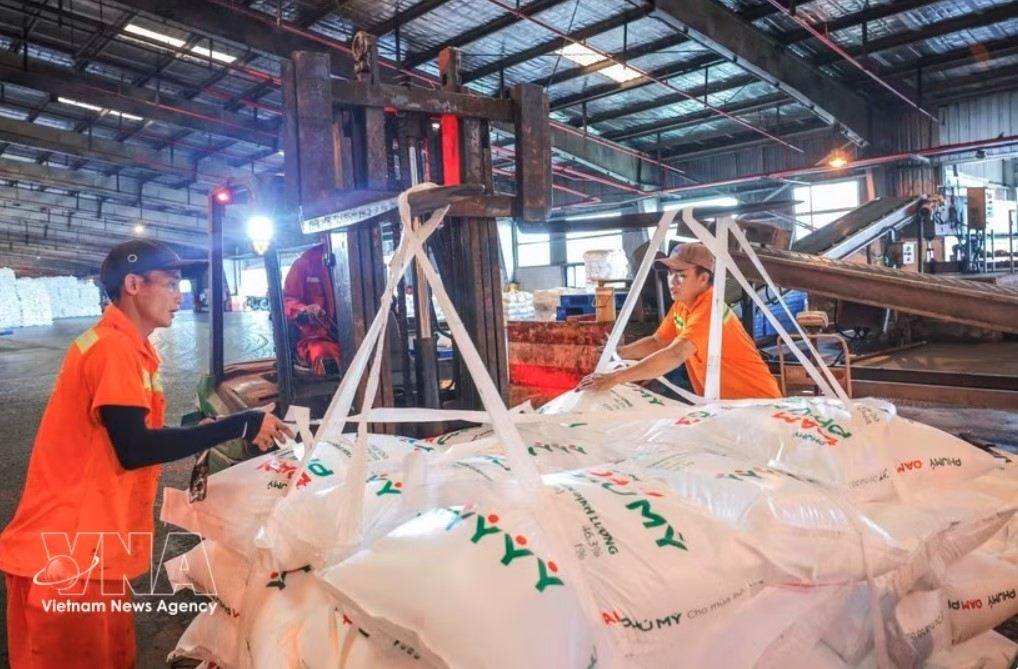
The US Department of Agriculture’s Foreign Agricultural Service (FAS) is now accepting applications for a US$500,000 Notice of Funding Opportunity (NOFO) designed to open new export pathways for innovative US biofertiliser products.

According to a notice issued on August 4, FAS invites US universities, agricultural trade associations, and non-profit organisations to apply for this technical assistance funding to evaluate crop yields and reductions in nitrogen leaching in the US and Vietnam using US manufactured biofertilsers such as liquid fish fertiliser.

Vietnam’s national guidelines for fertiliser management will be shaped via technical input on microbial coatings and innovative, higher-efficiency alternatives to synthetic fertilisers.

US organic rice farmers will be sent on an outreach tour to Vietnam to share how they use US-manufactured biofertilisers to reduce nitrogen leaching and maintain crop yields.

The FAS will track growth of Vietnam imports for at least three US-manufactured fertiliser enhancement products and biofertilisers.


Source: VNA

Photo: VNA

Latest Posts

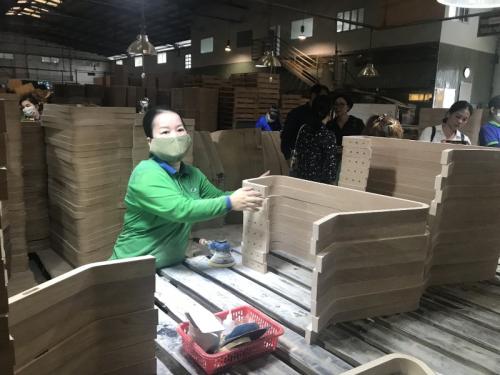
Wood sector aims for $19 bln export goal

Wood sector aims for $19 bln export goal

The industry will focus on maintaining its presence in key traditional markets, with a particular emphasis on the United States, and expanding into Japan, China, South Korea, the EU, India, Canada, Australia, the Middle East, and other emerging markets.

The Vietnam Timber and Forest Product Association (VIFOREST) has set an ambitious export target exceeding $18.5 billion for 2026.

To realize the goal, the industry plans to implement five core groups of solutions while simultaneously petitioning the Government to remove tax, credit, and administrative bottlenecks to create a more favorable environment for businesses.

First, the industry will focus on maintaining its presence in key traditional markets, with a particular emphasis on the United States.

Second, VIFOREST aims to diversify its export footprint by expanding into Japan, China, South Korea, the EU, India, Canada, Australia, the Middle East, and other emerging markets.

Third, the industry intends to effectively tap into the domestic market. By providing wooden furniture and materials for social housing projects, schools, hospitals, offices, hotels, and infrastructure developments, businesses aim to maintain production capacity, preserve jobs, and ensure steady cash flow.

Fourth, the sector will focus on enhancing value-added products. This involves developing products with superior design, established branding, and higher levels of deep processing. Additionally, the industry will utilize by-products to produce wood pellets, biomass, and other circular economy products.

Fifth, there will be a push for sustainable raw material development. This includes increasing the use of domestic plantation timber, certified wood, and legally imported timber.

The industry will also accelerate the digitalization of traceability records to meet EU Deforestation Regulation (EUDR) requirements and strengthen linkages with forest owners and cooperatives to transition toward large-timber forestry.

Recommendations for Government support

To ensure these solutions are effective, VIFOREST has requested that the Ministry of Agriculture and Environment, along with other central agencies, focus on five areas of support.

First, establish a regular exchange mechanism with US agencies and associations to provide transparent information regarding labor, the environment, and Vietnam’s plantation materials. This aims to protect the legitimate interests of Vietnamese businesses against tax measures and trade defense investigations.

Second, the Association proposes abolishing the 25% export tax on sawn timber produced from imported roundwood and the 5% export tax on black pellets and sawdust charcoal. VIFOREST estimates that resolving these tax issues could boost annual export turnover by $500–700 million.

Third, VIFOREST suggests creating tailored credit packages for wood processing enterprises and forest owners. Furthermore, it recommends restructuring debt repayment schedules for businesses significantly impacted by the tax policies of major international markets.

Fourth, increase resources for trade promotion, supporting businesses in attending international fairs and connecting with global distribution networks. This includes promoting the national brand: "Legal, Sustainable, and Responsible Vietnamese Wood."

Fifth, the Association calls for the continued digitalization and integration of procedures for planting area identification, CITES licensing, and origin certification. They also recommend the "single-declaration" use of data to eliminate duplicate inspections and shorten customs clearance times.


Xuan Cau Holdings starts work on $296 mln solar power plant in southern Vietnam

Xuan Cau Holdings starts work on $296 mln solar power plant in southern Vietnam

Multi-sector corporation Xuan Cau Holdings on Tuesday broke ground on the Dau Tieng 5 solar power plant in Vietnam’s southern province of Tay Ninh, a VND7.77 trillion ($296.14 million) project that will be among the country's first renewable energy developments to operate under the direct power purchase agreement (DPPA) mechanism.

The project, developed by DT5.1 Energy JSC, a Xuan Cau Holdings subsidiary, will have an installed capacity of 450 MW and is scheduled to begin commercial operations in December 2027.

The solar farm will be built on semi-submerged land around Dau Tieng Reservoir that had previously been used mainly for cassava cultivation.

The developer said the project would make more efficient use of the site's abundant solar resources while creating new economic opportunities for the local area.

Once operational, the plant is expected to generate approximately 808 gigawatt-hours (GWh) of electricity annually, supplying clean power to Vietnam's national grid.

Addressing the groundbreaking ceremony, To Dung, chairman of Xuan Cau Holdings, said that this is one of the first projects to implement the direct power purchase agreement mechanism, which allows renewable energy producers to sell electricity directly to large consumers.

He said the project would not only support renewable power producers and large electricity consumers but also contribute to the development of Vietnam's competitive electricity market.

Xuan Cau Holdings is already one of Vietnam's major solar investors. In 2018, the company developed the Dau Tieng 1, 2 and 3 solar complex with a combined capacity of 500 MW, which was introduced at the time as Southeast Asia's largest solar power complex.

These projects occupy around 720 hectares, equivalent to about 2.6% of Dau Tieng Reservoir's surface area, and were completed in roughly 10 months, helping establish Tay Ninh as one of Vietnam's leading solar energy hubs.

Long An and Tay Ninh provinces were merged last July to form the new Tay Ninh which borders Dong Nai city, Dong Thap province, Ho Chi Minh City, and Cambodia.


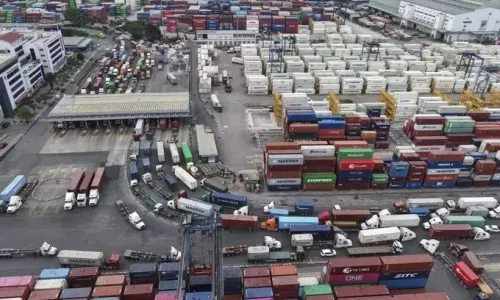
Vietnam's trade turnover tops $659B in 7 months

Vietnam's trade turnover tops $659B in 7 months

Vietnam's posted a trade turnover of US$659.58 billion in the first seven months of 2026, up 28.1% from a year earlier.

Imports outpaced exports, resulting in a trade deficit of $20.52 billion, largely driven by stronger demand for imported raw materials, machinery and production inputs.

Merchandise exports totaled $319.53 billion between January and July, a 21.7% year-on-year increase, according to the National Statistics Office.

The domestic economic sector contributed $63.64 billion, up 5.8% and accounting for 19.9% of total exports, while the foreign-invested sector, including crude oil, generated the remaining $255.89 billion, up 26.4%.

Some 31 export items recorded turnover exceeding $1 billion each, accounting for 93% of the total export value. Of these, seven products each generated more than $10 billion, making up 69.7% of total exports.

Manufactured goods remained dominant, reaching $287.91 billion and accounting for 90.1% of exports. Agricultural and forestry products earned $22.79 billion (7.1%), seafood exports totaled $6.86 billion (2.2%), while fuel and mineral exports reached $1.97 billion (0.6%).

Meanwhile, merchandise imports rose 34.8% year-on-year to $340.05 billion. Imports by the domestic sector reached $92.14 billion, up 24.1%, while the foreign-invested sector imported goods worth $247.91 billion, an increase of 39.2%.

A total of 40 imported products exceeded $1 billion in value each, accounting for 93% of the total imports. Two products each recorded import turnover above $10 billion, representing 52% of the total.

Production inputs accounted for 94.1% of imports, equivalent to $319.95 billion. Machinery, equipment, tools and spare parts made up 56.9% of imports while raw materials and fuels accounted for 37.2%. Consumer goods imports totaled $20.1 billion, or 5.9% of the total.

The U.S. remained Vietnam's largest export market, with exports valued at $104.7 billion in the seven-month period, while China continued to be the country's largest source of imports, supplying goods worth $138.6 billion.

Vietnam recorded a trade surplus of $91.4 billion with the US, up 22.6% year-on-year, while its trade deficit with China widened 39.7% to $93 billion.

To further boost exports, Nguyen Thi Huong, the office's director, recommended the government to continue implementing measures to promote exports, step up trade promotion activities, diversify supply chains, production networks and export markets while improving product quality and integrating more deeply into regional and global supply chains.

She also called for better utilization of existing free trade agreements, stronger exports to key markets, and greater efforts to tap into emerging markets, including Halal, Latin American and African markets, with the aim of achieving a sustainable trade surplus.

In addition, she proposed providing businesses with timely market information, helping them comply with new export standards, supporting them in anti-dumping cases, facilitating access to finance, and encouraging the adoption of advanced technologies to improve product quality, enhance added value and expand export markets.


See all blog