Lumen Vietnam Fund

Blog

Foreign investors return as net buyers, giving VN-Index momentum for August breakout?

Foreign investors return as net buyers, giving VN-Index momentum for August breakout?

Foreign investors have returned as net buyers for three consecutive sessions, while improving liquidity and more attractive valuations are providing additional support for Vietnam’s stock market outlook in August.

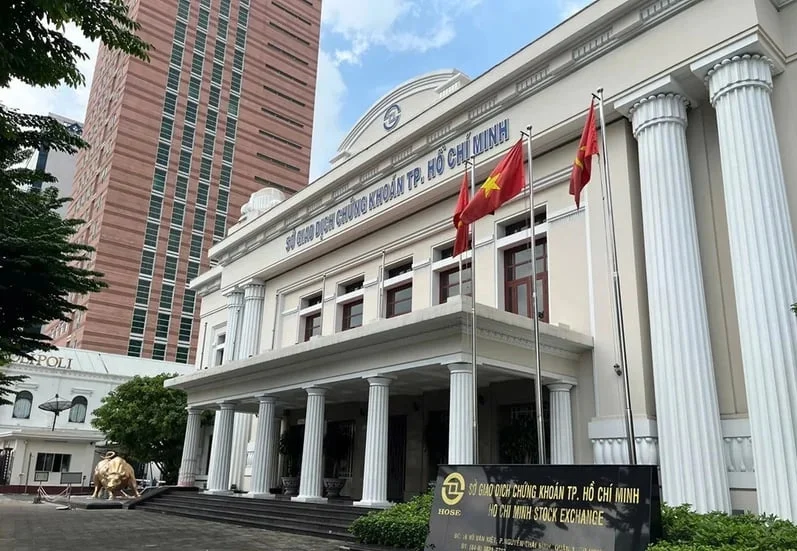
After falling to 1,651 points, the VN-Index rebounded to 1,776 points in just six trading sessions. Liquidity also improved significantly, with matching value on the Ho Chi Minh Stock Exchange (HoSE) returning to around VND19-20 trillion ($761.88 million) per session.

Notably, foreign investors returned as net buyers on HoSE for three consecutive sessions, with total net purchases reaching VND2,446 billion ($93.18 million), focusing on stocks such as FPT, VHM, VIC, MBB, HPG and PNJ.

The move was seen as a positive signal after the market experienced a sharp correction in July.

According to MB Securities (MBS), seasonal factors are supporting the market. Statistics show that the probability of the VN-Index gaining in August is around 80%. Over the past six years, the market has risen every August, with an average gain of 3.9% - the highest average monthly increase of the year.

In terms of valuation, the sharp decline in July has brought the VN-Index’s valuation to an attractive level. Excluding Vingroup-related stocks, the index’s price-to-earnings (P/E) ratio has fallen to around 10.5 times, equivalent to the level seen when the market was affected by tariff-related concerns. Lower valuations are expected to encourage cash inflows back into the market, including foreign capital.

MBS expects the VN-Index to target 1,800 points in its base-case scenario and 1,850 points in a more positive scenario, while placing support at the 1,600-1,650 point range. The brokerage recommends investors prioritize stocks that have undergone deep corrections, including securities firms, real estate companies, retailers, state-owned banks, oil and gas firms, steelmakers and logistics companies.

Meanwhile, An Binh Securities (ABS) forecasts the VN-Index could return to an uptrend and test the 20-day moving average, corresponding to the 1,760-1,763 point range. The market is also entering a short-term consolidation phase, with downside risks gradually easing. Investors may consider gradually increasing stock exposure to a maximum of 50% of their portfolios and prioritizing purchases during market corrections.

Five drivers supporting the market in August

According to MBS, several favourable factors could help the market continue its recovery momentum in August.

First, the easing of regulations on counting State Treasury deposits in the loan-to-deposit ratio (LDR).

Starting from August 1, adjustments to the treatment of State Treasury deposits when calculating LDR are expected to provide banks with additional lending capacity. State-owned lenders, particularly Vietcombank (VCB), BIDV (BID) and VietinBank (CTG), are expected to benefit the most.

MBS said the measure is a necessary policy tool to support the Government’s target of economic growth above 10%, while also encouraging banks to improve capital management capabilities.

Second, the first extraordinary session of the 16th National Assembly.

The session, taking place from August 3-24, 2026, will discuss many important issues, including 24 draft laws and resolutions. Notably, amendments to the Land Law, Housing Law and Real Estate Business Law are expected to help remove legal bottlenecks and unlock resources for the property market.

Third, the FTSE Russell index review.

On August 21, 2026, FTSE Russell is expected to announce the official list of Vietnamese stocks meeting criteria for inclusion in the FTSE Global Equity Index Series (FTSE GEIS) during its September semi-annual review. The event has attracted significant attention from investors as it could affect foreign capital flows.

Fourth, positive second-quarter earnings growth.

As of July 29, 2026, 672 out of 1,525 listed companies and banks, representing 38.9% of total market capitalizaation, had released financial statements or preliminary estimates for second-quarter results.

Total after-tax profit increased 25.6% year-on-year. Although lower than growth rates recorded in the previous three quarters, earnings growth remained strong, supported by non-financial companies, whose profits rose 36.1%, while financial firms posted 10.7% growth.

Fifth, increasing insider share purchases.

Recently, executives at several companies have registered to buy large amounts of shares, including VCI, PDR, VBB, KDH and MWG.

The move is viewed as a signal of management confidence in business prospects and stock valuations following the recent market correction.


Source: Tuong Nhu, Thai Ha

Photo: Photo by The Investor/Lien Thuong
Latest Posts

Moving forward on net zero commitments

Moving forward on net zero commitments

With an appropriate regulatory foundation now in place, Vietnam can move forward on meeting its net-zero commitments and accessing growth opportunities.

Carbon markets are rapidly evolving from policy instruments into new arenas for international cooperation and economic competition. For Vietnam, early, proactive, and well-informed participation will be critical not only in delivering on its emission reduction commitments but also in unlocking new growth opportunities as the country transitions toward a green economy.

In pursuit of its commitment to achieve net-zero emissions by 2050, the Vietnamese Government has accelerated the development of a comprehensive legal framework for greenhouse gas (GHG) mitigation, the domestic carbon market, and its integration with international carbon trading systems.

The regulatory foundation is now largely in place. It includes Decree No. 06/2022/ND-CP on GHG mitigation and ozone layer protection, as amended by Decree No. 119/2025/ND-CP, and most recently Decree No. 112/2026/ND-CP, issued on April 1, 2026, governing the international exchange of GHG emission reduction outcomes and carbon credits.

The latest decree establishes the legal basis for transferring and exchanging emission reduction outcomes between Vietnam and international partners through mechanisms operating both within and outside the framework of the Paris Agreement. It is expected to support Vietnam’s climate targets while helping attract investment and low emissions technologies.

At the same time, growing interest from Vietnamese businesses, particularly in export manufacturing, energy, and agriculture and forestry, has driven increasing demand for guidance on developing carbon credit projects and accessing international carbon markets. Several local governments have also begun exploring ways to leverage emission reduction opportunities to support green economic development, highlighting the need for greater awareness, technical capacity, and stronger market connectivity.

Building capacity

As the State authority responsible for climate change policy and carbon market development, the Department of Climate Change recognizes that effective implementation of the new regulatory framework will depend on strengthening the capacity of both government agencies and the private sector.

Enhancing understanding of domestic regulations, international market requirements, and technical standards has become increasingly important as Vietnamese organizations prepare to participate in global carbon markets. Equally important is expanding cooperation with international partners, financial institutions, and market participants to create new opportunities for carbon credit transactions and climate investment.

Preparing adequate institutional arrangements, technical expertise, and financial resources will also be essential in ensuring that Vietnam’s participation in international carbon markets is transparent, credible, and effective.

Three priorities

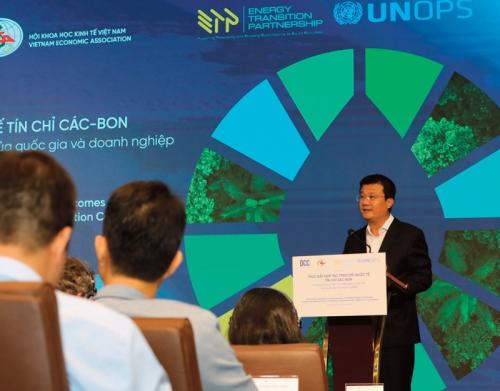
Against this backdrop, a July 23 forum entitled “Promoting Cooperation on Internationally Transferred Mitigation Outcomes Towards the Implementation of National and Corporate Emission Reduction Commitments” focused on three key priorities.

The first was updating participants on Vietnam’s latest legal framework governing the international exchange of GHG emission reduction outcomes and carbon credits. The discussions aimed to help businesses better understand the regulatory environment, including their rights, obligations, and the conditions for participating in international carbon markets.

The second priority examined emerging opportunities, market trends, and evolving requirements through insights from international organizations, financial institutions, and development partners. These discussions highlighted increasingly stringent global expectations surrounding carbon credit quality, data transparency, and technical compliance.

The third focused on assessing and strengthening the readiness of Vietnamese businesses. Participants explored practical steps for developing carbon projects, selecting appropriate measurement, reporting, and verification (MRV) methodologies, and connecting projects with available sources of climate finance and technical assistance.

Strengthening collaboration

The active participation of policymakers, international experts, and businesses generated valuable insights that will help strengthen cooperation between government agencies and the private sector in using market-based mechanisms to achieve both national and corporate emissions reduction goals.

The dialogue also reinforced international cooperation on carbon credits by connecting Vietnamese businesses with global sources of financing, technical support, and market expertise while aligning those opportunities with national policy priorities.

As international carbon markets continue to expand, strengthening institutional capacity and deepening collaboration between governments, businesses, and global partners will be essential to enabling Vietnam to meet its climate commitments and compete successfully in the emerging green economy.

(*) Mr. Nguyen Tuan Quang is a Deputy Director of the Department of Climate Change at the Ministry of Agriculture and Environment.

HCM City's e-commerce retail sales expected to grow 25% annually

HCM City's e-commerce retail sales expected to grow 25% annually

The southern metropolis has unveiled its 2026–2030 Master Plan for E-commerce Development.

Ho Chi Minh City has unveiled its 2026–2030 Master Plan for E-commerce Development, setting ambitious targets to accelerate digital commerce and promote sustainable growth.

Under the plan, 70% of the city's adult population is expected to shop online by 2030, while e-commerce retail sales are projected to grow by an average of 25% annually, accounting for 20% of total retail sales across the city.

The plan identifies e-commerce as a key pillar of the digital economy, aiming to optimize the entire value chain—from production and business operations to consumer experience. It also seeks to balance economic growth with social equity and environmental protection.

A major focus of the strategy is the development of green and sustainable e-commerce. By 2030, the city aims to reduce the proportion of products using plastic packaging to no more than 45%, while increasing the share of recycled packaging to 50%.

In addition, at least 40% of logistics companies are expected to adopt clean energy solutions, and 50% of businesses are targeted to implement environmentally friendly packaging standards, supporting the transition toward a low-carbon and more sustainable digital economy.


FPT partners with OpenAI to tap into the $240 bln cybersecurity market

FPT partners with OpenAI to tap into the $240 bln cybersecurity market

AI is not only driving a new wave of investment but also reshaping the demands of the cybersecurity market.

FPT Corporation has officially been recognized as a select parnter of OpenAI. Under this partnership, FPT will deploy advanced AI models and products to organizations and businesses on a large scale.

According to FPT, by "joining forces," the two technology giants will support global organizations in building AI transformation roadmaps, developing platforms, enhancing internal capabilities, and deploying AI solutions that are safe, responsible, and tailored to the practical needs of each unit.

Through this collaboration, businesses can optimize the cost of operating AI models by effectively managing tokens (the data processing units of AI models). They can also maximize the value of advanced large language models, such as GPT-5.6, and tools like ChatGPT Work to realize strategic business goals.

Executive Vice President of FPT Corporation and CEO of FPT Software, Mr. Pham Minh Tuan, said that FPT and OpenAI will work together to integrate advanced AI models into the operations of large-scale enterprises, accelerating a transformation process that is fast, efficient, and responsible.

According to Mr. Tuan, cybersecurity is a key sector where advanced AI models can create the most significant impact. By integrating next-generation AI intelligence from GPT-5.6 Sol and Codex Security into FPT’s cybersecurity platforms and smart business operation processes—particularly FPT’s "Patch the Enterprise" program—customers' IT infrastructure and application environments will be proactively protected against new AI-related risks.

AI is not only driving a new wave of investment but also reshaping the demands of the cybersecurity market. Gartner predicts that global cybersecurity spending will increase by 12% to reach $240 billion by 2026. The cybersecurity services market alone is expected to grow from approximately $84 billion in 2025 to $93 billion in 2026.

Furthermore, by 2027, an estimated 17% of cyberattacks will involve Generative AI (GenAI), leading to a growing demand for AI security, cybersecurity governance, and compliance solutions. This is one of the fastest-growing markets in the AI era.


See all blog