Lumen Vietnam Fund

Blog

Nghi Sơn refinery receives over 950,000 barrels of Congo crude oil

Nghi Sơn refinery receives over 950,000 barrels of Congo crude oil

Diversifying crude oil supply sources is considered crucial for Nghi Sơn Refinery and Petrochemical LLC (NSRP) in ensuring stable feedstock supplies and safeguarding domestic fuel supply, particularly as traditional crude imports from Kuwait have been affected by tensions in the Middle East.

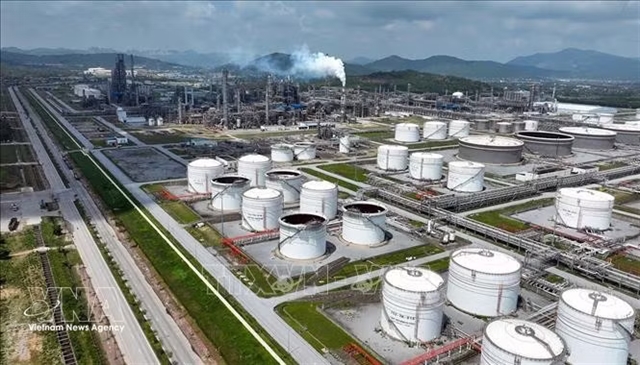
THANH HÓA — The Nghi Sơn Refinery and Petrochemical Plant in the central province of Thanh Hóa has received more than 950,000 barrels of Djeno crude oil imported from the Republic of Congo for fuel production to meet domestic market demand.

The crude shipment was arranged by Nghi Sơn Petroleum Products Distribution Branch (PVNDB), a subsidiary of the Vietnam National Industry - Energy Group (Petrovietnam), to help maintain stable operations at the refinery.

Diversifying crude oil supply sources is considered crucial for Nghi Sơn Refinery and Petrochemical LLC (NSRP) in ensuring stable feedstock supplies and safeguarding domestic fuel supply, particularly as traditional crude imports from Kuwait have been affected by tensions in the Middle East.

While Kuwaiti crude remains the refinery’s primary feedstock under its original design, NSRP has previously successfully processed its first batch of Das Blend crude oil as part of efforts to safely and efficiently handle alternative feedstock sources.

The refinery said the move forms part of its strategy to process an additional 10–12 million barrels of new crude oil annually alongside Kuwaiti crude or equivalent medium-grade oils, especially during specific operational periods such as catalyst replacement at the residue hydrodesulfurisation (RHDS) unit.

Implementing Petrovietnam’s international trading strategy, PVNDB successfully arranged its first crude oil shipment for NSRP as the refinery seeks to diversify supply sources. The move contributes to ensuring national energy security while marking PVNDB’s expansion from petroleum distribution into deeper participation in the crude oil supply chain for domestic refineries.

Leveraging Petrovietnam’s reputation and advantages in international transactions, PVNDB coordinated closely with NSRP to review demand, identify suitable supply sources, assess commercial options and negotiate with foreign partners to complete the transaction on schedule while ensuring compliance and risk management requirements.

In the coming period, PVNDB plans to continue importing crude oil suitable for NSRP and other domestic refineries, while strengthening governance standards, workforce development, international cooperation and supply diversification to enhance adaptability and risk management amid global energy market fluctuations.

Under its 2026 production plan announced earlier this year, NSRP aims to import nearly 12.5 million tonnes of crude oil and supply around nine million tonnes of petroleum products to the domestic market.

Established in 2008, NSRP is a joint venture backed by Kuwait Petroleum Europe B.V. (KPE), Japan’s Idemitsu Kosan Co. Ltd. (IKC), Petrovietnam and Mitsui Chemicals Inc. (MCI), with total investment exceeding US$9 billion.


Source: VNA/VNS

Photo: VNA/VNS

Latest Posts

Nghe An breaks ground on US$2.3 billion LNG power plant

Nghe An breaks ground on US$2.3 billion LNG power plant

VOV.VN - Nghe An province on May 18 launched construction of the Quynh Lap LNG Thermal Power Plant, a US$2.3 billion project expected to become one of the largest energy developments in Vietnam’s north-central region.

The groundbreaking ceremony was held on the occasion of the 136th birth anniversary of President Ho Chi Minh (May 19, 1890–2026).

Approved by the Nghe An People’s Committee in February 2026, the project has a total registered investment capital of approximately VND59.37 trillion (US$2.3 billion). The investor consortium includes PetroVietnam Power Corporation (PV Power), Nghe An Sugar Co. Ltd., and the Republic of Korea’s SK Innovation.

Located in Tan Mai ward, the project spans more than 152 hectares across both onshore and offshore areas. Nearly 60 hectares will be developed on land, while the remainder covers coastal and sea-surface zones. The shared breakwater area serving the Dong Hoi port complex is excluded from the project scope.

The Quynh Lap LNG Thermal Power Plant will have a total installed capacity of 1,500MW, comprising two combined-cycle gas turbine units of 750MW each. Construction and commissioning are scheduled for the 2026–2030 period.

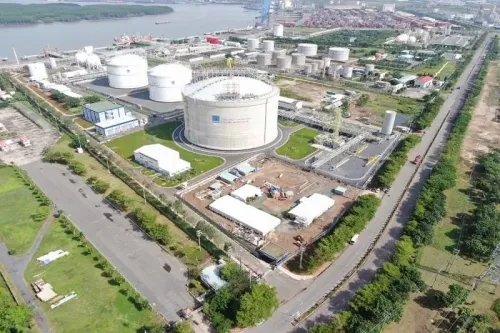
Supporting infrastructure includes a 250,000-cubic-meter LNG storage facility, regasification systems, and a dedicated port capable of accommodating LNG carriers of up to 150,000 tonnes. The plant is projected to consume approximately 1.15 million tonnes of imported LNG annually.

Provincial authorities view the Quynh Lap LNG Thermal Power Plant as a strategic driver for Nghe An’s socio-economic development in the coming years. With investment capital nearing VND60 trillion, it is the largest among the province’s 12 key development projects.

The project is expected to support Nghe An’s goal of achieving annual economic growth of over 12% in the coming years by attracting industrial investment, accelerating economic restructuring, and increasing the industrial sector’s contribution to the province’s Gross Regional Domestic Product (GRDP).

Chairman of the Nghe An People’s Committee Vo Trong Hai said the project would help ensure a stable electricity supply for the national grid while enhancing the province’s attractiveness to industrial investors.

Once operational, the plant is set to contribute an estimated VND6–7 trillion (US$230–270 million) annually to the provincial budget, making it one of Nghe An’s largest long-term sources of revenue.


Strategic orientations for development

Strategic orientations for development

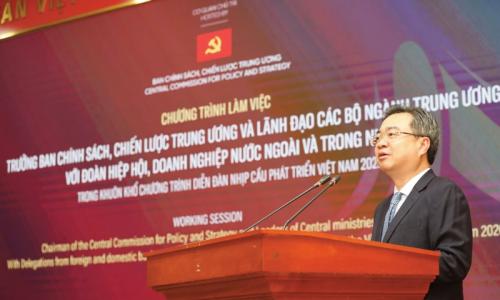
Mr. Nguyen Thanh Nghi, Politburo Member, Secretary of the Party Central Committee, and Chairman of the Central Commission for Policy and Strategy, delivered remarks at a working session with the FDI community held within the 6th Vietnam Connect Forum on May 13 in Hanoi.

The 14th National Congress of the Communist Party of Vietnam set the goal that, by 2030, Vietnam will become a developing country with modern industry and upper-middle income status, and by 2045 will rise to become a developed, high-income country.

To realize these strategic objectives, in the spirit of self-reliance and resilience, Vietnam must mobilize and unlock development resources while strongly leveraging both internal and external strengths. External resources are an important factor in enhancing internal capacity, in which the synergy between the domestic economic sector and the foreign-invested sector plays a particularly important role.

Four key issues

From the opinions raised by businesses at the working session held ahead of the Vietnam Connect Forum 2026 on the morning of May 13, we observed four key issues emerging.

First, the foreign business community continues to demonstrate positive confidence in Vietnam’s investment and business environment, development prospects, and the country’s direction for improving the investment and business climate in the coming period.

Second, investment trends in Vietnam are undergoing a clear shift, in line with the direction set out in the Resolution from the 14th National Party Congress for the 2026-2031 development period. This shift is toward sectors with high technological content, innovation, and added value, such as semiconductors, AI, data, digital technology, green technology, renewable energy, smart logistics, and international finance.

Vietnam has a significant opportunity to capitalize on this trend while also confronting challenges in meeting new requirements and seizing opportunities to participate more deeply in global value chains.

Third, regarding links between the FDI sector and domestic enterprises, this is an important issue closely associated with the direction of Vietnam’s self-reliant and resilient development in the new phase of development.

After nearly 40 years of reform, the FDI sector has played a highly-important role in the economy, contributing to export growth, State budget revenues, investment model transformation, job creation, and the enhancement of Vietnam’s international standing.

However, compared with expectations and development requirements, technology spillover effects, localization rates, and the participation of Vietnamese enterprises in global supply chains remain limited. The effectiveness of links between the FDI sector and domestic enterprises has yet to meet requirements for enhancing the capabilities of Vietnamese businesses and promoting their more substantive participation in global value chains.

Accordingly, the requirement of the new phase of development is to build an ecosystem of close links between domestic enterprises and FDI enterprises. This is also one of the major orientations currently being studied and finalized, and will be reflected in a new Politburo resolution on the development of the foreign-invested economic sector, which is expected to be issued in the near future.

Under this approach, the overarching direction is to develop the foreign-invested economic sector into an important component of an independent and self-reliant economy, closely linked with the domestic economic sector, while prioritizing quality, efficiency, technology, and spillover effects as the leading criteria.

The draft resolution on FDI also clearly identifies strategic orientations for FDI attraction, including the selective attraction of high-tech projects; encouraging the establishment of research centers in Vietnam; promoting technology transfer; developing support industries; enhancing the capabilities of Vietnamese enterprises; fostering deeper and more substantive participation in global value chains; and continuing institutional and administrative procedure reforms, alongside improving human resource quality.

Fourth, attention was drawn to the foundational issues that require continued improvement in the time to come, particularly those related to the policy and legal framework aimed at effectively attracting new-generation FDI inflows and enhancing the operational efficiency of FDI enterprises.

Areas highlighted include legal and policy frameworks related to land, planning, investment, construction, trade, and other relevant sectors. Under Conclusion No. 18-KL/TW from the 2nd Plenum of the 14th Party Central Committee, Vietnam’s legal system will undergo a comprehensive review, with the Ministry of Justice assigned to complete this task in 2026. Revisions to implementing regulations and guidelines for the Land Law are also expected to be completed this year.

Regarding controlled pilot mechanisms, or sandboxes, in the context of rapid technological and business model changes, ministries, sectors, and localities with development potential have been tasked with submitting proposals in the second quarter of 2026.

The review and adjustment of planning to ensure consistency and coherence in serving investment needs, particularly land-use planning, has also been assigned for completion in the second quarter, both to ensure effective governance and to facilitate investment attraction while maximizing development potential.

Further reforms

In terms of administrative reform, Conclusion No. 18 calls for the modernization of State governance methods, the full digitalization of administrative procedures in the digital environment, and enhanced data connectivity and sharing. The stated objective is to position Vietnam’s investment environment among the Top 3 in ASEAN and within the Top 30 most attractive investment destinations globally by 2028.

The government is also targeting a 50 per cent reduction in administrative processing times and compliance costs this year compared to 2024, while removing unnecessary business conditions and improving policy predictability.

In addition, emphasis has been placed on improving policy stability and predictability; developing high-quality human resources to support the objective of double-digit economic growth during the 2026-2031 period; and ensuring energy, logistics, and digital infrastructure as foundations for growth.

The Politburo has issued Resolution No. 70 on ensuring national energy security, while assigning tasks related to finalizing mechanisms for offshore wind power and LNG development, as well as removing bottlenecks in renewable energy development.

Regarding financial market reform and the expansion of foreign ownership limits, the direction identified is to consider increasing foreign ownership caps in sectors that do not affect national security, while implementing comprehensive reform plans for Vietnam’s financial market.

The Central Commission for Policy and Strategy proposed maintaining a mechanism for regular meetings and exchanges to continue listening to feedback from the business community, including FDI enterprises. Through coordination with central ministries and agencies, this mechanism would support further research and improvements to institutions and policies, thereby advising the Politburo and the Secretariat on enhancing the investment and business environment, serving the objectives of rapid and double-digit growth during the 2026-2031 period and realizing the 2045 goal of transforming Vietnam into a developed, high-income country.

Construction ministry proposes bold reforms to cut red tape

Construction ministry proposes bold reforms to cut red tape

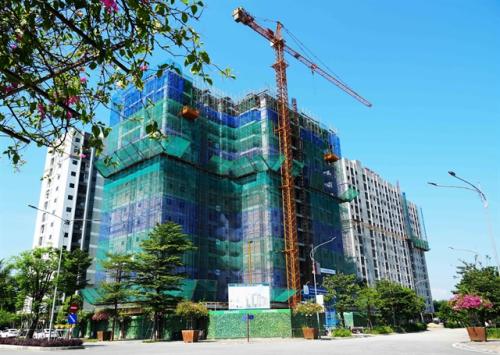
The Ministry of Construction has proposed sweeping reforms to streamline administrative procedures in the construction sector with the principle that each construction project should undergo only one administrative procedure before breaking ground.

HÀ NỘI — The Ministry of Construction has proposed sweeping reforms to streamline administrative procedures in the construction sector, suggesting a new principle that each project should undergo only one administrative procedure before breaking ground.

Under the proposal, projects that have already undergone appraisal of feasibility study reports by specialised construction authorities would be exempt from construction permit requirements.

The ministry said current construction licensing procedures still have overlaps in design appraisal dossiers and construction permit applications.

It takes around 15 to 20 days, depending on the type of project, to process the applications, while applicants are still required to submit two sets of paper documents.

The proposed changes would mean projects subject to official feasibility appraisal would no longer need separate construction permits, while projects outside that category would continue to undergo the permitting process.

As a result, construction permit requirements would mainly apply to individual houses in certain urban areas with planning and architectural management requirements, along with a limited number of smaller Grade 3 and 4 projects.

The ministry also proposed expanding online public services, allowing all eligible applicants to complete procedures entirely online and submit only one electronic dossier instead of paper files.

Authorities would also stop requiring documents already available on national databases, such as land-use rights certificates, the ministry said.

Another ministry proposal would reduce the number of projects requiring feasibility study appraisal, simplifying appraisal dossiers and shortening project appraisal timelines.

Processing time for construction permits would be reduced by half under the proposal. Specifically, permits for individual houses would be processed within seven working days, while other projects would face a maximum processing period of ten working days.

The ministry said these reforms aim to remove institutional bottlenecks affecting investment and construction and lower compliance costs for citizens and businesses as part of a broader effort to cut administrative procedures and business conditions.

After reviewing all 454 administrative procedures under its authority in April, the ministry proposed abolishing, simplifying or decentralising 157 of them, equivalent to nearly 35 per cent.

It also proposed reducing 19 conditional business sectors, or around 30 per cent of the total, and cutting 102 out of 249 business investment conditions, equivalent to nearly 41 per cent.

The ministry said it would continue to focus on simplifying administrative procedures and business conditions as well as reducing compliance costs and processing times, while stepping up decentralisation alongside stronger inspection and oversight to improve the effectiveness of State management.


See all blog