Lumen Vietnam Fund

Blog

Construction ministry proposes bold reforms to cut red tape

Construction ministry proposes bold reforms to cut red tape

The Ministry of Construction has proposed sweeping reforms to streamline administrative procedures in the construction sector with the principle that each construction project should undergo only one administrative procedure before breaking ground.

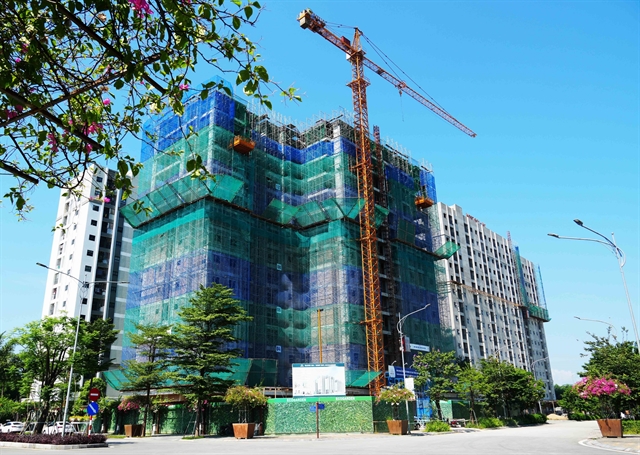
HÀ NỘI — The Ministry of Construction has proposed sweeping reforms to streamline administrative procedures in the construction sector, suggesting a new principle that each project should undergo only one administrative procedure before breaking ground.

Under the proposal, projects that have already undergone appraisal of feasibility study reports by specialised construction authorities would be exempt from construction permit requirements.

The ministry said current construction licensing procedures still have overlaps in design appraisal dossiers and construction permit applications.

It takes around 15 to 20 days, depending on the type of project, to process the applications, while applicants are still required to submit two sets of paper documents.

The proposed changes would mean projects subject to official feasibility appraisal would no longer need separate construction permits, while projects outside that category would continue to undergo the permitting process.

As a result, construction permit requirements would mainly apply to individual houses in certain urban areas with planning and architectural management requirements, along with a limited number of smaller Grade 3 and 4 projects.

The ministry also proposed expanding online public services, allowing all eligible applicants to complete procedures entirely online and submit only one electronic dossier instead of paper files.

Authorities would also stop requiring documents already available on national databases, such as land-use rights certificates, the ministry said.

Another ministry proposal would reduce the number of projects requiring feasibility study appraisal, simplifying appraisal dossiers and shortening project appraisal timelines.

Processing time for construction permits would be reduced by half under the proposal. Specifically, permits for individual houses would be processed within seven working days, while other projects would face a maximum processing period of ten working days.

The ministry said these reforms aim to remove institutional bottlenecks affecting investment and construction and lower compliance costs for citizens and businesses as part of a broader effort to cut administrative procedures and business conditions.

After reviewing all 454 administrative procedures under its authority in April, the ministry proposed abolishing, simplifying or decentralising 157 of them, equivalent to nearly 35 per cent.

It also proposed reducing 19 conditional business sectors, or around 30 per cent of the total, and cutting 102 out of 249 business investment conditions, equivalent to nearly 41 per cent.

The ministry said it would continue to focus on simplifying administrative procedures and business conditions as well as reducing compliance costs and processing times, while stepping up decentralisation alongside stronger inspection and oversight to improve the effectiveness of State management.


Source: VNS

Photo: VNA/VNS Photo Nguyên Lý

Latest Posts

Car sales hit 126,800 in first four months of 2026

Car sales hit 126,800 in first four months of 2026

The figure representing a year-on-year increase of 25%.

Members of the Vietnam Automobile Manufacturers’ Association (VAMA) sold 126,794 vehicles in the first four months of 2026, a year-on-year increase of 25%, the association has announced.

Passenger vehicle sales rose by 18%, commercial vehicles by 38%, while special-use vehicles recorded a sharp increase of 119%.

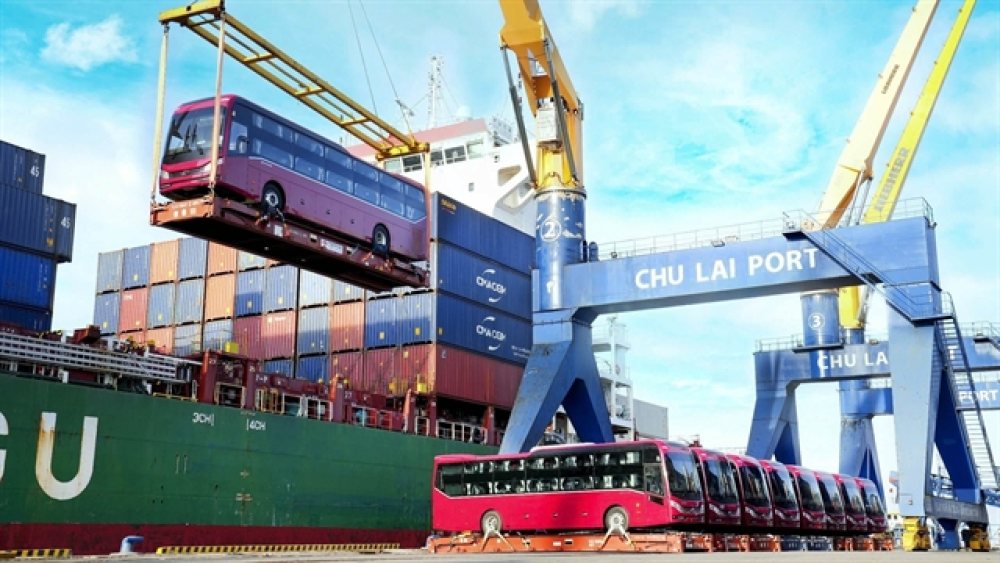
Imported completely built-up vehicles continued to grow faster than domestically assembled models. By the end of April, sales of locally assembled vehicles had gone up 16% year-on-year while imported units soared by 32%.

In April alone, some 31,937 vehicles were sold, dropping 17% from the previous month. Of the total sales, passenger vehicles accounted for 21,284 units, down 14% month-on-month; commercial vehicles 9,805 units, a decline of 26%; and special-use vehicles 848 units.


Đà Nẵng promotes investment attraction to achieve over 11 per cent growth

Đà Nẵng promotes investment attraction to achieve over 11 per cent growth

Đà Nẵng is intensifying efforts to attract investment, develop the international financial centre and unlock development resources as the central coastal city aims to achieve economic growth of more than 11 per cent in 2026.

ĐÀ NẴNG — Đà Nẵng is intensifying efforts to attract investment, develop the international financial centre and unlock development resources as the central coastal city aims to achieve economic growth of more than 11 per cent in 2026.

According to Trần Văn Vũ, head of the Đà Nẵng Statistics Office, the city recorded strong investment attraction momentum during the first four months of 2026, both in terms of capital scale and project numbers.

Investment flows have become increasingly diversified, with a focus on infrastructure, high-quality services and sectors with high added value, helping improve the efficiency of capital utilisation. The city is gradually reinforcing its position as an attractive investment destination, laying the foundation for medium- and long-term growth. Domestic investment in Đà Nẵng exceeded VNĐ70.8 trillion (US$2.68 billion) during the period, tripling the figure recorded in the same period of 2025. The city licensed 42 new projects and approved capital increases for eight others.

Vũ said the figures reflected growing investor confidence in the city’s business environment, particularly as support policies and infrastructure improvements continue to take effect.

Foreign direct investment (FDI) attraction also showed strong growth, reaching $237.7 million, double the level recorded a year earlier. The city granted licences for 47 new FDI projects, approved capital adjustments for 16 projects and recorded 10 transactions involving capital contributions and share acquisitions in economic organisations.

The results indicate that Đà Nẵng’s investment climate is becoming increasingly attractive and capable of drawing more flexible capital flows.

The Vietnam International Financial Centre in Đà Nẵng (VIFC-DN), although newly operational, has begun establishing itself as a new economic model drawing considerable interest from both domestic and foreign investors.

To date, it has welcomed 12 official members, while 11 investors have received approval for investment interest. More than 85 domestic and foreign investors have shown interest and registered to become members. According to Đặng Đình Đức, Standing Vice Chairman of the VIFC-DN Executive Agency, the city will accelerate the development of key urban, transport, technical and digital infrastructure projects supporting the financial centre.

The agency also plans to expand international partnerships, organise the Đà Nẵng Economic, Finance and Technology Week 2026, participate in sustainable financial centre initiatives and establish cooperation agreements with major global financial centres.

At the same time, the VIFC-DN will step up investment promotion activities aimed at attracting multinational corporations and investors in the financial sector, thereby enhancing Việt Nam’s position within the global financial network.

Unlocking resources to drive growth

Secretary of the municipal Party Committee Lê Ngọc Quang said the city remains committed to achieving double-digit growth in 2026, with services serving as the main pillar and industry-construction acting as the growth engine.

The city will continue strengthening investment attraction, accelerating public investment disbursement and addressing bottlenecks affecting delayed projects. It also plans to further promote science and technology, digital transformation, human resources development and social welfare, particularly in mountainous areas.

Minister of Finance Ngô Văn Tuấn noted that tourism and services currently account for more than half of Đà Nẵng’s economic structure. However, based on international experience, he said industrial development remains essential for sustaining double-digit growth. He suggested the city focus on sectors with competitive advantages in order to attract investment more effectively.

According to the minister, Đà Nẵng faces two major challenges in its ambition to become a highly competitive Asian development hub. The first is its coastal climate and saline environment, which pose difficulties in attracting investors in electronics manufacturing. The second relates to human resources, as the city’s workforce quality has yet to stand out despite a population exceeding 3 million.

Đà Nẵng, often described as a “livable city,” should introduce stronger policies to attract highly qualified international talent, Tuan advised, stressing that the city’s growing automobile industry should move toward green transition and electric vehicle production to align with global trends.

Standing Deputy Prime Minister Phạm Gia Túc said Đà Nẵng has already benefited from a range of preferential and breakthrough mechanisms designed to attract investment. These include the establishment of the Chu Lai Open Economic Zone, the Free Trade Zone and the VIFC-DN, all supported by special policies promoting finance, technology transfer and innovation.

He urged the city to prioritise the mobilisation of all available resources to ensure the effective operation of the Free Trade Zone and the VIFC-DN in order to attract major corporations and investors.

The Deputy PM also encouraged Đà Nẵng to proactively work with ministries and agencies to formulate additional breakthrough policies on economic and trade development where necessary, before submitting them to the Government for consideration.

Singaporean banks see more opportunities in Vietnam

Singaporean banks see more opportunities in Vietnam

Singapore’s banks are expanding their presence in Vietnam to seize opportunities from the market’s increasing integration into Asian trade and surging corporate financing needs.

Chief Executive of DBS Vietnam Abdul Raof Latiff told the media that Vietnam was historically a corridor market for Singapore banks, which supported clients from home as they expanded abroad.

However, Vietnam is currently no longer just a destination for inbound capital. It is increasingly a market in its own right – one with a stronger domestic corporate base, deeper supply chain links and a more consequential role in the broader ‘China+N’ strategy.

Vietnam has been a key beneficiary of the ‘China+N’ strategy, under which companies diversify manufacturing and supply chains beyond China by adding operations in one or more alternative markets, often in Southeast Asia.

Several multinational firms are moving production amid years of US-China trade tensions.

Elaine Lam, head of global corporate banking at OCBC, said that expanding intra-Asia trade and the reconfiguration of global supply chains have helped Vietnam cement its position as one of Southeast Asia’s fastest-growing economies.

Lam said that OCBC’s Vietnam strategy centres on supporting customers from its core markets, particularly Singapore and mainland China, as they invest in the country, while also serving Vietnamese State-owned enterprises and large local corporations in their domestic expansion and broader capital needs.

UOB Vietnam Chief Executive Victor Ngo said that while supporting regional and Singapore-based clients entering Vietnam remains important, his bank has increasingly built a franchise anchored in the domestic economy.

“This shift is reflected on the ground through the expansion of our corporate and retail capabilities, significant growth in our local talent base and the scaling of our retail business following the Citi consumer banking acquisition, as well as continued long-term investments such as fresh capital injections and our new headquarters in HCM City,” Ngo said.

According to Latiff, demand is rising for sustainable finance and advisory services, particularly as Vietnamese companies engage more with global customers, investors and supply chain partners facing higher environmental, social and governance expectations.

Lam said key sectors drawing customer interest include energy, renewables, manufacturing and real estate. She added that OCBC has substantially deepened its cash management, trade finance, foreign exchange and other banking capabilities to support customers’ cross-border financing and transactional requirements “more seamlessly”.

She also noted that Vietnam’s push for greater financial inclusion – backed by a young and tech-savvy population as well as rapid digital adoption – is creating opportunities in digital banking and fintech, with continued innovation expected across payments, financial services and digital ecosystems.

Foreign direct investment flows are a key focus for UOB, as Vietnam continues to attract capital into sectors such as electronics, industrials, consumer goods and real estate.

See all blog