Lumen Vietnam Fund

Blog

Đà Nẵng promotes investment attraction to achieve over 11 per cent growth

Đà Nẵng promotes investment attraction to achieve over 11 per cent growth

Đà Nẵng is intensifying efforts to attract investment, develop the international financial centre and unlock development resources as the central coastal city aims to achieve economic growth of more than 11 per cent in 2026.

ĐÀ NẴNG — Đà Nẵng is intensifying efforts to attract investment, develop the international financial centre and unlock development resources as the central coastal city aims to achieve economic growth of more than 11 per cent in 2026.

According to Trần Văn Vũ, head of the Đà Nẵng Statistics Office, the city recorded strong investment attraction momentum during the first four months of 2026, both in terms of capital scale and project numbers.

Investment flows have become increasingly diversified, with a focus on infrastructure, high-quality services and sectors with high added value, helping improve the efficiency of capital utilisation. The city is gradually reinforcing its position as an attractive investment destination, laying the foundation for medium- and long-term growth. Domestic investment in Đà Nẵng exceeded VNĐ70.8 trillion (US$2.68 billion) during the period, tripling the figure recorded in the same period of 2025. The city licensed 42 new projects and approved capital increases for eight others.

Vũ said the figures reflected growing investor confidence in the city’s business environment, particularly as support policies and infrastructure improvements continue to take effect.

Foreign direct investment (FDI) attraction also showed strong growth, reaching $237.7 million, double the level recorded a year earlier. The city granted licences for 47 new FDI projects, approved capital adjustments for 16 projects and recorded 10 transactions involving capital contributions and share acquisitions in economic organisations.

The results indicate that Đà Nẵng’s investment climate is becoming increasingly attractive and capable of drawing more flexible capital flows.

The Vietnam International Financial Centre in Đà Nẵng (VIFC-DN), although newly operational, has begun establishing itself as a new economic model drawing considerable interest from both domestic and foreign investors.

To date, it has welcomed 12 official members, while 11 investors have received approval for investment interest. More than 85 domestic and foreign investors have shown interest and registered to become members. According to Đặng Đình Đức, Standing Vice Chairman of the VIFC-DN Executive Agency, the city will accelerate the development of key urban, transport, technical and digital infrastructure projects supporting the financial centre.

The agency also plans to expand international partnerships, organise the Đà Nẵng Economic, Finance and Technology Week 2026, participate in sustainable financial centre initiatives and establish cooperation agreements with major global financial centres.

At the same time, the VIFC-DN will step up investment promotion activities aimed at attracting multinational corporations and investors in the financial sector, thereby enhancing Việt Nam’s position within the global financial network.

Unlocking resources to drive growth
Secretary of the municipal Party Committee Lê Ngọc Quang said the city remains committed to achieving double-digit growth in 2026, with services serving as the main pillar and industry-construction acting as the growth engine.

The city will continue strengthening investment attraction, accelerating public investment disbursement and addressing bottlenecks affecting delayed projects. It also plans to further promote science and technology, digital transformation, human resources development and social welfare, particularly in mountainous areas.

Minister of Finance Ngô Văn Tuấn noted that tourism and services currently account for more than half of Đà Nẵng’s economic structure. However, based on international experience, he said industrial development remains essential for sustaining double-digit growth. He suggested the city focus on sectors with competitive advantages in order to attract investment more effectively.

According to the minister, Đà Nẵng faces two major challenges in its ambition to become a highly competitive Asian development hub. The first is its coastal climate and saline environment, which pose difficulties in attracting investors in electronics manufacturing. The second relates to human resources, as the city’s workforce quality has yet to stand out despite a population exceeding 3 million.

Đà Nẵng, often described as a “livable city,” should introduce stronger policies to attract highly qualified international talent, Tuan advised, stressing that the city’s growing automobile industry should move toward green transition and electric vehicle production to align with global trends.

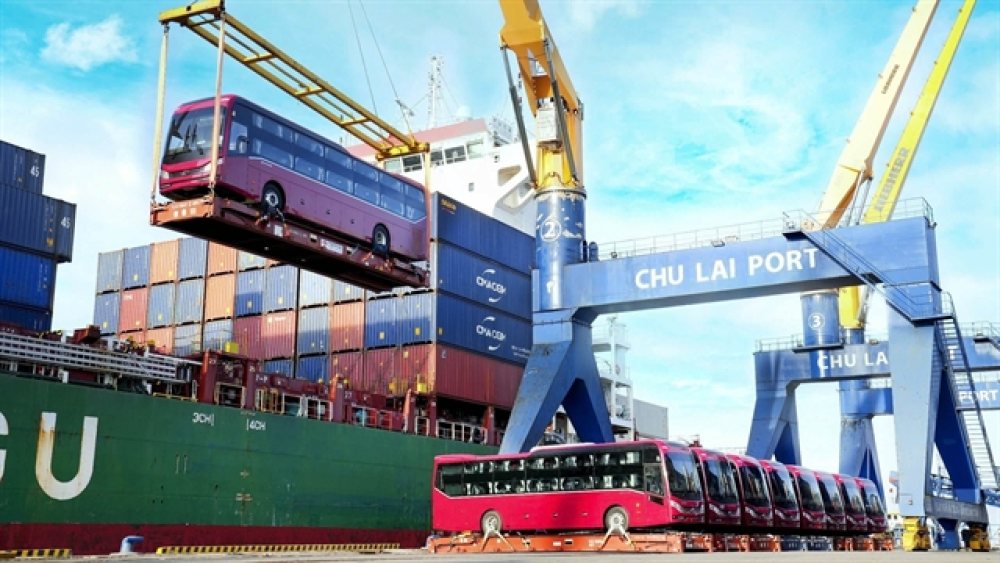
Standing Deputy Prime Minister Phạm Gia Túc said Đà Nẵng has already benefited from a range of preferential and breakthrough mechanisms designed to attract investment. These include the establishment of the Chu Lai Open Economic Zone, the Free Trade Zone and the VIFC-DN, all supported by special policies promoting finance, technology transfer and innovation.

He urged the city to prioritise the mobilisation of all available resources to ensure the effective operation of the Free Trade Zone and the VIFC-DN in order to attract major corporations and investors.

The Deputy PM also encouraged Đà Nẵng to proactively work with ministries and agencies to formulate additional breakthrough policies on economic and trade development where necessary, before submitting them to the Government for consideration.

Source: VNA/VNS

Photo: VNA/VNS Photo Đoàn Hữu Trung
Latest Posts

Vietnam auto market sees strong supply growth as domestic production surges

Vietnam auto market sees strong supply growth as domestic production surges

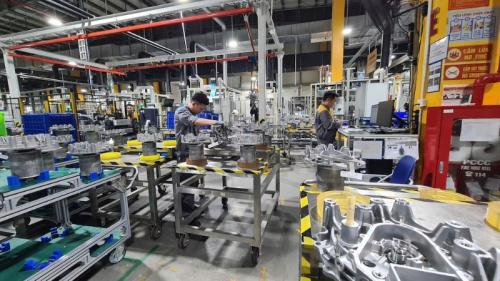
In the first five months of the year, domestic manufacturers produced an estimated 232,100 vehicles, up 26.7% year-on-year.

The number of new vehicles entering Vietnam’s automotive market rose sharply in May 2026, driven by robust growth in domestic production, which continued to outpace imports.

According to the National Statistics Office under the Ministry of Finance, an estimated 76,837 new vehicles, including both locally assembled and imported models, were supplied to the market in May, up 13.2% from April's total of 67,880 units.

Domestic automakers produced an estimated 53,700 vehicles during the month, an increase of 4.7% from April and 40% higher than the same period last year. The figure marked the highest monthly production level recorded so far in 2026, surpassing the previous peak of 51,700 units in January.

In the first five months of the year, domestic manufacturers produced an estimated 232,100 vehicles, up 26.7% year-on-year.

Vehicle imports also recorded strong growth. Vietnam imported an estimated 23,137 completely built-up (CBU) vehicles in May, with a total value of $548 million. Compared with April, imports increased 39.5% in volume and 26.5% in value.

While import volumes were broadly unchanged from May 2025, the value of imported vehicles rose 29.2%, suggesting a shift toward higher-priced models and premium vehicle segments.

During the first five months of 2026, Vietnam imported approximately 95,427 CBU vehicles worth $2.3 billion. The figures represented a modest increase of about 10% in volume and a substantial 26.7% rise in value compared with the same period last year, reflecting continued demand for imported vehicles and higher-value automotive products.


Vietnam Manufacturing PMI

Vietnam Manufacturing PMI

Summary

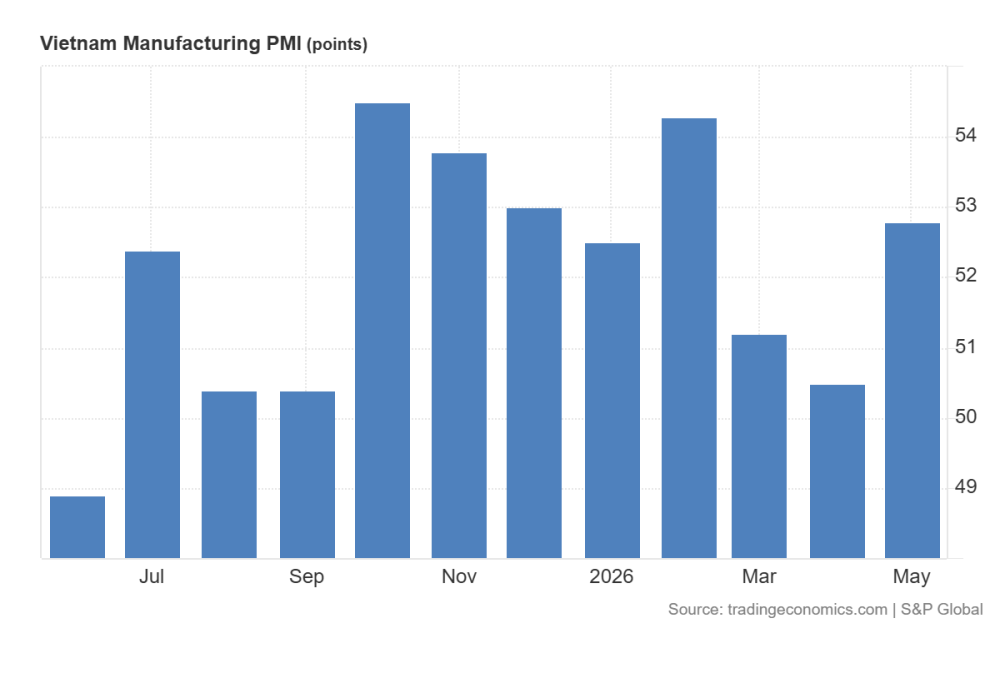
The S&P Global Vietnam Manufacturing PMI jumped to 52.8 in May 2026, picking up from a seven-month low of 50.5 in the previous month. It marked the highest reading since February, mainly due to a renewed increase in new orders, which expanded at the fastest pace in three months as customers built precautionary inventories amid concerns over a prolonged conflict in the Middle East. The recovery in demand was accompanied by a thirteenth consecutive month of output growth, with production expanding at the quickest pace since February. Meanwhile, input cost inflation quickened to its highest level since April 2011, driven mainly by higher fuel, oil, and transportation expenses. In response, output price inflation was among the strongest seen in the past fifteen years, although the pace of increase eased slightly from April. Looking ahead, business confidence remained relatively subdued, as firms remained wary of the potential long-term repercussions of the conflict in the Middle East.

Vietnam Manufacturing PMI

The S&P Global Vietnam Manufacturing Purchasing Managers’ Index measures the performance of the manufacturing sector and is derived from a survey of 400 manufacturing companies. The Index is based on five individual indexes with the following weights: New Orders (30 percent), Output (25 percent), Employment (20 percent), Suppliers’ Delivery Times (15 percent) and Stock of Items Purchased (10 percent), with the Delivery Times index inverted so that it moves in a comparable direction. A reading above 50 indicates an expansion of the manufacturing sector compared to the previous month; below 50 represents a contraction; while 50 indicates no change. This is only a limited sample of PMI headline data displayed on the Customer’s service, under licence from S&P Global. Full historic PMI headline data and all other PMI sub-index data and histories are available on subscription from S&P Global. Contact economics@spglobal.com for more details.

Vietnam’s industrial production records strongest five-month growth in four years

Vietnam’s industrial production records strongest five-month growth in four years

Vietnam’s industrial production maintained strong momentum in the first five months of 2026, with the Index of Industrial Production (IIP) rising 9.1% year-on-year, the highest growth rate for the period in the past four years, according to the Ministry of Finance’s National Statistics Office (NSO).

The office reported that the IIP expanded across all 34 provinces and cities during the period. Strong growth in manufacturing and processing, along with electricity production and distribution, drove industrial expansion in many localities, while some areas recorded slower growth due to weaker performance in manufacturing, mining and power generation.

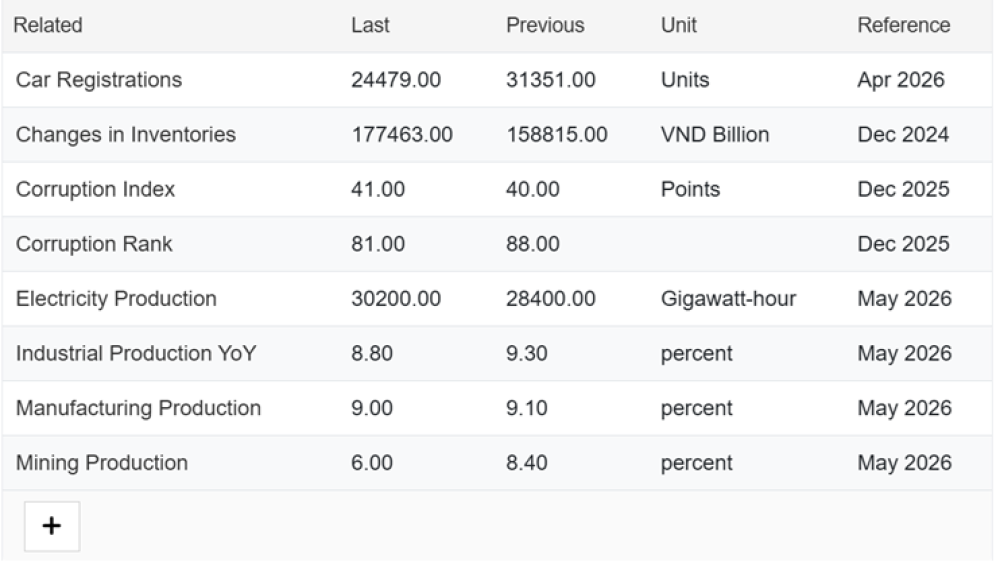
​In May alone, the IIP was estimated to increase 3.3% from the previous month and 8.8% year-on-year. Manufacturing and processing grew 9% compared to the same period last year, while water supply, waste and wastewater management activities rose 8.7%, electricity production and distribution increased 8.5%, and mining expanded 6%.

​Overall, in the January–May, IIP growth of 9.1% surpassed the 8.8% increase recorded in the same period of 2025. Manufacturing and processing, the key driver of industrial growth, expanded 9.5%, contributing 7.4 percentage points to the overall increase. Mining rose 5.5%, reversing a decline in the corresponding period last year, while electricity production and distribution grew 7.6%.

​Several major industries posted robust growth, including metal production (20.2%), motor vehicle manufacturing (18%), chemicals and chemical products (16.9%), other non-metallic mineral products (16.2%), and beverages (15.1%). In contrast, the production of hard coal and lignite mining declined 4.6%, while that of other transport equipment fell 1%.

Among key industrial products, motorcycle output surged 36% year-on-year, followed by automobiles (26.7%), processed seafood products (21.6%), rolled steel (21.5%), and sugar and beer, both up 14.4%. Meanwhile, production of NPK fertiliser fell 6.8%, MSG declined 6%, leather footwear dropped 5.7%, and clean coal production decreased 4.7%.

The labour market also showed positive signs. As of May 1, the number of employees working in industrial enterprises increased 1.1% from a month earlier and 3.4% year-on-year, the NSO said. Employment in foreign-invested enterprises rose 1.5% month-on-month and 3.4% year-on-year, while non-State enterprises recorded corresponding increases of 0.6% and 2.6%.

​The broad-based growth of industrial production underscores the resilience of the sector and its role as a key driver of economic expansion, although continued efforts are needed to improve productivity, strengthen manufacturing and ensure sustainable growth.


See all blog