Strategic orientations for development
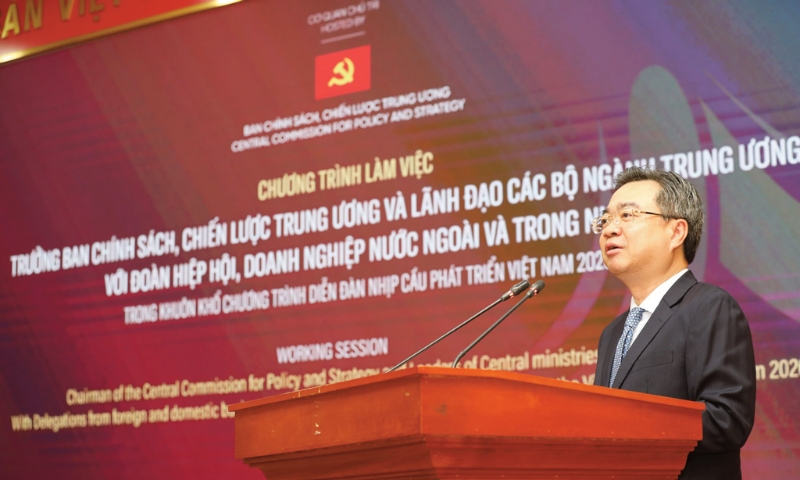
Mr. Nguyen Thanh Nghi, Politburo Member, Secretary of the Party Central Committee, and Chairman of the Central Commission for Policy and Strategy, delivered remarks at a working session with the FDI community held within the 6th Vietnam Connect Forum on May 13 in Hanoi.
The 14th National Congress of the Communist Party of Vietnam set the goal that, by 2030, Vietnam will become a developing country with modern industry and upper-middle income status, and by 2045 will rise to become a developed, high-income country.
To realize these strategic objectives, in the spirit of self-reliance and resilience, Vietnam must mobilize and unlock development resources while strongly leveraging both internal and external strengths. External resources are an important factor in enhancing internal capacity, in which the synergy between the domestic economic sector and the foreign-invested sector plays a particularly important role.
Four key issues
From the opinions raised by businesses at the working session held ahead of the Vietnam Connect Forum 2026 on the morning of May 13, we observed four key issues emerging.
First, the foreign business community continues to demonstrate positive confidence in Vietnam’s investment and business environment, development prospects, and the country’s direction for improving the investment and business climate in the coming period.
Second, investment trends in Vietnam are undergoing a clear shift, in line with the direction set out in the Resolution from the 14th National Party Congress for the 2026-2031 development period. This shift is toward sectors with high technological content, innovation, and added value, such as semiconductors, AI, data, digital technology, green technology, renewable energy, smart logistics, and international finance.
Vietnam has a significant opportunity to capitalize on this trend while also confronting challenges in meeting new requirements and seizing opportunities to participate more deeply in global value chains.
Third, regarding links between the FDI sector and domestic enterprises, this is an important issue closely associated with the direction of Vietnam’s self-reliant and resilient development in the new phase of development.
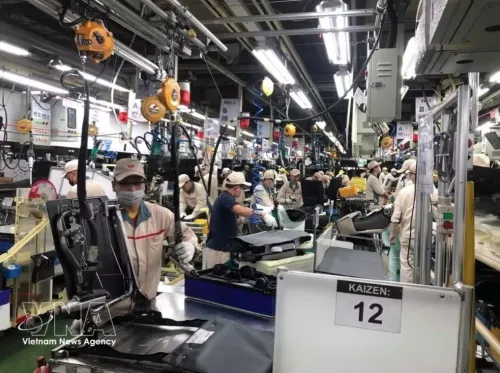
After nearly 40 years of reform, the FDI sector has played a highly-important role in the economy, contributing to export growth, State budget revenues, investment model transformation, job creation, and the enhancement of Vietnam’s international standing.
However, compared with expectations and development requirements, technology spillover effects, localization rates, and the participation of Vietnamese enterprises in global supply chains remain limited. The effectiveness of links between the FDI sector and domestic enterprises has yet to meet requirements for enhancing the capabilities of Vietnamese businesses and promoting their more substantive participation in global value chains.
Accordingly, the requirement of the new phase of development is to build an ecosystem of close links between domestic enterprises and FDI enterprises. This is also one of the major orientations currently being studied and finalized, and will be reflected in a new Politburo resolution on the development of the foreign-invested economic sector, which is expected to be issued in the near future.
Under this approach, the overarching direction is to develop the foreign-invested economic sector into an important component of an independent and self-reliant economy, closely linked with the domestic economic sector, while prioritizing quality, efficiency, technology, and spillover effects as the leading criteria.
The draft resolution on FDI also clearly identifies strategic orientations for FDI attraction, including the selective attraction of high-tech projects; encouraging the establishment of research centers in Vietnam; promoting technology transfer; developing support industries; enhancing the capabilities of Vietnamese enterprises; fostering deeper and more substantive participation in global value chains; and continuing institutional and administrative procedure reforms, alongside improving human resource quality.
Fourth, attention was drawn to the foundational issues that require continued improvement in the time to come, particularly those related to the policy and legal framework aimed at effectively attracting new-generation FDI inflows and enhancing the operational efficiency of FDI enterprises.
Areas highlighted include legal and policy frameworks related to land, planning, investment, construction, trade, and other relevant sectors. Under Conclusion No. 18-KL/TW from the 2nd Plenum of the 14th Party Central Committee, Vietnam’s legal system will undergo a comprehensive review, with the Ministry of Justice assigned to complete this task in 2026. Revisions to implementing regulations and guidelines for the Land Law are also expected to be completed this year.
Regarding controlled pilot mechanisms, or sandboxes, in the context of rapid technological and business model changes, ministries, sectors, and localities with development potential have been tasked with submitting proposals in the second quarter of 2026.
The review and adjustment of planning to ensure consistency and coherence in serving investment needs, particularly land-use planning, has also been assigned for completion in the second quarter, both to ensure effective governance and to facilitate investment attraction while maximizing development potential.
Further reforms
In terms of administrative reform, Conclusion No. 18 calls for the modernization of State governance methods, the full digitalization of administrative procedures in the digital environment, and enhanced data connectivity and sharing. The stated objective is to position Vietnam’s investment environment among the Top 3 in ASEAN and within the Top 30 most attractive investment destinations globally by 2028.
The government is also targeting a 50 per cent reduction in administrative processing times and compliance costs this year compared to 2024, while removing unnecessary business conditions and improving policy predictability.
In addition, emphasis has been placed on improving policy stability and predictability; developing high-quality human resources to support the objective of double-digit economic growth during the 2026-2031 period; and ensuring energy, logistics, and digital infrastructure as foundations for growth.
The Politburo has issued Resolution No. 70 on ensuring national energy security, while assigning tasks related to finalizing mechanisms for offshore wind power and LNG development, as well as removing bottlenecks in renewable energy development.
Regarding financial market reform and the expansion of foreign ownership limits, the direction identified is to consider increasing foreign ownership caps in sectors that do not affect national security, while implementing comprehensive reform plans for Vietnam’s financial market.
The Central Commission for Policy and Strategy proposed maintaining a mechanism for regular meetings and exchanges to continue listening to feedback from the business community, including FDI enterprises. Through coordination with central ministries and agencies, this mechanism would support further research and improvements to institutions and policies, thereby advising the Politburo and the Secretariat on enhancing the investment and business environment, serving the objectives of rapid and double-digit growth during the 2026-2031 period and realizing the 2045 goal of transforming Vietnam into a developed, high-income country.
Source: en.vneconomy.vn
Photo: Vietnam Economic Times