Lumen Vietnam Fund

Blog

China overtakes US as top market for Vietnamese seafood exports

China overtakes US as top market for Vietnamese seafood exports

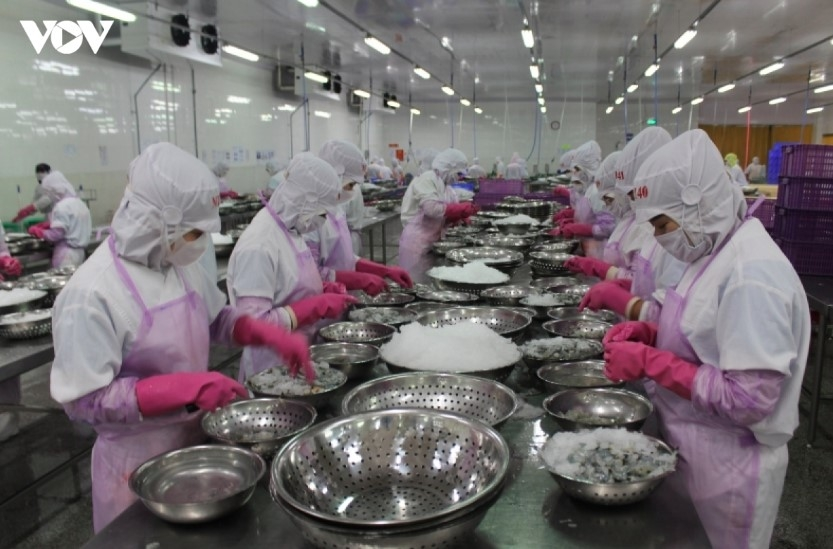
VOV.VN - China imported nearly US$1.4 billion worth of Vietnamese seafood in the first half of 2026, up about 40% from a year earlier, surpassing the US to become the top export market for Vietnamese seafood.

According to the Ministry of Agriculture and Environment, Vietnam's seafood exports totaled more than US$5.7 billion during the reviewed period, up 11.4% year-on-year. Exports to China reached nearly US$1.4 billion, compared with nearly US$898 million to the US.

Including Hong Kong, exports to the market amounted to about US$1.5 billion, up nearly 38%, while Japan ranked third with nearly US$788 million.

A representative of Nam Viet Corporation said the shift toward China has become more pronounced since the beginning of the year. With freight costs to more distant markets still high, China has become an increasingly attractive destination thanks to its proximity, lower logistics costs and faster capital turnover.

According to Le Hang, Deputy Secretary General of the Vietnam Association of Seafood Exporters and Producers (VASEP), many exporters have shifted exports to China as the US and Europe have raised trade barriers. In addition to its geographic proximity, which helps reduce logistics costs and delivery times, the Chinese market has relatively less stringent import requirements. Fresh seafood can also be shipped through border crossings, making storage easier and reducing costs.

Meanwhile, exports to the US continued to face pressure from tighter import requirements under the Marine Mammal Protection Act (MMPA), including additional COA requirements for certain wild-caught seafood products. Shrimp was also subject to high anti-dumping duties. In addition, exporters ramped up shipments to the US ahead of new tariff measures, leading to higher inventories, while weaker consumer spending and a preference for lower-priced products kept exports to the market largely flat in the first half of the year.

VASEP said export growth in the first half pointed to recovering market demand and exporters' ability to adjust their market strategies and product mix.

However, importers have become increasingly cautious, placing shorter and smaller orders while demanding more competitive prices and stricter compliance with quality, certification and traceability standards. As a result, exporters have had to become more flexible in both production and market selection.

Shrimp remained Vietnam's largest seafood export, generating about US$2.3 billion in the first half of the year, up 13.6% and accounting for more than 40% of total seafood export value. Growth was driven primarily by demand from mainland China and Hong Kong, with lobster seeing particularly strong demand in both markets. Pangasius exports hit approximately US$1.1 billion, up 12.1%, supported by competitive prices and steady demand for whitefish across multiple markets.

The outlook for the second half of the year is still uncertain as exporters face the risk of additional US trade protection measures and other trade barriers, along with a renewed increase in refrigerated container freight rates.

As trade policies change rapidly, exporters will need to closely monitor market developments, proactively adjust their export plans, diversify their markets and increase the share of value-added processed products to reduce risks and maintain growth.


Source: VOV

Latest Posts

European firms remain upbeat about Vietnam’s market prospects

European firms remain upbeat about Vietnam’s market prospects

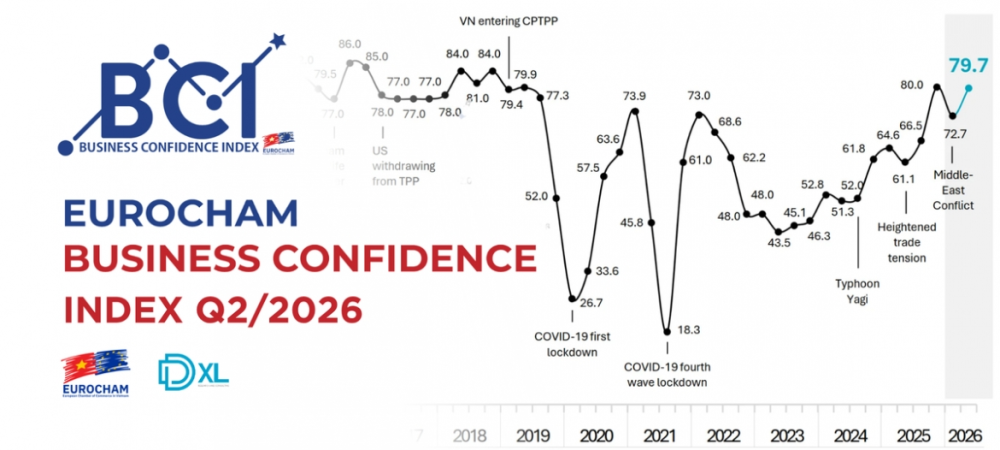
VOV.VN - European business confidence in Vietnam climbed to 79.7 points in the second quarter of 2026, approaching a seven-year high as the country continued to demonstrate resilience and attract investors despite global supply chain disruptions and shifting trade dynamics, the European Chamber of Commerce in Vietnam says.

EuroCham Business Confidence Index Q2/2026 conducted by DXL Research & Consulting. (Source: EuroCham)

EuroCham's flagship Business Confidence Index (BCI), the Q2 2026 report released on July 15, reveals a renewed surge in European business confidence, underscoring Vietnam's resilience amid one of the most volatile global operating environments in recent years.

With a sharp 7-point climb from the 72.7 points recorded in Q1, this quarter’s index is just a fraction below the historic seven-year peak of 80.0 reached in late 2025. The momentum signals a renewed appetite among European investors for expansion in one of Southeast Asia's fastest-growing economies, reaffirming the long-term confidence that briefly receded amid heightened global uncertainty.

"This quarter's findings demonstrate the incredible, almost tenacious resilience of both Vietnam's economy and the European businesses operating here," noted EuroCham Chairman Bruno Jaspaert.

“The first half of 2026 has been a rollercoaster. We entered the year with complex geopolitical wild cards, yet, despite a heavy cloud of global uncertainty, our member companies outperformed their own expectations. This index proves that when the weather gets rough, our ecosystem knows how to recalibrate and capture growth", he added.

The survey shows that 63% of European businesses reported positive business conditions during Q2, while optimism continues to strengthen, with 69% expecting favourable conditions in the coming quarter. This wave of optimism represents an 11-percentage-point jump compared to the expectations expressed just three months ago, driven by surging commercial performance, a healthy influx of new orders, and resilient domestic demand.

Xavier Depouilly, general manager of DXL Research and Consulting commented, “Confidence has recovered across all sectors, confirming that the slowdown recorded in Q1 was broad-based but ultimately temporary. While the pace of recovery has varied by industry, the overall direction is consistent. Agrifood recorded a more modest 5.5-point improvement, whereas Tourism & Hospitality surged by 8.7 points to reach 90.4, well above the overall index. Across industries, businesses have outperformed their own expectations, supported by resilient domestic and international demand, expanded public and private investment, and a remarkable ability to adapt to an increasingly complex environment. By introducing sector and company size level analysis, the BCI report and dashboard now provide a more granular understanding of business sentiment, helping both investors and policymakers identify where confidence is strengthening, where challenges remain, and where targeted actions can have the greatest impact.”

"These BCI results mirror the broader macroeconomic landscape as Vietnam solidifies its position as one of Asia's growth champions," Jaspaert explained. "In the first half of 2026 alone, the national GDP expanded by an impressive 8.18%. When you pair that breakneck growth with Vietnam's rise to 27th in the IMD World Competitiveness Ranking and its upcoming FTSE Russell upgrade to a Secondary Emerging Market this September, the narrative is crystal clear. What makes Vietnam truly stand out in a fiercely competitive regional landscape is a government that does not just talk about growth, but formalises it into national resolutions and actively executes structural reforms to pursue it.”

Throughout 2026, the Government has accelerated institutional reforms, administrative restructuring and investment policies aimed at attracting higher-quality foreign direct investment. Chief among these is the recent rollout of Resolution 10, which shifts the country's FDI criteria away from cheap labour and raw volume toward high-tech innovation, technology and sustainable growth.

Overall, the Q2 2026 Business Confidence Index underscores Vietnam's position as one of Asia's most attractive investment destinations, with European businesses continuing to express strong confidence in the market.

More than half of the respondents (54%) now describe Vietnam as a core strategic market and operational base, while a further 18% consider it a major growth location. Together, these findings reflect a notable shift in how European companies position Vietnam within their regional and global business strategies. Rather than serving solely as a manufacturing base, Vietnam is increasingly seen as a platform for production, sourcing, regional services and future expansion across Southeast Asia.

As Vietnam pursues its bold double-digit growth, businesses see a significant opportunity to translate today's strong business sentiment into sustained, high-quality investment by accelerating administrative reform, improving regulatory predictability and ensuring consistent implementation across all levels of government. Continued progress in these areas would enable businesses to devote more resources to innovation, production and workforce development, further enhancing Vietnam's competitiveness as a destination for international investment.

"The confidence radiating from this quarter's index is encouraging, but confidence alone is not the destination," Jaspaert said. “Over the last fifteen years, the BCI has evolved from a simple quarterly sentiment poll into a comprehensive economic indicator, giving our Government partners the evidence needed to optimise the investment climate. By continuing this constructive loop, we accompany Vietnam’s rise to become Asia's premier destination for high-quality, sustainable, and future-proof investment.”


Resilience of industrial production amid uncertainty

Resilience of industrial production amid uncertainty

Industrial production accelerated to a six-year high in the first half of 2026, supported by strong manufacturing growth, rising investment, and improving business conditions.

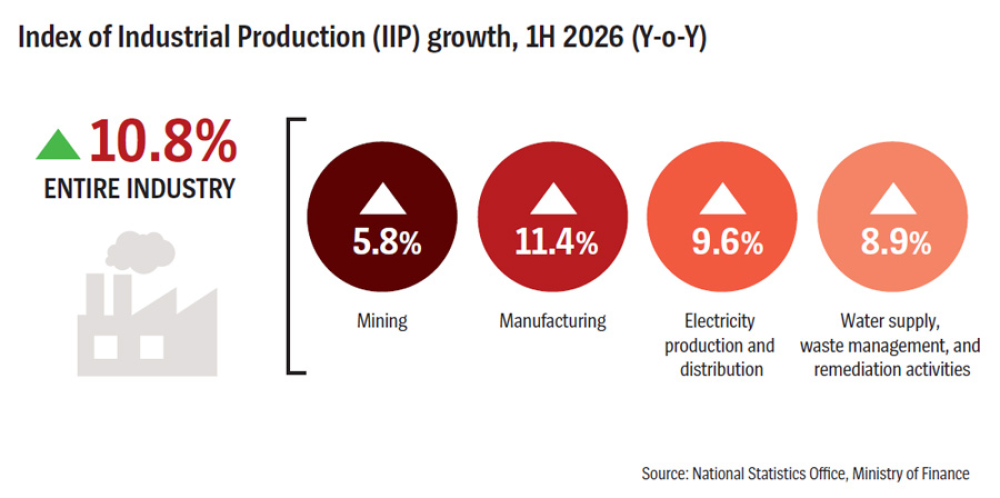
The latest data from the National Statistics Office (NSO) at the Ministry of Finance shows that Vietnam’s Index of Industrial Production (IIP) is estimated to have risen 11.2 per cent year-on-year in the second quarter of 2026. For the first half, the IIP expanded 10.8 per cent against the same period last year, up from 8.7 per cent in the first half of 2025 and marking the strongest first-half growth since 2019.

Industrial momentum

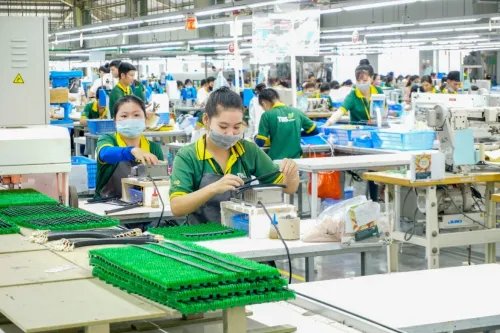
Manufacturing remained the main driver of industrial expansion, growing 11.4 per cent year-on-year, up from 10.5 per cent a year prior and contributing 8.9 percentage points to overall IIP growth. The sector benefited from stronger supply chains and rising demand from both domestic and export markets.

Electricity production and distribution increased 9.6 per cent, compared with 4.1 per cent in the same period of 2025, contributing 0.9 percentage points. Water supply, waste management, and wastewater treatment expanded 8.9 per cent, adding 0.1 percentage points, while mining rebounded with 5.8 per cent growth after contracting 3.5 per cent a year earlier, and also contributed 0.9 percentage points.

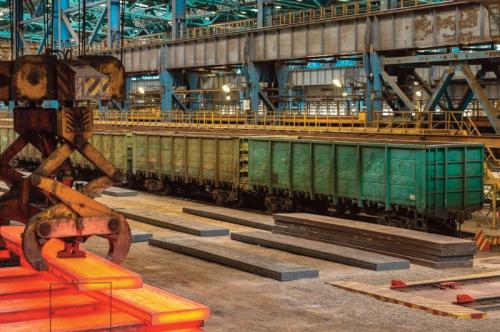
At the detailed industry level, several segments posted robust double-digit gains. Basic metals led the way, with growth of 21.5 per cent, followed by motor vehicle manufacturing with 17.7 per cent and beverages with 15.4 per cent, reflecting stronger consumer demand and higher utilization of production capacity.

Chemical manufacturing rose 14.8 per cent, non-metallic mineral products 14.9 per cent, and fabricated metal products 13.9 per cent, signaling accelerating infrastructure and construction activity that is driving demand for industrial materials and support industries. Traditional industries such as food processing and furniture manufacturing also maintained growth of more than 11 per cent, supporting agricultural value chains and domestic consumption.

Not all sectors exhibited the same momentum, however. Leather and related products posted a modest 4 per cent increase, while coal mining contracted 5.7 per cent.

The NSO reported that the IIP increased in all 34 provinces and centrally-administered cities in Vietnam during the first half of the year. Strong gains were concentrated in localities with rapidly-expanding manufacturing and electricity production, while slower growth was recorded in those where manufacturing, mining, or power generation are weak.

Manufacturing leads FDI inflows

Manufacturing also remained Vietnam’s leading destination for FDI. As of June 30, newly-registered FDI in the sector reached $10.76 billion, accounting for 61.9 per cent of all newly-registered investment nationwide. Including both new registrations and additional capital to existing projects, total registered FDI in manufacturing stood at $17.91 billion, representing 63 per cent of total newly-registered and additional capital.

More significantly, disbursed FDI totaled an estimated $13.03 billion during the first half of 2026, up 11.2 per cent year-on-year and the highest first-half figure in five years. Manufacturing alone accounted for 82.6 per cent of disbursements, or approximately $10.76 billion.

The continued expansion of multinational manufacturers has brought not only capital but also technology transfer, stronger management practices, and higher production standards, strengthening Vietnam’s domestic supply chains.

Improving demand has also been reflected in stronger sales and healthier inventory levels. The consumption index for manufacturing increased 10.8 per cent in the first half, compared with 9.8 per cent a year earlier, indicating that market demand is keeping pace with expanding production.

As a result, the average inventory ratio declined to 82.2 per cent from 85.7 per cent in the first half of 2025. Lower inventories alongside higher production suggest manufacturers are operating more efficiently, freeing up working capital while avoiding excessive stock accumulation; an indication that growth is increasingly supported by underlying demand rather than inventory buildup.

Labor market conditions also continued to improve. As of June 1, employment at industrial enterprises was 3.1 per cent higher than a year prior. Employment at FDI enterprises rose 3.1 per cent, with 2.4 per cent growth in the private sector and 1.4 per cent at State-owned enterprises (SOEs).

Employment expanded 3.2 per cent in manufacturing and 3.8 per cent in water supply and waste management, reflecting business expansion to meet rising orders. Though mining employment fell slightly, the industrial sector as a whole continued to play a critical role in job creation, supporting household incomes and consumer spending.
Business sentiment also strengthened. According to the NSO’s quarterly business survey, 85.2 per cent of FDI manufacturers expect business conditions in the third quarter to improve or remain stable compared to the second quarter. The corresponding figures were 82.8 per cent for private enterprises and 80.5 per cent for SOEs.

Expectations of rising production and stronger domestic and export orders have boosted confidence across industrial parks nationwide, encouraging businesses to invest in new equipment, improve production processes, and expand into new markets ahead of the year-end period.

Output growth eases inflation

The Manufacturing Purchasing Managers’ Index (PMI) provided further evidence of the sector’s improving health. According to S&P Global’s June 2026 Vietnam Manufacturing PMI report, released in early July, the Index rose to 51.8, signaling continued improvement in business conditions.

Manufacturing output expanded for a 14th consecutive month and at the fastest pace since the beginning of the year, supported by stronger inflows of new orders.

The report also pointed to easing inflationary pressures, with both input costs and output prices rising at their slowest pace in several months. Lower cost pressures have given manufacturers greater flexibility to maintain competitive pricing while protecting profit margins.

The moderation in inflation also reflects improving global supply chain conditions, though geopolitical tensions continue to create risks through higher shipping costs and occasional shortages of raw materials. Vietnamese manufacturers have demonstrated greater resilience by drawing on existing inventories and adopting more flexible procurement strategies.

Despite the broadly positive outlook, some challenges remain. Manufacturing employment declined for a fourth consecutive month even as production continued to increase, suggesting that companies still have spare production capacity or are relying more heavily on automation and productivity gains rather than expanding their workforce.

Outstanding workloads also declined sharply, indicating that factories are processing orders efficiently. The key challenge for the second half of the year will be translating higher production into sustained employment growth and a more resilient labor market.

Business confidence climbed to its highest level in four months, reflecting expectations of stronger global demand and continued investment in new product development. Hopes for a more stable international environment in the second half of 2026 are providing additional support for manufacturers’ expansion plans.

Mr. Andrew Harker, Economics Director at S&P Global Market Intelligence, believes Vietnam’s manufacturing sector ended the first half of 2026 on a positive note, with both new orders and output continuing to expand. Encouragingly, survey respondents attributed the growth primarily to improving underlying customer demand rather than precautionary inventory building.

At the halfway point of 2026, Vietnam’s industrial sector appears to be entering a new phase of expansion on increasingly solid foundations. Record IIP growth, the highest disbursed FDI in five years, and a steadily expanding PMI together underscore the sector’s resilience amid external uncertainty. Maintaining that momentum through the remainder of the year, however, will require effective policymaking and continued business adaptability to address logistics costs, localized labor shortages, and ongoing volatility in global markets.


Auto sales rise 15%, hybrid, imported vehicles continue to outperform

Auto sales rise 15%, hybrid, imported vehicles continue to outperform

Vietnam’s automobile market recorded a 15% year-on-year increase in sales in the first six months of 2026, with imported vehicles and hybrid models remaining the strongest growth segments.

Total sales reached 31,104 vehicles, up 4% from the previous month, according to a report by the Vietnam Automobile Manufacturers' Association (VAMA) released Friday.

However, compared with June 2025, sales were still down about 2.7%, indicating that the market recovery remains uneven.

Cumulative sales in the first half of 2026 totaled 149,761 vehicles, up 15% from the same period last year. Passenger cars amounted to more than 100,000 units, commercial vehicles exceeded 38,000 units, while hybrid vehicle sales reached 10,865 units, soaring 83% year-on-year.

The strong growth in hybrid vehicles reflects the ongoing shift toward more fuel-efficient and environmentally friendly transportation. In June alone, VAMA members sold 2,347 hybrid vehicles, up 41% from May and nearly double the figure recorded in June 2025, making hybrids the fastest-growing segment in the market.

Among VAMA member brands, Toyota remained the market leader with 6,494 vehicles sold in June, accounting for around 27% of total VAMA sales. Mitsubishi ranked second with 3,158 units, followed by Ford with 2,741 units. Kia and Mazda, both distributed by THACO, sold 2,675 and 2,361 vehicles, respectively, completing the top five best-selling brands for the month.

Notably, the sales gap among leading brands has narrowed compared to previous years, reflecting increasingly intense competition across multiple segments, including B-segment sedans, urban SUVs, MPVs, and pickup trucks.

Industry experts believe the positive first-half performance provides a solid foundation for stronger growth in the second half. Automakers are expected to launch new models, expand their hybrid and electric vehicle lineups, and roll out promotional programs to stimulate demand.

With auto loan interest rates remaining competitive, stable vehicle supply, and an increasingly diverse product range, Vietnam's automotive market is expected to maintain its growth momentum through the remainder of 2026. SUVs, MPVs, and hybrid vehicles are likely to remain the main drivers of overall market sales.


See all blog