Lumen Vietnam Fund

Blog

Austria's VAMED plans €1.2 bln Vietnam investment, explores hospital ship in Phu Quoc island

Austria's VAMED plans €1.2 bln Vietnam investment, explores hospital ship in Phu Quoc island

Austria's VAMED Engineering GmbH plans to invest EUR1.2 billion in Vietnam over the next five years and is exploring a hospital ship project in Phu Quoc island to expand healthcare capacity and support international events.

The plans were discussed during a meeting on Wednesday between Vietnamese Deputy Prime Minister Pham Thi Thanh Tra and César Louis-Philip Marseille, managing director of VAMED Engineering GmbH and a member of the board of VAMED+WWH Group of Germany.

Stressing that Vietnam is one of VAMED's important partners in Southeast Asia, Marseille said the planned investment of €1.2 billion over the next five years is expected to create thousands of jobs and promote knowledge and technology transfer, he added.

VAMED also wants to expand cooperation through concessional financing projects, public-private partnerships, and partnerships with private-sector investors. The group plans to supply medical products from Austria and Germany to Vietnamese partners.

Notably, VAMED proposed studying a hospital ship in Phu Quoc off Vietnam's southern province of An Giang, subject to the necessary conditions.

The company said the model would be a new approach for Vietnam's healthcare system and could provide medical services to large numbers of patients while strengthening the country's healthcare capacity.

Deputy PM Tra, in reply, welcomed the proposal, noting that Vietnam's long coastline and diverse healthcare needs create conditions for developing mobile healthcare models at sea. Such facilities could also help Vietnam respond to natural disasters and other emergencies, she said.

The proposed medical ship in Phu Quoc is also consistent with Vietnam's efforts to combine healthcare and tourism, particularly as the island prepares to host the APEC Economic Leaders' Week in 2027.

Tra said the project should be designed as a long-term healthcare asset rather than being developed solely to serve the APEC event. It should help strengthen local medical capacity, support the organization of international events, and improve healthcare services for the wider population.

She asked VAMED to quickly complete a detailed proposal covering technology, operations, and implementation mechanisms for the project.

Tra required the Ministry of Health to work with other ministries, agencies, and An Giang authorities to assess the hospital-ship concept, including its feasibility, technical requirements, standards, regulations, and other conditions needed for implementation.

The An Giang People's Committee was tasked with coordinating with relevant agencies to review the project's documents, investment conditions, and procedures.

In addition to the hospital ship proposal, Tra suggested VAMED invest in elderly healthcare and care facilities in Vietnam as the country faces growing demand for healthcare services.

VAMED has operated in Vietnam since 1997. Over nearly three decades, the group has deployed about €158 million in official development assistance (ODA) funding and implemented 10 major projects, helping upgrade medical equipment at 15 military hospitals, as well as Bach Mai Hospital, Cho Ray Hospital, and Hue Central Hospital. VAMED has also supported the development of medical-waste incineration facilities serving 25 local hospital clusters.


Source: Hai Yen
Latest Posts

Credit growth reaches 16.69% by September

Credit growth reaches 16.69% by September

Total outstanding credit reaching VND20.75 quadrillion ($789 billion) as of September 30, 2026.

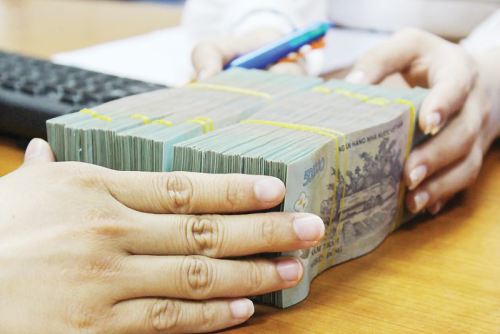
Vietnam’s total outstanding credit reached VND20.75 quadrillion ($789 billion) as of September 30, 2026, up 11.59% from the end of 2025 and 16.69% year on year, Deputy Governor of the State Bank of Vietnam (SBV) Pham Thanh Ha said at a press briefing of the SBV on October 7.

According to Mr. Ha, lending rates remain under upward pressure, although the pace of increase has slowed and rates have broadly stabilised around a new level. As of September 20, the average deposit rate for newly generated transactions stood at 6.38% per year, up 1.15 percentage points from the end of 2025.

Looking ahead to the final quarter, Mr. Pham Chi Quang, director of the SBV’s Monetary Policy Department, said rapid changes in the policies of major central banks in the world were adding pressure on Vietnam’s monetary policy.

With global interest rates trending higher, Vietnamese rates are unlikely to remain completely insulated from the broader trend, Mr. Quang said. The challenge is compounded by the economy’s continued need for substantial credit to support high growth.

Credit growth reached 19.07% in 2025, the highest level in 15 years. While strong economic growth requires continued credit expansion, rapid lending growth can also increase inflationary pressures.

The SBV will therefore continue to use monetary policy tools to support economic growth while limiting additional pressure on inflation.

Exchange rates will also remain a key policy variable. As a highly open economy, Vietnam could face imported inflation if exchange-rate movements are not effectively managed amid elevated global inflation.

The SBV will closely monitor money supply channels, inflation developments and exchange-rate movements to ensure timely policy responses in the coming period.


Vietnam cannot stand apart from global interest rate trend: central bank

Vietnam cannot stand apart from global interest rate trend: central bank

The U.S. Federal Reserve is likely to continue raising interest rates, and Vietnam cannot stand apart from the global interest rate trend, the State Bank of Vietnam’s monetary policy chief Pham Chi Quang said.

Monetary policy prioritizes inflation control

As of September 30, outstanding credit across the banking system stood at about VND20,750 trillion ($798.68 billion), up 11.59% from the end of 2025 and 16.69% from a year earlier, the SBV said. This means bank credit had injected about VND2,200 trillion ($84.68 billion) into the economy in just nine months.

The figure highlights the continued role of bank funding in supporting growth. But rapid credit growth also puts greater pressure on monetary policy, particularly as Vietnam is pursuing double-digit economic growth in 2026.

2026 is the first year of implementing the 14th National Party Congress resolution and the 2026-2030 socio-economic development plan, with a target of double-digit growth while maintaining macroeconomic stability and controlling inflation.

This means credit cannot simply be viewed in terms of "injecting more capital", according to SBV Deputy Governor Pham Thanh Ha. The SBV said it had conducted monetary policy proactively and flexibly during the first nine months, in line with market developments and with a focus on keeping average inflation at around 4.5% in 2026.

The pressure on monetary policy is becoming more apparent in price developments. The National Statistics Office said the consumer price index rose 0.62% in September from the previous month and 5.08% from a year earlier. In the first nine months, CPI rose 4.52%, above the 4.5% target set in the government's Resolution 01/NQ-CP.

"These are the highest increases for September and the nine-month average in many years, showing that the pressure to manage prices and control inflation in the final months of 2026 is very high," Ha stressed.

Pham Chi Quang, director of the SBV's monetary policy department, also noted that the 4.52% increase in CPI in the first nine months showed there was limited room for monetary easing. If credit continues to grow rapidly while cost shocks from energy and global commodities persist, price pressures could intensify.

In other words, the need to control inflation is becoming one of the key constraints on the scope for deeper interest rate cuts.

Domestic rates cannot be separated from global trend

After analyzing the global backdrop, Quang said Vietnam's interest rates could not stand apart from the international monetary policy trend.

On September 16, the Fed raised its benchmark interest rate by 25 basis points, bringing the federal funds target range to 3.75-4%. Several other major central banks also raised rates in September, increasing pressure on highly open economies such as Vietnam.

The monetary policy department chief said the Fed was likely to continue raising rates and Vietnam could not stand outside the global interest rate trend. Policymakers therefore need to find a balance between interest rates and the exchange rate rather than pursue a single objective, he said.

Domestic interest rate developments also show that the pressure has emerged. As of September 20, the average deposit rate for newly generated transactions stood at 6.38% a year, up 1.15 percentage points from the end of 2025, Deputy Governor Ha said. The SBV said interest rates remained under upward pressure, although the pace of increase had slowed and rates were settling around a new level.

Meanwhile, the SBV has kept its policy rates unchanged and asked credit institutions to stabilize market interest rates, disclose lending rates, and coordinate efforts to lower both deposit and lending rates.

Notably, interest rate pressure is not coming solely from domestic monetary policy. When global rates rise, the interest rate differential between the dong and U.S. dollar, capital flows and exchange rate expectations can all change. Cutting domestic rates too quickly could therefore put pressure on the exchange rate, while keeping rates too high for too long could increase companies' funding costs.

Quang said, however, that the exchange rate had been a positive variable, helping the SBV absorb some external shocks.

The Vietnamese dong has gained about 1.12% against the U.S. dollar, while many other Asian currencies have weakened by 2-7%. The move is notable as the Fed has just raised rates and the dollar has strengthened in global markets.

The resilience of the exchange rate has also been reflected in market developments. The SBV said it had managed the exchange rate flexibly while coordinating monetary policy tools to absorb external shocks, stabilize the foreign exchange market, and help control inflation. The legitimate foreign currency needs of the economy had been fully and promptly met, while the USD/VND exchange rate was managed flexibly in line with market conditions.

SBV to maintain flexible policy in fourth quarter

On monetary policy in the final quarter, Deputy Governor Ha said the global economy would continue to face numerous risks, with geopolitical factors, energy prices and fluctuations in the global economic and financial markets potentially weighing further on Vietnam's economy.

Recent data show that Vietnam continues to face significant pressures given its high degree of economic openness. The SBV will continue to conduct monetary policy proactively and flexibly while coordinating policies to help maintain macroeconomic stability, stabilize markets and support economic growth.

On interest rates, the SBV will closely monitor market developments and adjust policy in line with macroeconomic conditions, inflation developments and policy objectives. It will also take appropriate liquidity-management measures to ensure commercial banks' ability to make payments, while closely monitoring international markets and managing the exchange rate flexibly.

On credit, the SBV will continue to adjust policy in line with macroeconomic developments and the economy's capacity to absorb capital, supporting growth while ensuring the safety of credit institutions.

"Credit institutions are required to ensure safe and effective credit growth, while strictly controlling lending to potentially risky sectors; continue implementing credit programs and packages at the direction of the government and the SBV, ensuring effectiveness and making it easier for people and businesses to access capital," Ha said.

Banks must also continue improving the quality of their operations by strictly complying with regulations, ensuring safety and efficiency, controlling non-performing loans, and limiting the emergence of new risks.

A strategy to restructure national science, technology, and innovation programs approved

A strategy to restructure national science, technology, and innovation programs approved

The strategy aims to establish 30 regional-standard research teams while interconnecting scientific data with the National Innovation Center and regional innovation ecosystems.

Under Prime Ministerial Decision 1951/QD-TTg, signed by Deputy Prime Minister Ho Quoc Dung on October 8, a scheme on Restructuring National Science, Technology, and Innovation Programs for the 2026 to 2035 period has been approved.

The scheme establishes a comprehensive framework to streamline existing national initiatives authorized by the Prime Minister, the Minister of Science and Technology, and heads of central agencies, ensuring full operational coverage while preventing overlapping targets, contents, and resources.

For the 2026 to 2030 phase, the scheme mandates that all national science, technology, and innovation programs monitor progress and evaluate outcomes through a unified National Digital Platform for Science, Technology, and Innovation Management. The strategy aims to establish 30 regional-standard research teams while interconnecting scientific data with the National Innovation Center and regional innovation ecosystems.

By 2030, the program targets developing at least 20 key national products and strategic technology products. It aims to foster at least 20 enterprises capable of mastering strategic technologies, with a minimum of five enterprises integrating directly into global value chains. Additionally, the scheme envisions creating at least 250 innovative startups through technology testing, product development, research commercialization, and intellectual property exploitation.

The scheme further outlines supporting at least 150 innovative startup products and solutions for trial, application, and scaling, while helping at least 150 startups optimize processes and develop prototype products for commercial manufacturing. It also establishes a goal to attract private investment capital for innovative startups at a level matching or exceeding total state budget funding allocated to the National Innovative Startup Program.

To organize implementation through 2035, national programs are structured into six main groups.

The first group focuses on developing national capacity, human resources, research infrastructure, and shared database systems.

The second group advances basic research in natural sciences, engineering, technology, and humanities to provide scientific grounding for strategic policy planning and core technology development.

The third group concentrates resources on addressing large-scale, interdisciplinary scientific challenges vital for socio-economic development, national defense, and governance.

The fourth group supports individuals and enterprises in innovation, technology transfer, intellectual property management, and startup ecosystem expansion.

The fifth group channels focused funding into special national programs centered on core strategic technologies, while the sixth group drives national digital transformation across digital government, the digital economy, and digital society.

By the end of 2025, Vietnam maintained 42 national-level science programs encompassing approximately 4,800 tasks, backed by nearly VND17 trillion ($665 million) from the state budget.

According to the Ministry of Science and Technology, these programs have played a vital role in sustaining Vietnam's national research capacity and developing its scientific workforce.


See all blog