Lumen Vietnam Fund

Blog

Vietnam’s rapid growth reshapes Southeast Asia’s economic rankings: The Nation

Vietnam’s rapid growth reshapes Southeast Asia’s economic rankings: The Nation

Vietnam’s rapid economic growth is reshaping its position in Southeast Asia, with the country projected to overtake Indonesia in nominal GDP per capita in 2026, according to Thailand’s The Nation.

Vietnam’s nominal GDP per capita is forecast to reach US$5,259 in 2026, compared with US$5,153 for Indonesia, potentially placing it fifth among ASEAN economies, the Thai newspaper reported on October 31, citing International Monetary Fund (IMF) projections.

The outlook reflects Vietnam’s expanding manufacturing base, strong export performance and continued foreign investment. The Government has set a target of at least 10% economic growth in 2026, while real GDP grew 9.95% year on year in the third quarter.

Public investment and foreign direct investment (FDI) remain important drivers of the country’s economic expansion. In the first nine months of 2026, disbursed FDI reached US$21.1 billion, up 12% year on year, while registered capital for newly licensed projects rose 76% to US$50.3 billion.

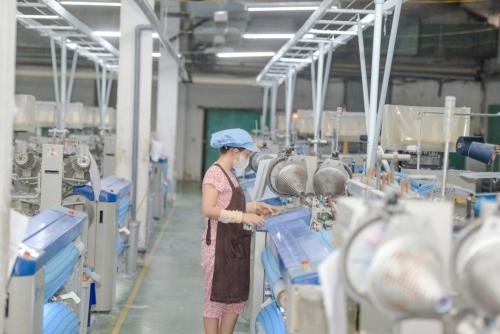
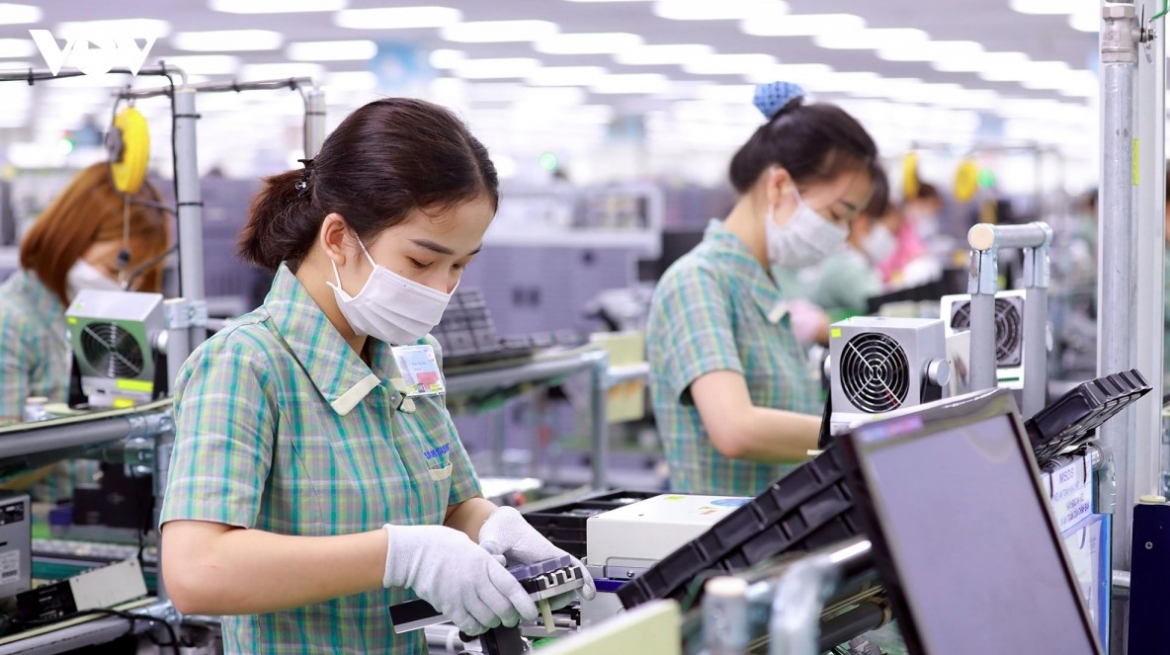
Exports also recorded strong growth, increasing 25% to US$434 billion over the same period, according to figures cited by The Nation. International manufacturers, including Samsung Electronics and Foxconn, have continued to expand their production operations in Vietnam, reinforcing its role in global supply chains.

Mai Fujita, a senior researcher at the Institute of Developing Economies of the Japan External Trade Organization (IDE-JETRO), emphasised the importance of proactive public investment in supporting economic growth. She also highlighted the need to develop human resources and technological capabilities alongside infrastructure to sustain growth over the longer term.

Vietnam is now setting its sights on raising GDP per capita to US$8,500 by 2030, a level comparable to Thailand’s current figure.

Its projected rise in GDP per capita comes as Indonesia continues to expand at a more moderate pace, while Thailand faces slower growth and high household debt. However, nominal GDP per capita rankings are influenced by exchange rates and population size as well as economic performance, and do not in themselves reflect income distribution or living standards.

International forecasts also point to challenges ahead. The International Monetary Fund and the Asian Development Bank project Vietnam’s economy to grow by around 7.5% in 2027, below the Government’s ambition of at least 10% growth in 2026.

The longer-term challenge is therefore to translate rapid expansion into sustained productivity gains and higher incomes. Investment in skills, technology and infrastructure will be crucial to strengthening competitiveness and ensuring that Vietnam’s economic momentum can be maintained.


Source: VOV

Latest Posts

Vietnam’s FDI attraction hits $54.85 billion in 10M

Vietnam’s FDI attraction hits $54.85 billion in 10M

This marking the highest level recorded since 2009.

Vietnam attracted $54.85 billion in registered foreign direct investment (FDI) this year, as of October 31, 2026, up 74 per cent from the same period last year and the highest level recorded since 2009, according to a report released by the National Statistics Office on November 3.

The strong growth was largely driven by a surge in newly registered investment. During the 10-month period of 2026, Vietnam licensed 3,478 new projects, up 4.7 per cent year-on-year, with registered capital reaching $30.73 billion, 2.2 times the figure recorded in the same period of 2025. This indicates a growing concentration of investment in large-scale, high-technology projects.

Investor confidence was also reflected in additional capital commitments by existing investors. A total of 1,079 previously licensed projects registered capital increases worth $16.13 billion, up 33.2 per cent year-on-year.

Foreign investors also made 2,616 capital contribution and share purchase transactions worth $7.99 billion, an increase of 49.6 per cent. Of these, 828 transactions added $3.28 billion to companies’ charter capital, while 1,788 share purchases worth $4.71 billion did not increase charter capital.

Manufacturing and processing continued to attract the largest share of FDI. The sector secured $14.61 billion in newly registered capital, accounting for 47.5 per cent of the total. Including adjusted capital, its combined registered investment reached $24.19 billion, or 51.6 per cent of the $46.86 billion in new and adjusted project capital.

Among 80 countries and territories with newly licensed projects, Singapore ranked first with $9.52 billion, representing 31 per cent of newly registered capital. South Korea followed with $5.81 billion (18.9 per cent), ahead of Luxembourg with $4.99 billion (16.2 per cent). Other major investors included Hong Kong (China), with $3.57 billion; China with $2.77 billion; Japan with $1.58 billion; and the Netherlands with $438.5 million.

Disbursed FDI in the first 10 months was estimated at $24.08 billion, up 13.1 per cent year-on-year and the highest disbursement recorded for the same 10-month period in the past five years.


CPI rises 4.57% in first 10M of 2026

CPI rises 4.57% in first 10M of 2026

Transport sector making the biggest contribution to the overall CPI increase, driven by petrol price hike.

Vietnam’s consumer price index (CPI) increased by 0.20 per cent in October compared with the previous month, while average CPI for the first 10 months of 2026 rose 4.57 per cent year-on-year, according to a report released by the National Statistics Office on November 3.

Of the 11 major groups of consumer goods and services, seven recorded price increases in October, while four saw declines.

Among the groups posting increases, transport recorded the largest rise, at 2.66 per cent, making the biggest contribution to the overall CPI increase, adding 0.27 percentage points. This was mainly driven by a 6.86 per cent increase in petrol prices and a 0.75 per cent rise in diesel prices, following adjustments in line with international fuel market trends.

Meanwhile, lower prices in four consumer groups helped moderate overall inflation.

Culture, entertainment and tourism recorded the sharpest decline, at 0.87 per cent. October marked the low season for both domestic and international tourism, with domestic travel service prices falling 1.27 per cent, outbound tourism services dropping 1.03 per cent, and hotel and guesthouse accommodation prices decreasing 1.72 per cent.

Notably, prices in the food and catering services group fell 0.24 per cent, directly reducing overall CPI by 0.09 percentage points.

Core inflation declined 0.05 per cent month-on-month in October but rose 4.04 per cent year-on-year. On average, core inflation increased 4.24 per cent in the first 10 months of 2026, below the corresponding 4.57 per cent rise in headline CPI.


Vietnam manufacturing growth eases in October as export orders fall

Vietnam manufacturing growth eases in October as export orders fall

The Vietnamese manufacturing sector continued expansion in October, although price increases and supply issues limited growth in some cases.

The S&P Global Vietnam Manufacturing Purchasing Managers' Index ticked up to 52.3 points in October from 51.9 points in September, pointing to a further modest monthly strengthening in the health of the sector at the start of the fourth quarter. Business conditions have now improved in 16 consecutive months.

The overall improvement in operating conditions was limited by slower rises in output and new orders. Total new business rose for the sixth month running, despite falling new export orders weighing on growth. The rate of expansion was solid, but the slowest in the current growth sequence.

Manufacturing production expanded again in October as new orders increased on stronger customer demand. However, growth also eased here, hitting a six-month low. Some respondents said difficulties obtaining raw materials had limited production growth.

Transportation difficulties were evident in data on suppliers' delivery times, which lengthened markedly and to the largest extent since April. Rising fuel prices and poor weather conditions were among the factors leading to transportation delays, according to respondents.

Difficulties importing goods and the use of inputs to support production meant that stocks of purchases decreased solidly, despite sustained growth of input buying as companies made efforts to secure goods to support production.

Rising transportation costs were also central to the latest rise in input prices as higher costs for oil pushed up fuel prices. The rate of inflation quickened for the second month running and was the fastest since June, albeit still well below the spike seen following the outbreak of war in the Middle East. In turn, output prices also increased at a sharper pace, following only a slight rise in September.

Employment fell for the third consecutive month in October, though only slightly, with some firms citing staff resignations. Despite the smaller workforce, slower new order growth and more efficient processing of outstanding work allowed firms to reduce backlogs modestly.

Stocks of finished goods also fell as firms sold warehoused goods to draw down inventories. Post-production stocks decreased markedly, though slightly less than in September.

Optimism about better raw material availability and further improvements in market conditions supported a positive 12-month outlook for production. Sentiment hit an eight-month high but remained weaker than before the war in the Middle East.

Andrew Harker, economics director at S&P Global Market Intelligence said, "Vietnamese firms are battling to maintain growth at present amid headwinds that are making their operations more challenging. New orders continued to rise in October, feeding through to a solid increase in production, but in both cases rates of expansion slowed from September."

"The limits to growth were often due to the international environment. Fuel and transportation costs rose amid higher oil prices, while companies reported difficulties importing and exporting products. While firms are able to maintain improvements for now, they will be hoping for a more conducive environment to growth in the months ahead," he added.


See all blog