Lumen Vietnam Fund

Blog

Vietnam’s air carriers expand international networks, grow fleets

Vietnam’s air carriers expand international networks, grow fleets

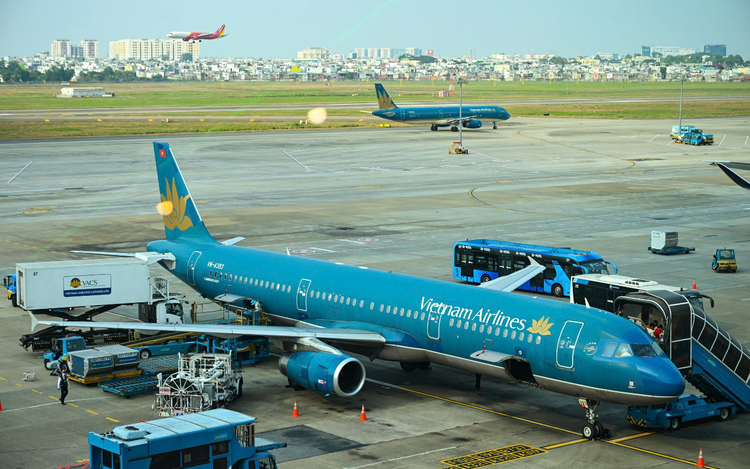
Vietnam’s aviation industry is entering a new phase of expansion, with major carriers launching new international routes, increasing flight frequencies, and accelerating fleet growth plans.

A significant milestone was reached on Tuesday when national flag carrier Vietnam Airlines operated the country’s first-ever direct flight between Hanoi and Amsterdam.

Flight VN83 departed Noi Bai International Airport in Hanoi at 3:50 am carrying nearly 300 passengers to the Dutch capital.

The route is operated using an Airbus A350 aircraft, with a flight time of some 12 hours.

Vietnam Airlines operates the Hanoi-Amsterdam air service on Tuesdays, Thursdays, and Saturdays.

The new route eliminates the need for passengers to transit through other hubs while providing convenient onward connections from Amsterdam to destinations across Europe.

Nguyen Quang Trung, deputy CEO of Vietnam Airlines, said that the route was part of the carrier’s strategy to selectively expand its international network and strengthen links between Vietnam and major global hubs of commerce, tourism, and trade.

With the addition of the air route to Amsterdam, Vietnam Airlines now operates 12 direct routes between Vietnam and Europe, serving eight destinations, including Paris, London, Frankfurt, Munich, Milan, Copenhagen, Moscow, and Amsterdam.

The national carrier is planning to increase the flight frequency on its Hanoi-Moscow route from three to four round-trip flights per week, starting from July 1.

Low-cost carrier Vietjet is also strengthening its European presence.

The airline is scheduled to launch a Hanoi-Prague (Czechia) service on October 10 using Airbus A330 aircraft.

The route will operate twice weekly and include a stopover in Almaty, Kazakhstan.

Travel firms view the simultaneous expansion by Vietnamese airlines into Europe as a positive development that will provide travelers with more options while supporting tourism, business travel, family visits, and cargo transportation.

Another carrier Vietravel Airlines, on the domestic front, opened its Hanoi-Buon Ma Thuot route on Monday and resumed operations on the Hanoi-Cam Ranh route for the peak summer season.

The Hanoi-Buon Ma Thuot service operates once daily, while the Hanoi-Cam Ranh route offers two flights per day.

The carrier has also increased frequencies on the Hanoi-Ho Chi Minh City route to five daily flights and added services on routes connecting Da Nang and Cam Ranh.

Internationally, Vietravel Airlines has started ticket sales for a new Ho Chi Minh City-Shenzhen route, scheduled to commence operations on August 15.

The airline is also organizing charter flights between Hanoi and Lanzhou, China, beginning in late June.

The carrier plans to add seven aircraft during the second half of the year, and aims to expand its fleet to up to 50 aircraft by 2030.

Meanwhile, Sun PhuQuoc Airways is preparing to launch three international routes connecting Vietnam with Russia, China, and Malaysia.

The airline had previously established agent networks in Taiwan, South Korea, Hong Kong, Singapore, Thailand, and India.

According to aviation experts, the wave of new routes and increased flight frequencies indicates that Vietnam’s aviation market is transitioning from a recovery phase to a period of network expansion and long-term growth.


Source: Tieu Bac - Cong Trung / Tuoi Tre News

Photo: Quang Dinh / Tuoi Tre
Latest Posts

Vietnam should build distinct financial hubs, not compete with Singapore or Dubai: global experts

Vietnam should build distinct financial hubs, not compete with Singapore or Dubai: global experts

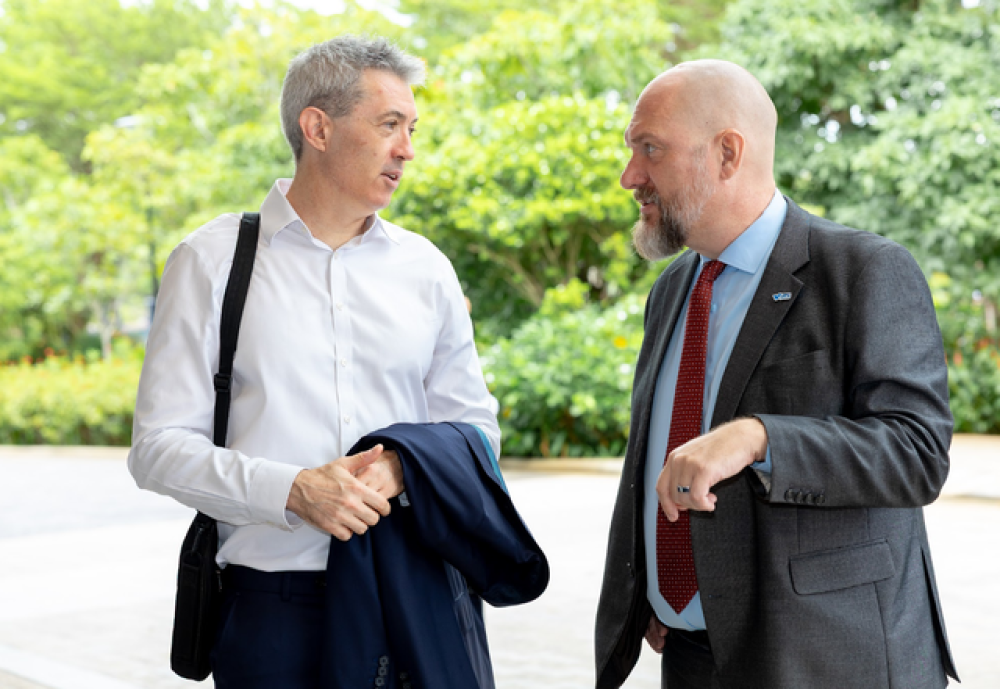
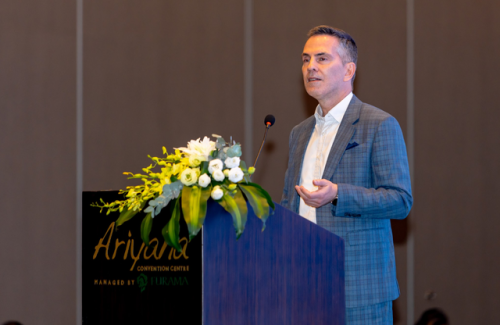
International financial experts said on Thursday Vietnam should develop its planned international financial centers around its own strengths rather than compete directly with established hubs such as Dubai and Singapore, emphasizing that institutions, talent, and governance will determine long-term success.

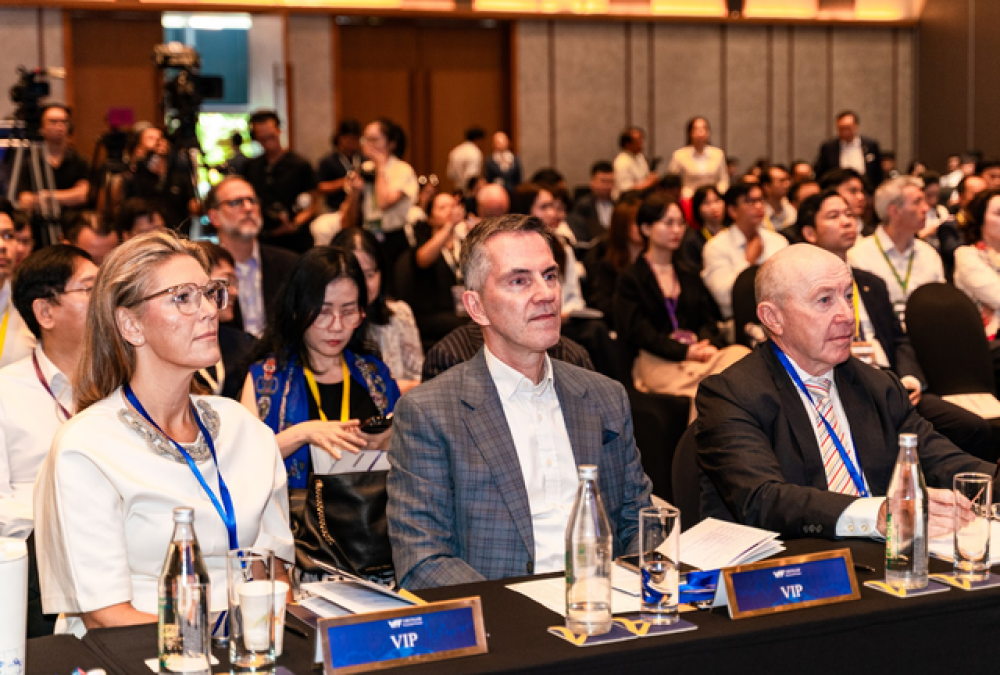
The comments were made at the Vietnam Financial Forum 2026 in the central Vietnamese city of Da Nang, where hundreds of international financial experts gathered through Friday to discuss the development of international financial centers in Ho Chi Minh City and Da Nang.

Jochen Biedermann, managing director of the World Alliance of International Financial Centers (WAIFC), said there is no single model for building a successful international financial center.

He added that modern financial hubs are increasingly defined by institutional quality, innovation, sustainability, and their ability to attract skilled professionals.

He said the foundations of any financial center remain a strong institutional framework, macroeconomic stability, and open markets, while future competitiveness will depend on talent and the ability to adapt to emerging technologies.

Biedermann identified artificial intelligence, digital assets and alternative payment systems, and open finance as three major trends reshaping financial centers, citing Dubai's efforts to integrate AI across financial services as an example.

He also said the growing number of financial centers across Asia means Ho Chi Minh City and Da Nang will face intense competition and should develop distinct identities instead of replicating models adopted elsewhere.

Rich McClellan, chief executive of the United Kingdom's project supporting Vietnam's international financial center initiative, said Vietnam's objective should be to build a model suited to its own stage of development while serving as a bridge for international capital flows.

He said a modern financial center requires internationally recognized governance standards, independent management, transparent supervision, and a credible dispute resolution system.

In his opinion, Vietnam should adopt competitive tax policies, regulatory sandboxes for fintech and digital assets, and stronger legal frameworks for capital markets and fund management.

Jeffrey Swiger, director of a Dubai-based investment fund advisory and project management firm, said sustainable capital inflows depend on transparent governance and a stable legal system.

Techcombank chief executive officer Jens Lottner said Vietnam's financing needs for green transition, digital transformation, and infrastructure will exceed the capacity of traditional funding channels, making an international financial center an important link between global capital and domestic investment opportunities.

Deputy chairman of the Da Nang People's Committee Ho Ky Minh said the city plans to develop its international financial center around three pillars: innovation, financial technology, and sustainable finance.

He said the initial focus will be on tokenized real-world assets, carbon credits and carbon markets, investment funds and fund management companies, commodity exchanges, and bonds and other medium- and long-term financing instruments.

Samsung Display ultra-thin glass supplier breaks ground on second plant in northern Vietnam

Samsung Display ultra-thin glass supplier breaks ground on second plant in northern Vietnam

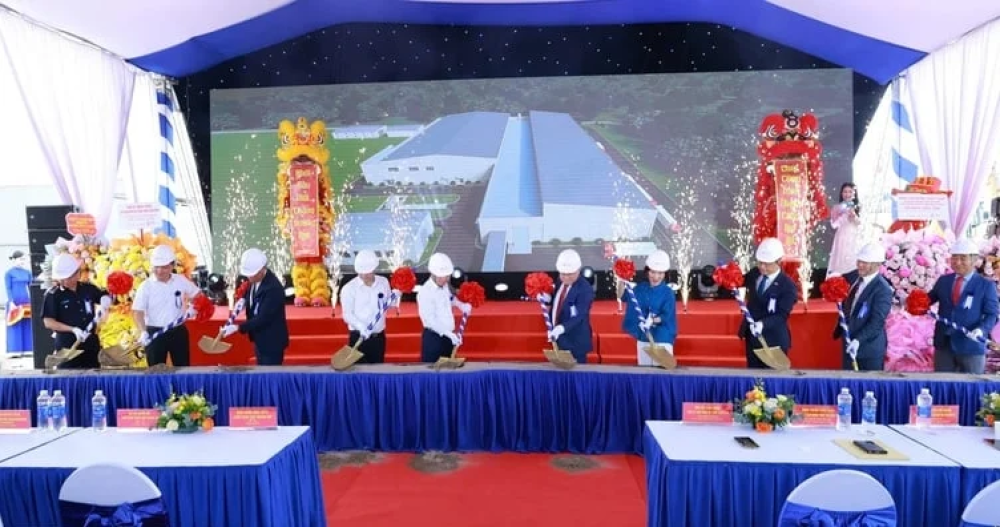
South Korea's Dowooinsys Vina, a subsidiary of NP Group, has begun construction of its second manufacturing plant in Thai Nguyen province, expanding production capacity for ultra-thin glass (UTG) used in Samsung Display's foldable smartphone panels.

The new facility, located in Song Cong II Industrial Park, represents an investment of $130 million and is expected to increase the company's total production capacity in Vietnam to a maximum 3 million UTG units per month once fully equipped.

The groundbreaking ceremony was held on Wednesday, following the commissioning of Dowooinsys Vina's first plant. According to Thai Nguyen authorities, the company's initial investment phase was $120 million, bringing the combined investment for the two phases to $250 million.

Tran Van Hau, Vice Chairman of the Thai Nguyen People's Committee, said the company had disbursed about $90 million by the time construction of the second plant began.

Dowooinsys Vina to boost ultra-thin glass capacity to 3 million units a month

UTG is a key protective material used in foldable display panels. Thai Nguyen authorities said the company currently supplies 100% of its UTG output to Samsung Display, making it part of the South Korean electronics giant's global supply chain.

According to Dowooinsys, the second factory is designed to add production capacity of up to 2 million UTG units per month. Combined with the existing plant's capacity of 1 million units, the company's total monthly output in Thai Nguyen could reach 3 million units after all production equipment is installed.

The new facility will be built on a site covering approximately 25,300 square meters, with nearly 17,600 sqm of floor space. During the first construction phase, the company plans to complete the factory building, clean rooms, utility systems, electrical infrastructure and fire protection systems by January 2027.

Construction costs for the initial phase are estimated at 26 billion won (about $17.3 million). Dowooinsys said the construction will be financed through the Vietnamese subsidiary's existing funds without financial support from its parent company or external borrowing, while production equipment will be installed in line with market demand.

CEO Ok Kyung-seok said the second plant represents a strategic investment to prepare for continued growth in the global UTG market. He said the company would continue expanding into new markets while strengthening research and development to reinforce its leadership position in the industry.


South Korean supplier plays key role in foldable display supply chain

Dowooinsys was established in South Korea on March 25, 2010, and specializes in the research, manufacturing and sale of ultra-thin glass.

According to the company's listing prospectus filed with the Korea Exchange, New Power Plasma was Dowooinsys's largest shareholder, holding approximately 27% before its initial public offering. Following the company's public listing in July 2025, the stake declined to 23.1%. A disclosure dated April 3, 2026 showed New Power Plasma's ownership had increased to 27.1%.

On its website, Dowooinsys said it began mass production of UTG in 2019. The technology was first commercialized in Samsung's Galaxy Z Flip, the foldable smartphone launched in February 2020.

UTG remains the company's flagship product for foldable smartphones, while development is underway for larger information technology devices, including tablets and laptops.

Dowooinsys Vina's investment project in Vietnam was originally licensed in 2022 with registered capital of $30 million, covering about 45,000 sqm and designed to produce 900,000 units annually.

Thai Nguyen authorities now state that the first investment phase totals $120 million, although publicly available information does not specify when or how the registered capital was revised from the initial amount.

In 2025, Dowooinsys Vina generated revenue of more than $62 million and employed 672 workers, including 650 Vietnamese employees.

At the groundbreaking ceremony, Thai Nguyen's Vice Chairman Tran Van Hau called on the company to expand recruitment and training of local workers and strengthen cooperation with businesses in the province to gradually increase the localization rate.

UOB raises Vietnam's 2026 GDP Growth forecast to 8.5%

UOB raises Vietnam's 2026 GDP Growth forecast to 8.5%

The country's first-half GDP growth reaching 8.18%.

Vietnam's economy accelerated in the second quarter of 2026, prompting Singapore-based UOB Bank to upgrade its full-year GDP growth forecast to 8.5% from 7.0%, citing stronger-than-expected economic performance and robust demand for artificial intelligence (AI).

According to UOB's latest report on Vietnam's economic growth in the first half of 2026, the country's GDP expanded 8.39% year-on-year in the second quarter, up from 7.94% in the first quarter. This lifted first-half GDP growth to 8.18%.

The result significantly exceeded UOB's previous expectations despite prolonged geopolitical tensions in the Middle East and elevated energy prices, reflecting broad-based expansion across the industrial, construction, services and agricultural sectors.

Manufacturing remained the primary driver of growth in the second quarter, supported by surging global demand for AI-related products. Citing data from Vietnam's National Statistics Office, UOB said industrial production rose 10.8% in the first six months of the year, compared with 8.7% in the same period of 2025. Manufacturing and processing output increased 11.4%, making the largest contribution to overall industrial growth.

The bank also noted that global supply chain diversification continued despite geopolitical uncertainty and rising energy costs. Registered foreign direct investment (FDI) reached nearly $34.7 billion in the first half of 2026, up 61% from $21.5 billion a year earlier.

According to UOB, the strong growth in registered FDI points to a healthy pipeline of future disbursements and reinforces expectations that 2026 could become Vietnam's record year for attracting foreign investment.

UOB said Vietnam remains the fastest-growing economy in ASEAN, with regional peers posting growth of between 2.8% and 6.0% in the first quarter and likely recording slower expansion in the second quarter. Supported by stronger-than-expected first-half growth, sustained AI momentum and easing energy prices, the bank raised its 2026 GDP forecast to 8.5%.


See all blog