Lumen Vietnam Fund

Blog

Vietnam seeks shift to co-development in Japanese ties

Vietnam seeks shift to co-development in Japanese ties

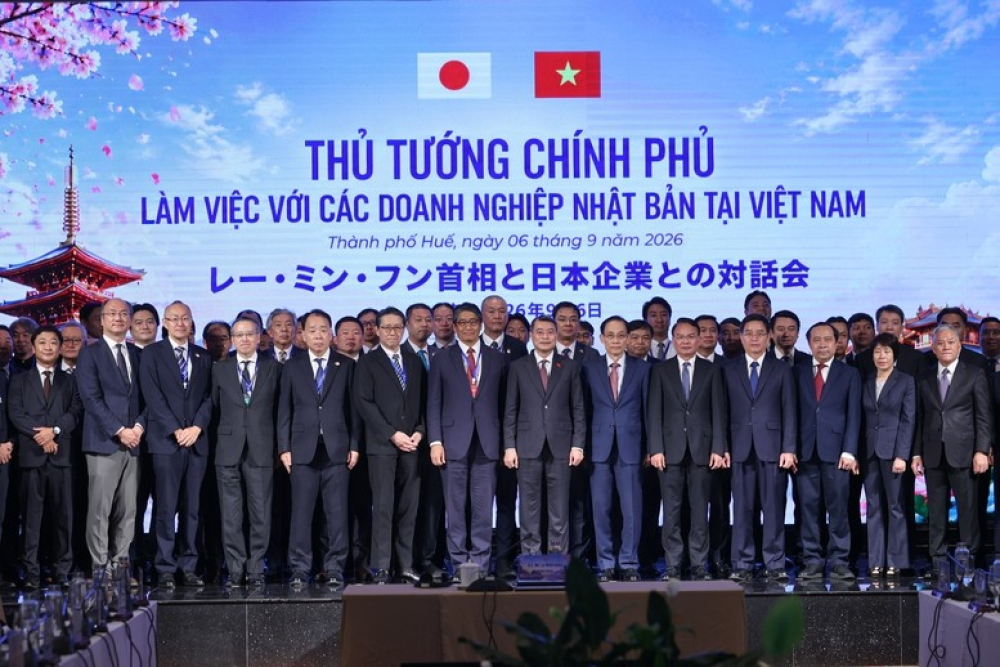
Prime Minister Le Minh Hung has called for a shift in Vietnam-Japan investment relations from a traditional “investor-host location” dynamic toward a partnership of co-development, joint creation, collaborative research, innovation, and deeper integration into global value chains.

Speaking at a working session with representatives of Japanese enterprises in Hue, held on September 6 within the framework of the 2nd Vietnam-Japan Local Cooperation Forum, Prime Minister Le Minh Hung addressed business operation updates, operational challenges, and policy recommendations aimed at central and local authorities.

Prime Minister Le Minh Hung commended the frank and constructive contributions from Japanese investors. He noted that these open discussions demonstrate deep mutual trust, cohesion, and a shared commitment to cooperation between Vietnamese government bodies and the Japanese business sector.

The Prime Minister emphasized that Vietnam is entering a new phase of development requiring rapid and sustainable growth anchored in science, technology, innovation, digital transformation, green transition, and the elevation of productivity and national competitiveness.

To achieve these strategic goals, the Vietnamese Government remains committed to improving the business climate, resolving corporate bottlenecks promptly, and fostering optimal conditions for foreign investors, particularly Japanese enterprises, to expand high-value operations and build lasting supply chain partnerships in Vietnam, the Prime Minister said.

According to reports presented at the meeting, two-way trade between Vietnam and Japan reached $33.7 billion in the first seven months of 2026, up over 16.8 percent year-on-year. Vietnam’s exports to Japan totaled $17.6 billion, representing a 16.6 percent increase, while imports from Japan stood at nearly $16.1 billion, up 17 percent.

Mr. Tsuchibashi Akito, Chairman of the Japanese Chamber of Commerce and Industry in Vietnam (JCCI), for his part, affirmed that Japanese enterprises continue to place high trust in Vietnam’s socio-economic stability and long-term development potential.

He confirmed that Japanese firms intend to expand their long-term commitments and expressed a strong desire to partner with Vietnam in modernizing its industrial sector through bilateral “co-creation” frameworks.

Source: Ha Le

Photo: chinhphu.vn

Latest Posts

Vietnam stocks in September: Waiting for the next wave

Vietnam stocks in September: Waiting for the next wave

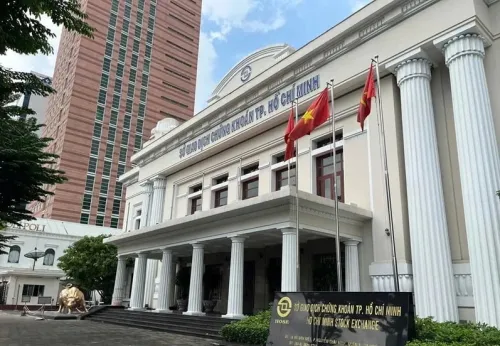
Vietnam's stock market is entering a special phase as two major themes converge in September: portfolio rebalancing by exchange-traded funds (ETFs) and new international capital flows following the market status upgrade.

According to a report by VPS Securities, September could be one of the busiest ETF rebalancing periods of the year, with Fubon FTSE Vietnam ETF, VanEck Vietnam ETF and Xtrackers Vietnam Swap UCITS ETF all making portfolio adjustments.

The simultaneous rebalancing of multiple funds is expected to significantly increase trading liquidity and price volatility, particularly for large-cap stocks and those with high weights in ETF portfolios.

The most notable aspect of the September rebalancing is not only which stocks ETFs will buy or sell, but also the emergence of structural capital flows following Vietnam's market status upgrade.

FTSE Russell is set to reclassify Vietnam's stock market status from "frontier" to "secondary emerging" from September 21 this year.

VPS estimates that total inflows from passive investment funds into Vietnam's market could reach nearly $2.4 billion, with most of the money coming from Vanguard funds.

Large-cap stocks such as VIC, VHM and VCB, as well as some mid-cap names including HPG, VPB and BID, are expected to attract larger inflows because they could be included simultaneously in multiple funds tracking Large Cap and Mid Cap indices, as well as actively managed funds using FTSE as a benchmark.

However, the capital is not expected to be deployed all at once but in four stages. The first tranche, accounting for about 10%, or roughly $240 million, is expected to be deployed in September 2026. The next three tranches are scheduled for March 2027, June 2027 and September 2027, accounting for 20%, 35% and 35%, respectively.

Passive funds are expected to complete their portfolio rebalancing by September 18, 2026 at the latest.

If the forecasts materialize, the new capital flows could provide significant additional demand for the market, particularly for large-cap stocks that meet the criteria of international indices.

VIC faces heavy ETF selling pressure but remains in line for new foreign inflows

Among large-cap stocks, VIC (Vingroup) is the most notable case, with buying and selling pressure expected from different ETF flows at the same time.

For Fubon FTSE Vietnam ETF, VPS expects VIC's weighting to be cut from 20.4% to the 10% cap. This would translate into selling of about 3.75 million shares worth around VND960 billion ($36.84 million). VHM (Vinhomes) is also expected to have its weighting reduced from 13.2% to 10%, resulting in the sale of nearly 4 million shares worth about VND298 billion ($11.44 million).

Meanwhile, Xtrackers Vietnam Swap UCITS ETF is expected to make a more significant adjustment. The fund currently has a 27.9% weighting in VIC and will have to cut it to the 15% cap. Under the base-case scenario, it could sell as many as 6.05 million VIC shares, worth about VND1.24 trillion ($47.58 million).

On the other hand, passive funds tracking the FTSE GEIS system are expected to buy a net 5.74 million VIC shares, worth about VND1.47 trillion ($56.41 million). For VHM, expected purchases stand at around 10.69 million shares, worth more than VND803 billion ($30.81 million).

This shows that selling pressure from some ETFs during the rebalancing does not necessarily mean foreign capital is exiting these stocks. Instead, the composition of capital flows could change significantly as new funds begin adding Vietnamese stocks to their portfolios following the market upgrade.

Besides VIC and VHM, HPG, VPB, SSI, SHB, VIX and VCB are also expected to attract significant purchases from passive funds tracking FTSE GEIS. HPG could see purchases of more than 20.5 million shares worth about VND445 billion ($17.08 million), while VIX could attract nearly 12.7 million shares and VPB more than 10.6 million shares. VCB could also see purchases of more than 6 million shares.

For Fubon FTSE Vietnam ETF alone, VPB, ACB, FPT, MCH and VPL are expected to attract the strongest inflows. All are new additions to the fund. VPB could see purchases of more than 21.5 million shares, ACB nearly 15.8 million shares, and FPT more than 7.6 million shares.

On the selling side, VND, VCI, KDH and KBC could face relatively strong pressure, with around 10.3 million, 8.8 million, 5.5 million and 4.3 million shares, respectively, expected to be sold.

VanEck Vietnam ETF is also expected to make notable changes, adding SSB and removing CEO from its portfolio. SSB could see purchases of around 13.8 million shares, while CEO could face selling pressure of about 3.73 million shares.

Xtrackers is also expected to create significant volatility in VIC by sharply reducing its weighting in the stock. On the buying side, NVL, VIX, SHB, VHM and HPG are expected to benefit significantly. If BSR is added to the portfolio, the stock could see purchases of more than 5.25 million shares worth around VND141 billion ($5.41 million).

The September rebalancing reflects an important shift in Vietnam's market: ETF capital is no longer simply rotating among stocks in existing indices, but is being joined by large-scale passive inflows linked to the market status upgrade.

As a result, price movements in some stocks could be significant during September 14-18. Investors, however, need to distinguish between technical buying and selling triggered by portfolio rebalancing and new, longer-term investment flows.


Eight-month economy stays on track, but business pressures remain

Eight-month economy stays on track, but business pressures remain

Việt Nam’s economy maintained strong momentum in eight months, but slower business re-entry, rising dissolutions and inflationary pressures highlight challenges as the Government pushes for double-digit growth.

Việt Nam’s economy entered the final third of 2026 with a strong set of headline numbers.

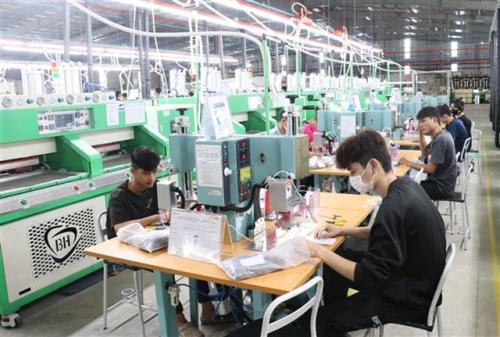
Industrial production rose 11.9 per cent in the first eight months, its fastest eight-month growth in years. Total trade reached a record US$770 billion, while registered foreign investment jumped 55.4 per cent to $40.63 billion. Disbursed FDI reached $17.25 billion, the highest level for the first eight months in five years.

Tourism also remained a bright spot. Nearly 15.9 million international visitors arrived in Việt Nam during the period, up 14.4 per cent year-on-year.

The overall picture remains positive, although some indicators point to areas that will require closer attention in the months ahead. The domestic business sector is one of them.

Business activity needs closer attention

In August alone, nearly 12,200 new enterprises were registered, down 40.5 per cent from a year earlier. Registered capital fell 41.9 per cent, while registered employment dropped 43.5 per cent.

The eight-month picture is less negative. Nearly 138,100 new enterprises entered the market, up 7.7 per cent year-on-year, with registered capital rising 36.2 per cent. But the number of enterprises returning to operation fell 15.8 per cent.

Taken together, the number of newly established and returning enterprises reached about 206,400 in the first eight months, 1.4 per cent lower than a year earlier.

At the same time, nearly 157,400 enterprises left the market.

More than 88,000 temporarily suspended operations. Nearly 28,600 stopped operating while waiting for dissolution procedures. Another 40,800 completed dissolution procedures, a sharp 125.5 per cent increase from the same period last year.

The figure, however, needs to be considered in the context.

Authorities in several localities, particularly HCM City, are accelerating efforts to clean up business and tax databases. Many companies that had stopped operating years ago remained on official records because they had not completed the necessary procedures. Their removal is now being recorded as formal dissolution.

This means the surge in dissolutions does not fully reflect the current health of the business sector.

Phạm Bình An, deputy director of the HCM City Institute for Development Studies (HIDS), said simplifying dissolution procedures and reducing compliance costs would help businesses that no longer have a need to operate complete the process. This would also help improve the accuracy of business data and create a more transparent business environment.

However, the figures also highlight some underlying challenges in the business sector beyond technical reasons.

Dr Nguyễn Quốc Việt, a public policy expert at the University of Economics, Vietnam National University, Hà Nội, noted that before the COVID-19 pandemic, the number of businesses entering or returning to the market was roughly twice the number leaving. In 2025 and particularly in the first eight months of 2026, the ratio had fallen to around 1.2–1.3 times.

Businesses continue to face high input and logistics costs, difficult access to capital and relatively high lending rates. Domestic firms also face weaker export performance in some traditional product groups. These pressures matter because the ability of companies to absorb losses for a long period has become more limited, Việt said.

Pressure builds ahead of year-end

There are other warning signs.

The trade figures are impressive, but imports continued to grow faster than exports. In the first eight months, exports rose 22.4 per cent while imports surged 35.3 per cent, leaving a trade deficit of $20.46 billion.

The imbalance is even more pronounced when looking at business ownership. The foreign-invested sector posted a trade surplus of $8.68 billion, while domestic enterprises recorded a deficit of $30.17 billion.

This suggests that stronger trade growth has not yet translated evenly across the economy.

Consumer demand is another area to watch.

Retail sales and consumer service revenue rose 13.3 per cent in the first eight months, broadly in line with the Government’s full-year target of 13-15 per cent. But after excluding price effects, growth was only 7.6 per cent, roughly unchanged from a year earlier.

In other words, nominal spending is growing strongly, but underlying purchasing power is less dynamic.
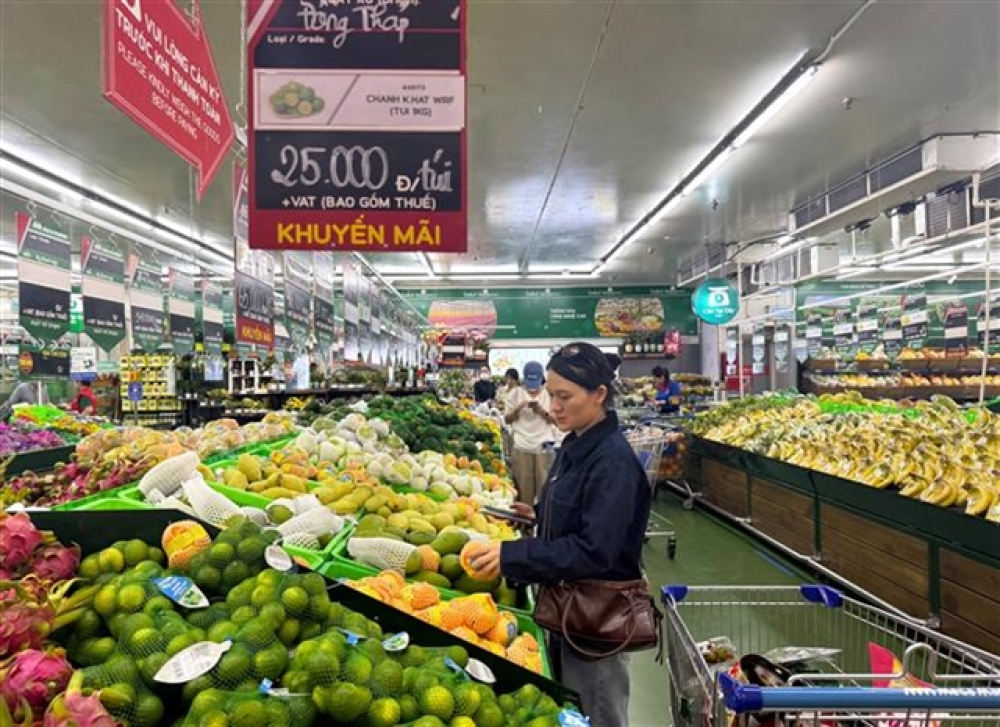
Inflation is also leaving less room for policy manoeuvre. Consumer prices rose 4.45 per cent on average in the first eight months. The Government’s target is to keep inflation at around 4.5 per cent for the full year.

With fuel prices already nearly 15 per cent higher year-on-year, price pressures could intensify in the final four months.

Public investment offers another potential source of growth, but implementation remains uneven. Disbursement reached VNĐ509.6 trillion in the first eight months, or 49.8 per cent of the annual plan. Six ministries and agencies had disbursed less than 10 per cent, while 14 key transport projects had disbursement rates below 5 per cent.

This leaves a relatively narrow window for policymakers.

The economy needs to sustain industrial production, exports and investment while supporting domestic businesses and keeping inflation under control. At the same time, the Government must accelerate public investment without creating additional pressure on prices, interest rates or the financial system.

The challenge is particularly significant because the growth target has not been lowered.

Despite acknowledging the pressure, the Ministry of Finance has called for continued determination to achieve double-digit economic growth in 2026 while maintaining macro-economic stability and keeping inflation at around 4.5 per cent.

The numbers from the first eight months show that Việt Nam has strong engines to build on. But they also show that those engines are not running at the same speed.

With four months left, the Government is stepping up fiscal and monetary measures, accelerating public investment and supporting businesses and exports, while removing obstacles to stalled projects and improving the business environment. It remains committed to the double-digit growth target for 2026.


Vietnam’s industrial output posts strongest 8-month growth in 7 years as FDI surges 55%

Vietnam’s industrial output posts strongest 8-month growth in 7 years as FDI surges 55%

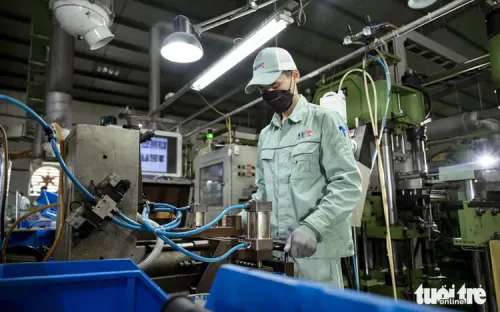
Vietnam’s industrial production rose 11.9 percent in January-August 2026, its strongest growth for the period since 2019, while registered FDI reached US$40.6 billion, up 55.4 percent year on year, according to the National Statistics Office under the Ministry of Finance.

Vietnam’s economy showed broad-based improvement in the eight-month period with industrial production, trade, investment, domestic consumption and international tourism all recording strong growth from a year earlier.

Industrial output rises across all 34 localities

The country’s industrial production index (IIP) increased 1.5 percent month on month and 14.4 percent year on year in August.

The Statistics Office said between 2019 and 2025, the eight-month growth rate had never exceeded 9.5 percent. The figure for January–August 2025 was 8.5 percent.

Industrial output increased year on year in all 34 cities and provinces.

The number of workers employed by industrial enterprises as of August 1 increased 1 percent from a month earlier and 3.8 percent from the same period last year.

Exports, foreign investment gain momentum

Industrial production accelerated as Vietnam’s total goods trade reached $770.1 billion in January–August, up 28.7 percent year on year and the highest level ever recorded for the eight-month period.

Exports totaled $374.8 billion, up 22.4 percent.

Foreign-invested companies, including crude oil, accounted for $300.4 billion, or 80.1 percent, while domestic companies contributed $74.4 billion.

Manufactured and processed industrial products accounted for 90.2 percent of total exports, worth $338 billion.

The U.S. remained Vietnam’s largest export market, with shipments totaling $122 billion.

Meanwhile, Vietnamese companies also increased their overseas investment. In January–August, 113 new projects received investment certificates, with total capital contributed by Vietnamese investors reaching $1.21 billion, 2.8 times higher than a year earlier.

Including additional capital for existing projects, Vietnam’s total overseas investment reached $2.62 billion, up 4.7 times year on year.

State budget-funded investment in January–August was estimated at VND546.8 trillion ($20.7 billion), equivalent to 50.5 percent of the annual target and up 18.5 percent year on year.

In the same period last year, disbursement stood at 45.3 percent of the annual target.

Domestic consumption, tourism remain strong

Retail sales of goods and consumer services revenue totaled VND5,235.5 trillion ($198.3 billion) in January–August, up 13.3 percent year on year. Adjusted for price changes, the growth rate was 7.6 percent, slightly higher than 7.5 percent in the same period last year.

Freight transport also expanded, with 2.285 billion metric tons of goods transported during the eight-month period, up 16.7 percent year on year.

Vietnam welcomed 15.9 million international visitors in January–August, up 14.4 percent year on year and the highest figure for the eight-month period on record.

August alone saw nearly two million foreign arrivals, up 19.7 percent from July.

The National Statistics Office said Vietnam remained an attractive destination for international tourists thanks to its favorable visa policies, stronger tourism promotion, diverse tourism products, and the country’s natural landscapes, culture, cuisine and relatively affordable travel costs.


See all blog