Lumen Vietnam Fund

Blog

Vietnam’s industrial output posts strongest 8-month growth in 7 years as FDI surges 55%

Vietnam’s industrial output posts strongest 8-month growth in 7 years as FDI surges 55%

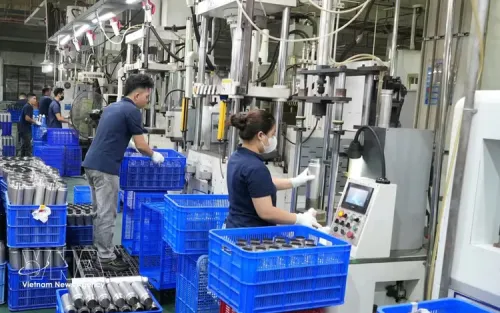
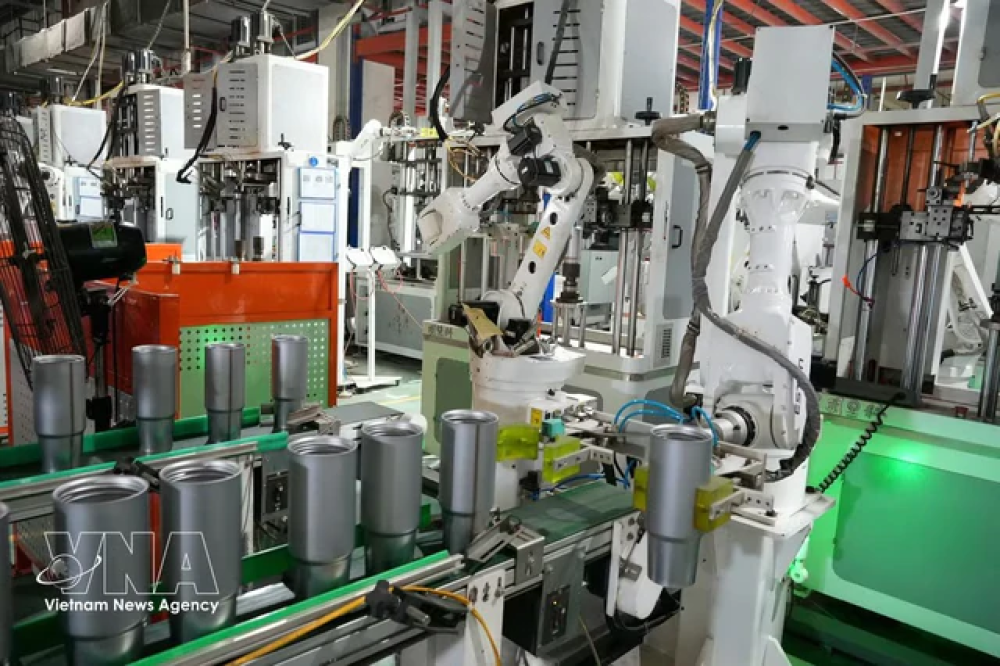
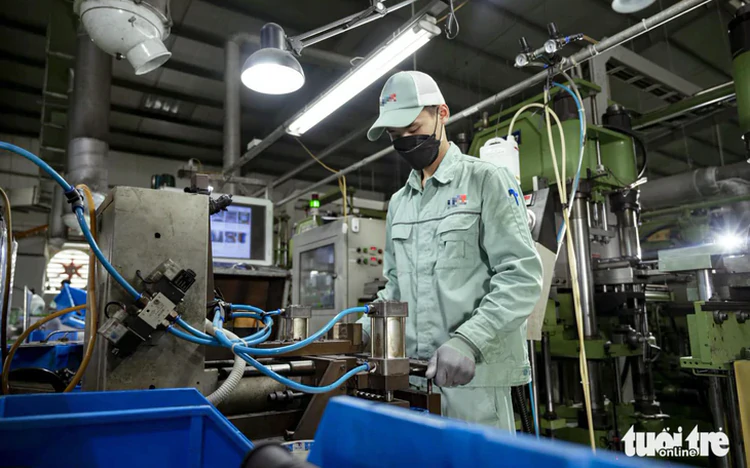
Vietnam’s industrial production rose 11.9 percent in January-August 2026, its strongest growth for the period since 2019, while registered FDI reached US$40.6 billion, up 55.4 percent year on year, according to the National Statistics Office under the Ministry of Finance.

Vietnam’s economy showed broad-based improvement in the eight-month period with industrial production, trade, investment, domestic consumption and international tourism all recording strong growth from a year earlier.

Industrial output rises across all 34 localities

The country’s industrial production index (IIP) increased 1.5 percent month on month and 14.4 percent year on year in August.

The Statistics Office said between 2019 and 2025, the eight-month growth rate had never exceeded 9.5 percent. The figure for January–August 2025 was 8.5 percent.

Industrial output increased year on year in all 34 cities and provinces.

The number of workers employed by industrial enterprises as of August 1 increased 1 percent from a month earlier and 3.8 percent from the same period last year.

Exports, foreign investment gain momentum

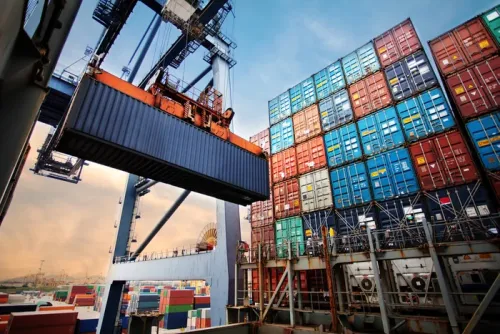
Industrial production accelerated as Vietnam’s total goods trade reached $770.1 billion in January–August, up 28.7 percent year on year and the highest level ever recorded for the eight-month period.

Exports totaled $374.8 billion, up 22.4 percent.

Foreign-invested companies, including crude oil, accounted for $300.4 billion, or 80.1 percent, while domestic companies contributed $74.4 billion.

Manufactured and processed industrial products accounted for 90.2 percent of total exports, worth $338 billion.

The U.S. remained Vietnam’s largest export market, with shipments totaling $122 billion.

Meanwhile, Vietnamese companies also increased their overseas investment. In January–August, 113 new projects received investment certificates, with total capital contributed by Vietnamese investors reaching $1.21 billion, 2.8 times higher than a year earlier.

Including additional capital for existing projects, Vietnam’s total overseas investment reached $2.62 billion, up 4.7 times year on year.

State budget-funded investment in January–August was estimated at VND546.8 trillion ($20.7 billion), equivalent to 50.5 percent of the annual target and up 18.5 percent year on year.

In the same period last year, disbursement stood at 45.3 percent of the annual target.

Domestic consumption, tourism remain strong

Retail sales of goods and consumer services revenue totaled VND5,235.5 trillion ($198.3 billion) in January–August, up 13.3 percent year on year. Adjusted for price changes, the growth rate was 7.6 percent, slightly higher than 7.5 percent in the same period last year.

Freight transport also expanded, with 2.285 billion metric tons of goods transported during the eight-month period, up 16.7 percent year on year.

Vietnam welcomed 15.9 million international visitors in January–August, up 14.4 percent year on year and the highest figure for the eight-month period on record.

August alone saw nearly two million foreign arrivals, up 19.7 percent from July.

The National Statistics Office said Vietnam remained an attractive destination for international tourists thanks to its favorable visa policies, stronger tourism promotion, diverse tourism products, and the country’s natural landscapes, culture, cuisine and relatively affordable travel costs.


Source: N.An / Tuoi Tre

Photo: Thanh Ha - Quan Nguyen / Tuoi Tre News
Latest Posts

Vietnam's trade deficit begins to ease

Vietnam's trade deficit begins to ease

Vietnam's goods trade deficit stood at $20.46 billion in the first eight months of the year, but pressure on the trade balance showed signs of easing as the deficit narrowed to just $120 million in August. Notably, the improvement came as total trade turnover hit a record high.

According to the National Statistics Office, Vietnam's total goods trade turnover reached $109.7 billion in August, up 31.7% from a year earlier. In the first eight months, the figure was $770.14 billion, up 28.7% year-on-year and the highest level ever recorded for the January-August period.

Exports reached $54.79 billion in August, up 3.2% from July and 26% from a year earlier. Imports, meanwhile, stood at $54.91 billion, down 3.1% month-on-month but still up 37.9% year-on-year.

The shift in the relative performance of the two sides of trade quickly narrowed the deficit. Vietnam's trade deficit fell to just $120 million in August from $3.59 billion in July.

Trade deficit narrows as imports cool

The August figures become more notable when viewed against the trend in previous months. Vietnam's trade deficit stood at $5.21 billion in May 2026 and narrowed to $2.64 billion in June before widening again to $3.59 billion in July. After seven months, the cumulative deficit had reached $20.52 billion.

In August, the trade balance was almost back to equilibrium. A deficit of just $120 million showed that the gap between exports and imports had narrowed significantly in a single month.

The main driver was the slowdown in imports. In the first eight months, imports reached $395.3 billion, up 35.3%, significantly faster than the 22.4% growth in exports. However, imports fell 3.1% from the previous month in August, while exports rose 3.2%.

This was an important shift because the widening gap between the growth rates of exports and imports had been the main factor behind the large trade deficits in previous months.

Still, the month-on-month decline in imports does not necessarily signal a slowdown in manufacturing activity. In the first eight months, capital goods and production inputs accounted for $372.04 billion, or 94.1% of total imports. The composition shows that most imported goods were still machinery, equipment, materials and other inputs for the economy.

This also ties in with the trend analyzed in July: a trade deficit is not necessarily a negative signal if foreign currency is being used to import production inputs that are subsequently converted into products, export orders and revenue.

The key question now is whether the low trade deficit recorded in August can be sustained in the final months of the year.

Behind the $20.46 billion deficit

Vietnam posted a cumulative trade deficit of $20.46 billion in the first eight months, compared with a trade surplus of $14.02 billion in the same period last year. So despite the sharp narrowing of the deficit in August, the cumulative trade balance remains under considerable pressure.

The divergence between the domestic and foreign-invested sectors remains particularly pronounced. The domestic sector recorded a trade deficit of $30.6 billion, while the foreign-invested sector, including crude oil, posted a surplus of $10.14 billion.

The FDI sector continued to account for 80.1% of total exports, with exports worth $300.37 billion, up 26.9%. The domestic sector, meanwhile, recorded exports of $74.47 billion, up just 7.4%, accounting for 19.9% of total exports.

These figures show that despite the improvement in the trade balance in August, the underlying structural issue remains unresolved. Trade volumes are expanding rapidly, but the ability of domestic companies to generate value and export remains significantly weaker than that of the FDI sector.

On the one hand, the fact that capital goods and production inputs accounted for 94.1% of imports shows that imported goods are largely supporting production and investment. On the other hand, if most machinery, components and raw materials still have to be sourced from abroad, the amount of value added retained in Vietnam will remain limited.

Therefore, what matters in the coming months is not only whether the trade balance returns to surplus, but also whether the narrowing deficit is driven by stronger exports or simply by slower imports.

If exports maintain their growth momentum while imports stabilize after their sharp increase, the trade balance has room to improve. In that case, foreign currency earnings from exports would help offset foreign currency demand for imports and ease pressure on the foreign exchange market.

Conversely, if imports continue to grow rapidly while exports fail to generate a corresponding increase in domestic value added, the trade deficit could become a structural issue rather than merely a short-term phenomenon.

After eight months, Vietnam's trade balance remains in a $20.46 billion deficit. But with the monthly deficit falling from $3.59 billion in July to just $120 million in August, the pace of deterioration has clearly begun to ease. This will be a key trend to watch in the final months of the year.


Eight national databases integrated with National Data Center

Eight national databases integrated with National Data Center

Eight out of 12 national databases and 67 specialized databases have been connected and synchronized with the National Data Center, delivering tangible value to citizens and businesses, according to the Ministry of Public Security.

Speaking at the Government’s regular press briefing for August on September 3, Major General Nguyen Quoc Toan, Chief of Office and Spokesperson for the Ministry of Public Security, provided updates on data creation, standardization, connection, and sharing.

He stated that an intensive campaign launched on July 1 aimed to resolve key bottlenecks in the political system's digital transformation.

Implementation has progressed from initial review and preparation to generating concrete, real-world results. Among specialized databases, 67 have been connected and synchronized, with 23 fully meeting data quality standards for continued integration.

The volume of synchronized data remains substantial. The national population database contains over 108 million records, the electronic civil status database holds more than 113 million records, and the national insurance database features over 48 million records.

This data connectivity is driving practical administrative reform. Following feedback from ministries, sectors, and localities, 498 out of 786 administrative procedures have been reduced or replaced, while 244 procedures have been eliminated entirely.

The Ministry of Public Security highlighted that these outcomes directly benefit citizens and enterprises while actively contributing to national socio-economic development.


Vietnam attracts $40.63bn in FDI in eight months

Vietnam attracts $40.63bn in FDI in eight months

Notably, the number of new FDI projects rose only 9.4% while their registered capital surged 96.8%, indicating a significant increase in average project size and investors’ stronger commitment from the outset.

Vietnam attracted US$40.63 billion in registered foreign direct investment (FDI) in the first eight months of 2026, up 55.4% year-on-year, the National Statistics Office under the Ministry of Finance reported on September 3.

The figure includes $21.72 billion in capital from 2,771 newly licensed projects.

Notably, the number of new projects rose only 9.4% while their registered capital surged 96.8%, indicating a significant increase in average project size and investors’ stronger commitment from the outset.

The processing and manufacturing sector remained the largest recipient of FDI, attracting $12.15 billion, or 55.9% of the total newly registered capital. Electricity, gas, water and air-conditioner production and distribution ranked second with $3.13 billion, accounting for 14.4%.

Among 73 countries and territories with newly licensed projects, Asian investors continued to dominate. Singapore led with $7.62 billion, making up 35.1% of the new registered capital, followed by the Republic of Korea with $5.67 billion (26.1%). Hong Kong (China), mainland China and Japan ranked next with $2.96 billion, $1.93 billion and $1.42 billion, respectively.

Meanwhile, 819 existing projects increased their investment capital by a combined $12.21 billion, up 14.7% year-on-year.

Including both new and additional capital, the processing and manufacturing sector attracted $20.18 billion, accounting for 59.5%. Meanwhile, real estate business received $5.32 billion, or 15.7%.

During the eight months, there were 2,062 capital contribution and share purchase transactions worth $6.7 billion, up 50.1%. Of this amount, foreign investors spent $4.15 billion acquiring existing shares without increasing companies’ charter capital, compared with $2.55 billion used to increase charter capital.

FDI through mergers and acquisitions (M&A) is also shifting away from real estate toward knowledge-intensive sectors and the domestic consumer market. Professional, scientific and technological activities attracted $2.74 billion, or 40.9%, followed by wholesale, retail and motor vehicle repair with $2.01 billion (30%).

Notably, FDI disbursement was estimated at $17.25 billion, up 12% from a year earlier and also the highest eight-month figure recorded over the last five years.

The processing and manufacturing sector accounted for $14.24 billion, or 82.6%, of the disbursed capital, far exceeding real estate that ranked second with $1.29 billion (7.5%) and energy with $622.9 million (3.6%).

Meanwhile, Vietnamese investment abroad, including newly registered and additional capital, reached $2.62 billion, 4.7 times higher than a year earlier. This consisted of $1.21 billion for 113 new projects and $1.41 billion for 29 existing projects, representing increases of 2.8 and 10.9 times, respectively.

Transport and warehousing attracted the largest share of Vietnamese capital overseas at $601.7 million (23%), followed by energy with $585.8 million.

Laos was the top destination for Vietnamese investment with $667.5 million, followed by Cambodia with $486.5 million. India and Indonesia also emerged as major destinations, receiving $323.9 million and $313.6 million, respectively, reflecting Vietnamese businesses’ expanding global investment footprint, the office said.

See all blog