Lumen Vietnam Fund

Blog

Vietnam ranks 18th among world’s top exporters in 2025: WTO

Vietnam ranks 18th among world’s top exporters in 2025: WTO

VOV.VN - Vietnam ranked 18th among the world’s 30 largest exporting economies in 2025, with export turnover estimated at US$473 billion, according to the latest data from the World Trade Organisation (WTO).

The ranking highlights Asia’s strong presence, with 11 economies represented. In Southeast Asia, Singapore places 14th while Thailand ranks 25th.

China remains the world’s largest exporter by a wide margin, with shipments totaling US$3.8 trillion, far exceeding all other economies. Its position is reinforced by an extensive network of free trade agreements with partners including Australia, Pakistan, the Republic of Korea, and the Association of Southeast Asian Nations (ASEAN).

The United States ranks second, with exports surpassing US$2.2 trillion, led by automobiles, oil, soybeans, and medical products. Its major trading partners include Canada, Mexico, China, Germany, and Japan.

Germany holds third place with US$1.8 trillion in exports. It is followed by the Netherlands (US$989 billion), Hong Kong - China (US$754 billion), Japan (US$738 billion), Italy (US$726 billion), and the Republic of Korea (US$709 billion).

Among resource-rich economies, the United Arab Emirates reports exports of US$707 billion, while Saudi Arabia generates US$311 billion. Oil and related products account for nearly 75% of Saudi Arabia’s export value and more than half of the UAE’s total.

Vietnam’s export growth continues to accelerate, supported by expanding foreign trade and deeper global integration through 17 free trade agreements with more than 60 economies. Exports exceeded US$470 billion in 2025, up more than 16%, while maintaining a trade surplus above US$20 billion, contributing to macroeconomic stability.

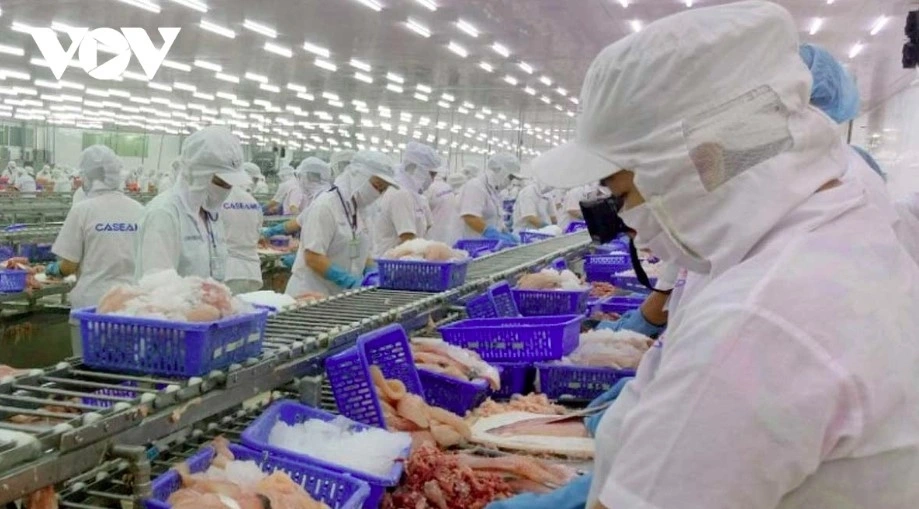
The country has emerged as one of the fastest-growing export markets globally, driven by strong demand for electronics, computers, mobile components, machinery, and agricultural products such as seafood, coffee, and wood products.

Vietnam’s trade expansion has been rapid and sustained, rising from US$100 billion in 2009 to US$930 billion in 2025. As of April 15, 2026, its combined import-export value approached US$300 billion and is likely to hit around US$1 trillion in the near term, reinforcing its position as an increasingly important hub in global trade.


Source: VOV

Photo: Illustrative image
Latest Posts

Vietnam set to become Southeast Asia’s second-largest economy by PPP: IMF

Vietnam set to become Southeast Asia’s second-largest economy by PPP: IMF

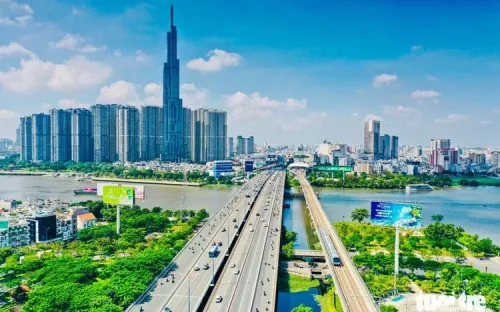
Vietnam is expected to become Southeast Asia’s second-largest economy by purchasing power parity (PPP), behind Indonesia, between 2026 and 2031, after surpassing Thailand and several regional peers, according to the International Monetary Fund (IMF).

The IMF has released its latest forecast on the economic size of six major Southeast Asian economies from 2026 to 2031, including Indonesia, Malaysia, the Philippines, Singapore, Thailand, and Vietnam.

Under this outlook, Vietnam’s gross domestic product (GDP) measured by PPP is expected to reach US$2.025 trillion in 2026, surpassing Thailand, Malaysia, the Philippines, and Singapore, and ranking second only to Indonesia, whose economy is forecast at $5.230 trillion.

Vietnam is also projected to be the only country besides Indonesia to exceed the $2 trillion mark that year.

The gap between Vietnam and Thailand is forecast to widen further in the following years.

By 2031, Vietnam’s PPP-based GDP is projected to exceed Thailand’s by more than $500 billion, pulling well ahead of Malaysia and the Philippines and consolidating its position as the second-largest economy in ASEAN.

Although Vietnam is still lagging behind Indonesia, it is expected to be the fastest in the region at narrowing the gap, with its economy rising from about 39 percent of Indonesia’s size in 2026 to nearly 46 percent by 2031.

Vietnam is also projected to significantly outpace Singapore in economic size, with its PPP-based GDP calculated to be more than 2.2 times larger by 2031, reflecting advantages in population scale and growth momentum, while Singapore is set to remain the clear leader in per capita income.

PPP is derived from the World Bank’s International Comparison Program, which uses global price benchmarks to compare living costs across countries and determine how much money is needed to purchase the same goods in different economies, said Dr. Nguyen Anh Vu, head of the finance faculty at the Ho Chi Minh City University of Banking.

He said the IMF’s projection that Vietnam will surpass Thailand to become Southeast Asia’s second-largest economy by PPP in the 2026–31 period is reasonable.

He explained that historically, Thailand’s economy was far larger than Vietnam’s, but the gap has narrowed significantly as Vietnam has maintained stronger growth over a prolonged period.

In 2006, Thailand’s nominal GDP stood at over $220 billion, compared to just over $66 billion for Vietnam.

By 2024, Thailand’s nominal and PPP GDP reached nearly $530 billion and $1.770 trillion, respectively, while Vietnam’s figures rose to nearly $480 billion and $1.650 trillion.

However, Dr. Vu cautioned that surpassing Thailand in economic size does not mean Vietnam has overtaken it in overall development, as living standards are better reflected by GDP per capita.

By this measure, Vietnam still lags behind Thailand.

In 2024, Thailand’s nominal GDP per capita was nearly $7,350, compared to about $4,720 for Vietnam, while PPP-based GDP per capita stood at over $24,710 for Thailand and $16,385 for Vietnam.

The gap partly reflects population differences, with Vietnam’s population exceeding 100 million compared to around 70 million in Thailand.

Dr. Vu likened this to two families with the same income but different numbers of members, noting that the smaller family would enjoy a higher standard of living.

Still, he said the IMF’s projection that Vietnam will surpass Thailand and other regional peers to become Southeast Asia’s second-largest economy by PPP marks a significant milestone, reflecting years of sustained high growth, reinforcing Vietnam’s position in the region, and providing a solid foundation for the next phase of economic expansion.


Hanoi to pilot petrol motorbike ban on 11 streets starting from July 1

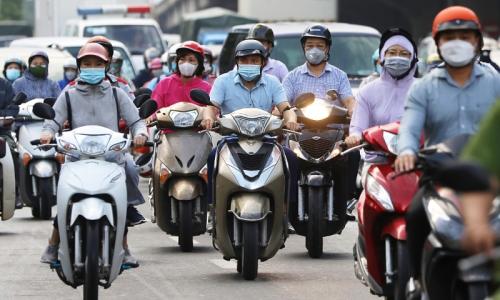
Hanoi to pilot petrol motorbike ban on 11 streets starting from July 1

In phase 1, the restricted zone will include 11 specific streets: Trang Tien, Hang Khay, Le Thai To, Hang Dao, Hang Ngang, Hang Buom, Ma May, Hang Bac, Hang Mam, Nguyen Huu Huan, and Ly Thai To.

The Hanoi People’s Committee has released a draft proposal to pilot a "Low Emission Zone" (LEZ) within the city's Ring Road 1 to curb air pollution.

According to the draft plan, the LEZ will span nine wards located within Ring Road 1: Hoan Kiem, Cua Nam, Ba Dinh, Giang Vo, Ngoc Ha, Hai Ba Trung, O Cho Dua, Tay Ho, and Van Mieu-Quoc Tu Giam.

Hanoi plans to implement the LEZ in three distinct phases:

In phase 1 (July 1, 2026 – December 31, 2026), the pilot will begin in Hoan Kiem Ward. The restricted zone will include 11 specific streets: Trang Tien, Hang Khay, Le Thai To, Hang Dao, Hang Ngang, Hang Buom, Ma May, Hang Bac, Hang Mam, Nguyen Huu Huan, and Ly Thai To.

During this phase, gas-powered motorbikes will be prohibited from circulating during specific weekend hours: from 6pm to midnight on Fridays, and from 6am to midnight on Saturdays and Sundays. The ban also applies to gas-powered motorbikes and scooters operating via digital ride-hailing platforms.

In phase 2 (January 1, 2027 – December 31, 2027), the city will expand the pilot area to include both Hoan Kiem and Cua Nam wards. This will encompass the core Hoan Kiem zone from Phase 1 plus 14 surrounding streets in Cua Nam ward, such as Nguyen Du, Tran Hung Dao, Tran Quang Khai, Dien Bien Phu, and Le Duan.

In phase 3 (January 1, 2028 – December 31, 2029), the LEZ will be expanded to encompass the entire area within Ring Road 1. This zone covers over 26 sq.km with a perimeter of 25 km and a population of approximately 625,000 people.

The boundaries of Ring Road 1 are defined by several major routes, including Hoang Cau, De La Thanh, Xa Dan, Dai Co Viet, Tran Khat Chan, Yen Phu, and Lac Long Quan, among others.

According to recent statistics, Hanoi currently has approximately 6.9 million motorbikes, with about 450,000 of those operating specifically within the Ring Road 1 area.


Vietjet leads Southeast Asia in emissions efficiency

Vietjet leads Southeast Asia in emissions efficiency

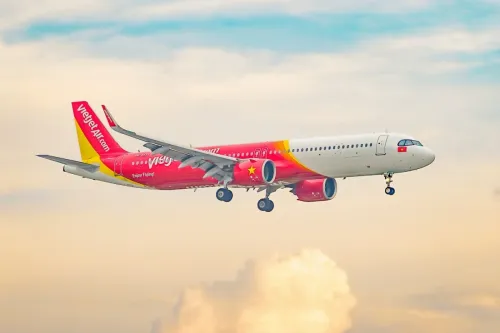
Vietjet has been ranked the lowest-emission airline on intra-Southeast Asian routes, according to the Flight Emissions Review 2025 released by global aviation data and analytics firm Cirium.

The report shows that Vietjet recorded emissions of 64.5 grams of CO₂ per Available Seat Kilometre (ASK), outperforming regional peers such as Singapore Airlines (66.7 grams) and Lion Air (67.1 grams). The ranking focuses exclusively on flights operating within Southeast Asia, where short- and medium-haul routes pose greater challenges for fuel optimisation.

Cirium’s assessment is based on its EmeraldSky methodology, which uses CO₂/ASK as a key metric for carbon emissions per seat offered per kilometre flown, an industry-standard indicator of operational efficiency.

Under comparable operating conditions, Vietjet’s leading position highlights its ability to optimise performance across its entire operational chain, including aircraft configuration, route network design and load management.

A key factor underpinning this achievement is the airline’s modern fleet. Vietjet primarily operates Airbus A320 and A321 aircraft, including fuel-efficient “NEO” variants that reduce fuel consumption by approximately 15–20% compared to earlier models. With one of the youngest fleets in the region, the airline has significantly lowered fuel burn and CO₂ emissions per flight.

In parallel with fleet investment, Vietjet has intensified advanced technologies in operations. These include data-driven flight analysis platforms such as SkyBreathe and fuel optimisation initiatives like SFCO2, which help enhance efficiency across its network.

The airline’s sustainability efforts have also gained international recognition. Earlier this year, Vietjet was named among the world’s Top 7 most sustainable airlines by AirlineRatings, reflecting its strong performance in emissions reduction, fuel efficiency and green aviation development. The carrier has also been acknowledged for its environmental, social and governance (ESG) achievements in markets such as Taiwan (China).

The Flight Emissions Review is an annual ranking by Cirium that independently evaluates the world’s 100 largest airlines based on actual operational data. It enables transparent comparisons of emissions performance across different markets and operational scales, providing a valuable benchmark for the global aviation industry as it advances toward more sustainable growth.

See all blog