Lumen Vietnam Fund

Blog

Hanoi to pilot petrol motorbike ban on 11 streets starting from July 1

Hanoi to pilot petrol motorbike ban on 11 streets starting from July 1

In phase 1, the restricted zone will include 11 specific streets: Trang Tien, Hang Khay, Le Thai To, Hang Dao, Hang Ngang, Hang Buom, Ma May, Hang Bac, Hang Mam, Nguyen Huu Huan, and Ly Thai To.

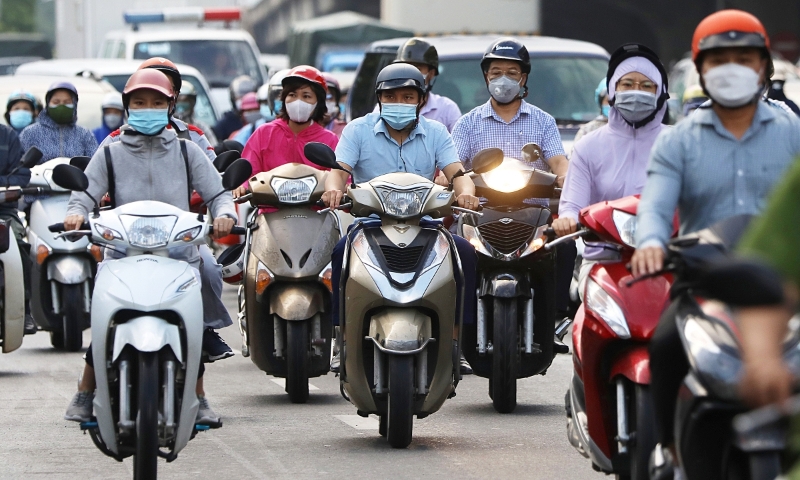
The Hanoi People’s Committee has released a draft proposal to pilot a "Low Emission Zone" (LEZ) within the city's Ring Road 1 to curb air pollution.

According to the draft plan, the LEZ will span nine wards located within Ring Road 1: Hoan Kiem, Cua Nam, Ba Dinh, Giang Vo, Ngoc Ha, Hai Ba Trung, O Cho Dua, Tay Ho, and Van Mieu-Quoc Tu Giam.

Hanoi plans to implement the LEZ in three distinct phases:

In phase 1 (July 1, 2026 – December 31, 2026), the pilot will begin in Hoan Kiem Ward. The restricted zone will include 11 specific streets: Trang Tien, Hang Khay, Le Thai To, Hang Dao, Hang Ngang, Hang Buom, Ma May, Hang Bac, Hang Mam, Nguyen Huu Huan, and Ly Thai To.

During this phase, gas-powered motorbikes will be prohibited from circulating during specific weekend hours: from 6pm to midnight on Fridays, and from 6am to midnight on Saturdays and Sundays. The ban also applies to gas-powered motorbikes and scooters operating via digital ride-hailing platforms.

In phase 2 (January 1, 2027 – December 31, 2027), the city will expand the pilot area to include both Hoan Kiem and Cua Nam wards. This will encompass the core Hoan Kiem zone from Phase 1 plus 14 surrounding streets in Cua Nam ward, such as Nguyen Du, Tran Hung Dao, Tran Quang Khai, Dien Bien Phu, and Le Duan.

In phase 3 (January 1, 2028 – December 31, 2029), the LEZ will be expanded to encompass the entire area within Ring Road 1. This zone covers over 26 sq.km with a perimeter of 25 km and a population of approximately 625,000 people.

The boundaries of Ring Road 1 are defined by several major routes, including Hoang Cau, De La Thanh, Xa Dan, Dai Co Viet, Tran Khat Chan, Yen Phu, and Lac Long Quan, among others.

According to recent statistics, Hanoi currently has approximately 6.9 million motorbikes, with about 450,000 of those operating specifically within the Ring Road 1 area.


Source: Tùng Dương

Photo: Illustrative photo
Latest Posts

Vietjet leads Southeast Asia in emissions efficiency

Vietjet leads Southeast Asia in emissions efficiency

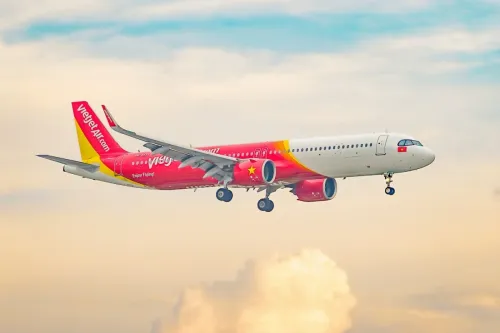
Vietjet has been ranked the lowest-emission airline on intra-Southeast Asian routes, according to the Flight Emissions Review 2025 released by global aviation data and analytics firm Cirium.

The report shows that Vietjet recorded emissions of 64.5 grams of CO₂ per Available Seat Kilometre (ASK), outperforming regional peers such as Singapore Airlines (66.7 grams) and Lion Air (67.1 grams). The ranking focuses exclusively on flights operating within Southeast Asia, where short- and medium-haul routes pose greater challenges for fuel optimisation.

Cirium’s assessment is based on its EmeraldSky methodology, which uses CO₂/ASK as a key metric for carbon emissions per seat offered per kilometre flown, an industry-standard indicator of operational efficiency.

Under comparable operating conditions, Vietjet’s leading position highlights its ability to optimise performance across its entire operational chain, including aircraft configuration, route network design and load management.

A key factor underpinning this achievement is the airline’s modern fleet. Vietjet primarily operates Airbus A320 and A321 aircraft, including fuel-efficient “NEO” variants that reduce fuel consumption by approximately 15–20% compared to earlier models. With one of the youngest fleets in the region, the airline has significantly lowered fuel burn and CO₂ emissions per flight.

In parallel with fleet investment, Vietjet has intensified advanced technologies in operations. These include data-driven flight analysis platforms such as SkyBreathe and fuel optimisation initiatives like SFCO2, which help enhance efficiency across its network.

The airline’s sustainability efforts have also gained international recognition. Earlier this year, Vietjet was named among the world’s Top 7 most sustainable airlines by AirlineRatings, reflecting its strong performance in emissions reduction, fuel efficiency and green aviation development. The carrier has also been acknowledged for its environmental, social and governance (ESG) achievements in markets such as Taiwan (China).

The Flight Emissions Review is an annual ranking by Cirium that independently evaluates the world’s 100 largest airlines based on actual operational data. It enables transparent comparisons of emissions performance across different markets and operational scales, providing a valuable benchmark for the global aviation industry as it advances toward more sustainable growth.

US firm seeks full control of Cai Mep LNG terminal in Ho Chi Minh City

US firm seeks full control of Cai Mep LNG terminal in Ho Chi Minh City

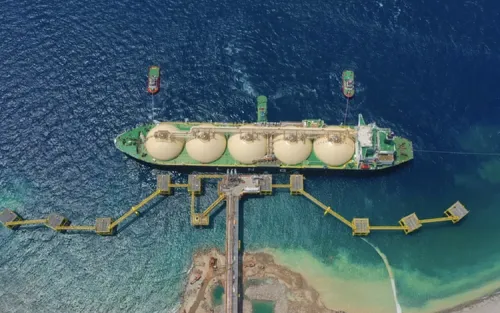
AG&P LNG, a subsidiary of U.S.-based energy investment firm Nebula Energy, has agreed to acquire the remaining stake in the Cai Mep LNG terminal in Ho Chi Minh City, paving the way for full ownership and a stronger presence in Vietnam’s liquefied natural gas sector.

According to shipping news outletTrade Winds, AG&P LNG on April 21 (U.S. time) reached an agreement to purchase the remaining 51 percent stake in Cai Mep LNG Terminal Company Limited, the terminal’s owner, from Hai Linh Co. Ltd., lifting its ownership to 100 percent.

Both companies are headquartered in northern Phu Tho Province.

AG&P LNG previously held a 49-percent stake in the terminal, with the remainder owned by Hai Linh.

Upon completion, Cai Mep LNG Terminal Company Limited will become a wholly owned subsidiary of AG&P LNG, while Hai Linh will divest its entire stake.

The deal value has not been disclosed.

The transaction remains subject to regulatory approvals and customary closing conditions.

AG&P LNG said the Cai Mep LNG terminal can be expanded to a capacity of up to six million metric tons per year and will serve as a core LNG import facility within Nebula Energy’s global portfolio.

The terminal is one of only two LNG import facilities currently in operation in Vietnam.

It is located in the former Ba Ria-Vung Tau Province, now part of Ho Chi Minh City following a national administrative restructuring that took effect on July 1, 2025.

Le Van Tam, general director of Hai Linh, said the divestment would allow the company to focus on its petroleum business and the Hiep Phuoc power project, while enabling the terminal to be further developed by a specialized LNG infrastructure operator.

Completed and commissioned in 2025, the Cai Mep LNG terminal is ready to supply stable LNG volumes to downstream customers in southern Vietnam.

Situated near the Mekong Delta, the facility has three onshore storage tanks with a total capacity of 220,000 cubic meters and is equipped for break-bulk operations to reload LNG onto smaller vessels.

It also features 14 loading bays for compressed natural gas (CNG) and LNG trucks.

The terminal is not only connected to the nearby Phu My Industrial Park but also linked via pipeline to the Phu My gas-fired power complex, the country’s largest facility of its kind with a capacity of around 3.9 GW.

Peter Gibson, chairman of Nebula Energy, described the move to full ownership as a significant milestone for AG&P LNG and Vietnam’s broader energy transition.

AG&P LNG said the terminal’s connectivity via major expressways to key demand centers has made it a critical link in Vietnam’s emerging LNG-to-power value chain.

The acquisition is expected to accelerate capacity expansion, strengthen downstream gas distribution, and fully integrate the Cai Mep terminal into Nebula Energy’s global LNG network.


S Korea’s Deputy PM eyes AI, semiconductor cooperation with Vietnam

S Korea’s Deputy PM eyes AI, semiconductor cooperation with Vietnam

In particular, the South Korean delegation praised the Vietnam-Korea Institute of Science and Technology (VKIST) as a flagship model for bilateral cooperation.

Vietnam encourages South Korean enterprises to bolster new investments and expand their operations in the country, particularly in priority sectors such as infrastructure, high-tech electronic manufacturing, semiconductors, big data, biotechnology, and smart cities.

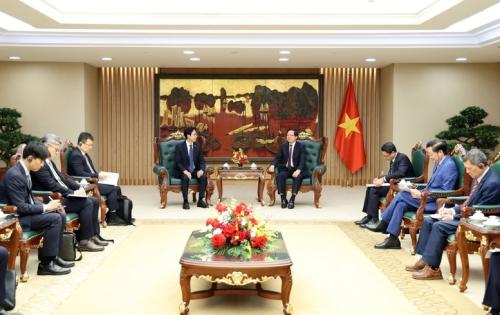
Deputy Prime Minister Ho Quoc Dung made these remarks while hosting South Korea’s Deputy Prime Minister and Minister of Science and ICT, Mr. Bae Kyung Hoon, in Hanoi on April 22.

The meeting was held as part of the state visit to Vietnam by South Korean President Lee Jae Myung to Vietnam between April 21-24.

The Vietnamese Deputy PM urged ministries and agencies from both nations to continue their close coordination to ensure the effective operation of cooperation mechanisms. He emphasized the need to translate policy agreements into concrete, practical projects that yield tangible benefits.

South Korean Deputy PM Bae Kyung Hoon, for his part, highlighted that many major South Korean corporations highly value Vietnam's development potential and high-quality human resources. He noted that the two sides are currently expanding cooperation across various fields, including agriculture, human resource training, and the implementation of Official Development Assistance (ODA) projects.

In particular, the South Korean delegation praised the Vietnam-Korea Institute of Science and Technology (VKIST) as a flagship model for bilateral cooperation.

Deputy PM Bae Kyung Hoon expressed his expectation that VKIST would continue to evolve into a symbol of the enduring partnership between the two countries.

The South Korean side committed to strengthening support and coordination for the effective implementation of projects related to VKIST. The goal is to transform the institute into more than just a research facility, serving as a vital bridge for business collaboration between the two nations. VKIST is also envisioned as a foundation for joint human resource training programs, specifically in software development and Artificial Intelligence (AI).

The South Korean Deputy PM further emphasized the vast potential of Vietnam's young workforce and expressed his hope for enhanced cooperation in cutting-edge sectors such as AI and the semiconductor industry—key areas of focus for the South Korean Government.


See all blog