Lumen Vietnam Fund

Blog

Vietnam looks beyond capital and FDI for next phase of growth

Vietnam looks beyond capital and FDI for next phase of growth

Vietnam must move beyond a growth model heavily reliant on investment, low-cost labor, and foreign-invested production to achieve its goal of becoming a high-income economy by mid-century, economists warned at a national scientific conference in Hanoi on Wednesday.

Jointly organized by Nhan Dan newspaper, the Communist Review, the National Economics University, and the University of Economics Ho Chi Minh City, the conference gathered nearly 300 delegates from Party agencies, the National Assembly, government ministries, research institutes, and the business sector to discuss renewing the country's development framework.

Moving beyond traditional growth drivers

Le Quoc Minh, Editor-in-Chief of Nhan Dan, emphasized that after four decades of Doi Moi (Renewal), Vietnam must address structural bottlenecks despite significant economic integration and rising living standards.

He urged a decisive shift toward growth quality, resource efficiency, productivity, and innovation over capital and natural resources.

Minh noted that the country needs to transition from merely participating in global value chains to securing higher positions within them, shifting from receiving technology to mastering it.

Aligning with Resolution 19-NQ/TW, issued on July 28, 2026, the new growth trajectory must balance speed with quality, economic efficiency with social progress, and deeper integration with national economic autonomy.

Presenting economic findings, Prof. Dr. Ngo Thang Loi from the National Economics University highlighted declining growth rates across four consecutive development periods.

Capital growth continues to outpace average GDP expansion, while total factor productivity (TFP) remains low, signaling capital inefficiency.

Furthermore, Vietnam remains heavily reliant on foreign direct investment (FDI). While FDI accounts for a major share of exports and GDP, links to domestic businesses are minimal—only 13 percent of FDI firms maintain local supply connections, and just 2.3 percent conduct local R&D.

Meanwhile, the domestic private sector remains fragmented, with micro and small enterprises accounting for 95 percent of all firms.

Loi also pointed to rising resource inequality, noting high Gini coefficient figures for land and capital access, alongside diminishing returns from traditional poverty reduction efforts.

Prof. Dr. Nguyen Trong Hoai from the University of Economics Ho Chi Minh City noted that structural economic shifts—such as moving labor from agriculture to manufacturing—are no longer generating strong momentum.

Although high-tech exports have surged over the past two decades, most gains remain concentrated within the FDI sector, while the domestic value-added share in exports has declined.

To catch up with emerging economies, Hoai stressed that Vietnam must quadruple its rate of labor quality improvement and increase IT capital investment fivefold.

Two growth paths toward 2045

Outlining future development paths, Hoai presented two scenarios: maintaining the current model, which risks missing high-income targets, or implementing aggressive reforms to reach high-income status around 2045–47.

The reform scenario requires annual TFP growth to rise from 0.2 percent to 2 percent. Hoai proposed shifting from a capital-heavy "1i" model (Investment) to a "3i" framework incorporating Investment, Infusion (technology diffusion), and Innovation.

Additionally, Vietnam holds untapped potential in services exports, which currently make up less than 10 percent of total exports, well below the ASEAN average of 26 percent.

Hoai concluded that future growth policies must remain inclusive, citing the need to support "reverse migration" to rural areas and adapt to an aging population starting in 2036.


Source: Tuoi Tre News - Vietnam News Agency

Photo: Danh Lam
Latest Posts

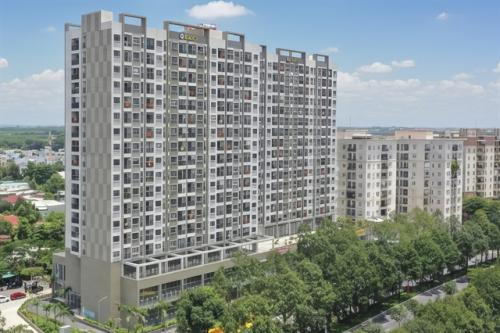
Affordable commercial housing at $1,530-1,910 per sq.m targeted

Affordable commercial housing at $1,530-1,910 per sq.m targeted

The Government will provide support to lower development costs for affordable commercial housing projects.

HÀ NỘI — The Ministry of Construction is drafting a legal framework to support the development of affordable commercial housing to bring average apartment prices down to VNĐ40-50 million (US$1,530-1,910) per sq.m through land incentives and profit controls for developers, Deputy Minister of Construction Nguyễn Văn Sinh said.

At a recent consultation on the draft revised Law on Housing organised by the Việt Nam Fatherland Front, Sinh said that affordable commercial housing would differ from social housing by allowing larger apartments and greater flexibility in project scale and investment models while still benefiting from government support. Currently, social housing apartments are capped at 79 sq.m.

The Government will provide support to lower development costs for affordable commercial housing projects, Sinh said.

Land for eligible projects would be allocated based on provincial land price tables rather than through auctions or competitive bidding to reduce developers' upfront costs while maintaining State budget revenues.

Construction costs would be fully reflected in selling prices to ensure building quality, while avoiding fixed price caps that could encourage developers to cut corners, he said.

Instead, developers' profits would be capped at around 15 per cent above eligible costs. The ministry estimates that the mechanism could reduce average selling prices to about VNĐ40-50 million per sq.m.

The target price is well below the current market level, with new apartments in major cities typically selling for VNĐ70-100 million per sq.m.

According to a report by property consultancy CBRE Việt Nam, about 16,600 new apartments were launched in Hà Nội during the first six months of 2026, the highest first-half supply since 2020. However, the market remains dominated by high-end projects.

For the second consecutive quarter, no newly launched apartment project in Hà Nội was priced below VNĐ60 million per sq.m. Most new supply was priced between VNĐ80 million and VNĐ110 million per sq.m or above VNĐ120 million, accounting for 30 per cent and 35 per cent of new launches, respectively.

Average primary market prices in the capital reached around VNĐ95 million per sq.m in the second quarter, up 12 per cent from the previous quarter and 21 per cent year-on-year, according to CBRE.

In HCM City, consultancy firm JLL reported around 3,000 new apartment launches in the first half of the year with average primary prices reaching VNĐ98.1 million per sq.m in the second quarter, up nearly 10.5 per cent from a year earlier.

Võ Hồng Thắng, deputy chief executive officer of DKRA Consulting, said that most middle-income households could only afford apartments priced below VNĐ60 million per sq.m.

Housing for all

The latest draft version of the revised Law on Housing has introduced affordable commercial housing as a new category of apartments developed under market mechanisms but eligible for certain Government incentives.

Developers would retain the right to set prices which would include land, construction and other lawful costs plus a regulated profit margin.

Eligible buyers would include individuals qualified for social housing support as well as businesses, cooperatives, public agencies and political organisations.

To discourage speculation, buyers would be prohibited from reselling affordable commercial housing for at least five years after making full payment.

Ngọ Duy Hiểu, deputy president of the Việt Nam General Confederation of Labour, said the draft law should do more to accelerate housing development while ensuring construction quality, sound urban planning, adequate living space and transport connectivity.

He also called for preferential policies to support workers in renting or rent-to-own housing, and for easier access to social housing for disadvantaged groups.

Hiểu said the proposed term 'affordable commercial housing' should be reconsidered to better reflect its nature. He also urged eligibility to be expanded to include employees of public and private organisations as well as self-employed workers, regardless of whether they work inside or outside industrial parks.

The draft law also introduces provisions governing accommodation-oriented properties, including condotels, resort villas, officetel units and commercial townhouses.

Under the proposal, such projects may be built on residential land, commercial and service land, or other eligible land categories.

Developers must ensure that the projects are used for accommodation purposes in line with their approved investment plans and comply with applicable technical standards, population density requirements and other established regulations.

The operation and management of accommodation-oriented properties must also remain consistent with the approved purpose of accommodation.

Maintenance funding for accommodation-oriented properties would be determined under the sales contract, or, if the contract does not specify, by agreement among property owners based on the building maintenance plan required under construction law.

The Ministry of Construction said the Government aims to promote a diversified housing market, including homes for sale, rent-to-own and rental housing suited to the financial capacity of households and individuals, while also supporting the renovation and reconstruction of existing housing.


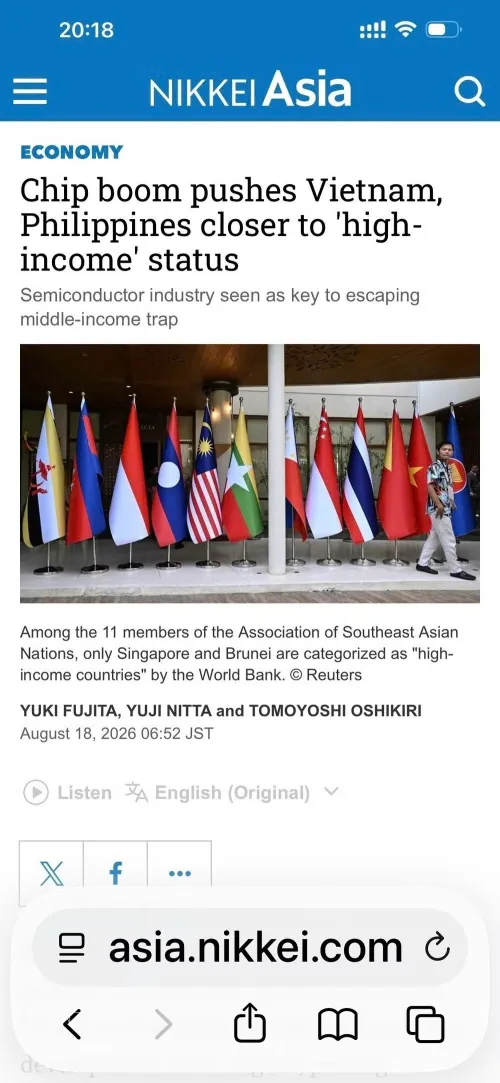
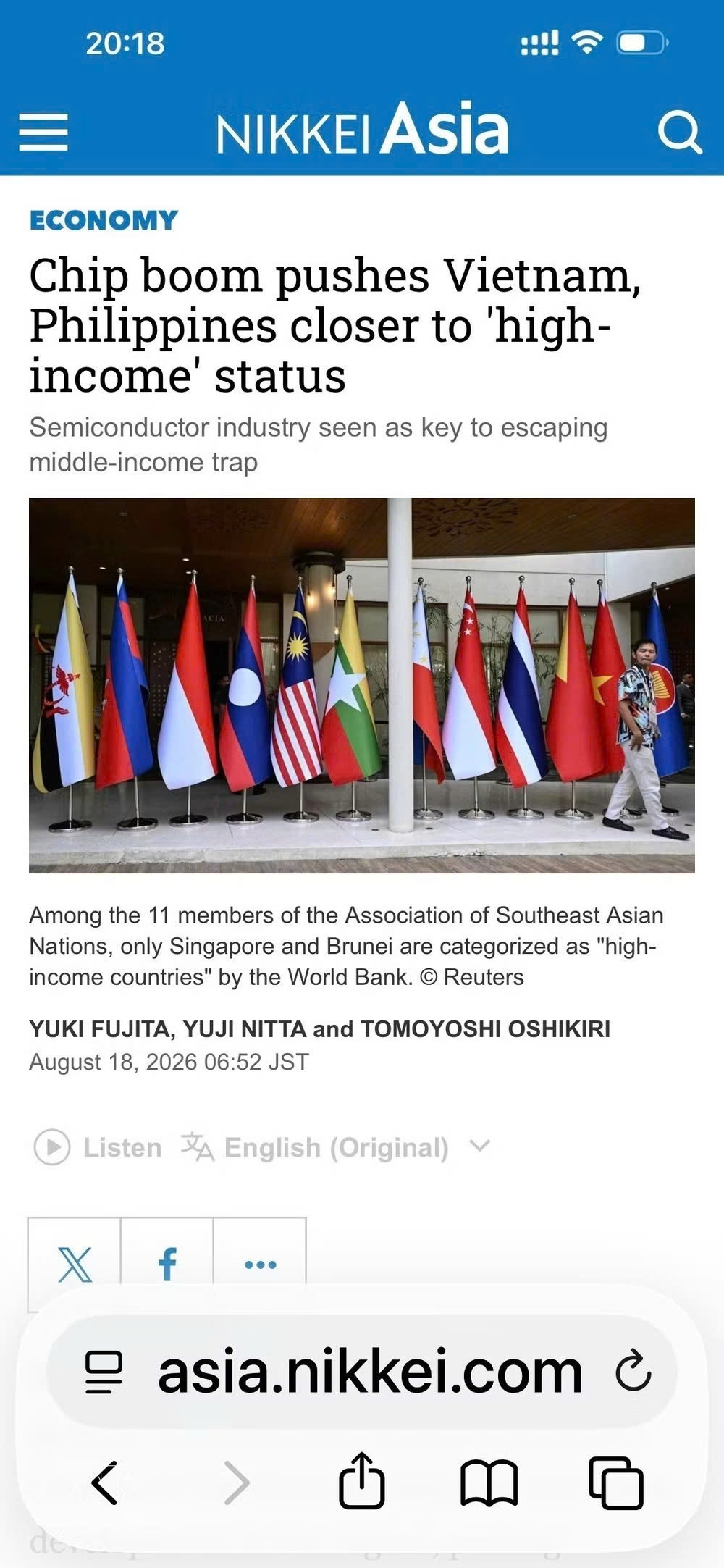
Chip boom pushes Vietnam closer to “high-income” status: Nikkei Asia

Chip boom pushes Vietnam closer to “high-income” status: Nikkei Asia

The rapid development of the semiconductor industry is reshaping Southeast Asia’s economic trajectory, creating opportunities for Vietnam and the Philippines to move closer to the ranks of high-income economies, according to Nikkei Asia.

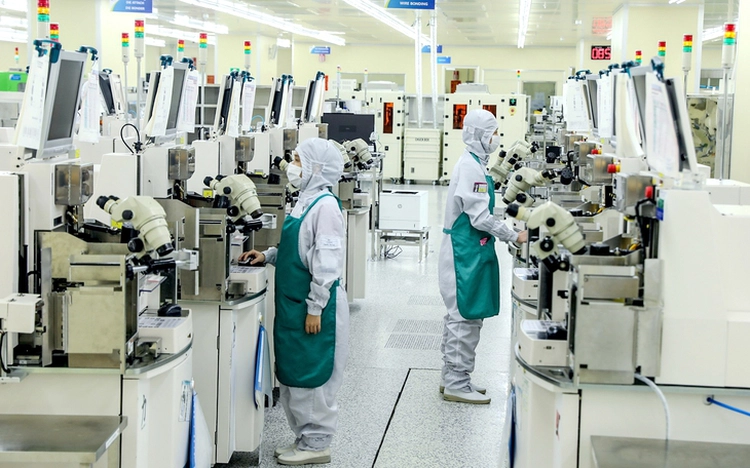
Vietnam’s semiconductor industry offers the country an opportunity to shift from a growth model heavily reliant on low-cost labour and manufacturing toward more technology-intensive, higher value-added sectors, the paper said.

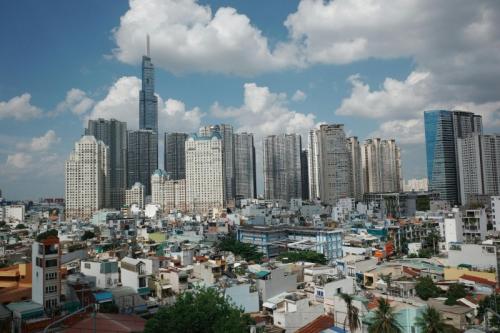
In the World Bank’s income classification updated in July, Vietnam was placed in the upper-middle-income group. Nikkei Asia said that to further raise income levels, the country needs to gradually reduce its reliance on low-cost labour and develop high-tech industries capable of generating greater added value.

Vietnam has raised incomes through an export-driven growth model. Its network of free trade agreements with countries and regions worldwide has helped attract foreign investment and establish manufacturing hubs for electronic components and electrical equipment.

In June, LG Innotek from the Republic of Korea announced plans to build a semiconductor substrate manufacturing plant in Vietnam with an estimated investment of around US$1 billion.

Vietnam is also seeking to expand its participation in the semiconductor value chain, moving beyond downstream activities such as assembly, packaging and testing into more technology-intensive areas, including chip design and the fabrication of integrated circuits on semiconductor wafers.

Under the country’s semiconductor industry development strategy, Vietnam aims to train more than 50,000 engineers and graduates for the sector by 2030.​

Nikkei Asia said the development of the semiconductor and electronics industries could provide an additional impetus for Vietnam’s economic growth amid rising global demand for products supporting artificial intelligence (AI).

To capitalise on the opportunity, Vietnam needs to continue improving the quality of its workforce and strengthening research and development capacity, while enhancing its ability to participate in higher value-added stages of global supply chains.

Meanwhile, the Philippines is also seeking to expand its semiconductor industry, which remains concentrated mainly in assembly, packaging and testing. Semiconductors and electronic products currently account for more than half of the country’s total merchandise exports. The Philippines is likewise seeking to upgrade its semiconductor industry as global demand for AI-related chips continues to grow.


Capital inflow drives expansion of HCMC’s hospitality and entertainment ecosystem

Capital inflow drives expansion of HCMC’s hospitality and entertainment ecosystem

BIG Investment Group Joint Stock Company (BIG) has announced a $5 million equity investment commitment from Brookland Group & Partners Limited, a global strategic private equity firm.

BIG Investment Group Joint Stock Company (BIG) has announced a $5 million equity investment commitment from Brookland Group & Partners Limited, a global strategic private equity firm.

Brookland Group & Partners Limited, headquartered in Dubai and Singapore, has deployed over $12 billion across 24 jurisdictions. The two parties officially signed their strategic cooperation agreement on August 7.

This marks BIG’s first successful international capital raise, occurring as the company prepares to transition from the UPCoM to the Ho Chi Minh City Stock Exchange (HOSE) by September 2026. This move to Vietnam’s main board will require BIG to adhere to more stringent standards regarding information disclosure, corporate governance, and free-float ratios.

The $5 million investment is structured as equity, meaning it will not incur debt on BIG’s balance sheet or dilute the ownership of existing shareholders. The investment is equivalent to approximately 38% of the group’s charter capital and is more than triple its projected 2025 after-tax profit of VND36.6 billion ($1.4 million).

This capital will serve as the primary funding source for BIG’s expansion into the hotel, F&B, and entertainment sectors in central HCM City. Individual acquisitions and deals will be supported by separate funding arrangements upon completion.

In 2025, the country welcomed 21.2 million international visitors. The Government has set a target of 25 million international arrivals this year and 35 million by 2030, following a steady average growth rate of 10% per year since 2011.

The hospitality market is reflecting this momentum. Real estate consultancy JLL forecasts a sharp increase in hotel transactions this year, primarily within the 4- and 5-star segments in Hanoi and HCM City. According to JLL, foreign investors are seeking yields of 7–9% in Vietnam’s hotel assets—significantly higher than the 3–4% yields found in developed markets such as Japan and Australia.

HCM City, with a population of over 14 million, is striving to become one of Asia’s leading hubs for MICE (Meetings, Incentives, Conferences, and Exhibitions) tourism and the "night economy," with the Saigon River serving as the central axis for nightlife development.

Local tourism authorities acknowledge that the city currently faces a shortage of high-quality venues operating after 10 pm, and lacks large-scale entertainment complexes comparable to those in Singapore and Bangkok.


See all blog