Lumen Vietnam Fund

Blog

Vietnam leans on wellness tourism to unlock higher-value segment by 2030

Vietnam leans on wellness tourism to unlock higher-value segment by 2030

Vietnam has the abundant natural resources, including beaches, forests, mineral springs, mineral mud and a wide range of medicinal plants, backed by a long-lasting traditional medicine and the cultural identity of its ethnic communities. Together, they form the base for wellness tourism products that are both competitive and distinctly Vietnamese.

Hanoi (VNA) – Vietnam is rolling out a national scheme to build a professional health and wellness tourism industry by 2030, betting that distinctive products, better service quality and stronger value chains can turn the sector into one of tourism's highest-value segments.

Chasing a higher-value tourism segment

Demand for health and wellness travel has surged in recent years, tracking a broader push for better quality of life and physical and mental balance.

This isn't just a passing trend. It's becoming a high-value segment that extends visitor stays, lifts spending and pulls related industries along with it", said Deputy Director General of the Vietnam National Authority of Tourism Ha Van Sieu.

Vietnam has the abundant natural resources, including beaches, forests, mineral springs, mineral mud and a wide range of medicinal plants, backed by a long-lasting traditional medicine and the cultural identity of its ethnic communities. Together, they form the base for wellness tourism products that are both competitive and distinctly Vietnamese.

In fact, that potential hasn't translated into products or economic value. Products remain fragmented in many places, with models limited to standalone resorts, spas or one-off services.

Links among medical tourism, traditional medicine, medicinal plants, culture, sports, nutrition, and science and technology remain weak. Specialised workers are scarce, and regulatory standards, quality management systems and coordination among sectors and localities all need to be improved.

Dr. Nguyen Anh Tuan, Director of the Institute for Tourism Development Research, said Vietnam is emerging as a branded destination for health and wellness tourism, with plenty of room to grow.

Wellness tourism models are already expanding fast. Hotels and resorts in mountain and coastal areas have folded in wellness services and drawn large crowds, while regions with hot mineral springs have built premium resort and wellness offerings, generating returns for investors and revenue for local budgets alike.

Building seamless, quality tourist experiences

The scheme aims for more than new tourism products. It's designed to build an economic ecosystem around tourism and wellness services.

Building that ecosystem will require the tourism sector to assess where things stand, clear key bottlenecks and define the core elements of wellness tourism products. The bigger task is treating the segment as a value chain linking tourism with healthcare, sports, culture, agriculture, medicinal plants, science-technology, indigenous knowledge, businesses and local communities.

Tuan proposed a framework built around one ecosystem, three product tiers and six policy pillars.

The three tiers include pure wellness tourism, wellness services involving specialised medical expertise, and medical tourism. Tiering lets regulators apply oversight based on risk level, protecting safety without burdening companies with unnecessary red tape.

The six pillars comprise institutional mechanisms and standards; resources and destinations; products and value chains; investment, businesses and communities; workforce and science-technology; and markets, branding and data.

On medical tourism's potential across Southeast Asia, Tuan said Vietnam's existing advantages leave it well placed to compete and, if leveraged properly, to go head-to-head with countries that already run mature medical tourism industries.

Traditional Eastern medicine is another edge. Pairing resorts and wellness services with herbal treatments rooted in Eastern medicine holds considerable promise, he said.

Customers respond well and will pay reasonable prices for attentive services that match what they spend, Tuan said. But he added that clearer, more specific policies are still needed to develop the sector systematically.


Source: VNA

Latest Posts

Shrimp exports rise to $3.3B in 8 months

Shrimp exports rise to $3.3B in 8 months

Vietnam's shrimp exports reached US$3.3 billion in the first eight months of 2026, up 12% year-on-year, with the Chinese market being a key growth driver.

White-leg shrimp were the top product, with exports exceeding $2 billion during the period, up 7.6%, according to customs data cited by the Vietnam Association of Seafood Exporters and Producers.

Black tiger shrimp shipments rose 7.4% to nearly $318 million while other shrimp products generated $936.6 million, a 25% increase.

The association said that mainland China and Hong Kong remained the standout markets for Vietnamese shrimp.

Shipments to both markets totaled nearly $1.12 billion, up 35.9% year-on-year and accounting for 34.1% of total shrimp exports in the first eight months.

Of this, China accounted for more than $1.07 billion, a 38.2% jump, making it the main growth driver as exports to several other major markets faced difficulties.

Exports to the U.S. fell 11.7% year-on-year to $436.1 million while those bound for the EU totaled $355.3 million, down 3.6%.

Shipments to Japan grew 6.1% to $388.5 million and those to Australia and Canada increased by 18.2% and 6.5%, respectively. Exports to Comprehensive and Progressive Agreement for Trans-Pacific Partnership (CPTPP) member countries reached around $901 million, up 11%.

In August alone, shrimp exports were worth $478.5 million, up 4.2% from a year ago. Shipments to the U.S. and EU dropped 12.6% and 23.5% year-on-year, respectively, during the month.

The association said the figures highlight increasingly divergent trends across export markets, with Asia continuing to post healthy demand while the U.S. and EU remain affected by competition and trade-related factors.


Wave of cars made in Việt Nam goes global

Wave of cars made in Việt Nam goes global

As the global automotive market continues to evolve, Việt Nam’s exports of CBU vehicles are also reaching new milestones.

HÀ NỘI — Exports of completely built-up (CBU) vehicles from factories in Việt Nam are gaining strong momentum. VinFast and Hyundai’s growing shipments of thousands of vehicles to Europe, Australia and the US signal a new direction for Việt Nam’s automotive industry.

As the global automotive market continues to evolve, Việt Nam’s exports of CBU vehicles are also reaching new milestones.

Previously, exports of vehicles manufactured and assembled by Vietnamese companies were largely concentrated in ASEAN markets. Domestic automakers are now beginning to expand beyond the region and reach more distant international markets.

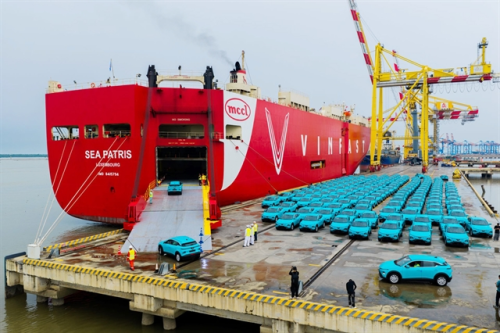
Two specialised international vehicle carriers arrived at Hải Phòng Port in late July, transporting more than 5,000 VinFast electric vehicles to markets in Europe and Southeast Asia. These mark VinFast’s 37th and 38th dedicated vehicle shipments, coming less than four years after the company exported its first batch of 999 vehicles to international markets.

VinFast now has a presence in more than 10 key international markets, including the US, Canada, Europe, India, Indonesia, the Philippines and the Middle East. Meanwhile, Green SM has expanded its operations into Laos, the Philippines, Indonesia, India and Kazakhstan, with Europe also in its sights.

Thanh Cong Group and its Hyundai Thanh Cong joint venture have also made their mark by exporting Hyundai vehicles to major markets including Mexico, Australia, Taiwan and China.

The shipments mark the expansion of vehicles produced at the Ninh Bình plant from Asian markets to four continents: Asia, the Americas and Oceania. The company aims to export 5,120 components and 10,160 finished vehicles this year.

Nguyễn Minh Sơn, director of the Hyundai Thanh Cong plant, said the company’s export programme has been prepared and carried out over several years, from building its manufacturing base and mastering technology and quality standards to gradually expanding into international markets, according to Xe Giao Thông online newspaper.

Exports to Mexico and Australia represent an important milestone and pave the way for more ambitious targets, he said.

The push to take 'Made in Việt Nam' cars overseas comes as the automotive industry continues to record a significant trade imbalance. Việt Nam imported 178,223 CBU vehicles worth US$3.5 billion in the first seven months of this year, up 46.7 per cent in volume and 30.3 per cent in value year-on-year. Meanwhile, Việt Nam’s automotive export capacity remains largely focused on components.

Localisation challenge

Ninh Hữu Chấn, former secretary general of the Vietnam Automobile Manufacturers’ Association, noted that Thaco had previously exported a significant number of trucks to Africa, Laos and Cambodia, while Daewoo Bus had also exported long buses. However, the current shift reflects a much larger scale and greater ambitions among domestic companies.

VinFast’s export drive is a bright spot, with India and Indonesia currently showing the clearest signs of success, he added.

By contrast, entry into markets with some of the world’s most stringent quality standards, such as the US and Europe, remains largely exploratory. Building a strong brand presence in these markets poses significant challenges, he said.

Economist Nguyễn Trí Hiếu offered a more candid assessment, noting that although vehicles bear the 'Made in Việt Nam' label, most core components are still imported and the country’s automotive industry remains largely assembly based.

To truly compete in global markets, automakers must step up investment in research and development (R&D) and develop key components themselves, including engines and vehicle operating systems, he said.

Market strategy is equally critical. Rather than competing head-on in large and highly competitive consumer markets, Vietnamese manufacturers should focus on niche markets or establish a strong foothold in Asia before expanding into Europe.

Hiếu also stressed a fundamental rule of the global automotive industry: selling cars is only the starting point. After-sales service and customer care are what ultimately determine long-term success. To maintain market share in demanding markets, manufacturers need reliable supplies of spare parts, well-trained maintenance staff and a comprehensive service network to build customer confidence.

To attract high-quality foreign direct investment into the supporting industries, Hiếu said the domestic market and export volumes must become large enough to reduce production costs.

Without rapid improvements in logistics infrastructure, stronger access to credit and, above all, greater exchange-rate stability, the current export momentum could face significant risks to costs and profit margins, he said.

Only by addressing the full chain, from R&D and supply chains to macro-level infrastructure, can 'Made in Việt Nam cars achieve sustainable growth in global markets.


Việt Nam's motorcycle market shifts as electric models gain ground

Việt Nam's motorcycle market shifts as electric models gain ground

Việt Nam’s motorcycle market is shifting as electric models gain ground, while manufacturers of petrol-powered motorcycles are upgrading emissions performance and adding technology and features to retain buyers.

HÀ NỘI Electric motorcycle sales nearly doubled in the first seven months of 2026, while petrol-powered models are being upgraded to meet tighter emissions rules and changing consumer demand.

Việt Nam’s motorcycle market is shifting as electric models gain ground, while manufacturers of petrol-powered motorcycles are upgrading emissions performance and adding technology and features to retain buyers.

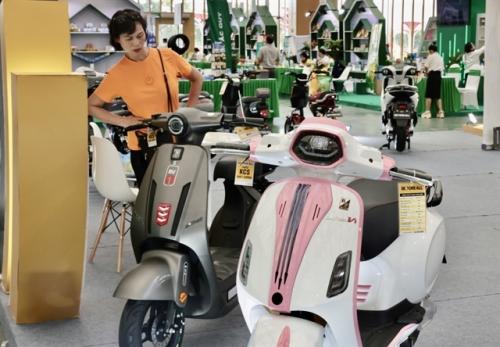
About 1.9 million two-wheelers were sold in Việt Nam in the first seven months of 2026, up 19.6 per cent on year, according to a MotorcyclesData report released earlier this month. Electric motorcycles accounted for 513,742 units, up 97.2 per cent and representing about 27.7 per cent of total sales.

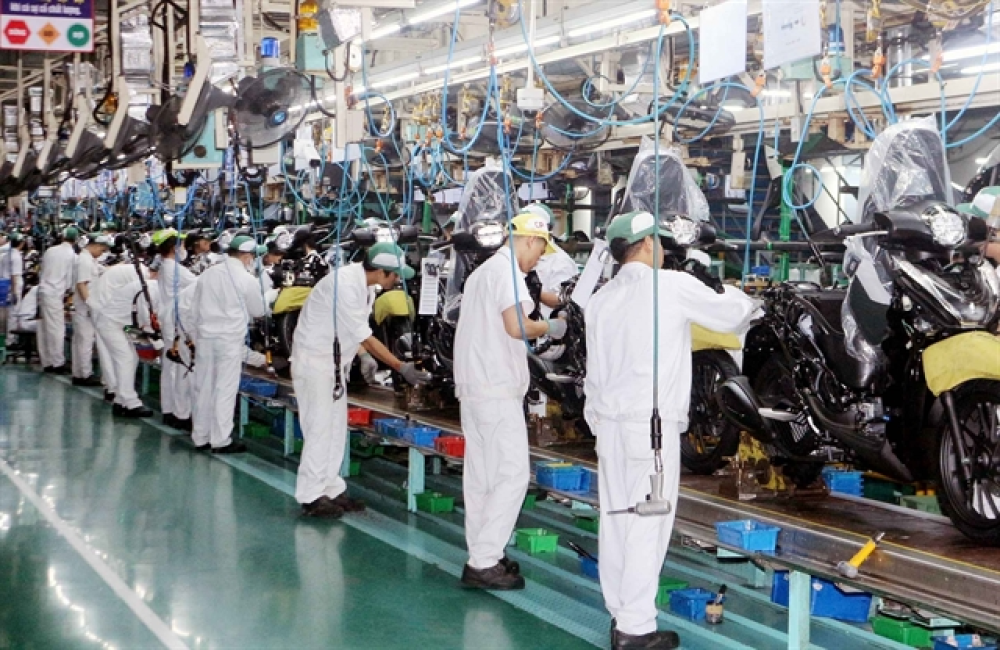
The growth in electric motorcycles comes as internal combustion engine models still account for most of the market. The five members of the Vietnam Association of Motorcycle Manufacturers - Honda, Yamaha, Piaggio, Suzuki and SYM - sold 638,431 motorcycles in the second quarter, up 4.4 per cent on year. Their combined sales topped 1.3 million units in the first half.

On September 18, Honda Vietnam introduced the 2027 SH Mode with an engine that meets Euro 4 emissions standards. Honda said emissions from the new model were about 40 per cent lower than those of the previous version.

Sayaka Arai, general director of Honda Vietnam, said the company would continue to introduce Euro 4-compliant models while improving environmental performance, design and features.

Honda has also added the ICON e:, CUV e: and UC3 models to its electric motorcycle lineup in Việt Nam. Internal combustion models, however, still account for the bulk of the company's sales.

The push to meet tighter emissions standards comes as new regulations for motorcycles and mopeds take effect. From July 1, motorcycles produced or imported into Việt Nam must meet Level 4 emissions standards. From July 1, 2027, Hà Nội and HCM City will begin emissions testing for motorcycles and mopeds already on the road.

Honda Vietnam is committed to pursuing the goal of building a greener mobility society through a multi-pronged approach, while developing both electric vehicle and internal combustion engine technologies, Arai said.

Electric models drive investment in infrastructure

The growth of electric motorcycles is driving investment in batteries, battery-swapping stations and after-sales services.

VinFast said it sold 406,453 electric motorcycles in Việt Nam in 2025, up 473 per cent from the previous year. Earlier this year, the company said its infrastructure operator V-Green had completed the installation of its first 4,500 battery-swapping stations.

On September 19, VinFast launched the second phase of its For a Green Future programme, offering discounts of VNĐ1.5 million (US$58) to VNĐ6 million ($231) to buyers of electric motorcycles, depending on the model and version.

Buyers of battery-swappable models will also receive 20 free battery swaps a month through June 30, 2028, the company said.

While VinFast is expanding its battery-swapping network, Yadea is increasing production capacity and broadening its product range in Việt Nam.

Yadea’s new plant in Bắc Ninh Province covers 232,200sq.m, with a first-phase investment of $100 million and an initial annual capacity of one million vehicles.

The company is targeting several customer segments, from students to higher-end users, with models including the Osta and Omee. Yadea also said it was working with Be Group to develop products for ride-hailing drivers.

Against the backdrop of Việt Nam’s accelerating transition towards green vehicles and the electrification of urban transport, the YADEA Osta is being introduced as a strategic step in the company's product portfolio, according to Liu Jia, general director of Yadea Vietnam.

Vietnamese companies are also increasing investment in the sector.

In March, Thiên Việt Securities JSC (TVS) invested $4 million in Đạt Bike in a Series B funding round. Đạt Bike said the funds would be used to expand production, strengthen its supply chain, develop its distribution network and increase research and development capacity.

Dat Bike said its production capacity had increased fivefold over the past two years. The company is also expanding its 3S dealership network in several cities and expects to have 100 outlets this year.

Electric motorcycles need to meet people’s daily transport needs in a convenient way. A motorcycle with sufficient range, suitable charging speed and the ability to charge using household electricity are important factors for users, said Đạt Bike founder and general director Nguyễn Bá Cảnh Sơn.

Đạt Bike is also expanding its after-sales network. In August, the company opened a 1,000sq.m service centre on Ngô Gia Tự Street in Hà Nội, its largest service centre to date.

For internal combustion models, petrol stations and repair networks have been established for years. For electric motorcycles, consumers must also consider battery life, range per charge, access to charging or battery-swapping stations, charging times, warranty policies and long-term running costs.

See all blog