Lumen Vietnam Fund

Blog

Vietnam leads ASEAN in AI readiness: Microsoft study

Vietnam leads ASEAN in AI readiness: Microsoft study

Vietnam currently ranks first in ASEAN in the proportion of AI pioneers, with 39% of workers classified as advanced AI users—more than double the global average of 16%, according to Microsoft Vietnam’s Work Trend Index 2026 report.

Vietnam’s workforce is among the most prepared in Southeast Asia to embrace artificial intelligence, but businesses must redesign their operating models to fully translate that advantage into higher productivity and competitiveness, according to Microsoft Vietnam’s Work Trend Index 2026 report released on June 24.

The report, based on analysis of trillions of anonymized productivity signals from Microsoft 365 and a survey of 2,000 knowledge workers in Vietnam, suggests the country is rapidly entering the AI era.

Vietnam currently ranks first in ASEAN in the proportion of AI pioneers, with 39% of workers classified as advanced AI users—more than double the global average of 16%.

According to the report, AI pioneers are employees who have integrated AI deeply into their daily work. Rather than using the technology solely for routine tasks, they apply it to higher-value activities such as information analysis, complex problem-solving, evaluating options and generating innovative ideas.

The findings also indicate that Vietnamese workers largely view AI as a tool to enhance human thinking rather than replace it. As many as 89% of AI users in Vietnam said they treat AI-generated outputs as a starting point for deeper analysis rather than as final answers.

This suggests that AI is increasingly being used to support decision-making, while critical judgment, evaluation and accountability remain firmly in human hands.

The impact on workplace performance is already becoming evident. The report found that 76% of Vietnamese AI users are now producing work outcomes that would have been impossible for them to achieve a year ago. Among AI pioneers, the figure rises to 83%.

While these results highlight Vietnam’s growing strength in AI-enabled talent, Microsoft noted that workforce capability alone is not enough. To turn this advantage into sustainable competitive gains, businesses will need to adopt new organizational structures, operating processes and governance models that fully leverage AI-driven transformation.


Source: Dũng Hiếu
Latest Posts

Vietnam seeks to extend fuel tax relief measures through September

Vietnam seeks to extend fuel tax relief measures through September

Vietnam’s Ministry of Finance has proposed extending a package of fuel tax relief measures through September 30, including a zero-percent preferential import tariff, a zero-rate environmental protection tax, and a value-added tax exemption, in a move to stabilize domestic fuel prices and support energy security amid volatile global oil markets.

The ministry on Wednesday began receiving public feedback on a draft government resolution that would maintain the preferential import tariff on gasoline, oil products, and related inputs at zero percent from July 1 through September 30.

The proposal would also keep the environmental protection tax at zero dong and maintain the value-added tax exemption on gasoline, oil products, related inputs, and aviation fuel through September 30.

The resolution is expected to take effect from July 1 through September 30, continuing fuel tax relief measures first introduced under Government Decree 72/2026 and later extended through June 30 under Resolution 25.

If changes to the implementation period are deemed necessary to support socio-economic development, ensure energy security, or stabilize the market, the Ministry of Industry and Trade will submit recommendations to the finance ministry for consideration by the government.

According to the finance ministry, the tax relief measures were introduced after conflict in the Middle East disrupted shipping through the Strait of Hormuz and drove up global energy prices.

Although oil prices have eased since shipping traffic through the region resumed, they remain above pre-conflict levels.

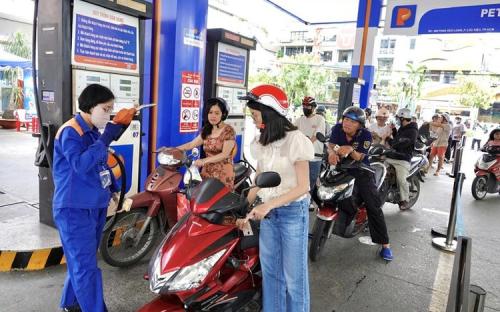
Domestic retail fuel prices fell sharply following the June 18 fuel price adjustment, reaching their lowest levels in about three months.

However, E10 and E5 gasoline prices remain 9.2 percent and 5.9 percent higher, respectively, than before the conflict, while diesel prices are still 23.86-33.84 percent above pre-conflict levels.

The ministry said risks remain in the global oil market as geopolitical tensions could flare up again.

It noted that much of the fuel currently sold in Vietnam was imported or stockpiled when prices were higher, while lower-cost supplies will take time to reach the domestic market.

Because fuel is a major input cost for sectors such as transportation, logistics, and fisheries, immediately restoring tax rates to their pre-support levels could drive up retail prices and add pressure to household budgets and inflation, the ministry said.

The extension is expected to help stabilize the domestic fuel market while supporting broader economic growth and macroeconomic stability amid ongoing global uncertainties.

It would also help businesses diversify fuel supply sources beyond ASEAN markets, reduce dependence on a limited number of suppliers, and strengthen energy security.

According to the ministry, maintaining the current tax measures through September is expected to reduce state budget revenue by about VND15.4 trillion (US$584.7 million) from July 1 to September 30.

Under Decree 72/2026, issued on March 9, import tariffs on unleaded gasoline and blending components such as naphtha and reformate were reduced from 10 percent to zero percent.

Tariffs on diesel, fuel oil, jet fuel, and kerosene were cut from seven percent to zero percent, while several petrochemical feedstocks, including xylene, condensate, and paraxylene, also saw their tariffs reduced to zero percent.

Other cyclic hydrocarbons saw tariffs lowered from two percent to zero percent.

The decree was originally scheduled to expire on April 30 before the government issued Resolution 25, extending its application through June 30.


Public investment disbursement gathers pace, but bottlenecks persist

Public investment disbursement gathers pace, but bottlenecks persist

Public investment disbursement has accelerated sharply in recent weeks, providing support for economic growth despite ongoing global uncertainties.

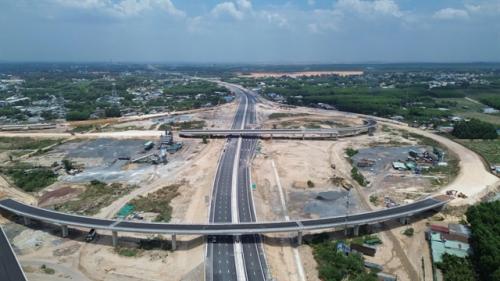
HÀ NỘI — Public investment spending has gathered momentum in recent weeks, reinforcing its role as a key driver of economic growth as global trade and financial uncertainties continue to weigh on traditional growth engines.

Recent data from the Ministry of Finance shows that public investment disbursement reached VNĐ227.2 trillion (US$8.6 billion) as of June 4, equivalent to 22.4 per cent of the annual target assigned by the Prime Minister.

This figure marked a sharp increase from the VNĐ198.4 trillion recorded as of May 28, meaning nearly VNĐ28.8 trillion was disbursed in just one week, 1.8 times higher than the amount disbursed in the previous week, signalling a notable acceleration in spending.

Public investment has become increasingly important as policymakers seek to sustain economic growth amid external headwinds, including elevated global interest rates, exchange rate volatility, rising energy prices and growing uncertainty in international trade.

The Government has allocated more than VNĐ1 quadrillion for public investment in 2026, one of the largest spending programmes on record.

Economists view public investment as a crucial source of domestic demand and one of the few growth drivers policymakers can directly influence, particularly as exports face mounting pressure from global economic uncertainty.

Although the disbursement ratio remains relatively modest, the total amount of capital injected into the economy has risen significantly. At the end of May, disbursed capital had increased by nearly VNĐ34.8 trillion compared with the same period last year.

However, progress remains uneven.

Ministry data shows that 26 ministries and central agencies, along with 19 localities, still report disbursement rates below the national average.

Phan Đức Hiếu, a permanent member of the National Assembly's Economic and Financial Committee, said the Government's goal of achieving a 100 per cent disbursement rate this year would be challenging given persistent implementation obstacles.

"There is no single reason behind delays," Hiếu said, noting that each project faces different circumstances depending on location, scale and local conditions.

Land clearance remains a major hurdle for many projects, while shortages of construction materials and rising material costs have emerged as increasingly common concerns.

According to Hiếu, contractors have also sought adjustments to project budgets as input costs continue to rise, creating pressure on project implementation and financing plans.

If these bottlenecks can be addressed, the pace of disbursement could improve considerably in the coming months, he said.

Nguyễn Xuân Thành, a senior lecturer at the Fulbright School of Public Policy and Management, said a 95 per cent disbursement rate is within reach, as many major projects have moved beyond land clearance and stepped into final construction stages, reducing some of the obstacles that delayed implementation in previous years.

Despite the improving national picture, some local authorities continue to struggle.

In northern Tuyên Quang Province, public investment disbursement had reached only 22.4 per cent of the local plan by mid-year, despite repeated directives from provincial authorities.

Provincial leaders attributed delays partly to difficult terrain, land clearance challenges and rising material costs. However, they also acknowledged that some agencies, local administrations and contractors had not acted with sufficient urgency in implementing assigned tasks.

While public investment is helping support growth amid external uncertainty, experts say faster project implementation and the removal of local bottlenecks will be key to meeting the Government's disbursement targets.


Vietnam Airlines receives over US$2.9 billion EXIM guarantee for 50 Boeing aircraft

Vietnam Airlines receives over US$2.9 billion EXIM guarantee for 50 Boeing aircraft

VOV.VN - Vietnam Airlines has received a Preliminary Commitment from the Export-Import Bank of the United States (EXIM), providing a guarantee of up to more than US$2.9 billion for loans supporting its investment project to acquire 50 Boeing 737 MAX 8 narrow-body aircraft.

The commitment is expected to strengthen Vietnam Airlines’ access to international financing at competitive costs while diversifying funding sources for key investment projects.

Vietnam Airlines is currently the first and only airline in Vietnam to receive EXIM export credit guarantees for aircraft financing, including previous fleet investment projects involving Boeing 777 and Boeing 787 Dreamliner aircraft.

The new commitment for the Boeing 737 MAX 8 project demonstrates Vietnam Airlines’ financial capacity, credibility and growth prospects, while also underscoring confidence from the US government and financial institutions in the carrier’s long-term development plans.

In February 2026, Vietnam Airlines signed an agreement in Washington, D.C. to purchase 50 Boeing 737 MAX 8 aircraft. Delivery is scheduled for 2030-2032.

The aircraft are expected to serve domestic and regional routes across Asia, thus supporting rising passenger and cargo demand as part of the airline’s long-term fleet expansion plan.

Beyond the 50-aircraft project, EXIM has also expressed readiness to work with Vietnam Airlines on financing solutions for other strategic projects involving US goods and services, including aircraft engines, maintenance, repair and overhaul (MRO) facilities, and related areas.

Vietnam Airlines said the commitment marks an important step in securing funding for the project, thereby offering favorable conditions for the airline to continue working with international lenders and implement its long-term fleet development strategy.


See all blog