Lumen Vietnam Fund

Blog

Vietnam, Japan boost semiconductor research cooperation

Vietnam, Japan boost semiconductor research cooperation

The move seen as a concrete step toward putting into practice Vietnam’s policies on science and technology, innovation and digital transformation.

Vietnam and Japan have officially launched a cooperation program to implement five joint research projects in the semiconductor sector, marking a shift from cooperation focused on networking and connections toward the implementation of substantive research programs.

The National Foundation for Science and Technology Development (NAFOSTED) under the Ministry of Science and Technology (MST) held a ceremony on July 22 to announce the results of the project selection process and sign funding agreements for five Vietnam-Japan joint semiconductor research projects in 2026.

The five funded projects include the design of secure AI system-on-chip (SoC) chips based on multi-core RISC-V CPUs and AI accelerators for AIoT devices; research into the fabrication of materials and power electronic devices based on wide-bandgap semiconductors for power management chips used in high-performance power equipment; and the development of advanced semiconductor materials for integrated sensors and renewable energy devices.

The program also covers the development of advanced semiconductor materials for high-electron-mobility transistors through a combination of theoretical simulations and experiments, as well as the design, simulation and fabrication of next-generation three-dimensional CFET integrated circuits using silicon thin-film transistors.

The implementation of these five joint semiconductor research projects is seen as a concrete step toward putting into practice Vietnam’s policies on science and technology, innovation and digital transformation, while strengthening research cooperation and technological capabilities between Vietnam and Japan.


Source: Hạ Chi

Photo: MST

Latest Posts

Unlocking all resources to support growth

Unlocking all resources to support growth

Vietnam’s ambitious economic growth targets in the coming period will require the mobilization of vast investment resources. The challenge of securing capital for growth cannot be solved through a single instrument or funding channel. Vietnam needs a comprehensive national financial strategy.

The goal of achieving high economic growth in the coming years is placing Vietnam in a new context that requires major qualitative and quantitative changes. However, as demand for capital continues to rise, the country’s current financial system remains heavily reliant on bank credit.

This not only puts pressure on banks’ liquidity and maturity balance, but also highlights that the capital market has yet to fully play its role as a medium- and long-term funding channel for the economy.

A survey by the Vietnam Chamber of Commerce and Industry (VCCI) showed that businesses continue to face significant challenges related to market access, financing and institutional barriers.

As of June 30, 2026, among more than 1 million operating enterprises, around 432,000 reported losses, while only about 420,000 were profitable. The business landscape remains characterized by a large number of small firms, with around 70% of non-state enterprises having registered capital of less than VND10 billion ($380,000), limiting their ability to access medium- and long-term funding.

This reality shows that the development of a comprehensive capital market is not only a requirement for the financial system but also a necessary condition to improve corporate resilience and create room for sustainable growth. A developed capital market would provide businesses with additional funding channels beyond bank loans while improving the efficiency of resource allocation across the economy.

The VCCI survey also identified three major challenges facing businesses:

Market bottlenecks: About 60.2% of enterprises reported difficulties in finding customers, while more than 53% experienced declining export orders due to sharply rising transportation costs.

Credit constraints: Around 93.5% of bank loans require collateral, making it difficult for many small and medium-sized enterprises to access financing.

Institutional barriers: More than 51% of legal obstacles stem from unclear or impractical regulations.

These challenges indicate that corporate financing needs cannot be addressed solely by expanding bank credit. What is needed is the simultaneous development of capital markets, the creation of additional medium- and long-term funding channels, and improvements to the institutional environment to ensure more efficient capital allocation.

A comprehensive strategy to unlock non-bank resources

Many experts agree that Vietnam needs to broaden its approach to financial resources rather than relying primarily on bank lending.

Gold and other forms of household-held assets are considered a major financial resource that has yet to be effectively mobilized. Financializing gold through mechanisms such as gold exchanges, gold certificates or gold-linked financial products could help channel these assets into the formal economy.

Dr. Le Xuan Nghia said that if designed with transparency and appropriate risk-management mechanisms, the mobilization of privately held gold resources could provide additional capital for the economy while reducing speculation and asset hoarding.

A paradox highlighted by many experts is that the State Treasury continues to raise funds through treasury bills and government bonds, while public investment disbursement remains slow. Undisbursed funds are deposited as term deposits at commercial banks, creating significant opportunity costs for the economy.

According to Dr. Vo Tri Thanh, accelerating public investment disbursement would not only improve the efficiency of budget capital utilization but also create strong spillover effects for the private sector, particularly in infrastructure, logistics, and supporting industries.

Timely and transparent tax refunds are also viewed as a way to quickly release cash flow for businesses. For many exporters, delays in value-added tax refunds can increase working capital pressures and limit production expansion.

Dr. Nguyen Tri Hieu said reforming tax refund procedures would help businesses reduce financial costs and improve cash-flow autonomy, thereby reducing dependence on bank borrowing.

Beyond traditional sources of capital, Vietnam needs to develop emerging financial markets such as carbon markets, green finance, digital assets, and non-bank financial instruments.

Dr. Nguyen Duc Kien said the carbon market could become a new channel for mobilizing resources for the green transition while encouraging businesses to invest in emission-reduction technologies.

In addition, the expansion of financial leasing, factoring and supply-chain financing could help address the working capital needs of small and medium-sized enterprises, which often struggle to access traditional bank credit.

Foreign direct investment (FDI) will continue to play an important role in Vietnam’s economic growth. However, experts say the country should shift from attracting FDI at all costs to a more selective approach, prioritizing projects with high technology content, technology transfer capabilities, and stronger links with domestic enterprises.

Analysts emphasize that the quality of FDI inflows is more important than their quantity. If FDI remains concentrated in processing and assembly activities with limited connections to domestic businesses, its spillover effects on the economy’s competitiveness will remain constrained.

For a national financial strategy to be effective, close coordination between monetary and fiscal policies is essential. This principle was also highlighted in the Government’s Resolution 168, which calls for coordinated policy management to support growth while maintaining macroeconomic stability.

Lessons from late 2022 showed that when monetary policy was tightened abruptly, funding channels such as the stock market, corporate bond market, and real estate sector were severely affected. Only after the Government introduced support measures, including Resolution 08 on corporate bonds and Circular 02 on debt restructuring, did markets gradually stabilize.

Dr. Can Van Luc said that in the coming period, monetary policy cannot shoulder excessive responsibility for supporting economic growth. Therefore, fiscal policy needs to play a more proactive role through stronger public investment, tax reforms, business support measures and efforts to foster capital market development.

The challenge of mobilizing resources for growth cannot be solved through a single tool or funding channel. Vietnam needs a comprehensive national financial strategy in which banks focus on providing short-term capital, working capital and payment services; capital markets become the main channel for supplying medium- and long-term funding for businesses and investment projects; household resources are effectively mobilized through appropriate financial instruments; public investment and FDI capital are deployed to generate stronger spillover effects for the private sector; economic institutions are reformed towards greater transparency, stability and innovation.

When these resources are unlocked and coordinated effectively, Vietnam will have a stronger financial foundation to achieve high and sustainable growth targets. Conversely, continued heavy reliance on bank credit while alternative funding channels develop slowly could expose the economy to financial imbalances and constrain long-term growth potential.



Việt Nam steps up export to achieve US$550-billion target

Việt Nam steps up export to achieve US$550-billion target

Exports reached $266.52 billion in the first six months, meaning the economy needs to generate roughly $245 billion more during the remainder of the year to meet the annual goal.

HÀ NỘI — Việt Nam is intensifying efforts to sustain export momentum in the second half of 2026 as the country works towards its target of US$550 billion in export revenue for the year, despite continuing uncertainties in global trade.

Statistics show that exports reached $266.5 billion in the first six months, meaning the economy needs to generate around $245.5 billion more during the remainder of the year to meet the annual goal.

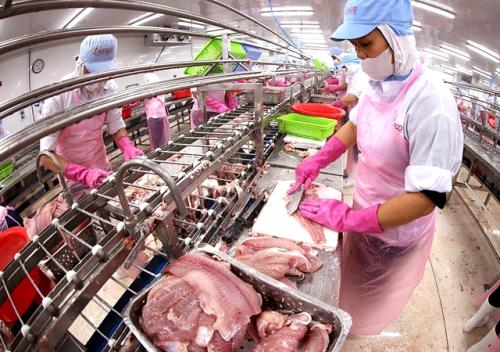
Agriculture continues to provide an important cushion for Việt Nam's trade performance. The sector posted a trade surplus of more than $9 billion in the first half of the year, supported by strong exports of fruit and vegetables, seafood, coffee, rice, timber products and cashew nuts. Industry associations believe continued market expansion and higher-value processed products will help maintain growth and move the agricultural sector closer to its target of $100 billion in export turnover by 2027.

Trade deficit reflects stronger production demand

Although Việt Nam recorded a trade deficit of about $16.65 billion in the first half of 2026, experts say the figure should be viewed in the context of expanding production rather than weakening exports.

Total import-export turnover climbed 27.1 per cent year on year to nearly $550 billion. Exports rose 21 per cent to around $266.5 billion, while imports surged 33.4 per cent to $283.2 billion, reversing the trade surplus recorded during the same period last year.

Import growth has been driven largely by production-related goods rather than consumer products. Electronics, computers and components, together with machinery and equipment, accounted for around 51 per cent of total imports. Other major increases were recorded in steel, chemicals, plastics, textile and footwear materials, reflecting stronger manufacturing activity.

Deputy Director of the Ministry of Industry and Trade's Agency of Foreign Trade Trần Thanh Hải said the current import structure demonstrates that businesses are actively preparing for future production and exports. He noted that higher petroleum import values were also influenced by geopolitical tensions that pushed up global energy prices, making part of the increase a result of external factors rather than higher import volumes.

Economists share the view that the trade deficit is largely an investment in future export capacity. Võ Xuân Vinh, Director of the Institute of Business Research at the University of Economics Ho Chi Minh City, said much of the increase in imports came from foreign-invested manufacturers whose export orders are generally secured in advance.

He also pointed to rising imports of electronic components amid booming global demand for AI-related technologies, as well as greater imports of raw materials for biofuel production. Having sufficient inputs available, he said, will enable manufacturers to respond quickly to international demand in the coming months.

Many analysts have therefore described the first-half trade deficit as "working capital" for export production. The second half of the year traditionally marks the peak purchasing season in major markets such as the US, the EU, Japan and the South Korea. With total trade already approaching $550 billion after six months, Việt Nam is widely expected to surpass $1 trillion in combined import-export turnover for the first time in 2026.

Government and businesses expand export markets

Against a backdrop of persistent uncertainty in global commerce, the Government is implementing a broad range of measures to strengthen export growth during the remainder of the year.

These include expanding overseas markets through economic diplomacy, maximising the benefits of free trade agreements (FTAs), streamlining administrative procedures, reducing logistics costs, improving access to credit and helping businesses overcome trade barriers. Authorities are also encouraging deeper processing, official cross-border exports and greater market diversification to improve the competitiveness of Vietnamese products.

According to the Ministry of Industry and Trade, one priority is helping enterprises make fuller use of existing FTAs while accelerating the conclusion of new agreements. Việt Nam has recently completed negotiations on a free trade agreement with the European Free Trade Association (EFTA), which will become the country's 18th FTA once signed, opening additional opportunities for exporters.

Vietnamese businesses are also actively adjusting their market strategies. Đặng Quý Nhân, General Director of Nam Mekong Agricultural Products JSC (Somekco), said the company, which exports bananas and fresh coconuts, has shifted more shipments to China after exports to the Middle East encountered difficulties earlier this year.

While acknowledging that profit margins in China are relatively low because of price competition, he said the market's strong consumption helps maintain stable demand for farmers' produce. The company is now seeking to expand exports to Russia to diversify markets and improve returns.

Industry associations also remain optimistic. Đặng Phúc Nguyên, General Secretary of the Vietnam Fruit and Vegetable Association (Vinafruit), said fruit and vegetable exports are well positioned to approach the historic $10-billion milestone this year, driven by robust durian shipments and rapid growth in processed products such as canned juices and dried fruit.

He credited government efforts to resolve issues related to growing area codes, packaging standards and customs clearance, enabling exporters to better meet China's import requirements while continuing to expand sales to premium markets including the US, the EU, Japan, South Korea and Australia.

The cashew industry is also expecting a strong finish to the year. Bạch Khánh Nhựt, Vice Chairman of the Vietnam Cashew Association, said exports to the US rose more than 33 per cent in the first half of the year, while Europe and other markets together accounted for about 62 per cent of export turnover, providing a balanced market structure that reduces dependence on any single destination.

If current demand continues through the year-end consumption season in the US, Europe and China, he said Việt Nam remains on track to achieve its $5-billion cashew export target, reinforcing its position as the world's leading exporter of cashew kernels while creating further momentum for higher-value agricultural processing and broader international market expansion.


Industrial real estate market in northern Vietnam maintains growth momentum in H1 2026

Industrial real estate market in northern Vietnam maintains growth momentum in H1 2026

The growth supported by new supply, stable leasing demand and strong absorption of industrial land.

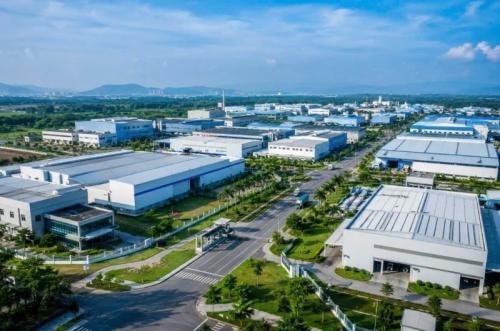
Industrial real estate market in northern Vietnam continued to grow in the first half of 2026, supported by new supply, stable leasing demand and strong absorption of industrial land, which reached its highest level since the first quarter of 2024.

According to CBRE Vietnam, the northern ready-built warehouse and factory market welcomed several large-scale projects during the first six months of the year, mainly in Bac Ninh and Hung Yen pr. Total new supply reached approximately 430,000 square meters, with more than three-quarters coming from ready-built factory projects.

However, the continued addition of new supply pushed the average occupancy rate of ready-built factories in the northern Tier-1 market to 82.7% in the second quarter, down 3.6 percentage points from the previous quarter and 4.2 percentage points year-on-year.

The ready-built warehouse segment, meanwhile, recorded more positive developments as new supply remained moderate while leasing demand from logistics companies and manufacturers stayed strong. Its average occupancy rate reached 85.3% in the second quarter, up 5.1 percentage points quarter-on-quarter and 1.1 percentage points year-on-year.

Average rents in the Tier-1 market stood at $4.9 per square meter per month for ready-built warehouses and $5.1 per square meter per month for ready-built factories, representing annual increases of 5.4% and 3%, respectively.

For industrial land, total net absorption in northern Tier-1 provinces and cities exceeded 217 hectares in the first half of 2026, the highest level since the first quarter, 2024, indicating a clear recovery in demand.

Meanwhile, average industrial land rents reached approximately $143 per square metre for the remaining lease term, up 2.9% year-on-year. The occupancy rate also rose to 81.3%, increasing 1.8 percentage points from the previous quarter and 0.6 percentage points from a year earlier.


See all blog