Lumen Vietnam Fund

Blog

Việt Nam steps up export to achieve US$550-billion target

Việt Nam steps up export to achieve US$550-billion target

Exports reached $266.52 billion in the first six months, meaning the economy needs to generate roughly $245 billion more during the remainder of the year to meet the annual goal.

HÀ NỘI — Việt Nam is intensifying efforts to sustain export momentum in the second half of 2026 as the country works towards its target of US$550 billion in export revenue for the year, despite continuing uncertainties in global trade.

Statistics show that exports reached $266.5 billion in the first six months, meaning the economy needs to generate around $245.5 billion more during the remainder of the year to meet the annual goal.

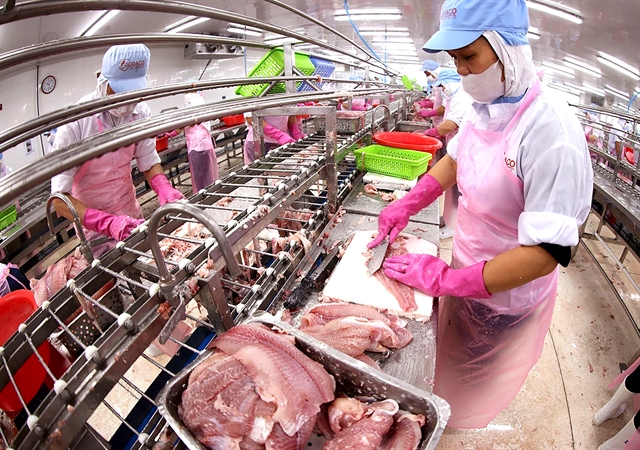
Agriculture continues to provide an important cushion for Việt Nam's trade performance. The sector posted a trade surplus of more than $9 billion in the first half of the year, supported by strong exports of fruit and vegetables, seafood, coffee, rice, timber products and cashew nuts. Industry associations believe continued market expansion and higher-value processed products will help maintain growth and move the agricultural sector closer to its target of $100 billion in export turnover by 2027.

Trade deficit reflects stronger production demand

Although Việt Nam recorded a trade deficit of about $16.65 billion in the first half of 2026, experts say the figure should be viewed in the context of expanding production rather than weakening exports.

Total import-export turnover climbed 27.1 per cent year on year to nearly $550 billion. Exports rose 21 per cent to around $266.5 billion, while imports surged 33.4 per cent to $283.2 billion, reversing the trade surplus recorded during the same period last year.

Import growth has been driven largely by production-related goods rather than consumer products. Electronics, computers and components, together with machinery and equipment, accounted for around 51 per cent of total imports. Other major increases were recorded in steel, chemicals, plastics, textile and footwear materials, reflecting stronger manufacturing activity.

Deputy Director of the Ministry of Industry and Trade's Agency of Foreign Trade Trần Thanh Hải said the current import structure demonstrates that businesses are actively preparing for future production and exports. He noted that higher petroleum import values were also influenced by geopolitical tensions that pushed up global energy prices, making part of the increase a result of external factors rather than higher import volumes.

Economists share the view that the trade deficit is largely an investment in future export capacity. Võ Xuân Vinh, Director of the Institute of Business Research at the University of Economics Ho Chi Minh City, said much of the increase in imports came from foreign-invested manufacturers whose export orders are generally secured in advance.

He also pointed to rising imports of electronic components amid booming global demand for AI-related technologies, as well as greater imports of raw materials for biofuel production. Having sufficient inputs available, he said, will enable manufacturers to respond quickly to international demand in the coming months.

Many analysts have therefore described the first-half trade deficit as "working capital" for export production. The second half of the year traditionally marks the peak purchasing season in major markets such as the US, the EU, Japan and the South Korea. With total trade already approaching $550 billion after six months, Việt Nam is widely expected to surpass $1 trillion in combined import-export turnover for the first time in 2026.

Government and businesses expand export markets

Against a backdrop of persistent uncertainty in global commerce, the Government is implementing a broad range of measures to strengthen export growth during the remainder of the year.

These include expanding overseas markets through economic diplomacy, maximising the benefits of free trade agreements (FTAs), streamlining administrative procedures, reducing logistics costs, improving access to credit and helping businesses overcome trade barriers. Authorities are also encouraging deeper processing, official cross-border exports and greater market diversification to improve the competitiveness of Vietnamese products.

According to the Ministry of Industry and Trade, one priority is helping enterprises make fuller use of existing FTAs while accelerating the conclusion of new agreements. Việt Nam has recently completed negotiations on a free trade agreement with the European Free Trade Association (EFTA), which will become the country's 18th FTA once signed, opening additional opportunities for exporters.

Vietnamese businesses are also actively adjusting their market strategies. Đặng Quý Nhân, General Director of Nam Mekong Agricultural Products JSC (Somekco), said the company, which exports bananas and fresh coconuts, has shifted more shipments to China after exports to the Middle East encountered difficulties earlier this year.

While acknowledging that profit margins in China are relatively low because of price competition, he said the market's strong consumption helps maintain stable demand for farmers' produce. The company is now seeking to expand exports to Russia to diversify markets and improve returns.

Industry associations also remain optimistic. Đặng Phúc Nguyên, General Secretary of the Vietnam Fruit and Vegetable Association (Vinafruit), said fruit and vegetable exports are well positioned to approach the historic $10-billion milestone this year, driven by robust durian shipments and rapid growth in processed products such as canned juices and dried fruit.

He credited government efforts to resolve issues related to growing area codes, packaging standards and customs clearance, enabling exporters to better meet China's import requirements while continuing to expand sales to premium markets including the US, the EU, Japan, South Korea and Australia.

The cashew industry is also expecting a strong finish to the year. Bạch Khánh Nhựt, Vice Chairman of the Vietnam Cashew Association, said exports to the US rose more than 33 per cent in the first half of the year, while Europe and other markets together accounted for about 62 per cent of export turnover, providing a balanced market structure that reduces dependence on any single destination.

If current demand continues through the year-end consumption season in the US, Europe and China, he said Việt Nam remains on track to achieve its $5-billion cashew export target, reinforcing its position as the world's leading exporter of cashew kernels while creating further momentum for higher-value agricultural processing and broader international market expansion.


Source: VNS

Photo: VNA/VNS Photo
Latest Posts

Industrial real estate market in northern Vietnam maintains growth momentum in H1 2026

Industrial real estate market in northern Vietnam maintains growth momentum in H1 2026

The growth supported by new supply, stable leasing demand and strong absorption of industrial land.

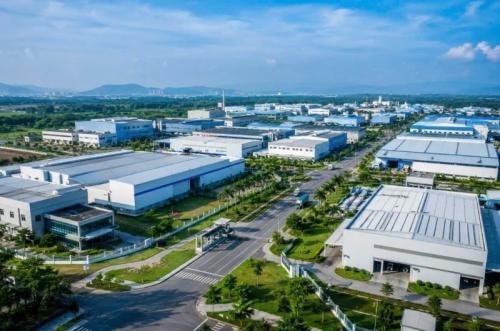
Industrial real estate market in northern Vietnam continued to grow in the first half of 2026, supported by new supply, stable leasing demand and strong absorption of industrial land, which reached its highest level since the first quarter of 2024.

According to CBRE Vietnam, the northern ready-built warehouse and factory market welcomed several large-scale projects during the first six months of the year, mainly in Bac Ninh and Hung Yen pr. Total new supply reached approximately 430,000 square meters, with more than three-quarters coming from ready-built factory projects.

However, the continued addition of new supply pushed the average occupancy rate of ready-built factories in the northern Tier-1 market to 82.7% in the second quarter, down 3.6 percentage points from the previous quarter and 4.2 percentage points year-on-year.

The ready-built warehouse segment, meanwhile, recorded more positive developments as new supply remained moderate while leasing demand from logistics companies and manufacturers stayed strong. Its average occupancy rate reached 85.3% in the second quarter, up 5.1 percentage points quarter-on-quarter and 1.1 percentage points year-on-year.

Average rents in the Tier-1 market stood at $4.9 per square meter per month for ready-built warehouses and $5.1 per square meter per month for ready-built factories, representing annual increases of 5.4% and 3%, respectively.

For industrial land, total net absorption in northern Tier-1 provinces and cities exceeded 217 hectares in the first half of 2026, the highest level since the first quarter, 2024, indicating a clear recovery in demand.

Meanwhile, average industrial land rents reached approximately $143 per square metre for the remaining lease term, up 2.9% year-on-year. The occupancy rate also rose to 81.3%, increasing 1.8 percentage points from the previous quarter and 0.6 percentage points from a year earlier.


Hanoi office vacancy rate tops 26% amid rising supply

Hanoi office vacancy rate tops 26% amid rising supply

The emergence of large-scale projects in western Hanoi has driven office supply higher and pushed vacancy rates up, while the retail segment has recorded positive signals thanks to the arrival of international brands.

Abundant office supply heats up competition

Hanoi's office market added more than 95,700 square meters of new floor space in the first half of 2026, according to the latest report by global commercial real estate and investment management firm JLL.

Grade A and B office space in Hanoi grew by 60,000 square meters in the second quarter alone following the opening of IFC Hanoi in the West Westlake area, bringing the capital city's total stock to about 2.2 million square meters.

The increase in office supply sent the Grade A vacancy rate soaring to 26.2 percent, up from 16.5 percent at the end of 2025.

The city's central area is facing growing pressure as tenants with expiring leases consider moving to newer, more suitable premises.

Average Grade A gross rents stood at around $36.8 per square meter per month, equivalent to nearly VND1 million, down slightly by 0.8 percent quarter on quarter.

The decline was mainly due to new projects outside the central area offering lower asking rents to attract tenants.

To cope with rising competitive pressure, many landlords are offering more flexible leasing terms, including longer rent-free periods, while upgrading their properties to meet green standards such as LEED and EDGE and qualify for smart building certifications.

Retail market remains buoyant as global brands expand

While Hanoi's office segment faced mounting pressure, the retail real estate market showed more positive momentum, with JLL reporting strong net absorption.

The opening of Hanoi Centre early in the year helped lift net absorption in the central area to 35,900 square meters in January-June.

In non-central areas, the vacancy rate fell to 6.4 percent despite changes in the tenant mix. Demand for retail space continued to come mainly from the food and beverage (F&B) and fashion industries.

Hanoi continued to demonstrate its appeal to global retailers, attracting major brands including Zara, Uniqlo, Urban Revivo, Victoria's Secret, and Pop Mart.

Monthly rents in the central area remained high at $133.1 per square meter, while rents in non-central areas rose 2.1 percent year on year to $55.4 per square meter.

Le Thi Huyen Trang, country head of JLL Vietnam, said the market was becoming increasingly polarized, with a growing preference for properties that deliver tangible value to tenants.

The West Westlake area is forecast to emerge as Hanoi's new Grade A office hub, with nearly 260,000 square meters of space expected to enter the market between 2027 and 2030, accounting for 85 percent of the city's new supply.

In addition, Hanoi's urban redevelopment, driven by major transport projects such as Beltway No. 4, urban railway lines, and bridges across the Red River, is expected to reshape the city's spatial structure and commercial real estate values over the long term.


Major works at Long Thanh International Airport gather pace towards completion

Major works at Long Thanh International Airport gather pace towards completion

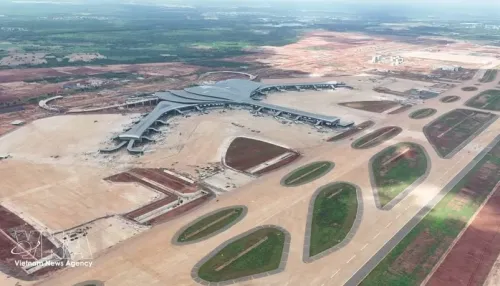
Construction of several key components of Long Thanh International Airport is entering its final stages as contractors accelerate progress to meet the project's completion schedule, according to the Airports Corporation of Vietnam (ACV).

​The ACV said on July 20 that contractors are deploying additional workers and equipment to speed up construction under Component Project 3, which covers the airport's essential aviation infrastructure. Major facilities, including the first and second runways, taxiways, aircraft aprons, the passenger terminal apron and the aircraft fuel supply system, are approaching completion.

The first runway, together with its associated taxiways and aircraft parking apron, has reached nearly 91% of the contracted workload. Construction of the runway and airside taxiway system has been largely completed, while technical test flights were successfully carried out in December 2025. The package is expected to be finished by the end of July.

Construction of the passenger terminal aircraft apron has also made significant progress, with nearly 90% of the contract completed. The underground service tunnel for ground support equipment and the drainage system have already been finished, while foundation works and concrete paving have reached around 99%. Contractors are now completing concrete joint sealing, service roads, mechanically stabilised earth retaining walls, retention ponds and other supporting infrastructure. The package is scheduled for completion by the end of August.

The airport's aircraft fuel supply system has reached about 88% completion. Meanwhile, construction of the second runway and its taxiways is progressing rapidly. The runway pavement structure has been completed, and contractors are finishing the remaining concrete works. This package is expected to be completed by the end of September.

The passenger terminal, the airport's largest and most important structure, has now reached more than 67% of its contract value.

The building's structural construction is scheduled for completion in September, after which contractors will begin testing major systems and equipment, including baggage handling, baggage screening, aircraft docking guidance systems, escalators, moving walkways and elevators.

Other key facilities, including internal airport roads, technical infrastructure, airport management systems, the multi-storey car park and cargo terminal No. 1, are also being built on schedule and are expected to begin operation simultaneously by the end of the year.

According to the ACV, Component Project 3 has completed nearly 78% of the total value of signed contracts. The project's main construction packages alone have achieved nearly VND58 trillion (about US$2.2 billion) in completed work, equivalent to around 70% of their total contract value.

Nearly 7,200 workers are currently working on the site, and the ACV has instructed contractors to recruit an additional 2,000 personnel to ensure the airport is ready for commercial operations by the end of the year.

The ACV acknowledged that the rainy season poses significant challenges, particularly for earthworks, cement concrete paving and asphalt construction carried out outdoors.

To minimise weather-related disruptions, contractors have been instructed to implement detailed rainy-season construction plans, prioritise indoor work during periods of heavy rainfall, strengthen on-site drainage systems, install backup pumps in construction areas and adjust work schedules flexibly in response to changing weather conditions.

See all blog