Lumen Vietnam Fund

Blog

Vietnam extends preferential tax policies for fuel imports

Vietnam extends preferential tax policies for fuel imports

The move aimed at diversifying fuel supply sources, and strengthening energy security.

The Government has issued a resolution, extending preferential import tax, environmental protection tax and value-added tax policies for gasoline, oil products, fuel-production inputs and aviation fuel.

Under the new resolution, the preferential import tax measures introduced under Resolution No. 25/2026/NQ-CP and Decree No. 72/2026/ND-CP will be extended. The policy is aimed at diversifying fuel supply sources and enabling businesses to import from markets beyond ASEAN and South Korea, helping reduce dependence on a limited number of suppliers and strengthen energy security.

Under Decree 72, the preferential import tariff on unleaded motor gasoline was reduced from 10% to 0%, while the same rate applies to certain gasoline-blending materials, including naphtha and reformate.

For diesel, fuel oil, aviation fuel and kerosene, the preferential import tariff was cut from 7% to 0%. Tariffs on certain petrochemical inputs, including xylene, condensate and p-xylene, were also reduced from 3% to 0%, while the rate for other cyclic hydrocarbons was cut from 2% to 0%.

The Government will also extend environmental protection tax and VAT policies under Resolution No. 19/2026/QH16 through December 31, 2026. Accordingly, the environmental protection tax on gasoline, excluding ethanol, as well as diesel, kerosene, fuel oil and aviation fuel, will remain at zero.

Meanwhile, gasoline, diesel, kerosene, fuel oil and aviation fuel will remain subject to a VAT mechanism under which businesses are not required to declare and pay output VAT but may deduct input VAT.

Excise tax on gasoline will continue to be governed by the 2025 Law on Special Consumption Tax and related regulations, with current rates of 10% for conventional gasoline, 8% for E5 gasoline and 7% for E10 gasoline.


Source: Hoang Son

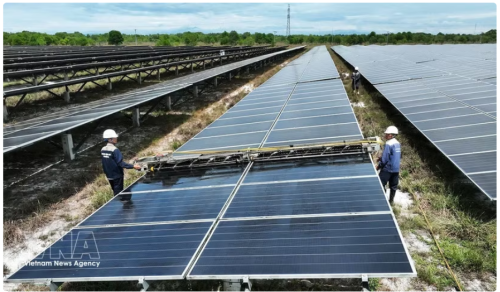
Photo: Illustrative image

Latest Posts

Higher interest rates reshape valuations across Vietnamese asset classes

Higher interest rates reshape valuations across Vietnamese asset classes

Deposit rates remain elevated in Vietnam, while the outlook for lower lending rates remains uncertain. As bank deposits return yields of 6-8% a year, stocks, property, bonds, gold and foreign currencies are all facing a higher return benchmark in the competition for capital.

In the interbank market, short-term liquidity pressures have eased significantly after sharp fluctuations in September. On September 21, overnight lending rates briefly rose to 7% per year, about 2.5 percentage points higher than at the end of the previous week.

By September 24, the rate had fallen to 1% per year, while one-week rates stood at 5.1%, two-week rates at 5.2% and one-month rates at 6.15%. On September 28, the overnight rate declined further to 0.48%.

The easing of interbank rates indicates that immediate liquidity stress has subsided, but deposit rates at commercial banks have not fallen correspondingly.

By mid-September, the four largest state-owned banks maintained deposit rates of around 6.6% per year for six-month terms and about 6.8% for 12-month terms. At some joint-stock commercial banks, 12-month deposit rates were between 7% and 7.8%. Some special deposit products offered higher rates, but these do not represent the broader market level.

The gap between interbank rates and deposit rates reflects two different pressures. Short-term liquidity conditions can improve quickly after policy measures, while banks' funding costs depend on credit demand, competition for deposits and the need to secure capital for the final months of the year.

KB Securities Vietnam (KBSV) said deposit rates had reached their peak and could remain elevated in the third quarter before easing slightly from early in the fourth quarter. Vietcombank Securities (VCBS), however, continued to highlight funding pressure as credit growth is expected to remain high.

Deposit growth reached 8.77% in August from the end of 2025, higher than credit growth of 8.38%. The gap has helped ease some pressure on the banking system's funding sources, but it is not enough to confirm that deposit rates will decline soon.

The final months of the year are typically a period when credit demand rises rapidly. If demand for capital continues to expand, banks may need to maintain sufficiently attractive deposit rates to retain funds.

Exchange rates are another constraint on the ability to cut rates. In September, the U.S. Federal Reserve raised interest rates by 25 basis points, bringing its target range to 3.75-4%. New projections from Federal Open Market Committee members showed that room for further monetary tightening remained.

Banking expert Nguyen Tri Hieu said U.S. interest-rate developments continued to affect exchange rates and Vietnam's monetary policy room.

When U.S. bond yields rise and the dollar remains strong, rapid domestic rate cuts become more difficult. If interest-rate differentials narrow too much, pressure on the exchange rate could increase, potentially feeding back into inflation.

The current environment therefore appears more consistent with a scenario of less volatile but still elevated interest rates, rather than a broad-based rapid rate-cut cycle.

Vietnam's credit-to-GDP ratio is currently around 150%. The large scale of credit means monetary management cannot rely mainly on further credit expansion, but must also focus on controlling the quality of capital allocation.

In this environment, high interest rates are beginning to have a clearer impact on how investors value different asset classes.

Property market faces pressure from funding costs

Property is among the markets most sensitive to interest rates. When deposit rates rise, banks' funding costs increase, limiting their ability to reduce lending rates.

For highly leveraged property companies, higher financial costs continue to weigh on cash flows, profitability and project development progress.

In a property sector report released in July, brokerage MBS said the residential property market in 2026 was being affected by high interest rates, causing liquidity and absorption rates to slow. The northern and southern markets were also showing different trends.

Greater pressure was falling on projects that had yet to generate cash flows, as developers may need to extend restructuring efforts, sell assets or seek financially stronger partners.

Segments serving genuine housing demand or generating clearer cash flows are proving more resilient. Industrial property has its own growth drivers thanks to foreign direct investment inflows and land rental demand, but each company's performance still depends heavily on legal progress, land handover schedules and revenue recognition timing.

For individual investors, the current interest-rate environment is changing investment calculations.

When 12-month deposits can generate returns of 6-8% per year, a low-liquidity property asset with high transaction costs and no cash flow must deliver sufficient price appreciation to compensate for the foregone yield.

Assets driven mainly by expectations of future price increases therefore face greater pressure than those with real demand or stable income generation.

Stocks face selective rather than broad-based gains

For equities, interest rates affect both capital flows and valuations. Higher deposit rates increase the opportunity cost of holding stocks. When safer assets offer higher returns, investors also demand higher returns from riskier assets. This puts pressure on the valuation multiples investors are willing to pay.

However, high interest rates do not necessarily mean money will leave equities if corporate earnings continue to grow.

SSI Securities's research unit said interest rates had not fallen significantly, while earnings prospects in the second half of the year could be less impressive than in the first half. Investment focus was therefore shifting towards sector and company selection rather than expectations of a broad market rally.

Banks are directly affected by funding costs. Banks with high CASA ratios, strong deposit mobilization and stable asset quality have an advantage in maintaining net interest margins, while those that need to raise deposit rates aggressively face greater pressure on funding costs and profits.

For listed property companies, pressure comes from both higher financial costs and weaker demand as buyers using leverage face higher borrowing costs.

Companies in manufacturing, exports, infrastructure, power and logistics with relatively stable operating cash flows may be less affected by the property credit cycle. However, this advantage still depends on each company's capital structure, industry outlook and ability to sustain earnings.

High interest rates are therefore making the market more differentiated rather than moving all asset classes in the same direction.

Bonds, gold and foreign currencies

The corporate bond market is also facing direct pressure as bank deposits become more attractive.

To compete for capital, bonds need to offer yields high enough to compensate for credit risks, particularly for property companies with weak cash flows or large refinancing needs.

HNX data showed that in September, some five- to six-year bank bond issuances carried interest rates of around 8.2-9% per year.

MBS also announced that the interest rate applicable to the fifth and sixth interest periods of its MBS12501 bond was 8.1% per year.

These levels show that funding costs in the bond market remain significant, creating an advantage for companies with strong cash flows, sound financial foundations and high transparency. For weaker companies, issuing new bonds to refinance existing debt will become increasingly difficult.

Gold and foreign currencies are also facing stronger competition from deposits.

When VND interest rates remain high, the opportunity cost of holding non-income-generating assets rises.

For gold, support continues to come from geopolitical uncertainty, global monetary policy and demand for hedging. However, to attract domestic capital, gold prices need to rise enough to compete with the returns available from bank deposits.

On September 29, domestic gold prices continued to fluctuate sharply, while global gold prices faced pressure from expectations that U.S. interest rates would remain elevated.

The domestic exchange rate has shown signs of easing. On September 29, the State Bank of Vietnam set the central exchange rate at VND25,630 per U.S. dollar, down VND2 from the previous session. However, the dollar remains heavily influenced by U.S. bond yields and expectations for Fed policy.

When bank deposits offer returns of 6-8% a year, investment channels with higher volatility must generate sufficiently large returns to compensate for risk, liquidity constraints and funding costs.

Capital is therefore unlikely to flow broadly into a single market. The ability to generate cash flow, leverage levels and asset quality will determine the attractiveness of each investment option while interest rates remain elevated.


Sun PhuQuoc Airways approved to expand wide body flight operations to Europe

Sun PhuQuoc Airways approved to expand wide body flight operations to Europe

This regulatory approval marks a major milestone for SPA following its initial AOC issuance on September 25, 2025, and its inaugural commercial flight on November 1, 2025.

The Civil Aviation Authority of Vietnam (CAAV) has approved Sun PhuQuoc Airways (SPA) to operate Airbus A330 wide-body aircraft starting September 30, expanding its operational territory to Europe just one year after securing its Air Operator Certificate (AOC).

This regulatory approval marks a major milestone for SPA following its initial AOC issuance on September 25, 2025, and its inaugural commercial flight on November 1, 2025.

According to SPA, the airline submitted its application for A330 operation approval on April 16, 2026. Throughout the evaluation process, the carrier finalized operational documentation, conducted rigorous training programs, and underwent mandatory verification checks covering flight operations, maintenance engineering, dispatch, and ground services. CAAV authorities performed comprehensive inspections before granting full operational approval for the wide-body fleet.

Under its fleet expansion roadmap, SPA has taken delivery of its first owned Airbus A330 (registration VN-A969). The aircraft is scheduled to enter commercial service on October 3 on the Hanoi - Ho Chi Minh City route before deployment on international long-haul flights. SPA plans to expand its A330 fleet to eight aircraft by April 2027.

The airline’s first international route using the A330 will connect the pearl island of Phu Quoc and Moscow (PQC-SVO), set to be launched on November 13, 2026. SPA is also conducting feasibility studies for additional direct routes from Phu Quoc to key markets across Europe and Central Asia. The airline also plans to introduce the A330 on routes to Japan from January 2027 and to Australia from May 2027.

Prior to receiving A330 approval, SPA held authorization to operate flights to over 10 international destinations across Northeast Asia, Southeast Asia, and Central Asia. During its first year of operations, the airline carried nearly 3.4 million passengers.

The addition of the A330 marks SPA’s strategic transition from a narrow-body operator to a dual narrow-body and wide-body carrier.

The airline plans to introduce Boeing 787-9 Dreamliners to service longer transcontinental routes.


Vietnam’s corporate bond market remains dominated by major groups

Vietnam’s corporate bond market remains dominated by major groups

Major real estate companies accounted for VND154 trillion ($5.93 billion), or 38.65%, of the total VND398 trillion ($15.32 billion) worth of corporate bonds issued in Vietnam since the beginning of 2026.

Data shows that issuers affiliated with or linked to Vingroup led the market, with total bond issuance of around VND69.41 trillion ($2.67 billion), equivalent to 17.42% of the total. They were followed by companies affiliated with or linked to Masterise, with around VND67.88 trillion, accounting for 17.03%. Together, the two groups raised around VND137.29 trillion ($5.29 billion), or over 34.45% of total corporate bond issuance since the beginning of the year.

The gap between the two leading groups is not large, but their fundraising structures differ. For Vingroup, issuance has been significantly concentrated at Vinhomes, which issued 17 bond packages with a total value of around VND51.5 trillion ($1.98 billion). Other issuers include Vinpearl, Thai Son, Can Gio Tourism Urban, and Green City Development.

Notably, many bond packages issued by Vinhomes and other companies in the Vingroup ecosystem were valued at between VND1 trillion ($38.5 million) and VND3 trillion. A series of Vinhomes bond packages have 36-month maturities and coupon rates of 12-12.5% per year.

While Vingroup’s large issuance volume is significantly concentrated at Vinhomes, the Masterise group has a different structure, with issuance conducted through multiple legal entities. According to the data, issuers belonging to the Masterise group include Hung Long, Hung Phat Invest Hanoi, Minh An, Masterise Lumiere Office, Thoi Dai Moi T&T, Parkland 53, Phat Dat, Thai Bao, and Thanh Quang.

Specifically, Hung Long issued a total of VND16 trillion ($616 million) in three offerings. Hung Phat Invest Hanoi issued VND9.3 trillion, while Thoi Dai Moi T&T had a single bond package worth VND8 trillion.

Many bond packages issued by the Masterise group were very large, ranging from VND5 trillion ($192.52 million) to VND7 trillion. Coupon rates were generally between 10% and 10.6% per year. The relatively low rates are also a key characteristic of these legal entities.

In terms of issuance value, Vinhomes ranked first with a bond package worth as much as VND15 trillion ($577.53 million), carrying a coupon rate of 12% per year. It was followed by a VND10.2 trillion issuance by Marina Center Investment Co., Ltd., a company linked to Sovico Group. This was also the longest-maturity bond package, at up to 120 months, while carrying a coupon rate of just 4% per year.

There were also issuers affiliated with or linked to MIK Group, Sun Group and Sunshine, among others, although their shares were not significant. Coupon rates ranged from 9.5% to 12.5% per year, with maturities of 36 to 60 months.

A notable aspect is the stated purpose of bond issuance by the Vingroup and Masterise ecosystems.

Companies belonging to the Vingroup family had three main purposes for issuing bonds: debt restructuring, at VND35.5 trillion ($1.37 billion), accounting for 51.1% of its total issuance; site clearance and related costs for the Olympic Sports Urban Area project in Hanoi, at VND29 trillion, or 41.8%; and the Van Village integrated tourism and resort urban project in the central city of Danang, at VND4.91 trillion, or 7.1%.

The structure of Vingroup’s bond-issuance purposes thus reflects two parallel needs: managing and restructuring debt obligations while also raising substantial capital to accelerate large-scale real estate and tourism projects.

For the Masterise group, affiliated legal entities used around VND30 trillion ($1.16 billion) raised from corporate bond issuance, equivalent to 44.2% of its total issuance this year, to acquire part of the low-rise and high-rise zones of the Ha Long Xanh integrated urban area in Tuan Chau, Dong Mai and Ha An wards, the northern city of Quang Ninh.

In addition, Hung Phat Invest Hanoi used VND9.3 trillion ($358.07 million) from corporate bonds to acquire High-Rise Residential Area No. 4, part of the International University Urban Area project in Ho Chi Minh City.

Minh An spent VND7.5 trillion from corporate bond proceeds acquiring the Cao Xa La project in Hanoi. Meanwhile, Thoi Dai Moi T&T used the entire VND8 trillion raised from its corporate bond issuance to transfer funds to Capitaland Tower to pay part of the corresponding transfer price to Can Gio Tourism Urban Joint Stock Company.

Apart from two bond lots issued by Phat Dat Real Estate Development Corp. whose purposes were unclear and one by Thai Bao Real Estate, which was used to advance part of the site-clearance costs for the Gia Binh 1 International Airport Urban Area project in Bac Ninh city, the remaining bond packages issued by entities affiliated with or linked to Masterise were used for mergers and acquisitions (M&As).

Why are corporate bonds concentrated among major groups?

The concentration of corporate bond flows among large non-financial corporate groups is not difficult to explain. Vingroup, Masterise Group, Sovico Group, MIK Group and Sun Group all have strong financial capacity and large asset bases.

Their solid financial foundations and strong reputations in their respective business fields not only give them room to develop large-scale projects, but also enable them to access the bond market with issuances worth trillions of VND (VND1 trillion = $38.5 million).

Conversely, when corporate bond buyers are mainly securities firms, banks and professional investment institutions, the ability of large companies to continuously raise capital through large bond issuances also partly reflects market confidence in their financial capacity, project execution capabilities, and debt repayment plans.

Dr. Bui Thanh Minh, deputy director at the Private Sector Development Research Board (Board IV) Office, said concentration in the stock market also creates new capital advantages for companies that already have advantages. As enterprise valuations increase, they may gain better access to issuing shares and bonds, using equity in mergers and acquisitions, and obtaining credit. Meanwhile, most small and medium-sized unlisted enterprises remain largely outside this process of increasing financial asset value.

“The capital allocation mechanism can cause this divergence to reinforce itself. Companies in the upper tier can borrow on more favorable terms and may issue shares and bonds or raise capital from strategic investors, allowing them to invest earlier in technology and continue expanding market share. Companies in the lower tier lack collateral, have less standardized financial statements and volatile cash flows, making borrowing more difficult; the lack of capital then prevents them from innovating, making it even harder to meet financing requirements,” he emphasized.

The issue, therefore, is not simply how to expand the corporate bond market, but, more importantly, how to ensure that capital flows in the market reach a broader range of businesses.

One proposed solution is to design different layers of capital to meet businesses’ diverse needs. This is particularly important because not every small business is suited to issuing bonds directly. Issuance costs, disclosure requirements, credit ratings and access to investors can make small-scale issuances inefficient. If all businesses are required to enter the bond market on their own, the gap between large and small companies may persist.

To address this issue, Dr. Minh proposed four different layers of capital.

The first is foundational capital for the majority of businesses, including working capital, factoring, supply-chain financing, financial leasing and credit guarantees for businesses with actual operations, orders and cash flows but insufficient collateral.

The second is transition capital, including medium- and long-term credit, green credit, equipment leasing, energy-efficiency funds and digital transformation support programs. This layer of capital should target investments where improvements in productivity, emissions reductions, traceability and the localization rate can be measured.

This is the layer that directly translates the spirit of the Politburo’s Resolution 57, dated December 22, 2024, on breakthroughs in science-technology, innovation and national digital transformation and Resolution 68, issued on May 4, 2025, on private-sector development into competitiveness at the enterprise level.

The third is risk capital for innovation. Venture capital funds, angel investors, private equity funds, co-investment mechanisms, research and development incentives, intellectual property valuation and sandbox frameworks need to be developed in a coordinated manner.

Not every technology project can be expected to immediately generate stable cash flows or have real estate available as collateral. A financial system seeking to support innovation needs a portion of capital that can accept the probability of failure, while managing risk through portfolios, performance milestones and transparent divestment mechanisms.

The fourth is linkage and growth capital. Politburo Resolution 10, dated on June 8, 2026, sets out the requirement that FDI capital should not only provide funding but also facilitate technology transfer, supplier development and linkages with domestic businesses. Therefore, credit, guarantee, co-financing and supplier-development programs should prioritize Vietnamese businesses capable of meeting the standards of major corporations, FDI companies and global supply chains.

At the same time, private companies capable of taking a leading role should have access to the equity and bond markets, project finance and M&A capital, while this access should be accompanied by modern governance, fair competition and the ability to support the development of the domestic business ecosystem.

The challenge of spreading capital, therefore, is not simply about putting more money into businesses that lack funding, but about creating a pathway through which businesses can move from foundational capital and transition capital to risk capital and growth capital. Each layer addresses a different bottleneck while creating the conditions for businesses to move to the next stage.

From this perspective, the next important issue is not only having multiple sources of capital, but ensuring that these channels are interconnected. Nguyen Ba Hung, chief economist at the Asian Development Bank (ADB), stressed the need for connectivity among equity, bond, credit and private investment channels.

He cited the example of infrastructure projects in many countries, which often rely on bank credit during the construction phase because this is a high-risk stage. Once a project is completed and begins generating revenue, construction risk is reduced, allowing the company to issue long-term bonds to refinance and repay the bank loan. This then frees up bank capital to finance other projects.

According to him, this mechanism shows that capital does not necessarily have to remain with one company or within one financial channel throughout the life cycle of a project. Bank capital can come first, followed by bond financing; private capital can participate during the high-risk stage, while capital markets can take over once the project’s cash flows become more stable. It is this movement between channels that creates the capacity to recycle capital and expand the economy’s overall supply of funding.

In the context of corporate bonds, rather than expecting small and medium-sized enterprises to immediately become issuers large enough to access the market, mechanisms should be created to allow capital to flow through different tiers of businesses and financial channels throughout a project’s life cycle. In that case, the development of the bond market would not be measured solely by the amount of capital raised, but also by its ability to release and reallocate capital to other businesses, projects and sectors of the economy.

Attracting capital to the private sector is one of the key issues identified by the Politburo, the Government and regulatory agencies as they work to improve the growth model and develop the capital market.

Politburo Resolution 68 on private-sector development calls for diversifying sources of capital for the sector while improving regulations governing the corporate bond market and expanding stable, reasonably priced channels for private businesses to raise funds. The policy direction shows that the objective is not only to increase the amount of capital supplied to the economy, but also to broaden private businesses’ access to financing.

At the capital-market level, the Securities Market Development Strategy by 2030, approved by the Prime Minister on December 29, 2023, also identifies the securities market as an important channel for mobilizing medium- and long-term capital for the economy, while continuing to restructure the market, improve quality and develop its components in a coordinated manner. The strategy sets a target for total outstanding bonds to reach at least 58% of GDP by 2030, including corporate bonds at a minimum of 25% of GDP.

The legal framework governing the corporate bond market has recently been further strengthened with the Government’s Decree 200/2026/ND-CP, which replaces Decrees 153/2020, 65/2022 and 08/2023. According to the State Securities Commission (SSC), one of the decree’s objectives is to improve the legal framework, increase openness and transparency, enhance the effectiveness of management and supervision, and protect investors’ rights, while creating conditions for businesses to raise medium- and long-term capital for production, business activities and development investment.

In addition, the SSC is studying a mechanism to establish a dedicated market for startups to raise capital. The creation of a specialized trading platform is expected to provide a seamless connection between venture capital (VC), private equity (PE) and public capital markets. This would give startups greater opportunities to raise funds, expand their operations and improve transparency in their activities.

Vietnam’s economy is entering a period of growth with ambitious targets. In 2025, GDP grew 8.02%, bringing the size of the economy to around $514 billion. For 2026-2030, the country has set a target of average annual GDP growth of at least 10%, while seeking to maintain total society's investment at an average equivalent to around 40% of GDP each year. The amount of capital required to achieve these targets is substantial. Infrastructure investment needs alone are estimated by the World Bank (WB) at around $30 billion a year.

Meanwhile, Vietnam’s financial system remains heavily dependent on bank credit. This is the main source of capital for the economy, but as demand for medium- and long-term funding rises sharply, continued heavy reliance on credit also creates constraints on the economy’s ability to meet its capital needs and puts additional pressure on the banking system. The WB has stressed the need to develop capital markets to supplement long-term financing, particularly for infrastructure investment and the transition to a high-income economy.

Diversifying channels for capital mobilization has therefore become an urgent requirement. Vietnam needs a more balanced financial structure in which bank credit, equities and corporate bonds play complementary roles. While equities provide equity capital, corporate bonds can provide medium- and long-term funding directly from the market, making them particularly suitable for sectors that require large amounts of capital and have long payback periods.

This direction has been established in policies adopted by the Party and State. The Politburo's Resolution 68-NQ/TW on private-sector development emphasizes the need to diversify sources of capital and improve the corporate bond market. The Securities Market Development Strategy by 2030 also sets a target for outstanding corporate bonds to reach at least 25% of GDP by that year.

Against a backdrop of growing demand for capital to support economic growth, the corporate bond market needs to expand rapidly but not overheated, with greater scale accompanied by transparency, safety and market discipline. A sufficiently large corporate bond market, with the ability to value risk and provide strong liquidity, would become an important medium- and long-term channel for capital, giving businesses more options for raising funds, easing pressure on bank credit and mobilizing additional resources for development investment. This is not only a requirement for the financial market, but is increasingly an important condition for Vietnam to achieve its double-digit growth target in the coming period.


See all blog