Lumen Vietnam Fund

Blog

Vietnam e-commerce growth outpaces traditional retail

Vietnam e-commerce growth outpaces traditional retail

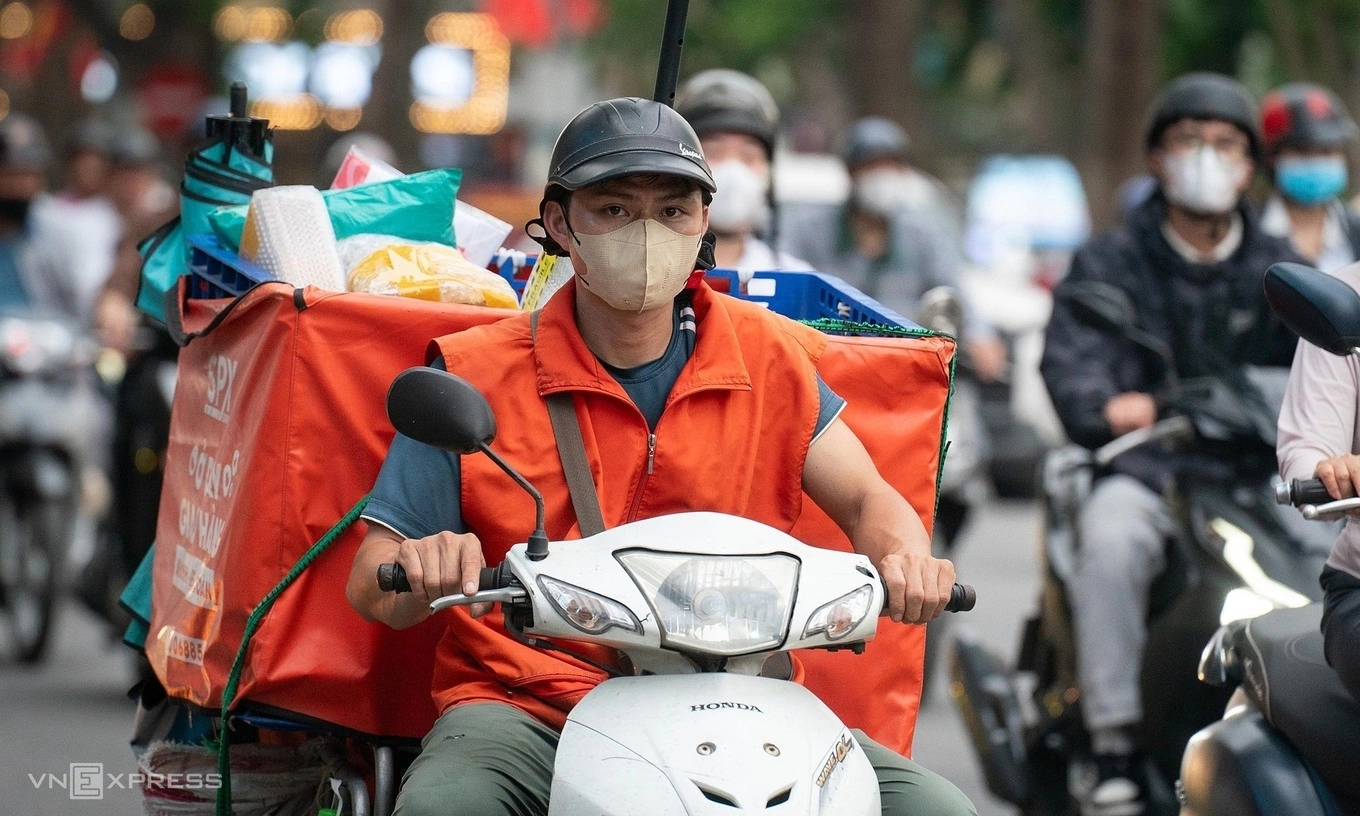
Online retail sales across major e-commerce platforms grew by more than 40% year-on-year in the first half of 2026, or three times the pace of Vietnam's overall retail sector growth.

A report by e-commerce data analytics platform Metric said the four major multi-category online marketplaces (Shopee, TikTok Shop, Lazada, and Tiki) saw gross merchandise value (GMV) grow by 38-52%.

Together, they hosted 613,900 stores, whose GMV was VND291.6 trillion (US$11.07 billion) and who sold more than 2.18 billion products, up 41% and 12%.

That means consumers spent an average of VND1.6 trillion a day to buy 12 million products, with beauty, fashion, home and living, groceries and food, and household appliances accounting for the largest share.

Popular brands have benefited from the rise of e-commerce. Audio equipment retailer JBL, for example, said its second-quarter sales on Lazada doubled from a year earlier.

A JBL Vietnam spokesperson said online channels not only generate high traffic and help the brand reach more customers, but also provide an effective platform for promotional campaigns targeting younger consumers.

Online accounted for 10% of overall retail sales, which exceeded VND2.94 quadrillion during the half, up 12.5% from a year earlier, according to data from the General Statistics Office.

Online retail’s rapid expansion has been partly attributed to the effect of livestreaming. A recent online survey by market researcher Q&Me found that livestream shopping has become the primary purchasing channel for online shoppers, accounting for 67% of their online spending.

Speaking at a seminar last month, Ta Van Thanh, CEO of footwear retailer Nesty, said more than half of the brand's sales on TikTok Shop comes from livestreaming. The company plans to expand its partnerships with content creators this year, he added.

Discounts also encourage many consumers to choose online shopping over brick-and-mortar stores. Q&Me said 82% of surveyed consumers said discounts were a key factor influencing their purchase decisions, as livestream-exclusive vouchers and limited-time promotions encouraged immediate buying decisions.

During Lazada's June 6 promotional campaign, its GMV rose 276% from an average day.

Delivery speed also plays a key role. Shopee said merchants offering express delivery within one hour or four hours recorded order growth of up to 130% compared with sellers who did not.

The platform said it would continue investing in operational infrastructure and expanding logistics partnerships to reduce delivery times.

But both Shopee and TikTok Shop have raised their fees for merchants, forcing some sellers to hike their prices in turn. Following sellers’ complaints, the National Competition Commission has requested the platforms to make a report on the impact of their higher fees.

Tran Lam, an online sales training expert, said the market is gradually moving beyond the "cash-burning" phase, which means sellers now need to prioritize improving business efficiency.

"Costs continue to rise on the platforms but consumers still expect lower prices, faster delivery, and more promotions."

Content creator Hoang Van Khoa, better known as PewPew on social media, said building a multi-platform ecosystem – developing each piece of content into multiple formats and distributing it across channels ranging from Shopee to Facebook and Instagram – has been key to his success.

"Through this approach, my content now consistently attracts more than 30 million views each month."

Metric advised merchants to develop product portfolios based on search trend data, price segmentation, and seasonal demand rather than intuition.

It also recommended improving product quality, images, and information while combining advertising, promotions, livestreaming, affiliate marketing, and social media content to broaden customer reach.

Sarah Nguyen, commercial director of Shopee Vietnam, said e-commerce is entering a new phase of development as consumers increasingly expect better experiences, greater personalization, and higher levels of trust.

She said this would require platforms to invest more in artificial intelligence, infrastructure, and solutions that deliver seamless shopping experiences while expanding merchants' access to buyers.

Source: Vien Thong

Photo: Photo by VnExpress/Hoang Giang
Latest Posts

IMF official says few countries match Vietnam's reform drive

IMF official says few countries match Vietnam's reform drive

Few countries have carried out reforms on the scale of Vietnam in recent years, while the Southeast Asian nation’s economy has shown impressive growth and resilience in the face of external shocks, an International Monetary Fund (IMF) official said on Tuesday.

Jochen Schmittmann, the outgoing regional resident representative for the IMF Resident Offices in Vietnam, Cambodia, and Laos, made the remarks during a meeting with Vietnamese Prime Minister Le Minh Hung in Hanoi.

Also attending the meeting was Fazurin Jamaludin, who will assume the position of IMF representative for Vietnam and Laos from August 23.

The Vietnamese premier thanked Schmittmann for his contributions during his tenure, particularly his efforts to maintain policy dialogue and connect programs on training, institution-building, and capacity development.

He said the Party Central Committee's recent third plenum adopted a resolution on renewing Vietnam's development model, recognizing that the country is at a historic turning point that calls for deep and large-scale reforms.

The structural reforms are aimed at laying the foundation for long-term development and helping Vietnam achieve its two strategic 100-year goals: becoming a developing country with modern industry and upper-middle income status by 2030, and a developed, high-income country by 2045.

PM Hung said the government remains committed to pursuing economic growth while maintaining macroeconomic stability.

He underscored that Vietnam will ensure the safety of its financial and banking system, strengthen fiscal discipline, and develop capital markets to reduce its reliance on bank credit.

The country will not sacrifice macroeconomic stability or the safety of its financial and banking system for rapid but unsustainable growth, he added.

The prime minister also spoke about the upcoming National Assembly session, which is expected to consider and pass a series of bills to further improve Vietnam's legal and institutional framework in line with international standards and practices.

The move will help make the investment and business environment safer and more attractive while strengthening the confidence of businesses, investors, and international partners, he said.

PM Hung described the IMF as a strategic policy advisory partner and a trusted companion in Vietnam's socioeconomic development.

The government values the IMF's assessments and recommendations and considers them an important source of information for policymaking and implementation, he said.

PM Hung expressed hope that during Jamaludin's tenure, the IMF office would continue to serve as an important and proactive bridge, maintain regular policy dialogue, and offer practical advice to support Vietnam's goal of rapid and sustainable growth.

Echoing the prime minister's sentiments, Schmittmann spoke highly of the strong cooperation between Vietnam and the IMF, praising the country's impressive economic growth, effective response to external shocks, and significant reforms.

Few countries have been able to carry out reforms on the scale Vietnam has in recent years, he said.

He also lauded Vietnam's key development priorities, particularly its efforts to make breakthroughs in science and technology, innovation, and digital transformation.

Vietnam still has room to further accelerate growth, particularly by ensuring effective coordination between fiscal and monetary policies and other policy measures, Schmittmann said.

He offered several specific recommendations and affirmed the IMF's full support for Vietnam's goal of achieving double-digit economic growth, as well as its efforts in the financial, monetary, and banking sectors.

For his part, Jamaludin noted that Vietnam is entering a new phase of development with promising prospects and expressed his impression of the country's ambition to achieve double-digit growth.

He said he hoped to build on the positive results of cooperation between the IMF and Vietnam during his tenure.

The IMF stands ready to remain a trusted partner and work with and support Vietnam in realizing its development goals and priorities in the coming period, Jamaludin said.


Resolution 10: Turning ESG commitments into action for quality FDI

Resolution 10: Turning ESG commitments into action for quality FDI

VOV.VN - Moving beyond mere GDP growth, global capital now demands Environmental, Social, and Governance (ESG) standards for high-quality FDI in Vietnam. Yet, a clear gap persists between the country's ESG commitments and its actual implementation.

Current state of ESG implementation

ESG serves as a set of criteria evaluating corporate sustainability across three pillars: Environmental, Social, and Governance. No longer a mere compliance requirement, ESG has become an essential benchmark for investors assessing risk and allocating capital.

According to PwC’s 2025 survey on ESG progress in Vietnam, roughly 89% of surveyed enterprises have established or plan to establish ESG commitments within the next two to four years; 61% have formulated structured ESG strategies; and 41% have integrated ESG into their core business models. This indicates a marked shift in corporate awareness regarding sustainable development, moving from short-term growth mindsets toward long-term orientation. ESG is gradually becoming a central component of governance and investment strategy.

However, experts note that the proportion of businesses truly embedding ESG into core operations, governance, and long-term strategy remains low.

Dr. Tran Van Khai, Vice Chairman of the National Assembly’s Committee on Science, Technology and Environment, points out that Vietnamese enterprises face numerous hurdles in implementing ESG.

"ESG remains a new field in Vietnam. Although adoption has accelerated in recent years, the country still lacks a unified nationwide guidance framework and criteria. Financial constraints, technological limitations, and a shortage of high-quality human resources pose major barriers to corporate ESG practice," Khai says.

For small and medium-sized enterprises (SMEs), practicing ESG presents an obstacle and is often seen as a compliance cost rather than a strategic investment, while short-term profit pressures leave many hesitant to allocate resources for transformation.

In addition, Vietnam’s legal framework and supporting ecosystem for ESG are not yet fully developed, while fragmented guidelines and oversight mechanisms make it difficult for businesses to adopt ESG systematically, effectively, and in line with international standards.

Dr. Nguyen The Binh, Director of the Banking Science and Technology Research Institute at Banking University of Ho Chi Minh City, points out a wide divide between making ESG commitments and actually putting them into practice.

"About 60% of businesses report a lack of expertise due to numerous unapplied guidelines and frameworks; 46% cite enterprise size as an obstacle; and 28% indicate a lack of transparent information. Measuring and evaluating ESG performance in Vietnam is also difficult due to the absence of unified assessment tools and standardized criteria. Balancing environmental, social, and governance factors is a tough challenge, as ESG demands a comprehensive transformation of core internal elements, from corporate culture and strategic thinking to actual operations," Binh stresses.

Refining institutions to turn ESG into competitive edge

With international investors sharply focused on sustainable development and risk transparency, ESG has become an entry ticket for capital allocation.

Dr. Le Xuan Nghia, Director of the Center for Development Consultation (CODE), emphasizes that Vietnamese businesses have no choice but to pursue green growth and meet ESG criteria.

"Vietnamese enterprises rely almost entirely on commercial bank credit without alternative funding sources. Although global green capital and energy transition funds are abundant, domestic firms face very limited access. In an environment where investment capital grows increasingly cautious and international requirements become stricter, ESG is no longer a superficial bonus to polish profiles, but a mandatory condition to enter global supply chains and access long-term, low-cost capital," Nghia states.

As Vietnam integrates deeper into the global market, businesses must stop treating ESG as a compliance burden and instead leverage it as a competitive advantage through practical action. Craig Martin, Executive Chairman of Dynam Capital, says that ESG is a prerequisite for Vietnamese firms to access international capital. International investors no longer look at paper commitments; they evaluate actual execution, transparency, and operational capability.

Resolution No.10 on foreign investment development sets the goal of positioning Vietnam as a competitive destination for high-quality, medium- and long-term foreign capital. Translating the resolution into concrete policies that support and invest in effective ESG practice is key to making Vietnamese firms attractive to foreign investors.

Dr. Tran Van Khai outlined three immediate priorities to ensure genuine ESG adoption:

First, build tailored ESG criteria and implementation guidelines for specific business groups and sectors, with the Government and National Assembly guiding and supervising implementation.

Second, given the substantial investment costs of ESG, appropriate financial mechanisms must be created to help enterprises, especially SMEs, access green capital and sustainable finance. Third, train and develop high-quality human resources, a key factor enabling businesses to execute ESG in practice, from strategy building and operations to measurement and reporting, ensuring ESG moves beyond guidelines into concrete action.

Vietnam holds significant advantages in attracting international capital, but funds will flow to the most trusted destinations rather than the fastest-growing ones. Genuine and effective ESG adoption serves as the "pass" for both the economy and domestic enterprises to enhance competitiveness and draw high-quality FDI. Achieving this requires supportive state policies to help businesses narrow the gap between commitments and sustainable ESG practice.

SBV faces tough monetary management amid high capital demands

SBV faces tough monetary management amid high capital demands

The disparity between credit growth and deposit growth is creating a fierce underlying deposit raising race among commercial banks.

HÀ NỘI — While the capital market is underdeveloped, the banking system is burdened with the responsibility of supplying capital beyond its actual capacity, causing a fierce deposit raising competition and putting heavy pressure on the State Bank of Vietnam (SBV)’s monetary policy management.

Việt Nam’s economic development strategy for the 2026-2030 period sets an ambitious GDP growth target of 10 per cent or more per year.

According to detailed calculations from BIDV Research, to achieve this goal, the required average investment capital will be around US$250-260 billion per year. Looking further ahead to 2045, the economy's capital needs could reach $500 billion per year.

However, the Vietnamese economy still relies heavily on bank credit, with this channel consistently accounting for 50-60 per cent of the total capital supply.

Meanwhile, long-term capital channels such as the corporate bond market only account for a modest 3-6 per cent, and the stock market contributes about 10-18 per cent.

Phạm Xuân Hòe, former deputy director of the Institute of Banking Strategy, said that banks are simultaneously burdened with three heavy responsibilities: acting as payment intermediaries, providing short-term capital and financing medium- and long-term capital.

The consequence of this situation is that the balance sheets of the banking system are constantly overloaded, he noted.

Currently, about 80 per cent of deposits in Việt Nam have maturities of less than 12 months, while medium- and long-term loans once accounted for up to 47 per cent of total outstanding loans.

According to SBV data, as of June 15, credit growth reached 6.35 per cent, but deposit growth only reached 4.3 per cent. This 2 per cent gap forces banks to attract deposits in a variety of ways.

The disparity between credit and deposit growth is creating a fierce race to raise deposits among commercial banks. Meanwhile, depositors are easily misled by the varying interest rates offered.

While the listed interest rate on banks’ websites for a six-month term is only around 6 per cent per year, customers can actually receive 9-10 per cent per year through special conditions related to balances or certificates of deposit.

At one private bank, customers depositing VNĐ200 million or more are offered an interest rate of 8.5 per cent per year. Some even offered 9 per cent for deposits of VNĐ1 billion or more.

Chairman of Vietcombank’s board of directors Nguyễn Thanh Tùng pointed out the obstacles related to the imbalance of capital sources. According to Vietcombank's calculations, to achieve 10 per cent GDP growth, the investment rate needs to reach 40 per cent of GDP, but the average domestic savings rate is currently only 36.5 per cent.

If the growth of unofficial sectors is excluded, the accumulated domestic capital deficit is even more severe.

Tùng confirmed that his bank always adheres to directives on interest rate levels, so raised capital is currently insufficient to meet growth needs.

Although Vietcombank's loan-to-deposit ratio is below 70 per cent, a safe level compared to the SBV's 80 per cent ceiling, the bank still warned that there will not be enough capital for large projects in the future.

Tùng proposed raising capital from external sources by allowing the Ministry of Finance to issue international bonds to leverage national prestige and obtain the best possible interest rates.

He also expressed a desire for the capital market, especially the corporate bond market, to develop more rapidly.

The current size of Việt Nam's corporate bond market is only equivalent to about 10 per cent of GDP, significantly lower than other countries in the region such as Thailand and Malaysia.

SBV Governor Phạm Đức Ấn admitted that pressure to raise capital is making the central bank’s interest rate management difficult.

When capital demand is high but raised capital is limited, rising deposit interest rates will cause higher lending interest rates, directly impacting enterprises. To alleviate this pressure, the SBV is working to prevent commercial banks from engaging in extreme competition for capital mobilisation.

As for long-term solutions, the governor said the SBV is studying expanding the scope of eligible foreign currency loans serving investment purposes, especially for import businesses.

In addition, the amended Law on Credit Institutions allows commercial banks to manage collateral assets for businesses issuing bonds. This is expected to be a breakthrough, because many investors are currently hesitant about the collateral assets of corporate bonds, such as real estate, or assets formed from borrowed capital.

Only when banks participate in this asset management process can the bond market develop enough to alleviate the burden of medium- and long-term capital requirements in the banking system.


See all blog