Lumen Vietnam Fund

Blog

Vietnam breaks ground on $897mn wind power projects

Vietnam breaks ground on $897mn wind power projects

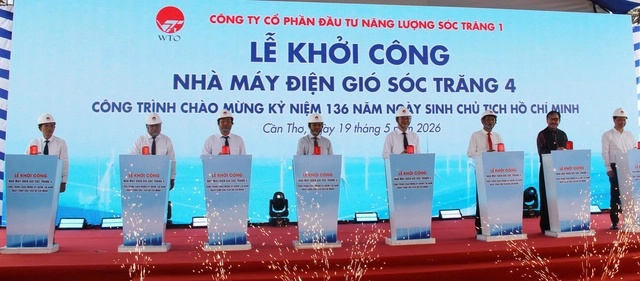
Work on two major wind power projects with a combined investment of VND23.639 trillion (US$897 million) started in Can Tho City, southern Vietnam on Tuesday.

The projects include the Phu Cuong 1A and 1B wind power complex and the wind power plant No. 4, officials said at the groundbreaking ceremony.

The Phu Cuong 1A and 1B cluster has a designed capacity of 200 megawatts and is being built in Lai Hoa Commune, Khanh Hoa Ward, and Vinh Phuoc Ward, carrying a price tag of about VND9.139 trillion ($347 million).

According to Nguyen Thi Mai Thanh, chairwoman of Refrigeration Electrical Engineering Corporation and chairwoman of REE Energy Co. Ltd., the wind power complex is expected to be completed in 2027.

She said the project is expected to contribute around VND200 billion ($7.6 million) annually to Can Tho’s budget starting in 2028.

During the event, the investor donated VND1 billion ($37,900) in scholarships to the city’s education fund.

Regarding the wind power plant No. 4 project, it has a capacity of 350 megawatts and will feature 56 turbines.

The plant, developed by Soc Trang 1 Energy Investment JSC, has a total investment of VND14.5 trillion ($550 million).

Officials said the projects are expected to support public investment disbursement, create new growth momentum for the Mekong Delta, and accelerate Vietnam’s transition toward cleaner energy sources.

Speaking at the ceremony, Truong Canh Tuyen, chairman of the Can Tho administration, described the projects as politically, economically, and socially significant, reflecting the city’s ambition for rapid and sustainable development.

Under Vietnam’s national power development plan for 2021-30 with a vision to 2050, Can Tho is expected to develop 56 power generation projects with a combined capacity of 9,154 megawatts by 2030.

The plan includes 30 wind power projects totaling around 2,785 megawatts.

Authorities said investment approval has so far been granted for 20 wind power projects with a total planned capacity of 1,428 megawatts.

Among them, nine wind farms have already commenced commercial operations with a combined capacity of 396 megawatts.

Three projects whose combined capacity is 142 megawatts are under construction, while eight projects totaling 890 megawatts are completing legal procedures before construction.

Another 10 projects with a total planned capacity of 1,357 megawatts are currently in the investor selection stage.


Source: Minh Duy - Le Dan - Khac Tam / Tuoi Tre News

Photo: Khac Tam / Tuoi Tre

Latest Posts

Construction begins on $200 mln waste-to-energy plant in Hanoi

Construction begins on $200 mln waste-to-energy plant in Hanoi

It is the first high-tech waste-to-energy project in Southwest Hanoi.

Hanoi has officially commenced construction on the Nui Thoong High-Tech Environmental Treatment and Waste-to-Energy Plant, a project representing a total investment of approximately VND5.25 trillion ($200 million).

The facility is designed with a processing capacity of 2,000 tons of waste per day and an electricity generation capacity of 45MW.

As the first high-tech waste-to-energy project in Southwest Hanoi, itaims to significantly reduce the city's reliance on landfills, promote a circular economy, and enhance municipal solid waste treatment capabilities for the city's southwestern wards and communes.

Once operational, the plant is projected to process roughly 660,000 tons of waste annually while contributing approximately 356 million kWh per year to the national power grid.

Speaking at the groundbreaking ceremony, Vice Chairman of the Hanoi People’s Committee Bui Duy Cuong emphasized the project’s vital importance to the city’s environmental protection efforts.

Currently, Hanoi generates over 8,000 tons of municipal solid waste daily. Although the city already operates two major waste-to-energy plants in Soc Son and Xuan Son, approximately 1,500 tons of waste still require burial in landfills every day.


Systemic liquidity pressure: Interest rates in Vietnam unlikely to fall further

Systemic liquidity pressure: Interest rates in Vietnam unlikely to fall further

Rising liquidity pressures are making it increasingly difficult for Vietnam’s deposit interest rates to decline further in 2026, with many commercial banks maintaining rates for 6-12 month deposits at around 6.5-7.8% per year.

Entering Q2/2026, Vietnam’s money market is showing clear signs of a new interest-rate cycle in which funding costs are likely to drop significantly.

Banking data indicate growing liquidity pressure as credit growth has recovered faster than deposit mobilization, while exchange-rate and inflation risks continue to weigh on monetary policy.

The trend places the State Bank of Vietnam (SBV) in a difficult balancing position: maintaining sufficiently low interest rates to support economic growth while also ensuring financial system stability and containing exchange-rate pressure.

One of the most notable signals in Q1/2026 was credit expansion outpacing deposit growth.

According to Q1 financial statements from 27 listed banks, 12 lenders reported declines in customer deposits compared with the end of 2025, including BIDV, MBBank, Techcombank, ACB, VIB, TPBank, SeABank, Eximbank, OCB, Nam A Bank, KienlongBank and BaoViet Bank.

The figures reflect a broader shift of capital flows toward production, business activities and alternative investment channels as the economy recovers.

At the same time, stronger credit demand has forced banks to step up deposit mobilization efforts to balance medium- and long-term funding needs.

As of April 28, total outstanding credit in Vietnam’s banking system stood at nearly VND19,500 trillion ($739.39 billion), up 4.42% from the end of 2025 and 18.26% higher than a year earlier.

Meanwhile, deposit growth has consistently lagged credit expansion, leaving Vietnam dong deposits roughly VND2,000 trillion ($75.84 billion) below total credit outstanding. The funding gap has compelled many banks to raise deposit rates to retain liquidity.

A treasury executive at a joint-stock commercial bank said competition for deposits was no longer merely a short-term issue but had become a structural challenge.

“The recovery in credit disbursement has been too rapid, forcing many banks to raise rates to maintain liquidity safety ratios,” the executive said.

Interest rates anchored at higher levels

Unlike the 2024-2025 period, when deposit rates commonly ranged between 4-6% annually, the market has now established a significantly higher funding-cost base.

For six-month deposits - currently the most competitive tenor - private joint-stock banks such as VPBank, Techcombank, HDBank and TPBank are offering rates ranging from 6.5-7.2% per year.

Meanwhile, 12-month deposit rates have risen more sharply, commonly reaching 7-7.8% at many joint-stock banks, with some smaller lenders and special deposit programs offering rates above 8%.

Even the state-owned “Big Four” banks - Vietcombank, BIDV, VietinBank and Agribank - have lifted long-term deposit rates to around 5.5-6.2%.

Analysts said the trend signals that the market has entered a phase of persistently high interest rates aimed at protecting system-wide liquidity.

Can Van Luc, a member of the National Financial and Monetary Policy Advisory Council, said current liquidity pressure stems from three simultaneous factors: recovering credit demand, USD/VND exchange-rate pressure, and capital shifting toward higher-yielding investment channels.

“In a context where credit growth exceeds deposit growth, deposit rates are unlikely to fall deeply as they did previously. The SBV will prioritize macroeconomic and exchange-rate stability over aggressive monetary easing,” Luc said at a recent financial conference.

Despite rising rates, analysts believe the likelihood of an uncontrolled “interest-rate race” similar to late 2022 remains limited.

Banks have diversified funding sources more effectively through the interbank market, long-term certificates of deposit, international bonds, and syndicated foreign loans.

At the same time, the SBV has intensified liquidity management through open market operations (OMO) to prevent localized funding shortages.

Short-term liquidity injections via OMO have helped ease overheating pressure in the interbank market while stabilizing market sentiment.

Brokerage SSI Securities said deposit rates are now approaching the peak of the current tightening cycle. The SBV’s liquidity interventions are expected to keep rates broadly stable during Q3/2026 rather than allowing further sharp increases.

Meanwhile, VNDirect Securities said there is limited room left for further policy-rate cuts due to exchange-rate and inflation risks.

If Vietnam continues lowering dong interest rates aggressively, the narrowing gap between U.S. dollar and dong rates could place additional pressure on the exchange rate and foreign capital flows.

A banking analyst at BSC Securities said current interest rates accurately reflect capital supply and demand conditions.

“The SBV can stabilize the market, but it will be difficult to push rates down significantly while credit demand remains high,” the analyst said.

Another challenge facing banks is narrowing net interest margins (NIM). While funding costs are rising rapidly, lending rates cannot increase proportionally due to pressure to support businesses and economic recovery.

As a result, many banks are having to sacrifice part of their profitability to maintain credit growth and market share.

Analysts said this is also why banks are unlikely to push deposit rates excessively high. If funding costs continue rising sharply, the banking sector’s profits could face significant pressure in the second half of the year.

Industry reports from multiple securities firms forecast that banking-sector NIMs in 2026 will continue to narrow slightly from the previous year, particularly among joint-stock banks with aggressive credit growth targets.

Overall, analysts expect Vietnam’s money market trend through the end of 2026 to remain broadly stable at elevated levels rather than decline.

In the near term, deposit rates for 6-12 month tenors are forecast to remain around 6.5-8% a year as banks rebalance funding sources following a period of rapid credit growth and slower deposit mobilization.

Toward the end of 2026, pressure could ease somewhat as alternative funding channels such as corporate bonds, international borrowing and long-term certificates of deposit expand further.

Under a scenario in which exchange-rate and inflation pressures moderate, 12-month deposit rates could decline slightly by around 0.3-0.5 percentage points by year-end.


Vietnam's wealth management market offers hundreds of billions of US dollars in growth potential

Vietnam's wealth management market offers hundreds of billions of US dollars in growth potential

As Vietnam’s middle class expands rapidly and demand for wealth accumulation rises, the country’s wealth management market is entering a strong growth phase, with potential to reach hundreds of billions of U.S. dollars in the coming years.

Wealth management and personal financial planning are drawing increasing attention, particularly as the pursuit of financial freedom becomes more widespread. However, experts say financial freedom is not a short-term destination but rather a long-term process shaped by each individual’s goals, capabilities and lifestyle choices.

In practice, an excessive focus on achieving financial freedom can also create significant mental pressure. Many people experience anxiety over not yet reaching their desired level of wealth, purchasing homes or cars, or retiring early as planned.

Speaking on the Asset Box program, Nguyen The Minh, director of investment banking and deputy director of securities business at An Binh Securities, said people need to be equipped early with knowledge of wealth management and personal finance, while remaining committed to long-term financial plans.

Asked about the concept of financial freedom, Minh said it is important to distinguish between “financial independence” and “financial freedom.” Financial independence refers to the ability to make life decisions without relying on others financially, while financial freedom carries a broader meaning, allowing individuals not only to cover living expenses but also pursue the lifestyle and aspirations they desire.

Minh noted wealth management activities in Vietnam remain at an early stage, particularly in terms of public mindset. Assets are still concentrated mainly in traditional channels such as real estate, gold and bank savings.

Although the number of securities accounts in Vietnam has surpassed 12 million, many investors still view stocks as a “quick-profit” channel rather than a long-term investment requiring knowledge and risk management, he added.

“Vietnam is currently transitioning from a savings-focused mindset toward investment for returns, but it has not yet fully entered the stage of professional wealth management,” Minh said.

According to Minh, the mindset of growing wealth to achieve financial freedom is becoming increasingly common. Surveys show around 74% of stock market investors expect to generate annual income ranging from VND100 million to VND500 million ($18,970).

Compared with Vietnam, countries such as Singapore and Thailand have developed wealth management models more extensively due to their longer histories of economic and financial market development, influencing public attitudes toward asset management.

Minh stressed setting ambitious goals for achieving financial freedom quickly is reasonable, but the key issue is whether individuals are truly suited to such objectives.

He noted that younger generations are increasingly affected by the “comparison trap” on social media, appearance-related pressures and unrealistic return expectations. As a result, many pursue financial targets beyond their own risk tolerance.

“In financial investment, higher returns always come with higher risks. Therefore, before setting goals for rapid financial freedom, individuals need to clearly determine their starting point, current capital scale, expected timeframe, and risk appetite,” Minh said.

On the outlook for the wealth management sector, he cited forecasts by PwC showing global assets under management could post a compound annual growth rate of 6.2% during 2026-2030, while Asia could see growth of around 6.8%.

In Vietnam, consultancy McKinsey & Company estimates the personal financial management market could reach $600 billion by 2027. Meanwhile, Allied Market Research forecasts the sector could record compound annual growth of as much as 32% during 2026-2030, underscoring the market’s substantial growth potential.

Favorable macroeconomic conditions and Vietnam’s target of achieving double-digit economic growth during 2026-2030 are also expected to drive rising demand for wealth management services. According to PwC, Vietnam’s middle class could account for as much as 55% of the population by 2030.

“I believe Vietnam’s wealth management sector will record very high growth rates in the coming years,” Minh said.

See all blog