Lumen Vietnam Fund

Blog

Việt Nam, Germany explore cooperation in high-speed railway technology transfer

Việt Nam, Germany explore cooperation in high-speed railway technology transfer

Alongside quality, safety, investment efficiency and the ability to meet the technical requirements of the North-South high-speed railway project, technology transfer is important, as Việt Nam considers cooperation with foreign enterprises and partners in the high-speed railway sector.

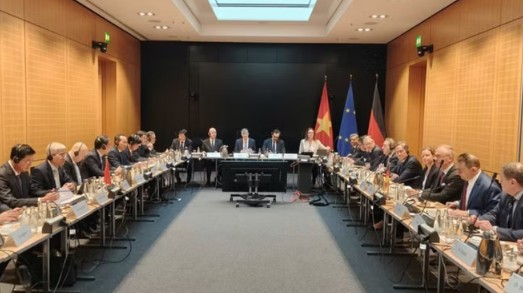
HÀ NỘI — Deputy Minister of Construction Bùi Xuân Dũng has had a working session with German authorities and businesses to seek cooperation and explore technology transfer for the North-South high-speed railway project.

Dũng said Việt Nam highly values Germany's strengths in science and technology, technical standards, safety management, the railway industry, export finance and human resources training.

He expressed Việt Nam's wish to establish a substantive and long-term channel for exchanges between the two countries' state management agencies and business communities in the railway sector.

Alongside quality, safety, investment efficiency and the ability to meet the technical requirements of the North-South high-speed railway project, technology transfer is important, as Việt Nam considers cooperation with foreign enterprises and partners in the high-speed railway sector, Dũng stressed.

The official emphasised that Việt Nam is at a particularly important stage in preparing the project's feasibility study report. Therefore, studying and selecting modern, integrated, safe and efficient technologies suited to Việt Nam's conditions, controlling lifecycle costs, organising project management, training human resources and building independent operation and maintenance capacity will be decisive to the project's long-term effectiveness.

Dũng called on German businesses, including Siemens Mobility, Deutsche Bahn (DB) and members of the German Railway Industry Association, to study substantive cooperation models with Việt Nam that go beyond the supply of products, equipment and services to include technology transfer, human resources training, development of domestic enterprises and supply chains, and the gradual development of Việt Nam's capacity to manufacture, operate, maintain and master railway technologies.

He noted that the scope of technology transfer, human resources training, supplier development, and the establishment of manufacturing and maintenance facilities in Việt Nam are also areas that Việt Nam has identified for further in-depth study during the current project preparation phase.

Regarding the German Federal Ministry for Transport, the Vietnamese side proposed sharing experience in high-speed railway network planning, investment models and project implementation, the division of responsibilities among State management agencies, safety authorities, owners and infrastructure managers, and the control of total investment, schedules, quality and risks in major projects.

The two sides discussed systems of standards and technical regulations, independent safety assessment and certification, as well as safety management during railway operations.

With the German Ministry for Economic Affairs and Energy, the Vietnamese side expressed interest in models for mobilising finance, export credit, risk guarantees, and green finance, as well as the potential to combine technological solutions, financing and services for large-scale railway projects.

Regarding Deutsche Bahn (DB), the Vietnamese side proposed exchanges of experience in the management, operation and maintenance of high-speed railway systems, lifecycle infrastructure asset management, transport organisation and station management.

As for Siemens Mobility, Việt Nam is interested in comprehensive solutions covering rolling stock, electrification, signalling and information systems, train control, telecommunications, depots, maintenance, and indicators related to reliability, safety and lifecycle costs.

Building on sound relations between Việt Nam and Germany, as well as Germany's strengths in the railway sector, Dũng said the two sides still have considerable room to develop practical cooperation programmes, contributing to the development of a modern, integrated and sustainable railway system in Việt Nam.

The Vietnamese side also proposed the two sides maintain coordination contacts and organise further in-depth exchanges on technology, technical standards, management and operation models, human resources training and technology transfer.

On the occasion, the Ministry of Construction's delegation conducted a field survey at Berlin Central Station (Berlin Hauptbahnhof), learning about the organisation and operation of the station and its connectivity between high-speed, intercity and urban railways and other forms of public transport.

The Vietnamese side focused on studying passenger flow management, the arrangement of multi-level transport spaces and convenient connectivity among different modes of transport. It also examined the model of integrating transport functions with commercial services, public amenities and urban development around the transport hub.

These experiences provide useful references for planning the station network of the North-South high-speed railway project, as well as for promoting transit-oriented development (TOD) in Việt Nam.


Source: VNA/VNS
Latest Posts

Vietnam needs to do more after market upgrade to lure up to $20bn in int'l capital: experts

Vietnam needs to do more after market upgrade to lure up to $20bn in int'l capital: experts

Vietnam needs to undertake further reforms following its recent stock market upgrade to attract and retain international capital, with an improved sovereign credit rating key to attracting greater inflows into the bond market, potentially worth US$10-20 billion, according to securities and bond market experts.

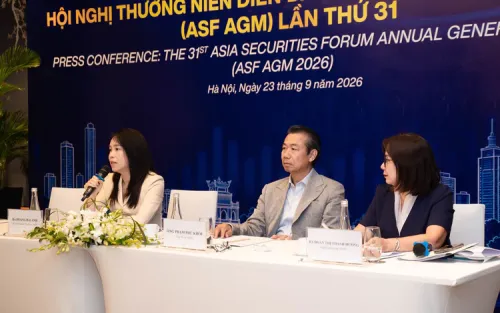
The comments were made at a press conference in Hanoi on Wednesday to announce the 31st Asia Securities Forum Annual General Meeting, which Vietnam will host for the first time from September 30 to October 3.

The conference comes shortly after Vietnam's stock market was upgraded by FTSE Russell from frontier-market to secondary emerging-market status on Monday, marking a milestone after years of reforms aimed at attracting international investors.

Upgrade opens door to more international capital

Hoang Hai Anh, vice-chairwoman of the Vietnam Association of Securities Business, said the FTSE Russell upgrade was the result of a lengthy reform process by regulators and market participants.

The milestone has brought Vietnam's market closer to the international investor community, but the upgrade is only a 'necessary condition,' she said.

To attract international capital and retain it in Vietnam over the long term, the country needs a clear market development and positioning strategy, Anh said.

She cited several regional markets that have built distinctive advantages, with Singapore positioning itself as a gateway for international capital into Asia, Malaysia leveraging its strength in Islamic finance, and Thailand focusing on market liquidity.

"Vietnam also needs to find its own market positioning," Anh said.

Besides market infrastructure, an important task is to improve the capabilities and quality of listed companies.

Anh compared market infrastructure to roads and traffic signs, saying good infrastructure is necessary, but market performance also depends on the quality of the 'vehicles' and market participants.

For Vietnam's stock market, this means improving corporate governance, transparency, and competitiveness alongside infrastructure development.

She cited Japan's long-term efforts to improve corporate capabilities and South Korea's programs to strengthen corporate governance and address the issue of undervalued stocks, commonly known as the 'Korea discount.'

The upcoming forum will bring together representatives from various international associations and organizations, while proposals to organize sessions specifically focusing on Vietnam have received support from international experts and speakers, Anh said.

Pham Phu Khoi, general secretary of the Vietnam Bond Market Association, estimated that potential international capital inflows into Vietnam's bond market could reach $10-20 billion if the necessary conditions are met.

Improving sovereign credit rating key to bond market

Khoi said the FTSE Russell upgrade would initially have a direct impact on Vietnam's stock market.

Passive investment funds could channel around $1.2-1.5 billion into Vietnamese stocks, while some analyses put the figure at around $2 billion.

However, the impact could extend beyond equities to the bond market, where international investor participation remains limited.

One of the key obstacles to attracting international bond investors is credit ratings.

Many international bond investors, particularly institutions with strict investment rules, require a country or issuer to meet certain investment-grade criteria before allocating capital, Khoi said.

Vietnam therefore needs to improve its sovereign credit rating, which could help raise the ratings of Vietnamese companies, reduce fundraising costs, and extend the maturities of capital raised.

If these conditions improve, bond-market inflows could be considerably greater than those into equities.

Global macroeconomic conditions would also influence international capital flows, Khoi said, with geopolitical tensions, oil price fluctuations, inflation and bond yields in major economies affecting international investors' capital allocation decisions.

When yields in developed markets remain high, emerging economies such as Vietnam face greater difficulty and higher costs in raising international capital.

This makes it important for Vietnam to strengthen its domestic fundamentals, particularly by improving its sovereign and corporate credit ratings, Khoi stressed.


HCM City’s industrial parks attract $5.57bln in investment in 9M

HCM City’s industrial parks attract $5.57bln in investment in 9M

FDI accounting for over $4.27 billion, up 62.2% year-on-year.

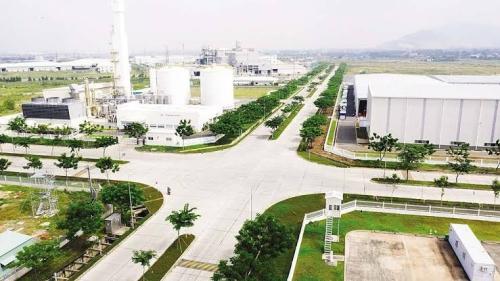
Investment in export processing zones and industrial parks across Ho Chi Minh City reached more than $5.57 billion in the first nine months of 2026, according to the Ho Chi Minh City Export Processing and Industrial Zones Authority (HEPZA).

The figure was equivalent to 131.15% of the full-year target of $4.25 billion and represented a 29.13% increase from the same period in 2025. Foreign direct investment (FDI) accounted for more than $4.27 billion, up 62.22% year-on-year.

HEPZA licensed 100 new projects with total registered capital exceeding $3.144 billion, while 120 existing projects registered capital increases totalling more than $1.126 billion.

Domestic investment in the industrial and export processing zones reached more than VND33.8 trillion, equivalent to approximately $1.3 billion. This included 84 newly licensed projects with combined capital of VND14.733 trillion and 51 projects registering capital increases totalling VND19.143 trillion.

The results highlight the continued attractiveness of Ho Chi Minh City’s industrial and export processing zones, while underscoring the role of FDI in mobilising resources, expanding production capacity and making effective use of existing industrial infrastructure.


New criteria for green projects and ESG subsidies in Vietnam issued

New criteria for green projects and ESG subsidies in Vietnam issued

Businesses and entrepreneurs undertaking certified green or circular projects that comply with Environmental, Social, and Governance (ESG) reporting standards will now qualify for state interest rate subsidies under newly issued government guidelines.

Deputy Prime Minister Ho Quoc Dung has signed Prime Ministerial Decision No. 46/2026/QD-TTg, introducing official guidelines to identify green and circular-compliant projects and regulate the application of ESG standards across key economic sectors in Vietnam.

Under the new regulations, a project is classified as “green” if it belongs to designated sectors, aligns with sustainability objectives, and meets specific statutory requirements. An attached framework sets out technical parameters across multiple industries, including 10 sub-sectors in energy, three in transport, two in construction, three in water resources, 12 in agriculture and biodiversity, six in manufacturing, and nine in environmental services.

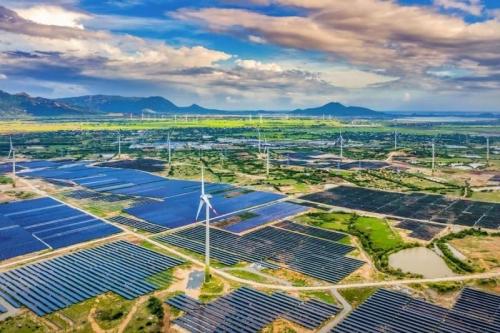
In the energy sector, solar power installations must meet efficiency and equipment certification standards, alongside extended producer responsibility for recycling. Power generation using renewable or new energy sources - such as geothermal, biomass, wave energy, green hydrogen, and green ammonia - must satisfy clear environmental benchmarks. High-tech battery manufacturing requires recognized eco-labels, the use of recycled inputs, and strict waste management compliance.

For transportation, eligibility extends to low- or zero-emission vehicle fleets, electric vehicle charging infrastructure, and clean energy supply services. In construction, projects must secure accredited green building certificates and adopt low-GWP (Global Warming Potential) and low-ODP (Ozone Depletion Potential) refrigerants.

Meanwhile, manufacturing projects covering energy-efficient machinery, electronics, and eco-friendly packaging must hold valid energy or eco-labels or comply with circular standards in export markets. Environmental service projects must meet minimum waste recycling ratios and limit landfill disposal.

The decision also details criteria for circular economy projects, spanning circular design, extended product lifespans, resource recovery, and industrial symbiosis. Green or circular status must be verified by an independent assessment body.

Additionally, project developers - including enterprises, household businesses, and individual traders - are required to compile and submit ESG compliance reports. Reaching certified green or circular status alongside verified ESG disclosures will serve as the official foundation for businesses to qualify for state interest rate support.


See all blog