Lumen Vietnam Fund

Blog

Thailand’s GDP growth accelerates to 2.9% in Q3, ranks fifth among six Southeast Asian economies

Thailand’s GDP growth accelerates to 2.9% in Q3, ranks fifth among six Southeast Asian economies

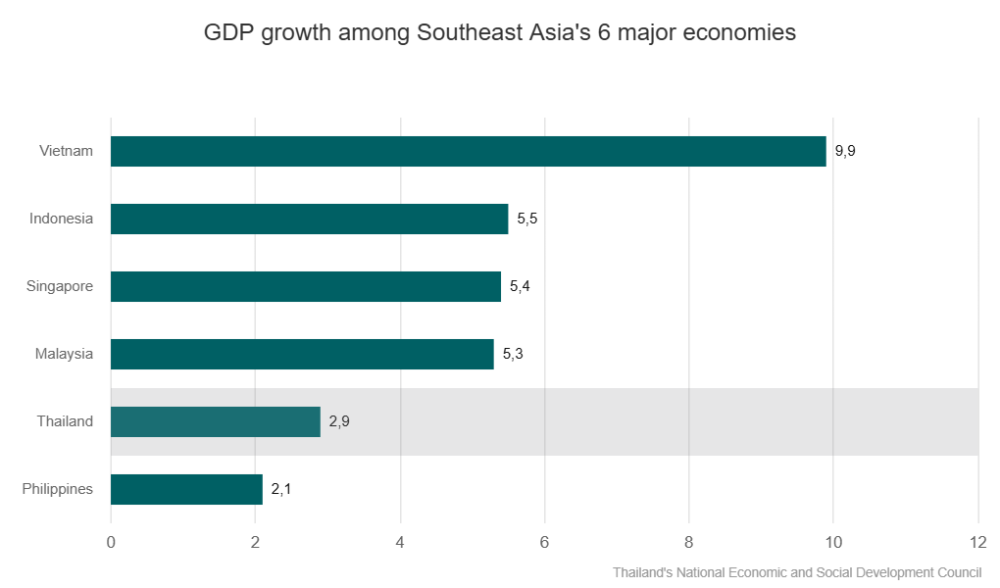
Thailand’s GDP expanded by 2.9% year on year in the third quarter, ranking fifth out of six major Southeast Asian economies.

Although growth accelerated from 2.4% in the second quarter, it exceeded only that of the Philippines with 2.1% in expansion rate, according to the National Economic and Social Development Council (NESDC).

In comparison, Vietnam leads the region with 9.9% growth, followed by Indonesia (5.5%), Singapore (5.4%) and Malaysia (5.3%).

Investment and exports were the main drivers of Thailand’s growth. Total investment increased by 11.8% in the third quarter, up from 9.2% in the previous quarter.

Goods exports reached $106.38 billion, an increase of 23.6% and the fastest growth in 21 quarters. Global demand for products linked to AI and data centers provided significant support.

Although investment and exports offered substantial support, some sectors lost momentum. Accommodation and food services expanded by 1.9%, down from 2.1% in the previous quarter.

Foreign tourist arrivals totaled 7.061 million, a decrease of 5%, while domestic tourism by Thai travelers grew by 1.9%.

The NESDC forecasts economic growth of 2.0–3.0% in 2027, with a midpoint of 2.5%, according to Thai PBS World.

While the outlook points to continued expansion, the forecasts suggest investment and exports will remain key sources of growth.

Risks associated with the global economy, conflict in the Middle East, energy prices and trade barriers also warrant monitoring.


Source: Dat Nguyen

Latest Posts

Cooperative framework in place

Cooperative framework in place

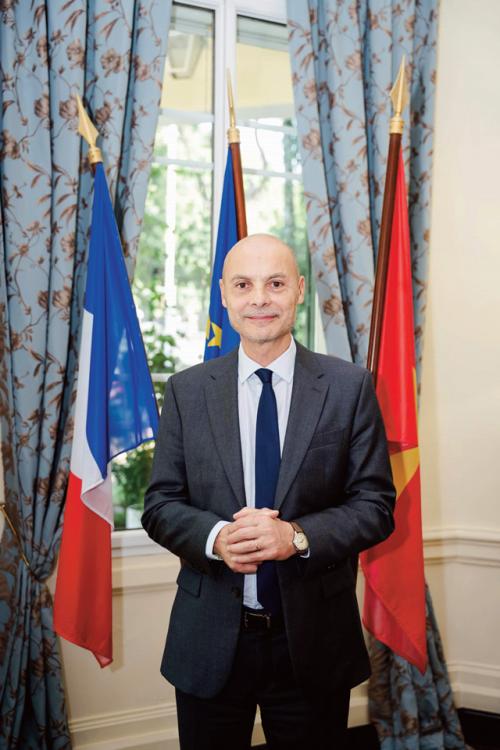
Newly-appointed Ambassador of France to Vietnam, H.E. Didier Le Bret, tells Linh Tong about his vision for bilateral ties between Vietnam and France and the opportunities he sees for closer cooperation.

- Since your arrival in Vietnam, what has impressed you most about the country’s way of life and the pace of its development?

Before answering, I want to tell you how happy I have been since arriving in Vietnam. Every morning when I wake up, I feel fortunate to be doing the job I do. I know that I will be discovering extraordinary people and experiencing something quite unique in the life of an ambassador: the privilege of arriving in a country where so many incredible things are happening.

To answer the question, I would say that two things have particularly impressed me since my arrival in Vietnam. The first is the country’s hospitality, and the second its economic dynamism. And the two are closely connected.

When a nation has confidence in itself and in its future, it can welcome the whole world. That is what Vietnam is doing today. The country is confident in its development and can therefore welcome everyone who wishes to visit the country or invest here in a very open and generous manner, while remaining selective if it wishes.

There is what we know about Vietnam through figures and statistics, and then there is what we discover first-hand every day when walking through the streets of Hanoi, Ho Chi Minh City, and other parts of the country. That is precisely what I would like to highlight. What we read in the statistics is something we can subsequently see for ourselves on the ground.

We all know that Vietnam has come a long way. At the time of the launch of “Doi Moi” (Economic Renewal), its GDP stood at only around $26-30 billion. It has increased 20-fold since, reaching approximately $514 billion in 2025. This is something we may know in an abstract sense before arriving in the country. But once we are here, we can see the tangible manifestations of this transformation.

It is an extraordinary expansion that economists today describe as a genuine development miracle. In the history of the global economy, Vietnam is among the countries that have reduced the number of people living on less than $2 a day - the international poverty threshold - at the fastest rate.

I saw this transformation first-hand. When I first visited Vietnam more than 15 years ago, bicycles were still common in Hanoi and Ho Chi Minh City. Today, the streets are filled with motorbikes, electric scooters, and modern electric taxis. The skylines could almost be those of New York, Shanghai, or Paris, while Metro Line 3 reflects the infrastructure of major European cities. And when I walk around Hanoi, I can do my shopping in some of the most modern stores while also discovering the country’s most traditional temples. The real luxury is not having to choose between modernity on the one hand and one’s history and heritage on the other.

This is something I feel very strongly. As an ambassador in Vietnam, you quickly become eager to discover as much as possible and meet as many people as possible.

- Following the recent high-level visits and the adoption of the 2026-2028 Action Plan, what concrete outcomes would you most like to prioritize in Vietnam-France relations?

I am fortunate to have a fairly clear roadmap outlining the priority areas of our bilateral relationship.

When I presented my credentials to Party General Secretary and State President To Lam, he reiterated what should remain at the heart of our relationship. We therefore start from an exceptionally solid foundation on which we can build: people-to-people ties.

For example, during his visit to Paris, Party General Secretary and State President To Lam also visited several research facilities, including the Paris-Saclay University, as well as facilities in the energy and automotive industries. Several agreements were signed, including joint declarations and technical arrangements between ministries, particularly in science, technology, and education and training.

Why is this important? Because we are not starting from scratch. We already have an exceptional cooperative framework in place. France currently hosts nearly 7,000 Vietnamese students, with around 1,500 arriving each year. We also have unique Franco-Vietnamese institutions in Vietnam, structures that are not found in many other countries. These institutions operate precisely in the areas of excellence that Vietnam is seeking to develop today: science, engineering, management, and digital and space technologies.

Our scientific cooperation framework in Vietnam has one particular characteristic: it is entirely geared toward the country’s development priorities. Programs are therefore designed to respond directly to Vietnam’s needs.

For example, Vietnam will host the next APEC Summit, in Phu Quoc in November 2027. Though France is not an APEC member, it has been invited to contribute to the preparations through an organization that brings together researchers, businesses, and local authorities. Our work focuses particularly on helping Southeast Asian countries prepare for climate shocks. This is a major priority for Vietnam, which is among the countries most vulnerable to climate change due to its extensive coastline and large agricultural areas, particularly in the Red River Delta and the Mekong Delta.

That is what I wanted to emphasize: we have a very solid foundation for cooperation, which we are putting at the service of Vietnam’s development priorities and our shared interests. Research conducted in Vietnam is also valuable to France and the rest of the world.

Furthermore, we are seeking to be present in all sectors that Vietnamese authorities currently consider priorities, whether infrastructure, transport, or, of course, energy. France, and Europe more broadly, is fortunate to have major industrial leaders in each of these fields. France also has traditionally maintained a strong presence in several other sectors, particularly pharmaceuticals, luxury goods, and agribusiness.

In conclusion, we intend to preserve and deepen our traditional areas of cooperation while becoming more actively involved in the sectors that are essential to the Vietnamese economy today.

- What obstacles are still holding back French companies operating in Vietnam, and what changes would you like to work on with Vietnamese authorities to address them?

The obstacles are of several kinds. Many French companies entered the Vietnamese market very early, in the early 1990s. At that time, the market was not yet fully prepared to accommodate such a large volume of foreign investment. Today, the situation is different. Countries across the region, as well as many others around the world, are keen to invest in Vietnam. France must also ensure that it has a strong presence here.

We may have fallen slightly behind, but we are nevertheless well established. Around 250 French companies operate in Vietnam, and all 40 of the largest French companies listed on the CAC 40 (the benchmark French stock market index) have subsidiaries here.

Regional countries such as Japan, South Korea, Singapore, Thailand, and China have greater capacity to establish and expand their presence in Vietnam. Much of the country’s exports are produced by foreign-invested enterprises that have relocated operations here. From France’s perspective, at the request of Vietnam’s highest-level authorities, our approach today is not simply to produce in Vietnam, but to produce with Vietnam and for Vietnam, within a genuine partnership.

Returning to the obstacles, Vietnamese authorities have a very clear political commitment to diversifying their sources of supply, particularly in the areas of security and defense. We will have an opportunity to discuss this further, as these are complex and sensitive issues that require time.

Entering the Vietnamese market can sometimes involve relatively high initial costs. However, these are gradually declining as an increasing number of highly-qualified Vietnamese executives become available to help us establish and develop our presence in the market. What we have built in the past is now an asset for the future.

Another potential obstacle for French companies, as well as for foreign investors more broadly, concerns energy infrastructure, as I mentioned earlier. When a country is targeting double-digit economic growth, it must be able to provide considerably greater energy and electricity generation capacity. This is a major challenge. I believe the pace at which FDI can grow will depend, in part, on how this challenge is addressed.


Vietnamese consumers remain upbeat on finances despite inflation pressures

Vietnamese consumers remain upbeat on finances despite inflation pressures

Consumer sentiment in Vietnam is slightly softer compared with last year, yet optimism about the future remains strong.

While rising living costs, environmental risks, and long-term financial obligations are prompting greater caution, 80 percent of Vietnamese consumers expect their personal financial situation to improve, up from 77 percent in 2025, according to the UOB's 2026 ASEAN Consumer Sentiment Study (ACSS), the bank's flagship regional report analyzing consumer trends across Singapore, Malaysia, Thailand, Indonesia, and Vietnam.

At a macro level, Vietnamese consumer sentiment regarding current and future economic conditions remains unchanged from 2025, with 84 percent maintaining a positive outlook, supported by strong economic growth in the first half of 2026.

"Vietnam's continued position as ASEAN's most optimistic market reflects strong consumer confidence in the economy's long-term growth prospects," said Mr. Paul Kim, Head of Personal Financial Services at UOB Vietnam. "Balancing optimism with prudent financial management enables households to navigate short-term challenges while staying proactive in capturing future opportunities."

However, concerns have deepened around the surrounding environment (81 percent), personal finances (80 percent), work-related matters (72 percent), and health and well-being (71 percent).

Unlike regional peers who are primarily worried about inflation-driven living costs, Vietnamese consumers cite climate change, natural disasters, and pollution as their top concern at 65 percent, up from 61 percent in 2025. With much of Vietnam's population and economic activity concentrated along coastlines, communities and businesses remain exposed to rising sea levels and extreme weather.

Meanwhile, inflation and mounting household expenses continue to weigh on budgets, with 52 percent of respondents saying inflation has eroded their household purchasing power. One in four (25 percent) worry about their ability to save, 23 percent are concerned about affording essentials, and 22 percent worry about covering their parents' healthcare and financial needs amid Vietnam's aging population, where people aged 60 and above are projected to make up roughly 25 percent of the population by 2050.

To stretch their budgets, 33 percent of consumers are cutting non-essential spending, 30 percent are tracking expenses, and 26 percent are seeking better deals.

On the macroeconomic front, UOB forecasts Vietnam's inflation to remain stable within the 3.5 to 4 percent range, backed by government policy measures. Mr. Kim noted that shifting political dynamics following the US midterm elections could slow fiscal spending and tax decisions, helping stabilize interest and exchange rates to the benefit of emerging markets including Vietnam.

For Vietnamese consumers, wealth extends beyond financial assets. Providing for family was cited as the top measure of wealth at 37 percent, followed by good physical health (34 percent) and owning a specific level of financial assets (34 percent). Additionally, 25 percent associate wealth with making a positive social impact and maintaining strong social connections, higher than the regional average.

Economic uncertainty, unexpected expenses, and the high cost of living were equally cited as top barriers to achieving wealth, at 24 percent each. While 85 percent of Vietnamese consumers are open to discussing wealth with family (above the ASEAN average of 80 percent), they favor independent decision-making, supported by financial advisors (40 percent, versus the 32 percent regional average) and digital wealth management tools (85 percent).

Digital tools are mainly used to gain financial insights (30 percent), track cash flow (29 percent), and manage investments (28 percent), with users prioritizing security and privacy (31 percent), customization (29 percent), and fee transparency (27 percent). Still, human relationship managers remain vital for navigating fees (33 percent) and receiving investment advice (32 percent), valued for trust (33 percent) and personalized guidance (31 percent).

More than half of Vietnamese consumers use AI tools daily for financial activities, and nearly nine in 10 have made financial decisions with AI assistance, primarily to compare banking products (38 percent), understand financial documents (33 percent), and manage budgets (30 percent). Within banking, consumers favor AI-driven personalized savings nudges (49 percent), smart product recommendations (43 percent), and overspending alerts (42 percent).

However, high usage does not equate to full trust. Vietnamese consumers still place greater trust in family and peers (82 percent), human financial advisors (77 percent), and budgeting apps (76 percent) than in AI platforms to act in their best financial interests.

Overall, 92 percent of Vietnamese consumers feel confident managing their personal finances, down two percentage points from 2025. The share saving at least 10 percent of their income rose from 82 percent in 2025 to 89 percent in 2026, well above the regional average of 77 percent. Furthermore, 92 percent maintain an emergency fund, and 59 percent have saved enough to cover three to six months of expenses, up two percentage points year on year.

Nearly two in five hold life insurance, while about one-third have basic health and personal accident coverage. Over three in four spend up to 15 percent of their annual salary on insurance premiums. Meanwhile, the proportion investing more than 10 percent of their annual income climbed from 57 percent in 2025 to 63 percent in 2026, surpassing the regional average of 58 percent, with 40 percent of investors reporting a high risk appetite.

Longer-term planning, however, shows signs of caution, as the share of consumers confident about their retirement savings target dipped from 83 percent in 2025 to 77 percent in 2026.


APEC Economic Leaders’ Week opens opportunities for Vietnam, a $1-trillion trade economy

APEC Economic Leaders’ Week opens opportunities for Vietnam, a $1-trillion trade economy

Vietnam’s participation in the ongoing 33rd APEC Economic Leaders’ Week in China offers significant opportunities to strengthen economic ties, attract high-quality investment, connect domestic businesses with regional and global supply chains, and help shape future regional cooperation, a deputy minister has said.

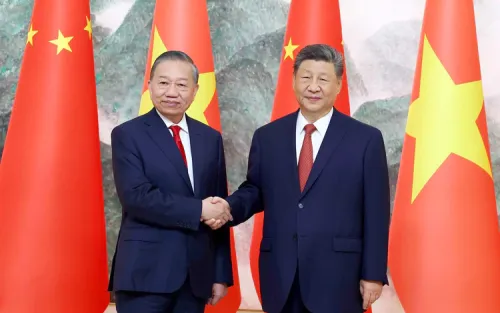
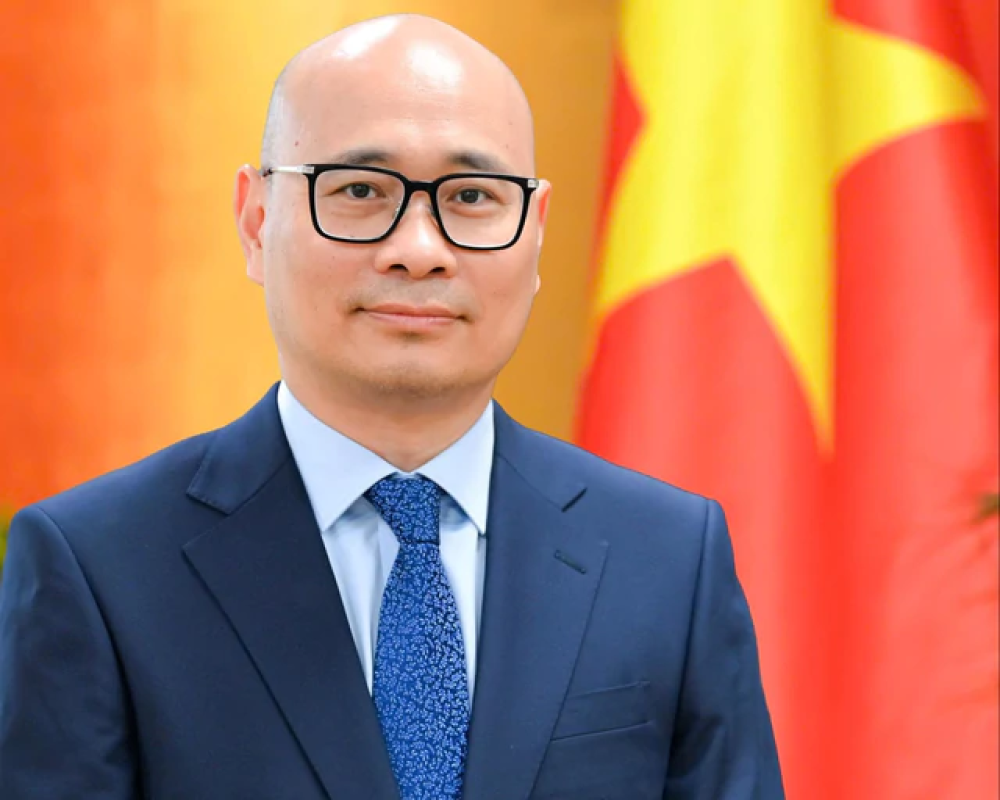
Deputy Minister of Industry and Trade Luong Hoang Thai made the remarks in an interview with Tuoi Tre (Youth) online newspaper as Party General Secretary and State President To Lam is in China to attend the event and conduct bilateral activities from November 17 to 20.

The top leader’s active participation not only demonstrates Vietnam’s strong commitment to regional cooperation but also creates opportunities to contribute to shaping APEC’s new cooperation directions in the coming years, Thai said.

Vietnam’s engagement in discussions and its proposals for initiatives at the forum would help the country affirm its regional role, keep abreast of emerging trends and advance its development goals, he added.

Expanding trade and investment ties

With total trade turnover exceeding US$1 trillion, Vietnam has become deeply integrated into the global economy, making stronger economic ties with regional partners increasingly important.

The 33rd APEC Economic Leaders’ Week offers Vietnam opportunities to strengthen ties with major economic partners and learn from China’s experience in science and technology, digital transformation, smart urban development and innovation hubs, Thai said.

Bilateral meetings with leaders of APEC member economies could help Vietnam advance practical cooperation in trade and investment while promoting its business and investment environment.

Vietnam could also highlight investment and cooperation opportunities in priority sectors, including high technology, semiconductor manufacturing, supporting industries, renewable energy, logistics infrastructure and the digital economy.

Such high-level engagements would help build international business confidence in Vietnam’s economic outlook and attract more high-quality foreign direct investment, he said.

The APEC CEO Summit, held annually as part of APEC Economic Leaders’ Week, brings together leading global corporations, major investors and influential business leaders from across the region and provides an important platform for Vietnam to promote its investment potential.

Vietnamese leaders’ participation and speeches at the summit help showcase the country and convey its commitment to reform, maintaining a stable investment environment and supporting businesses.

This could attract greater interest from international investors and open up cooperation opportunities in high-value-added sectors, Thai said.

Connecting Vietnamese businesses with regional supply chains

Against a backdrop of global economic uncertainty, rising trade protectionism and major adjustments to global supply chains, closer regional economic cooperation has become increasingly important, Thai said.

APEC’s 21 member economies include many of Vietnam’s leading trade and investment partners. The forum therefore serves not only as a platform for policy dialogue but also as a channel for promoting trade and investment liberalization, strengthening economic links and identifying new growth drivers.

Drawing on its extensive international integration experience and network of free trade agreements, Vietnam can propose practical initiatives to reduce trade barriers, simplify procedures, improve transparency and facilitate market access.

These measures would help businesses expand exports and participate more deeply in regional markets through trade facilitation, customs modernization, more efficient logistics, digital technology applications and lower cross-border transaction costs, he said.

APEC’s agreement to develop a new connectivity framework for 2026-2035 also gives Vietnam an opportunity to help shape long-term regional cooperation across three pillars: infrastructure connectivity, institutional connectivity and people-to-people connectivity.

The framework places particular emphasis on helping small and medium-sized enterprises access markets, connect with partners and participate more deeply in regional value chains.

APEC cooperation could also mobilize resources to help businesses, particularly micro, small and medium-sized enterprises, access technology, pursue digital and green transformations, meet new standards, secure financing and join supply chains.

These priorities could provide a foundation for practical cooperation initiatives during Vietnam’s APEC 2027 hosting year, Thai said.

Turning the APEC 2027 hosting role into economic gains

Hosting APEC in 2027 will mark a shift for Vietnam from actively participating in and contributing to the forum to taking a more proactive role in proposing initiatives, connecting member economies and promoting regional cooperation priorities, according to Thai.

This will give Vietnam an opportunity to consult other members and secure support for the theme, priorities and initiatives of APEC 2027, ensuring that they serve both the country’s development needs and the broader interests of the region.

Hosting the forum will also allow Vietnam to showcase its investment and business environment, market potential and domestic companies’ capabilities to leaders of member economies, multinational corporations and leading international investors.

Beyond promoting the country’s image, the event could help Vietnam secure tangible trade and investment benefits while playing a more active role in shaping the regional cooperation agenda.

The key task, Thai said, is to translate diplomatic and international integration opportunities into concrete results, including expanded market access, greater technology inflows, stronger domestic business capabilities and higher value added in supply chains.

These outcomes would help strengthen Vietnam’s position in the regional and global economy and create additional momentum for rapid and sustainable growth in the years ahead, he added.

See all blog