Lumen Vietnam Fund

Blog

Thai conglomerate TCC seeks to expand investment footprint in Vietnam

Thai conglomerate TCC seeks to expand investment footprint in Vietnam

Vietnamese Party General Secretary and State President To Lam has welcomed plans by Thai conglomerate TCC Group to expand investment in Vietnam in areas aligned with the country’s development priorities, saying the initiatives would add value to bilateral cooperation.

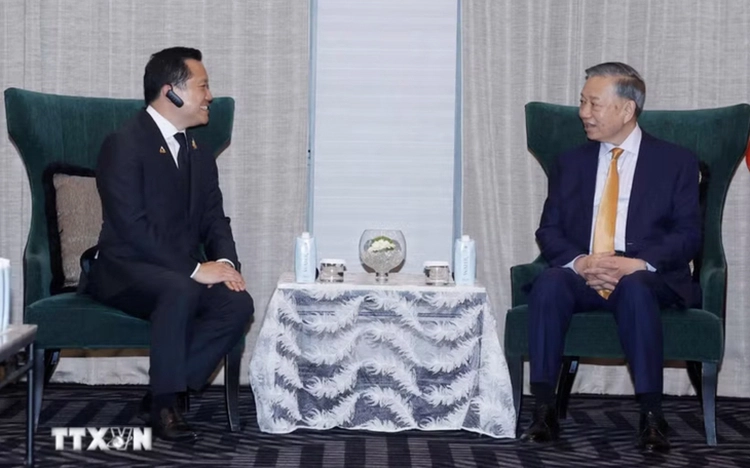
The top Vietnamese leader, who began his three-day official visit to Thailand on Wednesday, made the remarks during a meeting in Bangkok the same day with Thapana Sirivadhanabhakdi, executive chairman of TCC Group and CEO of Thai Beverage Public Company Limited (ThaiBev), a subsidiary of the conglomerate.

As one of Thailand’s largest private conglomerates, TCC Group operates across multiple sectors, including food and beverages, industry and trade, finance and insurance, real estate, agriculture, and agro-industry.

The group is present in multiple markets, including Vietnam, Singapore, Malaysia, and Myanmar.

During the meeting, Thapana provided updates on TCC Group’s operations in Vietnam and expressed appreciation for the Vietnamese leader’s support for the group, while voicing hope for continued favorable conditions for business activities going forward.

He asserted that the group is considering additional investment projects in Vietnam, particularly in logistics, recycling, and other sectors.

The Vietnamese leader praised the group’s expanding investment and business activities in Vietnam, particularly in sectors aligned with the country’s development needs and capable of generating added value for bilateral ties.

He also acknowledged TCC Group’s operations in Vietnam in recent years, encouraging the conglomerate to further develop its presence in line with stronger governance, greater application of science and technology, better environmental protection, and deeper contributions to local communities.

He said Vietnam is continuing to improve its investment and business environment, while prioritizing projects with high quality, advanced technology, modern governance, and strong linkages with domestic enterprises.

The top Vietnamese official also urged TCC Group to support Vietnamese small- and medium-sized enterprises in integrating more deeply into supply chains, helping strengthen connectivity between the two economies and across ASEAN.

He emphasized that Vietnam attaches importance to its comprehensive strategic partnership with Thailand, established in May 2025, with economic, trade, investment, and business ties serving as key pillars of sustainable growth and deeper regional integration.


Source: Vinh Tho - Thanh Hien / Tuoi Tre News

Photo: Vietnam News Agency

Latest Posts

89% of Vietnam survey respondents consider life insurance 'highly important'

89% of Vietnam survey respondents consider life insurance 'highly important'

Vietnamese people are paying increasing attention to financial planning, family protection and preparation for long-term risks, with up to 89% of respondents viewing life insurance as “highly important in daily life”, according to the Insurance Association of Vietnam (IAV).

However, life insurance is still largely perceived as a supplementary financial safeguard rather than a core risk-management tool or a long-term investment solution, the association said in its Public Opinion and Community Engagement Policy Research Quantitative Report.

The findings were based on a survey conducted by market research firm IFM Research, covering 1,265 respondents in both urban and rural areas across Hanoi, Ho Chi Minh City, Hai Phong, Danang and Can Tho.

Strong recognition of life insurance as an essential need

89% of respondents say life insurance is highly important in daily life. The figure reached 91% among life insurance owners, 86% among non-life insurance owners, and 91% among life insurance lapsers.

"The findings provide an encouraging signal, confirming that life insurance is increasingly recognized as an important financial solution in people’s lives - not only among existing customers but also among those who have not yet purchased coverage," IAV stated in a release on Thursday.

At the same time, the study recorded relatively positive levels of individual understanding of life insurance. 58% rated themselves as having a good understanding of life insurance.

The proportion was broadly consistent across age groups: 57% among the group aged 22-29 years old, 59% among the group aged 30-40 years old, and 58% among the group above 40 years old.

However, the main reasons why life insurance is considered necessary were tied to fundamental household needs. 57% said life insurance helps protect against risks, illness, accidents and death, while 45% highlighted its role in maintaining financial stability and support for the family.

In practice, a gap remains between recognizing the value of life insurance and incorporating it proactively into financial planning. Rather than using insurance as a forward-looking risk management tool, most people continue to adopt a defensive financial mindset.

When unexpected events occur, respondents said their first solutions would be to use savings (67%), reduce spending (53%) or seek additional income sources (39%). This suggests that life insurance is still largely perceived as an additional layer of protection rather than a core component of personal financial strategy.

Ralf Matthaes, managing director of IFM Research, said: "Public financial behavior remains primarily defensive. Although demand for and perceptions of life insurance are highly positive, actual ownership remains relatively low. Life insurance is still viewed mainly as supplementary financial protection rather than a core risk-management tool or a long-term investment solution.

"This presents both a challenge and an opportunity for brands to reshape the market through simpler policy wording, greater transparency, higher-quality advisory services and more structured financial education".

The study also showed that the main motivations to buy life insurance are risk protection, medical expense coverage and safe savings, while investment considerations remain less important.

Among policyholders, the most important decision factors included reasonable fees, reputable companies, products that meet needs, reasonable compensation payout, clear benefits, and fast claims processes. Younger individuals prioritize long-term contract maintenance, while the parent groups emphasize wide coverage scope.

Key barriers to life insurance participation included long payment timeline, prioritizing other investments, financial difficulties, and a lack of perceived need. Among respondents aged 22-29, the lack of suitable consultation emerged as the biggest obstacle.

Notably, the study found that financial pressure is the leading reason people struggle to maintain long-term contracts. The current average premium stands at around VND1.8 million ($68.37 million) per month (VND22 million or $836 per year), which remains a significant hurdle when incomes fluctuate or when consumers do not fully understand the value received relative to expectations.

Long-term planning capability needs strengthening

The study found that financial behavior varies significantly across different life stages. The under 30 group tends to prioritize purchasing major assets, maintaining spending stability and supporting parents. The 30-40 group focuses more on saving for children and long-term investment, while the 41+ group prioritizes retirement savings.

Across all age groups, however, a defensive financial mindset remains dominant, with people prioritizing building emergency reserves and ensuring family security, while investment continues to play a secondary role.

Financial planning capability remains relatively underdeveloped. The study found that 83% of respondents already have financial plans, with 46% maintaining both short-term and long-term goals. However, most respondents only began thinking seriously about financial planning in recent years, particularly following the Covid-19 pandemic, and their plans are reviewed infrequently.

“This indicates that people have started to develop financial planning habits, but the level of financial maturity remains limited. This underscores the need for stronger public communication and education on long-term financial planning and the role of life insurance within a broader preparedness strategy,” the research report noted.

Notably, people over 30 years old tend to plan their finances more than other groups. They, along with the Have kid(s) group, also started planning earlier and adjusting more frequently, demonstrating a higher level of financial initiative and discipline.

The report also identified clear geographic differences in financial behavior. Residents in first-tier cities recorded a higher rate of financial planning, reflecting greater initiative and awareness in managing personal finances.

However, respondents in southern cities showed a stronger tendency toward long-term planning and earlier preparation, suggesting a more future-oriented financial outlook and stronger saving habits.

Meanwhile, respondents in northern cities reported higher rates of short-term financial planning only, indicating a more pragmatic approach focused on managing daily cash flow. By contrast, rural communities in central Vietnam recorded the highest proportion of people without financial plans, highlighting more limited financial planning habits.

Life insurance market becoming increasingly mature

According to IFM Research, consumers consider several factors essential for an insurance brand to be viewed as trustworthy: clear information and policy terms, strong financial capability and professional advisors who can explain products in an accessible way.

In the 22-29 years old age group, recommendations from friends and family played a more important role, reflecting reliance on trusted sources when time or financial knowledge is limited.

By contrast, respondents with children paid particular attention to the financial strength of insurers, aligning with their desire for long-term security for their families.

The research also showed that life insurance is especially common among people aged over 30 - a life stage when many begin taking on greater financial responsibilities related to family, children, parents and long-term goals.

Notably, 80% of those who do not yet own life insurance plan to buy it within the next 12 months. The figure suggests that the market still holds substantial untapped demand, but its broader significance lies in how consumers are approaching insurance. People are not turning away from life insurance. Instead, they are researching, comparing and evaluating options more carefully before making a long-term commitment.

Nguyen Phong Cam, deputy secretary general of the IAV, said: “This indicates that the market is shifting from emotional decision-making toward choices based on actual needs. That is a sign of a more mature market. As customers ask more informed questions, insurers have greater opportunities to provide more tailored advice, design more suitable solutions and build longer-term relationships with consumers”.

According to IFM Research, the findings suggest that life insurance should continue to be positioned as a proactive financial protection tool, supported by transparent benefits and stronger post-sales services to build consumer confidence and encourage continued engagement with insurance products.

Recent risk data underscores the urgency. Statistics from Vietnam’s Ministry of Health show that, on average, around 1.1 million injury cases receive examination and treatment at healthcare facilities each year, while more than 30,000 people die annually from injuries. Road traffic accidents, drowning and workplace accidents remain among the leading causes of injury-related deaths.

“When properly understood, appropriately selected and sustainably maintained, life insurance is more than a financial contract. It is a way for individuals to demonstrate responsibility toward themselves, their families and the future. This is also the lasting value that the life insurance industry can contribute to society: helping more Vietnamese families live more proactively, confidently and resiliently in the face of life’s uncertainties,” Cam added.

This is the first time in more than 30 years of the Vietnamese life insurance industry's development that the sector has joined forces to conduct an independent study on public awareness and behavior in this field.

"Publishing this research not only provides a comprehensive picture of awareness and perceptions of the importance of life insurance in society, but also serves as an important basis for regulators, insurers and the broader insurance industry to develop more suitable solutions to better serve people in the years ahead," said Nguyen Phong Cam, deputy secretary general of the IAV.

According to the association, the report was released at a time when the life insurance industry continues to adjust its product portfolio to comply with new regulations and better respond to changing consumer needs at different stages of life.

To ensure a high degree of accuracy and provide insurers with a clearer understanding of customer financial profiles, as well as support policymakers in promoting insurance as a financial protection mechanism, the IAV worked closely with IFM Research throughout 2025 to conduct the survey.

The survey covered 1,265 respondents, with the sample designed to reflect a broad range of audiences relevant to the life insurance market - from younger adults beginning to establish financial plans, to families focusing on savings accumulation and health protection, and to middle-aged and older groups increasingly concerned with retirement, children’s future and broader family financial protection.

About genders, the survey sample was relatively balanced by gender, with men accounting for 45% (570 respondents) and women accounting for 55% (695 respondents). This distribution enabled the study to capture perspectives from both men and women on financial planning, insurance access and decisions related to purchasing life insurance.

The survey focused on adults aged 22 and above, covering multiple stages across the financial life cycle. This structure allowed the research team to compare protection needs, wealth accumulation, healthcare priorities and retirement preparedness across different stages of life.

All respondents belonged to the income group earning VND20 million ($760) per month or above. This group was selected because of its greater ability to consider commercial insurance products and long-term financial solutions.

About life insurance ownership, the sample was divided almost evenly between ownership groups. Life insurance owners accounted for 51%, while non-life insurance owners made up the remaining 49%. This structure enabled comparisons between the actual experiences of life insurance owners and the perceptions, expectations and barriers of those who do not yet own life insurance.

Green fuel transition gains momentum as E10 goes nationwide

Green fuel transition gains momentum as E10 goes nationwide

Starting June 1, E10 biofuel will officially be distributed nationwide under the Ministry of Industry and Trade (MoIT)’s roadmap, marking a major step in Vietnam’s green energy transition strategy, greenhouse gas emission reduction efforts and commitment to achieving net-zero emissions by 2050.

Under the ministry's Circular No. 50/2025/TT-BCT, all unleaded petrol sold on the domestic market from June 1 must be blended with ethanol to produce E10 for petrol-powered vehicles nationwide. Meanwhile, E5RON92 petrol will continue to be available until the end of 2030.

Expectations mixed with concerns​

Nguyen Duc Thanh, a ride-hailing driver in Hanoi’s Hoang Mai ward, said he previously used E5 petrol and is not overly concerned about switching to E10. His main concerns are fuel prices and consumption efficiency.

​People need sufficient information to feel confident, Thanh said.​

Consumer hesitation largely stems from the earlier rollout of E5 as when many users questioned the quality of biofuels.​

However, according to MoIT, most vehicles currently operating in Vietnam are compatible with E10. Authorities cited technical studies and international experience showing that around 90% of petrol-powered vehicles can use E10 without requiring engine modifications.​

Nguyen Phu Cuong, a resident of Hanoi's Long Bien ward, said transparency and fuel quality control are the most important factors. People will accept the transition if they clearly see the benefits and receive guarantees from authorities. If fuel quality differs between stations, it will be difficult to build trust.

Many vehicle owners in Hanoi also expect E10 adoption to help improve air quality, which remains a major issue in the capital. Environmental experts say ethanol-blended fuel enables cleaner combustion and reduces carbon monoxide and unburned hydrocarbon emissions compared to conventional petrol.

According to authorities, the introduction of E10 will be accompanied by tax and fee adjustments to make it more competitively priced than traditional fossil fuel. The MoIT is proposing revisions to environmental protection and excise taxes to encourage consumers to switch to biofuel.

In Hanoi, many fuel distributors said they have completed upgrades to storage tanks and fuel pumps in preparation for E10 sales from the start of June.

The ministry noted that E10 is already widely used in more than 60 countries, including the US, Japan, the Republic of Korea, Thailand and Brazil.

​Preventing speculation and fraud

Representatives from Hanoi’s market surveillance sub-department said market management teams will coordinate with the municipal Department of Industry and Trade, quality standards authorities and economic police to inspect E10 implementation at fuel retail outlets from June 1. Inspections will focus on fuel quality, price listing, supply stability and acts such as hoarding or selling fuel products that do not meet regulations.

Authorities will strictly handle cases involving fuel speculation, improper fuel sales or arbitrary suspension of sales that disrupt market supply.

Market surveillance officers stressed that the transition to E10 must be implemented in a synchronised manner to prevent profiteering during the policy transition period.

Energy experts described the rollout of E10 as an inevitable trend as Vietnam accelerates its emissions reduction and green transition agenda.

Dr. Ngo Tri Long, an economic expert, said E10 carries not only environmental significance but also positive implications for national energy security. By increasing the ethanol ratio in petrol, Vietnam can reduce dependence on imported fossil fuel while promoting domestic ethanol production.

Technical experts also noted that most modern engines can use E10 normally if the fuel meets quality standards. However, owners of older vehicles or cars with deteriorating fuel systems are advised to conduct regular maintenance checks to avoid corrosion of rubber components or the dissolution of residue inside fuel tanks.

According to specialists, E10 offers clear environmental benefits by helping reduce CO2 emissions, fine dust particles and other toxic pollutants from transport exhaust, a major source of urban pollution in cities such as Hanoi and Ho Chi Minh City.

They added that if implemented methodically, E10 could serve as a stepping stone toward wider adoption of higher-ethanol biofuels such as E15 and E20 in the future.

However, analysts stressed that the biggest challenge remains building public confidence. International experience shows that reasonable pricing, stable quality and transparent market management are essential for biofuels to gain broad consumer acceptance.


Việt Nam regards EAEU as trustworthy partner in AI development

Việt Nam regards EAEU as trustworthy partner in AI development

Deputy PM Hồ Quốc Dũng suggested Việt Nam and the EAEU establish a policy dialogue forum on the responsible use of AI, data protection standards and cybersecurity.

ASTANA — Việt Nam considers the Eurasian Economic Union (EAEU) a trustworthy partner in the development of artificial intelligence (AI) for mutual benefit, Deputy Prime Minister Hồ Quốc Dũng affirmed at the plenary session of the Eurasian Economic Forum held in Astana, Kazakhstan, on Thursday.

In his remarks, Dũng highlighted several of Việt Nam’s achievements in science – technology, innovation, e-government and the digital economy while sharing the country’s approach to AI development. He stressed that Việt Nam identifies science – technology, innovation and digital transformation as foundational drivers and strategic breakthroughs for entering a new era of development.

The Deputy PM also outlined several major directions for advancing the implementation of the free trade agreement (FTA) between Việt Nam and the EAEU amid emerging regional trends such as the digital economy and AI, alongside efforts to promote transcontinental transport corridors and the digitalisation of cross-border trade.

Dũng stressed that the existing agreement between Việt Nam and the bloc provides a solid basis for bilateral economic cooperation. In the current context, they should expand collaboration to new technological areas, including AI research and development covering smart agriculture, urban planning and transport, as well as stronger cooperation between research centres and educational institutions in training personnel in cybernetics and computer science.

The Deputy PM suggested the parties establish a policy dialogue forum on the responsible use of AI, data protection standards and cybersecurity.

On the same day, he held meetings with Chairman of the Board of the Eurasian Economic Commission (EEC) Bakytzhan Sagintayev, Deputy PM of Belarus Natalya Petkevich, and Vice President of Cuba Salvador Valdes Mesa.

Meeting with Sagintayev, Dũng affirmed Việt Nam’s commitment to cooperation with the EAEU and praised the practical benefits delivered by the EAEU – Việt Nam FTA to businesses and people on both sides over the past decade. He proposed a review of the agreement’s 10-year implementation to identify areas requiring improvement, including the removal of safeguard measures affecting Vietnamese fishery and apparel exports.

The EEC Chairman described the FTA with Việt Nam as a model of successful cooperation for the bloc, noting that trade turnover between the EAEU and Việt Nam reached US$8.3 billion last year. He pledged to work with member states to address Việt Nam’s concerns, while agreeing to strengthen cooperation in digital transformation and technology and to organise activities marking the 10th anniversary of the FTA signing.

At a separate meeting with the Belarusian Deputy PM, both sides expressed satisfaction with the progress in bilateral relations across politics, trade, tourism and other spheres, especially since Party General Secretary Tô Lâm's state visit to Belarus in May 2025.

Dũng called on Belarus, as an EAEU member state, to support the removal of safeguard measures on Việt Nam's textile – garment products and facilitate access to the EAEU market for the country's agricultural and fishery products. He also urged effective implementation of bilateral agreements, particularly the cooperation roadmap for 2026–2028.

The Belarusian Deputy PM stated that her country views Việt Nam as a strategic and reliable partner in Southeast Asia, and wishes to foster multifaceted cooperation. She voiced confidence that Việt Nam will become a key political, cultural and economic gateway linking Belarus with the wider region.

Petkevich also welcomed Vietnamese investments in Belarus and stronger cooperation between localities of the two countries.

Regarding safeguard measures, Belarus will positively consider raising thresholds for Vietnamese textile products, she noted, requesting that Việt Nam open its market further to some Belarusian agricultural and industrial goods. The official suggested that balancing bilateral trade could help address safeguard concerns.

During the meeting with the Cuban Vice President, Dũng described the Việt Nam – Cuba special friendship as a priceless common asset, saying the two countries should continue assisting each other to surmount difficulties.

The two sides agreed to effectively implement the projects on wet rice cultivation and renewable energy, and coordinate to organise activities marking the 100th birth anniversary of Cuban revolutionary leader Fidel Castro in 2026.

On Friday, Deputy PM Dũng is scheduled to meet a Russian deputy prime minister, visit Nazarbayev University and the International Science and Technology Centre, and hold a working session with the Vietnamese Embassy in Kazakhstan.

See all blog