Lumen Vietnam Fund

Blog

ADB plans $4.6bln financing package for Vietnam through 2029

ADB plans $4.6bln financing package for Vietnam through 2029

The Asian Development Bank plans to support Vietnam with a portfolio of 27 projects worth approximately $4.6 billion through 2029.

The Asian Development Bank (ADB) plans to support Vietnam with a portfolio of 27 projects worth approximately $4.6 billion through 2029, focusing on infrastructure, energy, urban development, agriculture, and public sector efficiency.

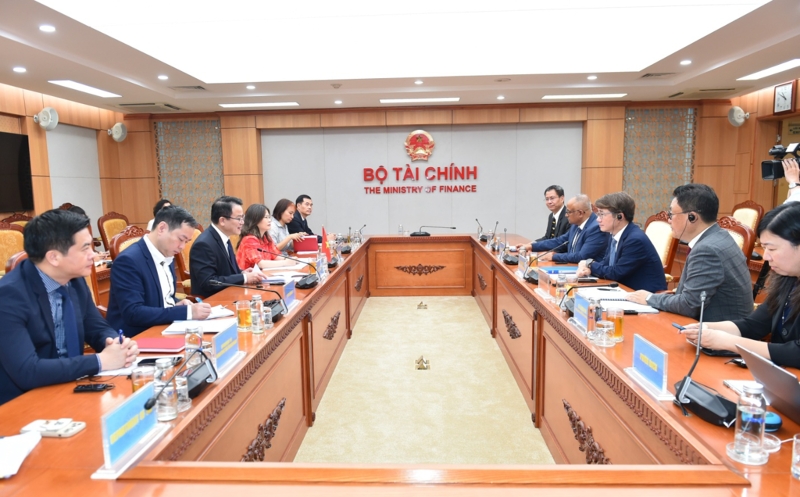
The plan was discussed during a meeting on June 15 in Hanoi between Deputy Minister of Finance Tran Quoc Phuong and Mr. Kim Dongil, Executive Director at ADB representing a constituency that includes Vietnam and some other Asian countries.

During the meeting, both sides reviewed future cooperation priorities, including budget support lending, large-scale infrastructure projects, and initiatives aimed at expanding ASEAN power grid connectivity.

According to ADB, the proposed project pipeline aligns with Vietnam’s key development priorities and is designed to support sustainable economic growth. The two sides agreed that future cooperation should focus on large-scale, high-impact projects capable of generating broad economic benefits rather than dispersing resources across smaller initiatives.

Deputy Minister Phuong noted that Vietnam’s financing needs remain substantial as the country pursues ambitious development goals. He emphasized that investment resources will be directed toward growth-driving sectors and regions with strong capacity to absorb capital effectively.

For his part, Mr. Kim Dongil reaffirmed ADB’s commitment to expanding its operations and financial support through 2030. He said the bank stands ready to assist Vietnam in achieving its socio-economic development objectives and expressed confidence that cooperation between the two sides will continue to deepen in the years ahead.


Source: Phương Nhi

Photo: The Ministry of Finance

Latest Posts

Automechanika 2026 highlights Việt Nam’s new energy vehicle boom

Automechanika 2026 highlights Việt Nam’s new energy vehicle boom

Over 400 businesses from 17 countries and regions have participated at the Automechanika HCM City 2026 exhibition on Thursday at HCM City’s Saigon Exhibition and Convention Center.

HCM CITY — Over 400 businesses from 17 countries and territories are participating at the Automechanika HCM City 2026 exhibition on Thursday at HCM City’s Saigon Exhibition and Convention Center, featuring the latest solutions and technologies across various sectors of the automotive industry.

The three-day event is co-organised by German based Messe Frankfurt Group, Chan Chao International Co Ltd and Yorkers Exhibition Service Vietnam.

The exhibited solutions and technologies cover various sectors, including parts & components, electrics & electronics, accessories & customising and others.

Key exhibitors at the event include leading carmakers from Việt Nam and China, as VinFast and BYD Oway, along with original equipment (OE) and aftermarket manufacturers and suppliers from Italy, Japan, Germany and Korea.

It also offers visitors an overview of the latest trends across the entire automotive value chain, including Việt Nam's rapidly growing new energy vehicle (NEV) market.

Fiona Chiew, general manager of Messe Frankfurt (HK) Ltd, said: “Việt Nam’s transition to EVs and hybrids is driving change for the domestic automotive sector, with both national and global carmakers making their impact on the market.”

According to the event organiser, EV and hybrid vehicle sales in Việt Nam reached 162,039 units in the first quarter of 2026, up over 36 percent year-on-year, creating expanding opportunities and challenges within the value chain.

The rapid growth of the electric and hybrid vehicle market is creating new demand for components, diagnostic equipment, charging infrastructure, repair services and technical workforce, while also opening up room for growth across the entire automotive supply chain.

She also mentioned that the event serves as a comprehensive platform for international and Vietnamese businesses to connect, share ideas and forge partnerships.

The event also provides visitors with numerous activities, including a Collision Repair Training Workshop, an Automotive Mobility Solutions Conference and B2B activities.


Two converging trends continue to drive FDI into Vietnam

Two converging trends continue to drive FDI into Vietnam

Asian partners continue to dominate foreign direct investment (FDI) into Vietnam in the first five months of 2026, as both the wave of production diversification away from China and the ongoing restructuring of capital flows within ASEAN jointly generate additional momentum for investment inflows.

Total newly registered FDI into Vietnam during the five-month period reached more than $24.8 billion, up 34.9% year-on-year. Disbursed capital amounted to $9.7 billion, an increase of 9.6%.

“This result shows that Vietnam remains an attractive destination for foreign investors amid ongoing shifts, restructuring, and diversification of global supply chains,” the Foreign Investment Agency (FIA) under the Ministry of Finance noted in its periodic report.

The most notable aspect is not only the increase in capital, but also the structure of investor origins. Singapore and South Korea continued to lead, while mainland China, Hong Kong, and Indonesia ranked among the top five investors.

Together, these five economies accounted for more than 85% of total registered FDI during the period, underscoring the continued dominance of Asian capital flows.

According to the FIA, this structure reflects Vietnam simultaneously benefiting from two major trends: the relocation and diversification of supply chains away from China, and the restructuring of investment within ASEAN.

Two capital flows converge

After five months, Singapore led in investment in Vietnam with more than $8.5 billion, followed by South Korea with over $6.7 billion. Combined, these two partners accounted for more than 60% of total registered FDI into Vietnam over the period.

Singapore’s position reflects its role as a regional financial and investment hub. A portion of multinational projects in Vietnam is registered through Singapore-based entities.

Meanwhile, South Korean capital continues to focus on industrial manufacturing, electronics, semiconductors, and expansion projects by companies already operating in Vietnam.

Mainland China ranked third in total registered capital, while also leading in the number of newly registered projects. This reflects a trend of Chinese firms expanding production capacity into Vietnam to diversify operations, access ASEAN markets, and benefit from free trade agreements.

However, this is not simply a case of production relocating out of China. In many industries, Vietnam is becoming an additional node in regional production networks, while its manufacturing sector remains heavily dependent on machinery, raw materials, and intermediate inputs imported from China.

At the same time, the presence of Singapore and Indonesia among the leading investors highlights the growing importance of intra-ASEAN capital flows.

Indonesia recorded about $1.74 billion in registered capital, almost entirely from a single equity contribution and share acquisition transaction in Ho Chi Minh City. This illustrates that ASEAN capital flows are not limited to greenfield projects, but also include mergers, acquisitions, and equity investments in existing firms.

Major projects shaping the FDI landscape

Several large-scale projects have significantly influenced FDI figures since the beginning of the year.

Notable examples include the Can Gio International Transshipment Port with total investment of $4.9 billion; the GS Nha Be Metrocity project, which increased capital by $2.2 billion; a smart complex project in the Thu Thiem New Urban Area with a capital increase of around $1.2 billion; and a $2.1 billion AI data center in Tan Phu Trung Industrial Park, all in Ho Chi Minh City. In Nghe An province, the South Korean-invesed Quynh Lap LNG thermal power plant boasts more than $2.2 billion in investment.

In Thai Nguyen province, Samsung Electro-Mechanics Vietnam No. 2 has registered $1.2 billion capital, focusing on high-end FCBGA circuit boards used in robotics, autonomous vehicles, and advanced technology devices.

Together with another multi-billion-dollar technology project, this has helped Thai Nguyen emerge as Vietnam’s leading locality for FDI attraction in the Jan-May period, while also reflecting South Korea’s shift toward higher-value, more technology-intensive investments.

Posco Future M has also invested in a project producing artificial graphite anode materials for lithium-ion batteries in Thai Nguyen, with more than $282 million in capital, linked to the electric vehicle, battery, and new energy supply chains.

In addition to manufacturing projects, an Indonesian investor’s transaction of more than $1.7 billion in contributing capital to VLD Investment and Finance JSC has also significantly affected the capital structure by partner country. However, this is registered capital via equity contribution and share acquisition, not a new investment project.

FDI concentrated in manufacturing and emerging industrial hubs

The processing and manufacturing sector remained the main driver of investment, accounting for more than 60% of total registered capital in the first five months.

Projects in electronics, semiconductors, battery materials, and data centers indicate that new capital flows are increasingly directed toward higher-value technology sectors, while manufacturing continues to be the core attraction for FDI.

Foreign investors invested across 29 provinces and cities. Thai Nguyen led with more than $7.6 billion, followed by Ho Chi Minh City and Nghe An. Tay Ninh, Bac Ninh, and Hanoi also ranked among the major destinations.

Thai Nguyen stood out for electronics, semiconductor, and high-tech material projects, while Nghe An attracted large-scale energy investments.

The rise of these localities suggests the early formation of new industrial hubs supported by land availability, industrial park infrastructure, and capacity to absorb large-scale projects. However, this concentration also makes provincial FDI performance more volatile, depending on the timing of a few major projects.

Disbursed FDI over the five-month period reached its highest level in five years for the same period, indicating that licensed projects continue to be implemented at a steady pace.

However, the growth rate of disbursed capital remained significantly lower than that of registered capital. According to the FIA, this highlights the need to closely monitor capital absorption capacity, implementation progress, and the conversion of registered capital into actual disbursements.

The agency also pointed to persistent bottlenecks in energy infrastructure, logistics, high-quality human resources, supporting industries, and project implementation procedures.

Amid intensifying global competition for high-tech investment, the FIA emphasized that Vietnam must improve energy and logistics infrastructure, enhance industrial park quality, develop a skilled technical workforce, and streamline procedures related to land, construction, environmental approvals, and fire safety.


Việt Nam’s trade surplus with EU expands amid economic headwinds

Việt Nam’s trade surplus with EU expands amid economic headwinds

Việt Nam’s trade with the European Union (EU) remained resilient in the first five months of 2026, with exports posting robust double-digit growth and the country’s trade surplus with the bloc climbing 11.3 per cent year-on-year to US$18.1 billion.

HÀ NỘI — Việt Nam’s trade with the European Union (EU) remained resilient in the first five months of 2026, with exports posting robust double-digit growth and the country’s trade surplus with the bloc climbing 11.3 per cent year-on-year to US$18.1 billion, despite slowing economic activity in Europe.

Trade between Việt Nam and the EU maintained momentum during the January-May period, supported by the EU-Việt Nam Free Trade Agreement (EVFTA) and sustained demand for key Vietnamese exports, even as the EU grappled with inflationary pressures and sluggish consumer spending.

Latest data from the Customs Department showed bilateral trade reaching $36 billion during the five-month period.

Exports to the EU rose 16.9 per cent from a year earlier to $26 billion, while imports increased 21.6 per cent to nearly $8 billion, leaving Việt Nam with a trade surplus of about $18.1 billion.

Strong performances were recorded across major export categories, including electronics, garments and textiles, wood products and agricultural commodities. Imports from the EU were concentrated on machinery, equipment and production technologies.

The bloc’s growing contribution also helped lift Việt Nam’s total trade turnover to more than $445 billion in the first five months, up 25 per cent year-on-year.

Việt Nam is currently the EU’s largest trading partner in ASEAN.

In 2025, bilateral trade approached $74 billion, with Vietnamese exports to the bloc reaching $56.2 billion, up 8.6 per cent, while imports rose 5.4 per cent to $17.6 billion. The figures translated into a record trade surplus of $38.6 billion.

Last year, computers, electronic products and components led export earnings at $10.89 billion, followed by machinery, equipment and spare parts at $7.42 billion, and phones and components at $6.9 billion, all posting growth from the previous year.

The Ministry of Industry and Trade attributed the strong performance largely to the EVFTA, which has significantly expanded market access for Vietnamese goods in the EU’s nearly 500-million-consumer market.

Rising exports and a steadily widening trade surplus have further strengthened Việt Nam’s role in global supply chains.

Since the agreement took effect in August 2020, bilateral trade has surged.

Bilateral trade turnover increased from $49.7 billion in 2020 to $68.4 billion in 2024 before approaching $74 billion in 2025. Over the same period, Việt Nam’s exports to the EU grew from $35.1 billion to $56.2 billion, while its trade surplus nearly doubled from $20.5 billion to almost $39 billion.

The sustained growth highlights the Việt Nam – EU economic partnership as one of the country’s most stable and successful trade relationships.

European businesses increasingly regard Việt Nam as a strategic link in global supply chains thanks to its strong FDI attraction, diversified export markets and extensive network of free trade agreements.

Raising supplier standards

The steady rise in exports and trade surplus since the EVFTA entered into force reflects Vietnamese businesses’ growing ability to meet the EU’s stringent quality and regulatory requirements. Many products have effectively leveraged tariff preferences under the agreement to generate export revenues exceeding $1 billion, while local firms have deepened their integration into the supply chains of European multinational corporations.

At the same time, exporters face mounting pressure as the EU tightens rules on environmental protection, carbon emissions, product traceability and corporate responsibility.

Đậu Anh Tuấn, vice decretary-general and director of the Legal Department at the Vietnam Chamber of Commerce and Industry (VCCI), said globalisation continues to create opportunities, but businesses must also adapt to increasingly demanding standards on sustainability, transparency and accountability.

The EU currently accounts for around 13 per cent of Việt Nam’s total exports and is becoming an increasingly important destination as the country seeks to diversify markets amid growing global trade uncertainties.

According to the Ministry of Industry and Trade, the EU trade landscape is being reshaped by three major trends: US tariff policies, green transition and digital transformation. Together, these forces are redefining global supply chains, import regulations and supplier expectations.

To stay competitive, many textile and garment manufacturers are accelerating investments in green production and sustainable development.

Garco 10 Corporation, for example, is investing heavily in modern equipment, digitalisation and smart manufacturing lines at its new factory in Hưng Yên province.

More than VNĐ142 billion ($5.39 million) has been earmarked for equipment upgrades and digital transformation, alongside nearly VNĐ40 billion for construction and VNĐ29.5 billion for additional investment projects.

Trần Ngọc Quân, trade counsellor at the Vietnam Trade Office in Belgium and the EU, said Vietnamese enterprises must proactively align with the requirements of the European Green Deal while advancing circular economy models, sustainable production and responsible consumption to secure long-term growth in the European market.


See all blog