Lumen Vietnam Fund

Blog

State-owned enterprises set to become a stronger driver of economic growth

State-owned enterprises set to become a stronger driver of economic growth

As Việt Nam strives to achieve double-digit economic growth, enhancing the operational efficiency of SOEs while reinforcing their pioneering and leading role has become an urgent priority.

HÀ NỘI — Although state-owned enterprises (SOEs) account for only a small proportion of the total number of businesses, they continue to control substantial resources across many strategic sectors and make significant contributions to the national economy.

As Việt Nam strives to achieve double-digit economic growth, enhancing the operational efficiency of SOEs while reinforcing their pioneering and leading role has become an urgent priority.

According to the Ministry of Finance, the number of SOEs had declined dramatically from more than 12,000 in the 1990s to just 695 by the end of last year.

Despite this sharp reduction, these enterprises still held total assets worth VNĐ4.5 quadrillion (approximately US$172.5 billion) and contributed VNĐ390 trillion to the state budget.

SOEs’ new role in economic development

Resolution No. 79-NQ/TW, issued by the Politburo on January 6 this year on the development of the state sector, affirms that the state economy, with state-owned enterprises (SOEs) at its core, is an especially important component of Việt Nam's socialist-oriented market economy.

However, the resolution also acknowledges that SOEs have yet to operate efficiently enough to match their position and the resources they control. Their international competitiveness remains limited, and their pioneering role in innovation and leadership in key and essential industries has not been sufficiently demonstrated.

Against the backdrop of Việt Nam's ambition to achieve double-digit economic growth, Resolution 79 dentifies the state economy as the pioneer in creating development, leading the way, promoting industrialisation and modernisation, restructuring the economy, and establishing a new growth model driven primarily by science and technology, innovation, and digital transformation.

Accordingly, restructuring SOEs must be accelerated to improve operational efficiency through the adoption of advanced technologies and modern corporate governance practices that meet international standards. At the same time, Việt Nam aims to build large state-owned economic groups, corporations, and enterprises capable of leading strategic and essential sectors of the economy.

Hoàng Văn Cường, former vice rector of the National Economics University, believes that the restructuring of SOEs has entered a new phase requiring changes not only in organisational models but also in governance mindset. In line with Resolution 79, the objective is no longer merely to reorganise, downsize or address historical shortcomings, but focus on developing a more efficient SOE sector with stronger international competitiveness and sufficient capacity to drive the national economy.

The new direction calls for the establishment of diversified ownership economic groups capable of mastering advanced technologies and integrating deeply into global value chains, rather than concentrating solely on equitisation or state capital divestment, said Cường.

To achieve this objective, Việt Nam must first reform its management model by clearly separating the state's regulatory function from its role as the owner of state capital.
Restructuring priorities for greater efficiency

Phan Đức Hiếu, a member of the 16th National Assembly and the National Assembly's Committee for Economic and Financial Affairs, emphasised that the most important task in the coming period is to establish a common understanding of SOE restructuring. Restructuring should not simply mean reducing the number of enterprises through mergers, dissolution, or capital divestment.

Its fundamental objective should be to enhance the efficiency and competitiveness of SOEs and the state sector as a whole, in line with Resolution 79's vision of SOEs serving as leaders, pathfinders, and drivers of innovation.

To achieve this objective, Hiếu proposed three key groups of solutions. First, long-standing financial, legal, and land-related issues must be comprehensively resolved, as these have become persistent bottlenecks hindering equitisation, ownership transfer, and enterprise restructuring.

Many SOEs still face situations where their charter capital exists only on paper but has not been fully contributed in practice. Land-use plans remain unclear, while numerous assets and projects cannot yet be accurately valued during ownership transfer.

The Ministry of Finance should conduct a comprehensive review of these obstacles, classify them according to the relevant authorities, and submit appropriate solutions to the National Assembly, the Government, or relevant ministries for final resolution, said Hiếu. If necessary, a special resolution could be introduced to address outstanding issues arising during the equitisation and restructuring of SOEs.

The second group of solutions focuses on improving corporate governance in accordance with international best practices. Việt Nam should not simply adopt the OECD Corporate Governance Principles wholesale. Instead, it should selectively apply provisions that are appropriate for different categories of enterprises and sectors.

These principles should then be institutionalised through the legal system, particularly regulations governing modern corporate governance, professional executive recruitment and the appointment of independent board members.

The third solution is to shift decisively from an administrative approach to restructuring and state capital divestment toward a market-oriented mechanism. The sale of state capital should not follow rigid plans but should instead be guided by market demand, as investors are more interested in a company's business prospects than in the value of its assets alone.

In practice, many state-owned economic groups have already begun implementing modern governance models.

Speaking at a recent online seminar on SOE governance, Nguyễn Thị Sơn Bình, deputy director of the SME Service Center under Viettel Telecom Corporation, stated that Viettel's mission extends beyond business development. The company aims to become a core force in building open economic ecosystems that connect state-owned enterprises, private businesses and household enterprises to generate synergies across the economy.

Viettel has adopted a lean management model, using digital transformation and innovation as key drivers of growth. The company has significantly reduced unnecessary management layers to shorten information flows and accelerate decision-making, viewing speed as a fundamental competitive advantage in today's rapidly evolving technological environment.

Sharing the view that institutional bottlenecks must be removed to accelerate restructuring, Doãn Thanh Tuấn, deputy director general of the Department of State-Owned Enterprise Development under the Ministry of Finance, observed that several factors have slowed SOE restructuring, with implementation capacity being among the most critical.

Besides objective constraints, there remains a widespread reluctance among officials to make decisions due to concerns about violating regulations or making mistakes, he said.

SOE restructuring has been slowed by a multi-layered management system, incomplete decentralisation, and lengthy approval procedures, said Tuấn.

He said key priorities ahead include protecting officials who act properly and transparently, streamlining the legal framework, and strengthening decentralisation with stronger post-implementation oversight.

He added that these directions have been reflected in recent policies and regulations. The Ministry of Public Security is drafting a resolution on special mechanisms to address legal issues related to economic development, while the Ministry of Finance is developing criteria for SOE classification and further guidance to support the restructuring process.

Source: VNS

Photo: VNA/VNS
Latest Posts

Australian businesses looking at trade and investment with Vietnam

Australian businesses looking at trade and investment with Vietnam

Mr. Sam Conroy, President of the Australian Chamber of Commerce in Vietnam (AusCham), tells Linh Ngoc that Australian businesses continue to look at trade and investment with Vietnam but also flag certain concerns.

How has interest among Australian businesses in Vietnam changed since the two countries upgraded relations to a Comprehensive Strategic Partnership in 2024? What sectors have been experiencing the strongest wave of new investment?

The elevation of bilateral relations to a Comprehensive Strategic Partnership (CSP) in March 2024 has given Australian businesses greater confidence in the long-term direction of the relationship. It sends a strong signal that both governments are committed to deeper cooperation across trade, investment, education, innovation, energy, and sustainable development.

Mr. Sam Conroy, President of the Australian Chamber of Commerce in Vietnam (AusCham)Mr. Sam Conroy, President of the Australian Chamber of Commerce in Vietnam (AusCham)

This momentum is reflected in the growing economic relationship. According to Australia’s Department of Foreign Affairs and Trade, two-way trade in goods and services reached A$30 billion ($21 billion) in 2025. However, total two-way investment was A$2 billion ($1.4 billion) in the same year. This contrast shows that, although trade is performing strongly, there remains considerable scope to expand investment in both directions.

AusCham has observed growing interest from Australian companies that see Vietnam not only as an export market but also as a potential base for manufacturing, services, and participation in regional supply chains. Nevertheless, publicly-available data does not yet provide a clear basis for ranking what sectors are receiving the strongest wave of new Australian investment. It is therefore more accurate to describe the principal areas of interest and opportunity.

Vietnam and Australia’s official economic strategies identify agriculture, education, tourism, energy and resources, the digital economy, professional services, science and technology, manufacturing, and skills development as sectors with strong potential. The CSP also places particular emphasis on clean energy, climate-related investment, education, innovation, digital transformation, and resilient supply chains.

However, it is important to distinguish growing interest from completed investment. Bilateral trade has developed strongly, but two-way investment remains modest relative to the size and potential of our economies. The next stage should therefore focus on converting positive sentiment and commercial enquiries into long-term, high-quality projects.

What key factors do Australian businesses prioritize and consider when investing in Vietnam?

Australian businesses generally take a long-term and risk-conscious approach to investment. Market growth is important, but it is only one part of the decision. Investors also look closely at the predictability of the regulatory environment, the consistency of implementation across different authorities, and the transparency and efficiency of administrative procedures.

The availability of skilled employees is another major consideration. As Vietnam moves into more technology-intensive and higher-value industries, investors need access to people with strong technical, managerial, digital, and English-language capabilities.

Infrastructure is equally important, particularly the reliability of electricity supply, transport and logistics networks, industrial facilities, and digital connectivity. Australian companies also assess the strength of potential local partners and suppliers, the protection of intellectual property, tax and customs arrangements, and the ability to meet environmental, social, and governance (ESG) requirements.

Ultimately, investors need confidence that they can establish and expand their operations within a stable, transparent, and commercially-sustainable environment.

How would you assess the potential for cooperation between businesses of the two countries in the time ahead? What sectors will be focused on?

The potential is significant, because the two economies are highly complementary.

Australia has internationally-recognized capabilities in education, resources, energy, agriculture, infrastructure, logistics, technology, and professional services. Vietnam offers a large and growing domestic market, a dynamic workforce, strong manufacturing capacity, and access to regional and global supply chains. Combining these strengths can create partnerships that go beyond traditional buyer-and-seller relationships.

Clean energy and the energy transition will be a particularly important area. Australia can contribute expertise in renewable energy, energy storage, critical minerals, mining technology, project development, and sustainable financing. Agriculture and food processing also offer substantial opportunities. Cooperation can help improve productivity, food safety, traceability, climate resilience, and access to international markets.

Education and skills development will remain central to the relationship, especially in areas such as semiconductors, renewable energy, digital technology, logistics, healthcare, and advanced manufacturing. Australian institutions can work with Vietnamese universities, vocational colleges, and businesses to design programs that respond directly to industry requirements.

We also expect greater cooperation in digital transformation, innovation, transport and logistics, advanced manufacturing, infrastructure, and professional services. These are areas in which Australian expertise can support Vietnam’s development ambitions while creating sustainable commercial opportunities for both countries.

Besides the opportunities, what are the challenges for Australian businesses doing business in Vietnam?

Like every fast-growing market, Vietnam presents both opportunities and challenges. Australian businesses frequently highlight the need for greater regulatory clarity and consistency. Differences in the interpretation or implementation of regulations between central and local authorities can create uncertainty, particularly in relation to licensing, taxation, customs, land, construction, and project approvals.

Lengthy administrative processes can affect project timelines and increase costs. For major investments in infrastructure, manufacturing, or energy, the availability of suitable land, reliable electricity, and supporting infrastructure is also a critical consideration.

Skills shortages are emerging in several high-growth sectors. Vietnam has a young and capable workforce, but further investment in technical education, management capabilities, and industry-linked training will be necessary as the economy moves toward more sophisticated activities.

There are also broader challenges arising from global economic uncertainty, supply chain disruptions, changing trade measures, and increasingly-demanding sustainability standards. Businesses must manage these issues while adapting to evolving regulations on data, cybersecurity, environmental compliance, and carbon emissions.

These challenges are manageable, but addressing them will require continuous dialogue between government, businesses, and industry associations. AusCham is committed to supporting that dialogue and helping Australian companies navigate the market successfully.

- In the context of the restructuring of global supply chains, Vietnam is considered an important destination for many international investors. In your opinion, what should it do to not only attract new capital but also become a higher-value link in the supply chains of Australian businesses?

Vietnam should focus on increasing the amount of domestic value, knowledge, and innovation generated through foreign investment, rather than assessing success primarily by the volume of registered capital.

An important step would be to strengthen connections between foreign-invested enterprises (FIEs) and Vietnamese suppliers. The World Bank reports that FIEs account for 73 per cent of Vietnam’s exports, while the participation of local businesses in global supply chains declined from 35 per cent in 2009 to 18 per cent in 2023. Supplier-development programs, access to supply chain finance, and support for Vietnamese companies to obtain international certifications would help close this gap.

Vietnam can also encourage investors to locate more high-value functions in the country, including R&D, engineering, product design, digital services, and regional management. Stronger intellectual property protection and closer cooperation between businesses, universities, and research institutions would support this transition.

Skills development must accompany this process. Greater investment in STEM (Science, Technology, Engineering, and Mathematics) education, vocational training, and industry-academia partnerships would help Vietnam meet demand for higher-skilled workers and move beyond activities based mainly on labor cost.

Finally, access to reliable low-carbon energy will become increasingly important. Australian and other international businesses are under growing pressure to measure and reduce emissions across their supply chains. Vietnam’s ability to provide renewable energy, credible carbon data, and internationally-recognized environmental standards will therefore influence future investment decisions.

By developing capable domestic suppliers, higher-skilled workers, stronger innovation systems, and cleaner production, Vietnam can attract investment that delivers greater and more lasting value to its economy.


Vietnam beats Thailand as Southeast Asia's second-largest aviation market

Vietnam beats Thailand as Southeast Asia's second-largest aviation market

Vietnam has overtaken Thailand to become Southeast Asia's second-largest commercial aviation market, while overall airline seat capacity in the region declined in July as higher fuel costs prompted carriers to trim international services, aviation data provider OAG said.

The UK-based firm said total airline seat capacity in Southeast Asia fell 1.2% year-on-year to 50.4 million seats in July.

Domestic capacity declined 1.3% and accounted for 45% of the region's commercial aviation market, while international capacity fell 1.5%, making up the remaining 55%.

OAG attributed the decline to rising jet fuel costs following tensions in the Middle East, which led several Southeast Asian airlines to scale back international operations.

Indonesia remained the region's largest aviation market with 10.9 million seats, up 0.3% from a year earlier.

Vietnam ranked second with 7.4 million seats, a 5.6% increase from July 2025, overtaking Thailand, where capacity fell 3% to 6.9 million seats.

Malaysia placed fourth with 5.2 million seats, down 8.3%, followed by the Philippines with 4.9 million seats, down 4.1%.

National flag carrier Vietnam Airlines became Southeast Asia's largest airline by seat capacity during the month, offering 2.81 million seats, up 0.1% from a year earlier.

According to OAG, Thailand, Malaysia, and the Philippines posted the steepest declines in capacity as airlines adjusted schedules to cope with higher jet fuel prices linked to the Middle East conflict, including uncertainty over shipping through the Strait of Hormuz.

The higher operating costs prompted several carriers to reduce or suspend direct and connecting flights between the Middle East and the three Southeast Asian countries, the report said.

According to the Civil Aviation Authority of Vietnam (CAAV), passenger traffic at Vietnamese airports reached over 76 million arrivals in January-July, up 7% year-on-year. Air cargo volume was nearly 267,000 tons, up 0.4%.


More Dutch firms seek Vietnamese suppliers as manufacturing ties deepen

More Dutch firms seek Vietnamese suppliers as manufacturing ties deepen

Việt Nam has made significant progress in strengthening its position in global manufacturing and now has the capabilities needed to participate more deeply in international supply chains.

HÀ NỘI — More Dutch companies are looking to source precision engineering, semiconductors and advanced manufacturing products from Vietnamese suppliers as global companies diversify their supply chains, opening new opportunities for companies to integrate into Europe's high-tech industrial ecosystem.

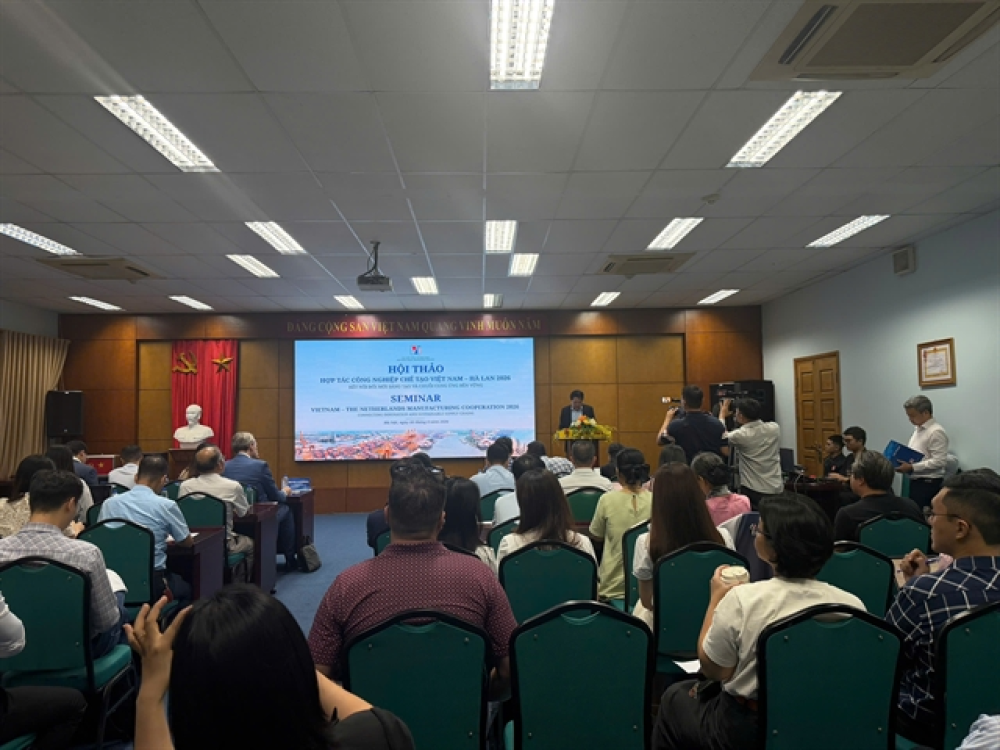
The opportunity was highlighted at the Việt Nam–Netherlands Manufacturing Cooperation Workshop held in Hà Nội on July 6.

Rick Slettenhaar, deputy ambassador of the Netherlands to Việt Nam, said Việt Nam has made significant progress in strengthening its position in global manufacturing and now has the capabilities needed to participate more deeply in international supply chains.

"Many Vietnamese companies already possess strong manufacturing capabilities," he said.

"The next step now is to connect these capabilities with international supply chains."

He noted that the Netherlands' high-tech industry, including companies specialising in precision manufacturing, mechatronics and semiconductor equipment, depends heavily on extensive international supplier networks and is continuously searching for reliable manufacturing partners.

"This is why cooperation between Dutch and Vietnamese ecosystems in the field of high-tech is growing," he said.

Slettenhaar pointed to companies such as ASML, the global leader in semiconductor lithography systems, which is strengthening supply chain connections in Việt Nam. Other Dutch firms, including VDL and Technotion, are also expanding their operations and supplier networks in the country.

"At the same time, more Dutch companies are looking to source more from Việt Nam," he added.

To facilitate those partnerships, he encouraged Vietnamese enterprises to participate in Dutch Precision Week this November, describing the event as a gateway to the Netherlands' high-tech manufacturing ecosystem.

The exhibition will allow businesses to meet original equipment manufacturers (OEMs), Tier 1 and Tier 2 suppliers, technology institutes and potential business partners while gaining a better understanding of market requirements.

"Many successful business partnerships start with a first conversation. The Dutch Precision Week is an ideal place to do so," Slettenhaar said.

The growing interest from Dutch manufacturers comes as Europe reshapes its industrial strategy around resilient supply chains, low-carbon production and advanced manufacturing.

Bùi Quang Hưng, Deputy Director General of the Trade Promotion Agency under the Ministry of Industry and Trade, said manufacturing has become increasingly important as the global economy undergoes structural changes driven by digital transformation, green development and supply chain diversification.

The European Union is promoting industrial policies that prioritise resilient supply chains, carbon reduction, smart manufacturing and innovation.

Hưng described the Netherlands as one of Europe's leading logistics, trade and high-tech manufacturing hubs, making it an ideal partner for Việt Nam.

"With strengths in precision engineering, semiconductors, automation, smart logistics and the circular economy, the Netherlands is not only an important trading partner but also a highly promising partner for investment cooperation, technology transfer and supply chain development with Việt Nam," he said.

Although Việt Nam has become a manufacturing base for multinational corporations in electronics, precision engineering, electrical equipment and other high-tech sectors, Hưng acknowledged that domestic companies still generate relatively limited value added because many remain concentrated in assembly work and the production of simple components.

For Vietnamese enterprises hoping to become suppliers to Dutch manufacturers, Võ Thị Ngọc Diệp, trade counsellor at the Vietnam Embassy in the Netherlands, said the Netherlands offers advantages beyond its domestic market.

Goods entering through the Netherlands can circulate throughout the EU single market without additional intra-EU customs procedures, making the country an effective gateway to Europe.

Rather than relying on broad trade promotion campaigns, Diệp proposed shifting towards sector-specific supplier development programmes targeting precision engineering, electronics, semiconductors, automation and supporting industries.

She recommended combining trade missions with factory visits, technical consultations and business matching programmes before international exhibitions while incorporating Dutch Precision Week into Việt Nam's national trade promotion activities.

Diệp also urged stronger support to help manufacturers comply with EU technical requirements through training on CE marking, machinery regulations and RoHS standards, alongside programmes that improve export readiness.

For businesses themselves, she advised preparing English-language corporate profiles, comprehensive technical documentation and internationally recognised certifications while responding quickly to sample orders.

She said enterprises should gradually move away from competing primarily on price and instead differentiate themselves through quality, innovation, transparency, reliable delivery and after-sales services.

The Vietnam Trade Office in the Netherlands will continue providing market information, connecting business partners and supporting practical cooperation projects as more Dutch companies explore sourcing opportunities in Việt Nam, Diệp added.

See all blog