Australian businesses looking at trade and investment with Vietnam
Mr. Sam Conroy, President of the Australian Chamber of Commerce in Vietnam (AusCham), tells Linh Ngoc that Australian businesses continue to look at trade and investment with Vietnam but also flag certain concerns.
How has interest among Australian businesses in Vietnam changed since the two countries upgraded relations to a Comprehensive Strategic Partnership in 2024? What sectors have been experiencing the strongest wave of new investment?
The elevation of bilateral relations to a Comprehensive Strategic Partnership (CSP) in March 2024 has given Australian businesses greater confidence in the long-term direction of the relationship. It sends a strong signal that both governments are committed to deeper cooperation across trade, investment, education, innovation, energy, and sustainable development.

Mr. Sam Conroy, President of the Australian Chamber of Commerce in Vietnam (AusCham)Mr. Sam Conroy, President of the Australian Chamber of Commerce in Vietnam (AusCham)
This momentum is reflected in the growing economic relationship. According to Australia’s Department of Foreign Affairs and Trade, two-way trade in goods and services reached A$30 billion ($21 billion) in 2025. However, total two-way investment was A$2 billion ($1.4 billion) in the same year. This contrast shows that, although trade is performing strongly, there remains considerable scope to expand investment in both directions.
AusCham has observed growing interest from Australian companies that see Vietnam not only as an export market but also as a potential base for manufacturing, services, and participation in regional supply chains. Nevertheless, publicly-available data does not yet provide a clear basis for ranking what sectors are receiving the strongest wave of new Australian investment. It is therefore more accurate to describe the principal areas of interest and opportunity.
Vietnam and Australia’s official economic strategies identify agriculture, education, tourism, energy and resources, the digital economy, professional services, science and technology, manufacturing, and skills development as sectors with strong potential. The CSP also places particular emphasis on clean energy, climate-related investment, education, innovation, digital transformation, and resilient supply chains.
However, it is important to distinguish growing interest from completed investment. Bilateral trade has developed strongly, but two-way investment remains modest relative to the size and potential of our economies. The next stage should therefore focus on converting positive sentiment and commercial enquiries into long-term, high-quality projects.
What key factors do Australian businesses prioritize and consider when investing in Vietnam?
Australian businesses generally take a long-term and risk-conscious approach to investment. Market growth is important, but it is only one part of the decision. Investors also look closely at the predictability of the regulatory environment, the consistency of implementation across different authorities, and the transparency and efficiency of administrative procedures.
The availability of skilled employees is another major consideration. As Vietnam moves into more technology-intensive and higher-value industries, investors need access to people with strong technical, managerial, digital, and English-language capabilities.
Infrastructure is equally important, particularly the reliability of electricity supply, transport and logistics networks, industrial facilities, and digital connectivity. Australian companies also assess the strength of potential local partners and suppliers, the protection of intellectual property, tax and customs arrangements, and the ability to meet environmental, social, and governance (ESG) requirements.
Ultimately, investors need confidence that they can establish and expand their operations within a stable, transparent, and commercially-sustainable environment.
How would you assess the potential for cooperation between businesses of the two countries in the time ahead? What sectors will be focused on?
The potential is significant, because the two economies are highly complementary.
Australia has internationally-recognized capabilities in education, resources, energy, agriculture, infrastructure, logistics, technology, and professional services. Vietnam offers a large and growing domestic market, a dynamic workforce, strong manufacturing capacity, and access to regional and global supply chains. Combining these strengths can create partnerships that go beyond traditional buyer-and-seller relationships.
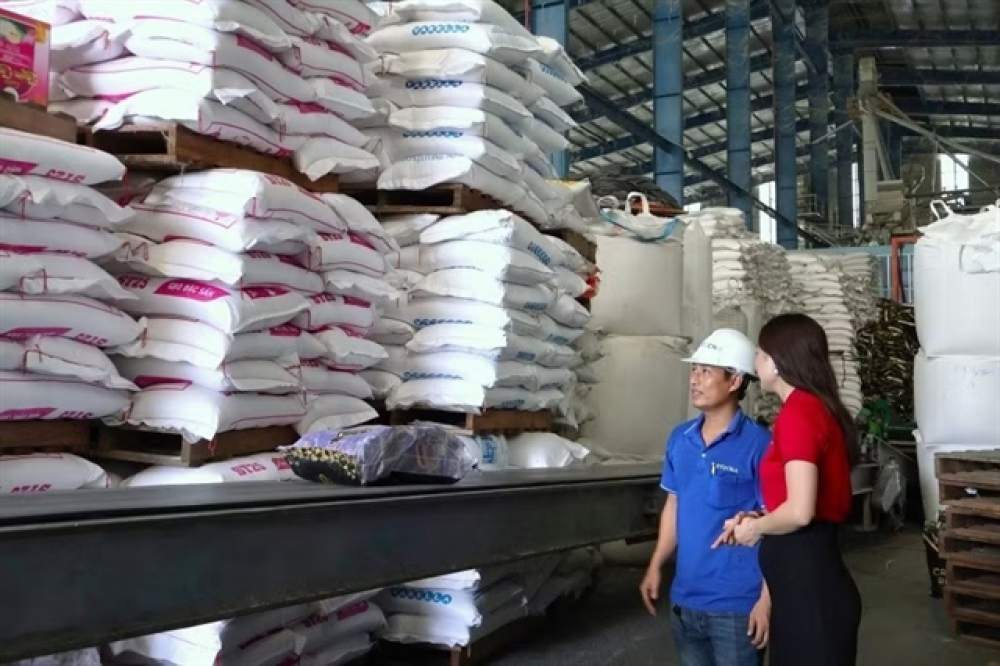
Clean energy and the energy transition will be a particularly important area. Australia can contribute expertise in renewable energy, energy storage, critical minerals, mining technology, project development, and sustainable financing. Agriculture and food processing also offer substantial opportunities. Cooperation can help improve productivity, food safety, traceability, climate resilience, and access to international markets.
Education and skills development will remain central to the relationship, especially in areas such as semiconductors, renewable energy, digital technology, logistics, healthcare, and advanced manufacturing. Australian institutions can work with Vietnamese universities, vocational colleges, and businesses to design programs that respond directly to industry requirements.
We also expect greater cooperation in digital transformation, innovation, transport and logistics, advanced manufacturing, infrastructure, and professional services. These are areas in which Australian expertise can support Vietnam’s development ambitions while creating sustainable commercial opportunities for both countries.
Besides the opportunities, what are the challenges for Australian businesses doing business in Vietnam?
Like every fast-growing market, Vietnam presents both opportunities and challenges. Australian businesses frequently highlight the need for greater regulatory clarity and consistency. Differences in the interpretation or implementation of regulations between central and local authorities can create uncertainty, particularly in relation to licensing, taxation, customs, land, construction, and project approvals.
Lengthy administrative processes can affect project timelines and increase costs. For major investments in infrastructure, manufacturing, or energy, the availability of suitable land, reliable electricity, and supporting infrastructure is also a critical consideration.
Skills shortages are emerging in several high-growth sectors. Vietnam has a young and capable workforce, but further investment in technical education, management capabilities, and industry-linked training will be necessary as the economy moves toward more sophisticated activities.
There are also broader challenges arising from global economic uncertainty, supply chain disruptions, changing trade measures, and increasingly-demanding sustainability standards. Businesses must manage these issues while adapting to evolving regulations on data, cybersecurity, environmental compliance, and carbon emissions.
These challenges are manageable, but addressing them will require continuous dialogue between government, businesses, and industry associations. AusCham is committed to supporting that dialogue and helping Australian companies navigate the market successfully.
- In the context of the restructuring of global supply chains, Vietnam is considered an important destination for many international investors. In your opinion, what should it do to not only attract new capital but also become a higher-value link in the supply chains of Australian businesses?
Vietnam should focus on increasing the amount of domestic value, knowledge, and innovation generated through foreign investment, rather than assessing success primarily by the volume of registered capital.
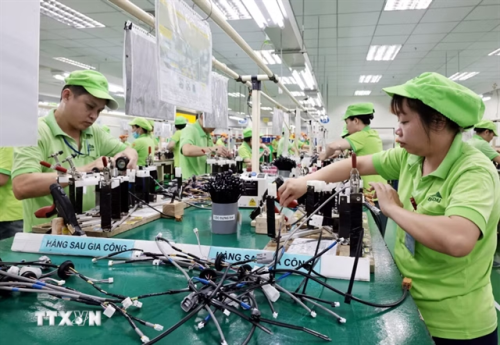
An important step would be to strengthen connections between foreign-invested enterprises (FIEs) and Vietnamese suppliers. The World Bank reports that FIEs account for 73 per cent of Vietnam’s exports, while the participation of local businesses in global supply chains declined from 35 per cent in 2009 to 18 per cent in 2023. Supplier-development programs, access to supply chain finance, and support for Vietnamese companies to obtain international certifications would help close this gap.
Vietnam can also encourage investors to locate more high-value functions in the country, including R&D, engineering, product design, digital services, and regional management. Stronger intellectual property protection and closer cooperation between businesses, universities, and research institutions would support this transition.
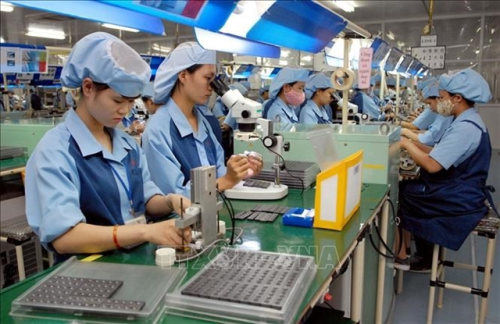
Skills development must accompany this process. Greater investment in STEM (Science, Technology, Engineering, and Mathematics) education, vocational training, and industry-academia partnerships would help Vietnam meet demand for higher-skilled workers and move beyond activities based mainly on labor cost.
Finally, access to reliable low-carbon energy will become increasingly important. Australian and other international businesses are under growing pressure to measure and reduce emissions across their supply chains. Vietnam’s ability to provide renewable energy, credible carbon data, and internationally-recognized environmental standards will therefore influence future investment decisions.
By developing capable domestic suppliers, higher-skilled workers, stronger innovation systems, and cleaner production, Vietnam can attract investment that delivers greater and more lasting value to its economy.
Source: en.vneconomy.vn