Lumen Vietnam Fund

Blog

Sơn La breaks ground on nearly $115 million wind power plant

Sơn La breaks ground on nearly $115 million wind power plant

Once operational, the plant is expected to supply more than 230 million kWh of clean electricity annually to the national grid.

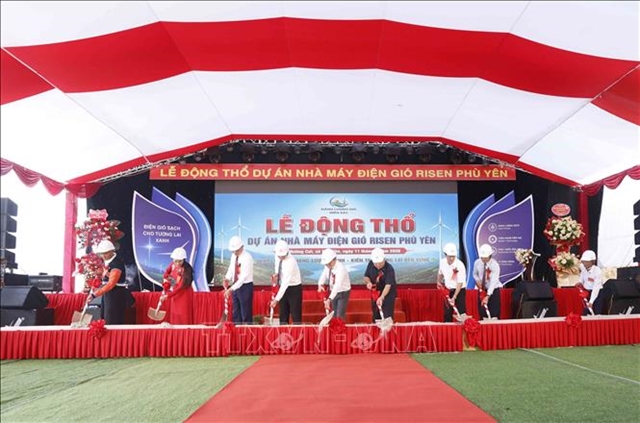
SƠN LA — The Sơn La Provincial People's Committee and Northern Wind Energy JSC held a groundbreaking ceremony for the Risen Phù Yên Wind Power Plant project on Thursday.

The Risen Phù Yên Wind Power Plant will have a capacity of 80MW and a total investment of nearly VNĐ3 trillion (nearly US$114 million).

The project, which has an operational term of 50 years, will be built in Phù Yên and Mường Cơi communes in Sơn La Province, covering approximately 46.4 hectares. Commercial operations are expected to commence in the third quarter of 2028.

Once operational, the plant is expected to supply more than 230 million kWh of clean electricity annually to the national grid.

The project is expected to contribute to the efficient use of renewable energy resources, reduce greenhouse gas emissions, create jobs, support the development of transport and power infrastructure, increase local budget revenues and advance Sơn La’s goals of green development and sustainable economic growth.

It is also expected to encourage further renewable energy investments, helping position Sơn La as a leading clean energy hub in Việt Nam’s northwestern region.

On the occasion, Northern Wind Energy JSC donated VNĐ100 million each to Phù Yên and Mường Cơi communes to support programmes aimed at eliminating temporary and dilapidated housing.


Source: VNS

Photo: VNA/VNS

Latest Posts

Foxconn, Brookfield partner on 1 GW renewable energy buildout in Vietnam

Foxconn, Brookfield partner on 1 GW renewable energy buildout in Vietnam

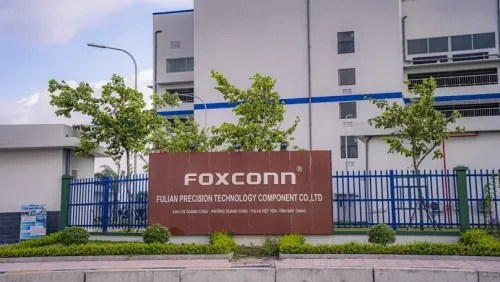
Taiwanese electronics manufacturing giant Foxconn and global investment firm Brookfield Asset Management have formed a strategic partnership to develop up to 1 gigawatt of renewable energy capacity in Vietnam, underscoring growing demand from multinational manufacturers for clean power in one of Asia's fastest-growing production hubs.

Under the agreement, the two companies will jointly invest in and manage a portfolio of utility-scale solar, wind and battery energy storage projects supported by long-term power purchase agreements (PPAs), according to a Foxconn statement released on Tuesday.

Brookfield will make its investment through the Brookfield Global Transition Fund, one of its flagship vehicles focused on accelerating the energy transition.

The renewable energy portfolio is intended primarily to support the operations of Foxconn and its supply-chain partners in Vietnam, where the company has rapidly expanded manufacturing capacity in recent years.

James Tu, Foxconn's Chief Investment Officer, said the partnership would help secure a stable and cost-competitive electricity supply to support the company's long-term growth strategy in the region.

The agreement comes as global technology manufacturers face increasing pressure from customers and investors to reduce carbon emissions across their supply chains while ensuring reliable access to electricity amid rising energy demand.

Vietnam has emerged as a key manufacturing destination for electronics companies seeking to diversify production beyond China. Foxconn, Apple's key supplier, has invested heavily in the country and now produces a wide range of products, including consumer electronics, networking equipment, and technology components.

"Brookfield's partnership with Foxconn underscores the scale of corporate demand for renewable power in Vietnam, one of Asia's fastest-growing economies," said Daniel Cheng, head of Energy for Asia Pacific at Brookfield. "As global manufacturers increasingly turn to renewables for its cost competitiveness, speed to market and energy security benefits, we're seeing strong and rising demand for long-term supply across the region."

Cheng added that supportive policy developments across Southeast Asia are creating favorable conditions for renewable energy investment and accelerating deployment opportunities for Brookfield's transition-focused strategy.

Since beginning its investment in Vietnam in 2007, Foxconn has established a presence in Bac Ninh, Hanoi, Quang Ninh and Nghe An, with Bac Ninh emerging as its key hub.

Meanwhile, Brookfield is already active in Vietnam's renewable energy sector. The Canadian investment firm previously acquired a 100-MW wind power project in central Vietnam and has continued to expand its clean-energy footprint across Southeast Asia.

HCMC launches double-digit growth plan for 2026-2030 period

HCMC launches double-digit growth plan for 2026-2030 period

Strategic technology sectors prioritized for development include Artificial Intelligence (AI), semiconductors, Big Data, Cloud Computing, biotechnology, new materials, and renewable energy.

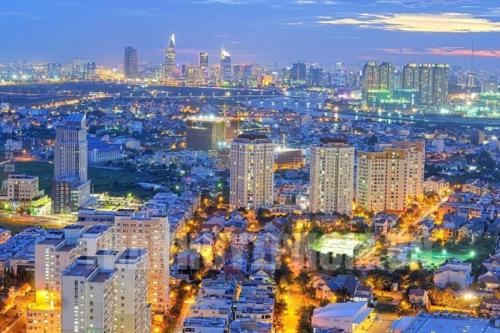
With the goal of maintaining double-digit economic growth during the 2026–2030 period, Ho Chi Minh City is finalizing a comprehensive action plan, which prioritizes strategic infrastructure, science and technology, innovation, and digital transformation to create a foundation for long-term growth.

Under Plan No. 83-KH/TU recently issued by the municipal People’s Committee, the city aims for rapid and sustainable development. HCMC intends to further solidify its role as the nation's economic engine and the primary growth pole of the country's Southeast region while striving for annual double-digit growth rates throughout 2026–2030.

By 2030, the city aims to become a civilized, modern urban center and a Southeast Asian hub for innovation, finance, and services. Looking further ahead to 2045, the city aspires to become a leading international megacity and a top Asian center for economics, finance, trade, and services.

To realize these goals, the city will focus on refining its development institutions to be more modern and synchronized, while promoting decentralization and the delegation of authority. A key part of the strategy involves building a digital government, digital economy, and digital society. Science, technology, innovation, and digital transformation have been identified as the primary drivers of growth in the coming period.

Strategic technology sectors prioritized for development include Artificial Intelligence (AI), semiconductors, Big Data, Cloud Computing, biotechnology, new materials, and renewable energy.

Simultaneously, Ho Chi Minh City will continue to restructure its economy to enhance productivity, quality, and competitiveness. This includes promoting the maritime economy, logistics, international financial center, high-quality tourism, and other high-value-added service industries.

Regarding public investment, resources will be prioritized for strategic infrastructure, national key projects, regional connectivity initiatives, and projects with high "spillover effects" that create growth momentum for both the city and the surrounding region.

The plan also emphasizes the necessity of balancing economic growth with social progress and justice. This includes improving the quality of education, healthcare, culture, and social welfare; protecting the environment; and adapting to climate change. Furthermore, the city will ensure national defense and security while stepping up international integration to improve the quality of life for its citizens and ensure fast, sustainable development.


Construction materials market shows signs of easing after price surge

Construction materials market shows signs of easing after price surge

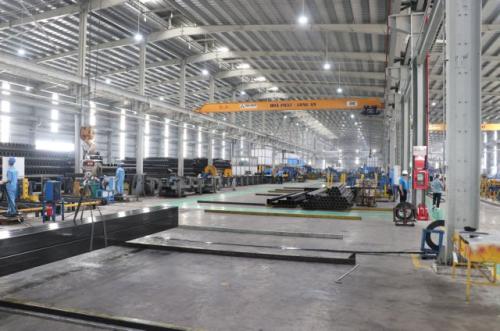
Several steel companies have announced price cuts for construction steel products, marking the first downward adjustments this year and offering some relief to contractors facing rising project costs.

HÀ NỘI — The domestic construction materials market is showing early signs of easing after months of sharp price increases, although some key materials are expected to remain elevated amid strong demand and supply constraints.

Several steel companies have announced price cuts for construction steel products, marking the first downward adjustments this year and offering some relief to contractors facing rising project costs.

From early June, a branch of Hoa Phat Steel Pipe Co in Bình Dương reduced prices for rebar and wire rod products by between VNĐ150,000 and VNĐ300,000 (US$5.75-11.50) per tonne, depending on product type and region,baoxaydung.vnreported.

In the northern region, rolled steel prices fell by VNĐ170,000 per tonne, while larger reductions were recorded in the central region, where prices dropped by as much as VNĐ220,000 per tonne.

Viet Duc Steel Plant also announced similar price cuts.

The reductions follow a volatile first five months of 2026, during which the industry recorded at least three rounds of steel price increases. Construction steel prices rose above VNĐ15.6 million per tonne after cumulative increases of VNĐ100,000-300,000 per tonne in each adjustment.

Cement prices also increased in the first quarter and early May, rising by VNĐ50,000-100,000 per tonne. Bagged cement currently sells for between VNĐ1.5 million and VNĐ2.4 million per tonne, while bulk cement ranges from VNĐ1.25 million to VNĐ1.85 million per tonne.

Meanwhile, prices of construction materials such as sand, bricks and stone remain under pressure due to localised supply shortages and strong demand from major public infrastructure projects.

Prices for some materials have risen by 15-25 per cent since the start of the year, with occasional increases of up to 50 per cent in certain areas. Yellow sand is currently priced at VNĐ600,000-750,000 per cubic metre, while construction stone costs around VNĐ750,000-780,000 per cubic metre, up from about VNĐ500,000 dong earlier this year.

Thái Duy Sâm, vice chairman of the Vietnam Association of Building Materials, said the market was being shaped by rising input costs and supply-demand dynamics.

Steel producers' recent price cuts reflected efforts to stimulate demand as activity in the residential construction sector remained cautious, he said.

By contrast, cement, stone and sand continue to face upward pressure from elevated electricity and coal costs, while tighter regulations on mineral extraction have constrained supply.

The imbalance between strong demand from public investment projects and available supply has been a key driver of higher prices for construction materials, Sâm toldbaoxaydung.vn.

Industry experts expect the market to stabilise at new price levels in the second half of 2026, with clearer differentiation among material groups.

Steel prices are likely to remain stable or edge lower in the near term as the rainy season slows construction activity. Meanwhile, sand, stone and cement prices are expected to remain elevated or increase modestly, supported by demand from major transport infrastructure projects entering peak construction phases later this year.

They said prices of these materials are also heavily influenced by local mining and licensing policies, making them more volatile than industrially manufactured products.

See all blog