Lumen Vietnam Fund

Blog

Six banks syndicate over $1 bln for HCMC-Trung Luong-My Thuan expressway expansion

Six banks syndicate over $1 bln for HCMC-Trung Luong-My Thuan expressway expansion

The lending consortium includes Vietcombank as the lead arranger, alongside VietinBank, BIDV, Agribank, TPBank, and VPBank.

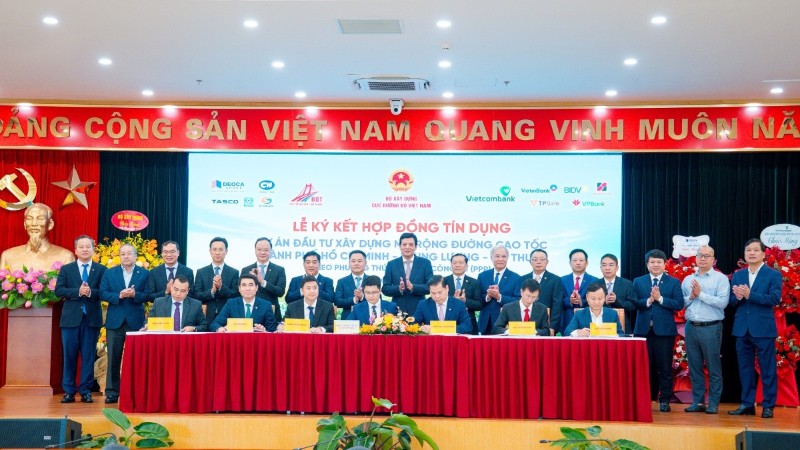
The Saigon - My Thuan Expressway BOT Co., Ltd (the project enterprise) and a consortium of six banks have officially signed a syndicated credit agreement to fund the Ho Chi Minh City – Trung Luong – My Thuan Expressway expansion project.

The credit facility, totaling VND27.094 trillion (approx. $1.03 billion), secures the necessary capital to ensure the project stays on schedule.

The lending consortium includes Vietcombank as the lead arranger, alongside VietinBank, BIDV, Agribank, TPBank, and VPBank. According to the participating parties, this represents the largest credit financing ever granted to a transport project under the Public-Private Partnership (PPP) model in Vietnam.

Speaking at the signing ceremony on July 16, Deputy Minister of Construction Bui Xuan Dung emphasized that the completion of the credit agreement is a major milestone, providing the financial foundation to move the project forward according to the planned timeline.

The Deputy Minister noted that expanding the HCMC – Trung Luong – My Thuan Expressway is an urgent requirement to alleviate severe congestion on the route. The expansion aims to enhance traffic safety, reduce logistics costs, improve regional competitiveness, and create more development opportunities for the Mekong Delta.

Since Phase 1 of the Trung Luong – My Thuan section was put into operation, traffic volume has peaked at over 60,000 vehicles per day. This significantly exceeds the original design capacity, making the expansion an immediate priority.

The HCMC – Trung Luong – My Thuan Expressway expansion project has a total investment of VND36.125 trillion (nearly $1.4 billion). It is being implemented via the PPP model and notably involves no state budget funding.


Source: Đan Tiên

Photo: deoca.vn
Latest Posts

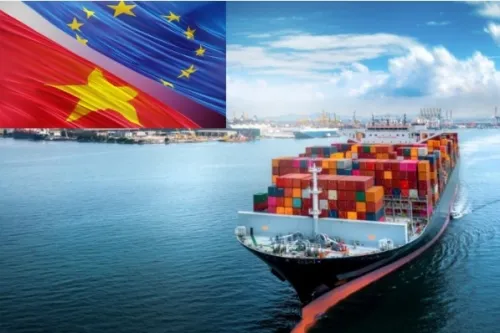
EVFTA supports strong growth in Vietnam-Nordic trade

EVFTA supports strong growth in Vietnam-Nordic trade

VOV.VN - Vietnam's exports to Sweden, Denmark, Norway and Latvia posted strong year-on-year growth in the first half of 2026, supported by the EU-Vietnam Free Trade Agreement (EVFTA).

According to Nguyen Thi Hoang Thuy, Head of the Vietnam Trade Office in Sweden, which also covers Denmark, Norway, Iceland and Latvia, trade and investment ties between Vietnam and the Nordic markets continued to obtained positive results during the six-month period of the year.

Vietnam Customs data showed that exports to all four markets increased from a year earlier, led by Norway with growth of 47.2%, followed by Latvia at 36.9%, Denmark at 29.9% and Sweden at 19.6%. Imports from Denmark and Latvia also rose, while imports from Sweden and Norway declined.

EVFTA has continued to deliver practical benefits by reducing tariffs and trade barriers, improving market access and providing a more stable framework for economic cooperation between Vietnam and the European Union (EU).

The agreement enables a wide range of Vietnamese products, including garments, footwear, wood products, seafood, coffee, electronics, machinery and processed industrial goods, to benefit from preferential tariffs when they meet rules of origin. It has also helped strengthen importers' confidence, support long-term business relationships, diversify supply sources and deepen Vietnamese companies' participation in supply chains.

To meet the stringent standards of the Nordic market, many Vietnamese companies have accelerated their green transition.

Cao Huu Hieu, Director General of the Vietnam National Textile and Garment Group (Vinatex), said the group is investing in textile and dyeing production, green and circular manufacturing, and digital technologies to meet environmental, traceability and sustainability requirements. These efforts are expected to become one of Vinatex's new growth drivers for 2026-2030 while helping the group remain competitive in demanding markets, including the Nordic region, he added.

In investment, Sweden, Denmark, Norway, Iceland and Latvia had a combined 359 valid foreign direct investment projects in Vietnam with total registered capital of about US$4.44 billion as of the end of the first half of 2026, according to the Vietnam Trade Office in Sweden.

Denmark and Sweden remained the two largest investors among the five countries, while Norway, Iceland and Latvia also maintained investment projects in Vietnam.

Alongside these positive developments, a series of new EU regulations taking effect from 2026, including the Carbon Border Adjustment Mechanism (CBAM), the EU Deforestation Regulation (EUDR), the Packaging and Packaging Waste Regulation (PPWR), the General Product Safety Regulation (GPSR) and the Digital Product Passport, will require exporters to meet higher standards.

Experts said EVFTA is entering a new phase of competition as the EU expands trade ties with other partners. In the coming years, Vietnam's ability to maintain and expand its market share in the EU, including the Nordic region, will depend increasingly on supply chain management, data transparency, compliance with sustainability standards and strict control of product origin.

The results recorded in the first half of 2026 provide a solid foundation for Vietnam and its Nordic partners to enhance business links, pursue new business opportunities and expand commercial cooperation.


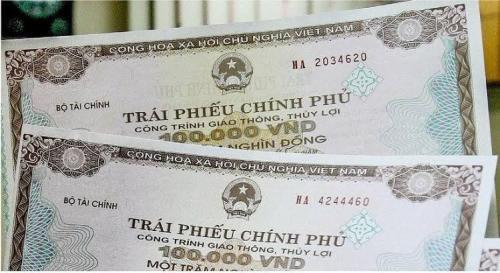
Government bond issuance reaches $6.94 billion in 6M

Government bond issuance reaches $6.94 billion in 6M

The figure equivalent to 36.5% of the annual target.

Vietnam's government bond issuance slowed markedly in June 2026, reflecting softer market demand and changing conditions on both the supply and demand sides, according to data from the Vietnam Bond Market Association (VBMA).

During the month, the State Treasury conducted 20 government bond auctions with a total offering value of VND68 trillion ($2.58 billion). However, only VND23.38 trillion worth of bonds was successfully issued, resulting in a bid-to-cover success rate of 34.4%, indicating relatively subdued investor appetite.

The value of successful bond sales fell by more than 30% from May and was approximately 23% lower than in June 2025, highlighting a clear slowdown in capital mobilization through government bond auctions.

Issuance continued to be concentrated in medium- and long-term maturities. Ten-year bonds accounted for the largest share of successful issuance at 58%, followed by five-year bonds with 39%.

According to the State Treasury, the average winning yield rose to 4.25% per annum in June, compared with 4.09% in the previous month, suggesting that higher borrowing costs were needed to attract investors.

For the first six months of 2026, total government bond issuance reached VND182.56 trillion ($6.94 billion), equivalent to 36.5% of the annual target.


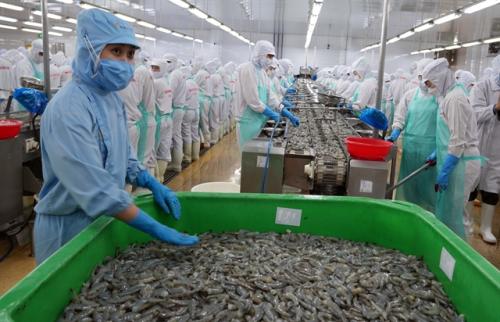
China becomes Việt Nam’s largest seafood export market

China becomes Việt Nam’s largest seafood export market

China has surpassed the US to become the largest buyer of Vietnamese seafood, with imports reaching nearly US$1.4 billion in the first half of 2026.

HÀ NỘI — China has surpassed the US to become the largest buyer of Vietnamese seafood, with imports reaching nearly US$1.4 billion in the first half of 2026, up about 40 per cent year-on-year, according to statistics of the Ministry of Agriculture and Environment.

The recorded imports were nearly $898 million in the period, down about 1 per cent. Japan ranked third with nearly $788 million, a 2 per cent increase.

A representative from seafood exporter Nam Viet Corporation said that the shift towards China has become more visible since the beginning of the year. The company as shipping costs to distant markets remained high, China became a more attractive destination thanks to its geographical proximity, lower logistics costs and faster capital recovery.

Lê Hằng, deputy general secretary of the Vietnam Association of Seafood Exporters and Producers (VASEP), said that the US and European markets introduced more trade barriers, so many seafood exporters had proactively shifted to China.

Exports to the US continued to face challenges, Hằng said.

She pointed out that the US’ stricter requirements under the Marine Mammal Protection Act (MMPA) have forced exporters to obtain additional Certificates of Admissibility (COA), which creates complicated procedures, particularly for tuna products.

Shrimp exports to this market have also remained under pressure from high anti-dumping duties.

The US market was further affected by increased shipments ahead of new tariff measures, which pushed up inventories.

The VASEP said seafood export growth during the period reflected not only recovering demand but also businesses’ ability to adjust markets and restructure products as importers have become more cautious while requirements on pricing, quality standards, certification and traceability have tightened.

Other markets also recorded positive growth. The Republic of Korea imported $419.4 million worth of seafood from Việt Nam in the first six months, up 9 per cent, while ASEAN markets purchased more than $380 million, up 16 per cent.

The figures show that Việt Nam’s market diversification strategy has helped offset slower growth in traditional markets such as the US, the EU and Japan.

Overall, Việt Nam’s seafood exports totalled more than $5.7 billion in the January-June period, rising 11.4 per cent from a year earlier.

Shrimp remained Việt Nam’s largest seafood export item, generating about $2.3 billion in the first half, up 13.6 per cent year-on-year and accounting for more than 40 per cent of total seafood export value. Shrimp’s growth was mainly driven by strong demand from mainland China and Hong Kong, particularly for lobster.

Pangasius exports reached about $1.1 billion, up 12.1 per cent, benefiting from competitive prices and stable demand for white-flesh fish in many markets.

According to Hằng, exporters could face the risk of additional protectionist measures from the US, including possible new barriers related to forced labour regulations and potential quotas on some seafood products.

Rising global refrigerated container freight rates are another major challenge, she added.

She urged seafood exporters to regularly update market information for export plans, diversify market and increase deep processing to maintain growth.


See all blog