Foreign investment into Vietnam surged in the first half of 2026, driven by manufacturing, high-tech industries, and record FDI disbursement as investors reinforced their confidence in the country’s long-term growth prospects.
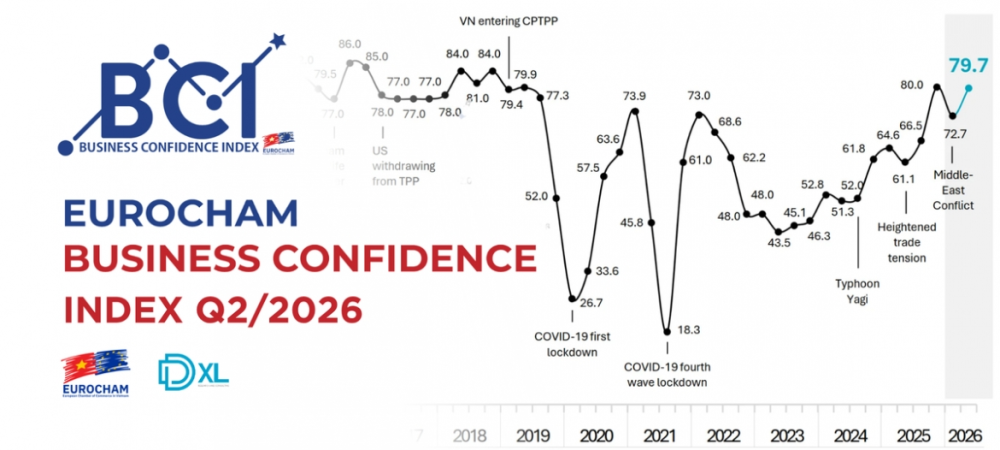
Foreign investment inflows posted strong growth in the first half of 2026 despite mounting geopolitical uncertainty and the ongoing realignment of global supply chains. Backed by a clear policy direction, Vietnam continued to reinforce its position as a safe and attractive destination for international investors.
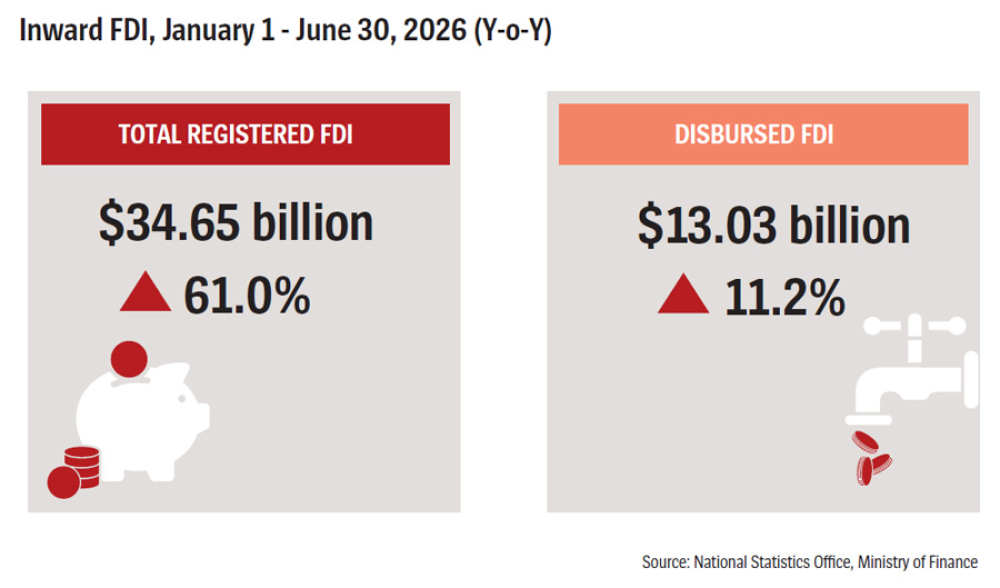
According to the National Statistics Office at the Ministry of Finance, as of June 30, total registered foreign investment, including newly-registered capital, additional capital for existing projects, and foreign investors’ capital contributions and share purchases, reached $34.65 billion, up 61 per cent year-on-year. The figures underscore continued confidence among multinational corporations in Vietnam’s macro-economic stability and long-term growth prospects.
Strengthening across the board
Growth in foreign investment was broad-based, with all three major capital channels posting solid gains. Newly-registered investment reached $17.39 billion across 2,013 licensed projects, up 8.2 per cent in value from a year earlier. The increase suggests that the average size of new projects has risen significantly, reflecting a shift away from smaller investments toward large-scale projects backed by substantial financial resources.
Additional investment in existing projects also remained robust. A total of 541 projects increased their registered capital by a combined $11.04 billion, up 23.5 per cent year-on-year. The continued expansion of established operations highlights foreign investors’ long-term commitment to Vietnam and confidence in the country’s investment environment.
Meanwhile, capital contributions and share purchases climbed 89.5 per cent to $6.22 billion. Professional, scientific, and technological activities attracted $2.64 billion, while wholesale and retail drew $1.94 billion, reflecting growing merger and acquisition (M&A) and strategic partnership activity across high-value service sectors.
The brightest spot in the investment picture was disbursed FDI, which is estimated at $13.03 billion, up 11.2 per cent against the same period last year and the highest first-half disbursement in five years. Strong disbursement reflects both the economy’s ability to absorb investment and the government’s continued efforts to remove administrative bottlenecks and accelerate project implementation.
Competing for investment
In June alone, newly-registered foreign investment totaled approximately $9.84 billion, including $2.55 billion in new projects, $5.26 billion in additional capital, and $2.05 billion in capital contributions and share purchases. It was the busiest month of the year for investment approvals and licensing, highlighting major shifts across key investment destinations.
In Ho Chi Minh City, total newly-registered and additional investment reached $4.87 billion during the first half of the year, making it the country’s second-largest FDI destination. The city attracted $1.47 billion in newly-registered capital and $3.4 billion in additional investment. Notably, nearly $2.98 billion of additional capital was registered in June alone, underscoring the expansion of existing projects.
The southern city also recorded significant progress in green investment, highlighted by the commissioning of a nearly 28 MWp rooftop solar power system at the Samsung Electronics HCMC CE Complex in Saigon Hi-Tech Park, supporting both sustainable development and the city’s energy transition agenda.
Several large-scale data center projects also received investment approval, including a 52 MW facility worth $508.7 million developed by Singaporean investors Hathor, Frontier, and Evolution, as well as a 60 MW hyperscale data center valued at $480.2 million developed by the Starmason JSC.
In northern Vietnam, Bac Ninh continued to strengthen its position as one of the country’s leading industrial hubs. During the first half of the year, the provincial industrial park authority approved 12 new projects worth $31.78 million and authorized an additional $539.22 million in capital for 25 existing projects, bringing total newly-registered and additional investment to nearly $2.58 billion.
Thai Nguyen remained the country’s top-performing locality, attracting more than $8.03 billion in newly-registered and additional investment, including $5.8 billion in new projects and $2.23 billion in additional capital. The province’s success reflects its long-term strategy of attracting large-scale high-tech, semiconductor, and electronics manufacturing projects. Hai Phong, meanwhile, secured $1.83 billion after accelerating approvals for supporting semiconductor and electronics projects, including those involving LG Innotek, and Phu Tho attracted an additional $554 million in expansion capital.
Elsewhere, the central city of Da Nang benefited from the continued expansion of German cleaning equipment manufacturer Kärcher, following the successful operation of its first production phase.
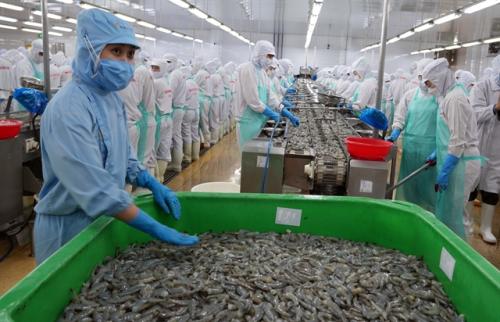
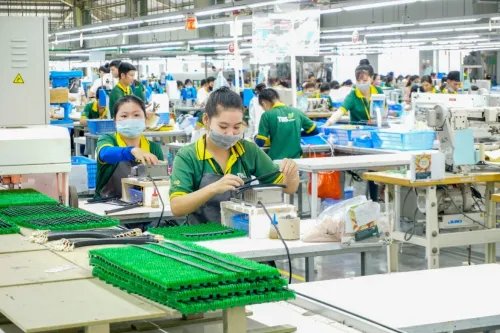
FDI during the first half of 2026 remained heavily concentrated in manufacturing and strategic industries. Manufacturing attracted $17.91 billion, accounting for 63 per cent of all newly-registered and additional investment and reaffirming its role as the backbone of Vietnam’s economy. Real estate followed, with $5.1 billion, equivalent to 17.9 per cent of total investment and highlighting continued investor confidence in industrial property and urban infrastructure.
New FDI strategy takes shape
The surge in foreign investment during June and the first half of 2026 also reflects the impact of Vietnam’s evolving investment strategy.
On June 8, the Politburo issued Resolution No. 10-NQ/TW, outlining the country’s FDI strategy for 2026-2030. The Resolution marks a significant shift in Vietnam’s approach, emphasizing quality over quantity in attracting foreign investment.
The strategy rests on three core priorities. First, Vietnam aims to attract global leaders in semiconductors, AI, digital ecosystems, and next-generation high-tech industries, to deepen the country’s integration into global value chains.
Second, investment projects are expected to align with sustainable development goals by adopting environmental, social, and governance (ESG) standards, renewable energy, and circular economy models, supporting Vietnam’s commitment to achieving net-zero emissions by 2050.
Growth in foreign investment was broad-based, with all three major capital channels posting solid gains. Newly-registered investment reached $17.39 billion across 2,013 licensed projects, up 8.2 per cent in value from a year earlier. The increase suggests that the average size of new projects has risen significantly, reflecting a shift away from smaller investments toward large-scale projects backed by substantial financial resources.
Third, the Resolution calls for sweeping administrative reform by streamlining approval procedures, eliminating overlapping regulations, and reducing bureaucratic barriers. The broader implementation of genuine one-stop administrative mechanisms and faster investment licensing has strengthened Vietnam’s competitiveness in attracting rapidly-shifting global investment flows.
Positive outlook, but challenges remain
Vietnam’s foreign investment outlook for the second half of 2026 remains positive, with inflows expected to maintain strong momentum and potentially reach record highs.
Global investment in semiconductors and advanced electronics continues to expand rapidly. Supported by improving infrastructure and extensive experience in hosting large-scale manufacturing projects, Vietnam is well positioned to attract additional multi-billion-dollar investments from leading technology companies in the US, Japan, South Korea, and Taiwan (China) over the remainder of the year.
Record FDI disbursement during the first half also demonstrates that foreign-invested enterprises continue to operate efficiently in Vietnam. As global export demand gradually recovers, higher production requirements are expected to encourage further capacity expansion and additional investment by existing manufacturers.
Nevertheless, Vietnam will need to address several structural challenges to maximize the benefits of next-generation FDI.
The first is clean energy infrastructure. High-tech manufacturing plants and data centers require enormous supplies of reliable, low-carbon electricity to meet international sustainability standards. Accelerating power transmission projects, completing the direct power purchase agreement (DPPA) mechanism, and facilitating greater investment in renewable energy will therefore be critical.
The second challenge is human capital. High-tech investment increasingly demands semiconductor engineers, highly-skilled technicians, and advanced technical specialists rather than low-cost labor. Expanding the supply of highly qualified workers through nationwide education and workforce development programs will be essential to sustaining Vietnam’s competitiveness in attracting technology-intensive investment.