Lumen Vietnam Fund

Blog

Singapore-backed giant to break ground on $216 mln wind farm project in central Vietnam

Singapore-backed giant to break ground on $216 mln wind farm project in central Vietnam

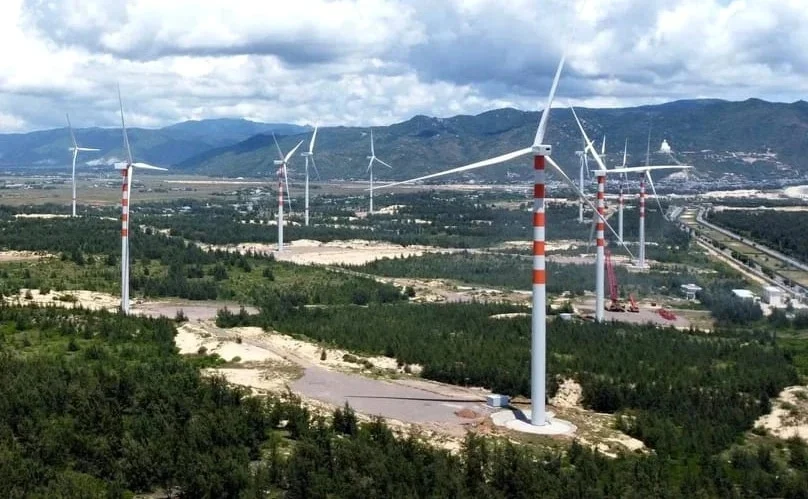
Nexif Ratch Energy SE Asia Pte. Ltd has committed to begin construction of its wind power project in Gia Lai in November this year, significantly earlier than the previously approved schedule of Q1/2027, as the central province pushes ahead with renewable energy development under the country's adjusted Power Development Plan VIII.

The over VND5.7 trillion ($216.5 million) Van Canh Binh Dinh Wind Power Plant project, located in Canh Lien commune, will have an installed capacity of 143 MW. It is expected to generate approximately 391.8 million kWh of electricity annually.

Nexif Ratch Energy, headquartered in Singapore, was established in December 2022 as a joint venture between Singapore-based Nexif Energy, which holds a 51% stake, and Thailand's RATCH Group, which owns the remaining 49%.

The company develops, acquires, builds and operates renewable energy projects across the Asia-Pacific region, with regional offices in Vietnam and the Philippines in addition to its Singapore headquarters.

Cyril Thibaut Ioan Dissescou, CEO of Nexif Ratch Energy SE Asia, previously toldThe Investorthat the Van Canh Binh Dinh project is one of the company's strategic investments in Vietnam and said the firm was committed to ensuring its successful implementation.

In Vietnam, Nexif Ratch Energy currently operates the 30-MW Minh Luong hydropower plant in Lao Cai province and the 49-MW Song Giang hydropower complex in Khanh Hoa province. It is also constructing the 80-MW Nexif Energy Ben Tre wind power project.

The company has additionally signed an MoU with authorities in Khanh Hoa province to study the development of the 102-MW Nexif Energy Khanh Hoa 1 wind farm.

Nearly 3,000 MW of power projects set for construction

The Nexif Ratch project is part of a broader wave of energy investments accelerating across Gia Lai.

According to commitments made by investors to provincial authorities, renewable energy projects scheduled to break ground in 2026 will have a combined capacity of approximately 2,971.6 MW, including wind, solar and hydropower developments.

October is expected to be the busiest month, with 29 projects slated to begin construction, including 17 wind farms, seven solar projects and five hydropower plants. Four additional projects are scheduled for September and five for November.

Among the largest projects is the 750-MW Hon Trau Wind Power Plant Phase 1, developed by VinEnergo Energy JSC, which is scheduled to start construction in December 2026. The developer has committed to bringing forward the start date by around six months from the previously approved timeline of Q3/2027.

The solar power segment includes 10 projects with a combined capacity of 751.8 MW.

Notable among them is the 400-MW KN Ia Ly-Gia Lai solar power plant, which is scheduled to begin construction in November 2026. Although the project remains behind the original target of Q2/2026, investors have pledged to accelerate implementation.

Several other solar projects, including Phu Thien (32 MW), Chu Ngoc-EVNLICOGI 16 Phase 2 (20 MW), Ia Blu 3 (40 MW), Ia Blu 4 (40 MW), Nhon Hoa 1 (49 MW) and Nhon Hoa 2 (90 MW), have also committed to earlier construction schedules.

Wind power remains the dominant segment, accounting for around 2,150 MW of planned capacity across 24 projects.

Several projects have pledged to start construction months ahead of approved timelines.

The 50-MW Ia Boong-Chu Prong Wind Power Plant, for example, was initially approved for groundbreaking in Q2/2027 but is now expected to start construction in November 2026. The 143-MW Vinh Thuan Wind Power Plant has similarly moved its planned start date forward from Q1/2027 to October 2026.

In addition to renewable energy projects, five hydropower developments with a combined capacity of nearly 70 MW are scheduled to begin construction in October 2026. These include the Se San 4A Expansion (29 MW), Dak Ayuonh (12 MW), Lo Pang (6.5 MW), Krong Ja Taun (5.5 MW), and Ayun 2 (16.8 MW) projects.

Gia Lai is widely regarded as one of Vietnam's most promising provinces for renewable energy development.

Following the government's approval of the adjusted Power Development Plan VIII, local authorities have accelerated investment approval procedures and sought to facilitate project implementation.

However, provincial officials said several projects that had already received investment approval have experienced delays, with investors failing to proactively coordinate with relevant agencies to resolve administrative and regulatory obstacles.

To address the issue, Gia Lai authorities have urged investors to expedite outstanding procedures and ensure all conditions for construction are met in line with their committed timelines.

Binh Dinh and Gia Lai provinces were merged last July to form the new Gia Lai which borders Dak Lak, Quang Ngai, Cambodia, and the East Sea.


Source: Nguyen Tri, Quang Nguyen

Photo: Photo by The Investor/Nguyen Tri.
Latest Posts

Hai Phong accelerates development of 24 industrial clusters

Hai Phong accelerates development of 24 industrial clusters

Total investment capital estimated at VND12.56 trillion ($478 million).

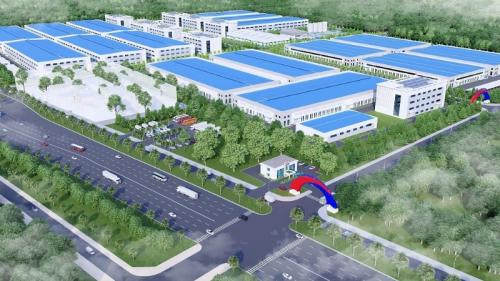
Northern Hai Phong city is investing in 24 industrial clusters with a combined area of more than 1,116 hectares with total investment capital of VND12.56 trillion ($478 million) as the northern port city seeks to expand its industrial land bank and sustain economic growth.

According to the municipal People's Committee, industrial-cluster projects in the eastern part of the city are progressing rapidly, while several projects in the western area continue to face delays due to land clearance challenges.

Of the 24 industrial clusters under development, 16 are located in eastern Hai Phong, covering approximately 713.5 hectares across Tien Lang, Kien Thuy, An Lao, An Duong, Thuy Nguyen and the Southern Coastal Economic Zone. The area hosts several large-scale projects, including the Le Thien–Dai Ban Industrial Cluster, the largest among them, spanning about 60 hectares with an investment of roughly VND1.25 trillion.

Meanwhile, eight industrial-cluster projects are being developed in western Hai Phong, covering a combined area of around 409 hectares.

City authorities said the 24 projects, once completed, will provide an additional 1,116.8 hectares of industrial land, helping expand the city's manufacturing base and enhance its capacity to attract secondary investment projects.


Vietsovpetro reaches historic milestone of 255mn tonnes of crude oil at Vietnam’s Bach Ho field

Vietsovpetro reaches historic milestone of 255mn tonnes of crude oil at Vietnam’s Bach Ho field

Vietsovpetro, the Vietnam-Russia joint venture under the Vietnam National Industry - Energy Group (Petrovietnam), said it has achieved a historic mark of 255 million metric tons of crude oil extracted from the Bach Ho (White Tiger) field, marking nearly four decades of offshore oil and gas development in Vietnam.

The milestone was achieved at 3:30 am on Thursday, nearly 40 years after the joint venture first drilled for crude oil from the Bach Ho field, Vietnam’s largest oil field on its continental shelf in the East Vietnam Sea, on June 26, 1986.

Throughout its development, Vietsovpetro has maintained stable production while achieving notable scientific and technological breakthroughs, including the discovery and production of oil from basement rock reservoirs at the Bach Ho field, a landmark achievement with both practical and scientific value for the petroleum industry.

The milestone is also expected to provide strong momentum for Vietsovpetro to further accelerate scientific and technological innovation, adopt advanced technical solutions, and improve production and business efficiency, thereby maintaining its role as a key player in Vietnam’s national industry and energy sector.

In its early years, the joint venture faced significant challenges in infrastructure, technology, and offshore production experience.

Over time, successive generations of Vietnamese and Russian engineers and workers have gradually overcome these obstacles and successfully built and expanded oil and gas activities on Vietnam’s southern continental shelf.

In the first quarter of 2026 alone, Vietsovpetro produced around 770,000 metric tons of crude oil and condensate, along with more than 10 million cubic meters of natural gas, and delivered over 210 million cubic meters of gas to shore to meet domestic energy demand.

The company said crude oil output remained largely in line with targets, while gas production and gas deliveries to shore exceeded planned levels.

To sustain production as long-producing fields enter a natural decline phase, Vietsovpetro has implemented a range of technical solutions at Block 09-1, where the Bach Ho field is located, including optimizing well flow, enhancing extraction efficiency, and maximizing recovery of remaining reserves.

At the same time, exploration and appraisal drilling activities have been stepped up to add new reserves, laying the groundwork for future production, while enhanced oil recovery (EOR) technologies are also being deployed as the joint venture transitions toward a more technology-driven production model, with support from units within the Petrovietnam ecosystem.

Thanks to these efforts, crude oil sales in the first quarter of 2026 exceeded targets, contributing to state budget revenues and reinforcing national energy security.


Government bond auctions mobilise US$1.27 billion in May

Government bond auctions mobilise US$1.27 billion in May

The State Treasury raised VND33.63 trillion (US$1.27 billion) in Government bonds across 17 auctions conducted by the Hanoi Stock Exchange (HNX) in May.​

In the first five months of 2026, total capital mobilised via Government bonds reached VND159.2 trillion, equivalent to 72% of the State Treasury’s second-quarter issuance target and 32% of its annual plan.

Demand remained concentrated in medium- and long-term instruments, with 10-year and five-year bonds accounting for the bulk of issuance. The two tenors represented 54% and 45% of the total issuance value, respectively amounting to VND18.25 trillion and VND15 trillion.

The State Treasury offered bonds with maturities ranging from 3 to 30 years during the month. Successful bids were secured for 3, 5, 10, 15, and 30-year bonds, while winning yields edged up by between 2 and 14 basis points from the final auction in April.

At the last auction in May, winning yields were recorded at 3.49% for three-year bonds, 4% for five-year bonds, 4.25% for 10-year bonds, 4.27% for 15-year bonds and 4.5% for 30-year bonds.​

On the secondary market, the total listed value of Government bonds stood at nearly VND2.7 quadrillion at the end of May, up 2% month on month. Average trading value, however, slipped 6.59% to VND14.96 trillion per session.

Outright transactions accounted for 74.4% of total trading value, while repos made up 25.63%. Foreign investors contributed 4.3% of overall market turnover, up 0.8 percentage points from the previous month, but remained net sellers with net outflows of VND137 billion.

​HNX data showed that yields on bonds with maturities of 10–15 years posted the strongest increase during the month, reaching 3.97%. In contrast, the sharpest declines were seen in the three- to five-year and seven-year segments, where yields fell to 2.65% and 3.63%, respectively.​

Bonds with maturities of seven to 10 years were the most actively traded, accounting for 20.6% of total market value. They were followed by 20-year bonds with a 15.5% share and five-year bonds with 7.3%.


See all blog