Lumen Vietnam Fund

Blog

Government bond auctions mobilise US$1.27 billion in May

Government bond auctions mobilise US$1.27 billion in May

The State Treasury raised VND33.63 trillion (US$1.27 billion) in Government bonds across 17 auctions conducted by the Hanoi Stock Exchange (HNX) in May.​

In the first five months of 2026, total capital mobilised via Government bonds reached VND159.2 trillion, equivalent to 72% of the State Treasury’s second-quarter issuance target and 32% of its annual plan.

Demand remained concentrated in medium- and long-term instruments, with 10-year and five-year bonds accounting for the bulk of issuance. The two tenors represented 54% and 45% of the total issuance value, respectively amounting to VND18.25 trillion and VND15 trillion.

The State Treasury offered bonds with maturities ranging from 3 to 30 years during the month. Successful bids were secured for 3, 5, 10, 15, and 30-year bonds, while winning yields edged up by between 2 and 14 basis points from the final auction in April.

At the last auction in May, winning yields were recorded at 3.49% for three-year bonds, 4% for five-year bonds, 4.25% for 10-year bonds, 4.27% for 15-year bonds and 4.5% for 30-year bonds.​

On the secondary market, the total listed value of Government bonds stood at nearly VND2.7 quadrillion at the end of May, up 2% month on month. Average trading value, however, slipped 6.59% to VND14.96 trillion per session.

Outright transactions accounted for 74.4% of total trading value, while repos made up 25.63%. Foreign investors contributed 4.3% of overall market turnover, up 0.8 percentage points from the previous month, but remained net sellers with net outflows of VND137 billion.

​HNX data showed that yields on bonds with maturities of 10–15 years posted the strongest increase during the month, reaching 3.97%. In contrast, the sharpest declines were seen in the three- to five-year and seven-year segments, where yields fell to 2.65% and 3.63%, respectively.​

Bonds with maturities of seven to 10 years were the most actively traded, accounting for 20.6% of total market value. They were followed by 20-year bonds with a 15.5% share and five-year bonds with 7.3%.


Source: VNA
Latest Posts

Vietnam regulator confirms foreign ownership limits for PV Drilling, PVTrans

Vietnam regulator confirms foreign ownership limits for PV Drilling, PVTrans

Vietnam’s securities regulator has confirmed foreign ownership limits for two major state-controlled oil and gas companies, leaving significant room for overseas investors to increase holdings in both firms.

The State Securities Commission of Vietnam (SSC) on Tuesday issued notices regarding foreign ownership caps at oilfield services provider PV Drilling (HoSE: VPD), a subsidiary of state-owned Petrovietnam, and shipping major PetroVietnam Transportation Corporation (PVTrans, HoSE: PVT).

According to a document released by PV Drilling, the SSC confirmed that the company’s maximum foreign ownership ratio remains at 50%.

As of the close of trading Tuesday, foreign investors held 8.49% of PV Drilling’s outstanding shares. The confirmation means overseas investors can still acquire an additional 41.51% stake in the company, equivalent to approximately 225.4 million shares.

Separately, PVTrans disclosed that it had received a similar notice from the SSC confirming a maximum foreign ownership limit of 49%.

Foreign investors currently own 13.42% of PVTrans. This leaves 35.58% foreign ownership capacity available, equivalent to roughly 167.2 million shares that overseas investors may still purchase.

The regulator said organizations and individuals involved in preparing the ownership review dossiers remain responsible for the accuracy of the information and compliance with applicable regulations.

PVTrans operates one of Vietnam’s largest fleets of crude oil, petroleum product, chemical, and liquefied gas tankers and plays a key role in the logistics chain of Petrovietnam.

In 2025, it recorded consolidated revenue of VND16 trillion ($607.3 million), up 30% year-on-year and beating the target by 7%. It booked pre-tax profit of VND1.55 trillion ($58.83 million) last year, surpassing the goal by 29%.

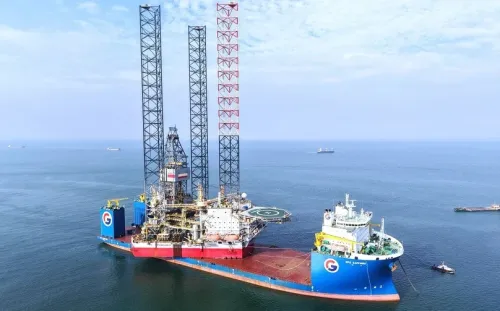
PV Drilling is one of Vietnam’s largest offshore drilling contractors, providing drilling rigs and technical services to domestic and international oil and gas operators.

The firm posted consolidated revenue of 10.5 trillion ($399.2 million), pre-tax profit of VND1.1 trillion ($41.83 million), and net profit of VND830 billion ($31.56 million) in 2025, far exceeding the year's targets.

Shrimp and pangasius exports see double-digit growth amid mounting pressure

Shrimp and pangasius exports see double-digit growth amid mounting pressure

Vietnamese shrimp continues to face fierce competition from Ecuador, India, and Indonesia, while US trade defense measures, including anti-dumping and anti-subsidy duties along with administrative reviews, also pose ongoing challenges for this sector.

Vietnam's seafood exports in May 2026 reached $1.02 billion, a slight increase of 0.6% compared to the same period last year, according to the Vietnam Association of Seafood Exporters and Producers (VASEP).

For the first five months of the year, the industry's total export turnover hit $4.67 billion, marking an 11% increase over the same period in 2025.

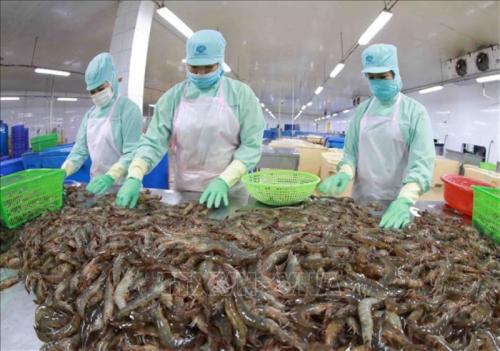
Shrimp remains the flagship export product, generating $1.9 billion in the first five months—an 11.5% increase that accounts for approximately 40.4% of total seafood export value. The growth in the shrimp sector has been driven by recovering demand in several Asian markets, a rise in the consumption of processed products, and increased lobster exports to China.

However, a significant issue currently facing the industry is the mismatch between domestic production and import demand. Many localities are trending toward farming large-sized shrimp to optimize product value, whereas demand in several major markets is shifting toward smaller sizes to serve budget-conscious consumer segments.

Furthermore, Vietnamese shrimp continues to face fierce competition from Ecuador, India, and Indonesia. US trade defense measures, including anti-dumping and anti-subsidy duties along with administrative reviews, also pose ongoing challenges for this sector.

VASEP also reported that pangasius exports in the first five months reached $905 million, up 12.6% year-on-year. This industry is considered to have a favorable foundation due to its stable supply, competitive pricing, and consumer demand that aligns with global "saving" trends.

Pangasius maintains significant growth potential in China, ASEAN, the Middle East, the European Union (EU), and several emerging markets. As global consumers continue to prioritize reasonably priced products, pangasius is well-positioned to maintain its status within the whitefish category.

Despite these opportunities, the pangasius industry is under increasing pressure from rising production costs. The price of fingerlings has remained high since 2025, and increases in feed, transportation, and other input costs have made farmers more cautious about expanding their farming areas. If this trend persists, rising farming costs could continue to drive up raw material prices, ultimately squeezing the profit margins of export processing enterprises.


Vietnam’s trade turnover hits $445bln in 5M

Vietnam’s trade turnover hits $445bln in 5M

The figure representing a year-on-year rise of 25%.

Vietnam’s total trade turnover reached $445.12 billion in the first five months of 2026, up 25% from a year earlier, according to data released by the National Statistics Office on June 3.

Exports rose 19.5% year-on-year to $215.66 billion, while imports jumped 30.8% to $229.46 billion, resulting in a trade deficit of $13.8 billion. In the same period last year, the country recorded a trade surplus of $5.1 billion.

In May alone, total import-export turnover amounted to $99.07 billion, up 3.2% from April and 25.8% higher than a year earlier. Exports reached $46.93 billion, increasing 2.1% month-on-month, while imports climbed 4.3% to $52.14 billion, creating a monthly trade deficit of $5.21 billion.

The foreign-invested sector continued to dominate Vietnam’s export performance, accounting for nearly 80% of total exports with shipments worth $172.16 billion, up 24.7% year-on-year.

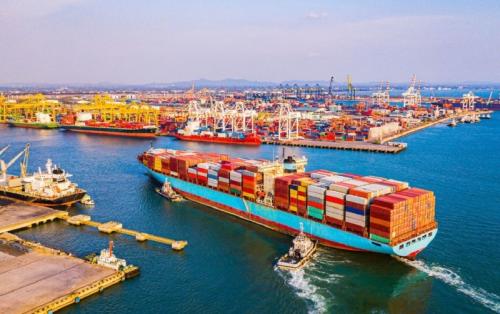
Processed industrial goods remained the country’s largest export category, generating $193.71 billion and representing 89.8% of total exports. Agricultural and forestry products contributed $15.79 billion, while seafood exports reached $4.67 billion.

The US remained Vietnam’s largest export market, with turnover of $69.6 billion, while China was the country’s biggest source of imports at $92.6 billion.


See all blog