Lumen Vietnam Fund

Blog

Shrimp and pangasius exports see double-digit growth amid mounting pressure

Shrimp and pangasius exports see double-digit growth amid mounting pressure

Vietnamese shrimp continues to face fierce competition from Ecuador, India, and Indonesia, while US trade defense measures, including anti-dumping and anti-subsidy duties along with administrative reviews, also pose ongoing challenges for this sector.

Vietnam's seafood exports in May 2026 reached $1.02 billion, a slight increase of 0.6% compared to the same period last year, according to the Vietnam Association of Seafood Exporters and Producers (VASEP).

For the first five months of the year, the industry's total export turnover hit $4.67 billion, marking an 11% increase over the same period in 2025.

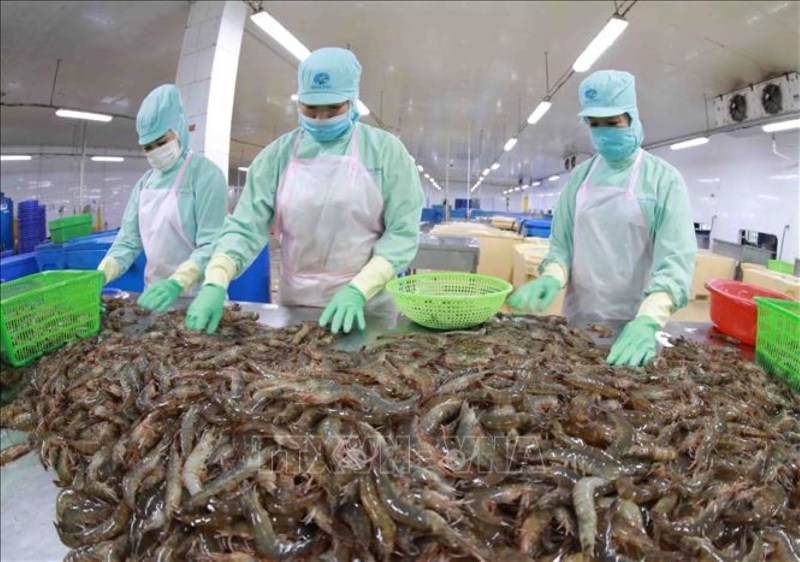
Shrimp remains the flagship export product, generating $1.9 billion in the first five months—an 11.5% increase that accounts for approximately 40.4% of total seafood export value. The growth in the shrimp sector has been driven by recovering demand in several Asian markets, a rise in the consumption of processed products, and increased lobster exports to China.

However, a significant issue currently facing the industry is the mismatch between domestic production and import demand. Many localities are trending toward farming large-sized shrimp to optimize product value, whereas demand in several major markets is shifting toward smaller sizes to serve budget-conscious consumer segments.

Furthermore, Vietnamese shrimp continues to face fierce competition from Ecuador, India, and Indonesia. US trade defense measures, including anti-dumping and anti-subsidy duties along with administrative reviews, also pose ongoing challenges for this sector.

VASEP also reported that pangasius exports in the first five months reached $905 million, up 12.6% year-on-year. This industry is considered to have a favorable foundation due to its stable supply, competitive pricing, and consumer demand that aligns with global "saving" trends.

Pangasius maintains significant growth potential in China, ASEAN, the Middle East, the European Union (EU), and several emerging markets. As global consumers continue to prioritize reasonably priced products, pangasius is well-positioned to maintain its status within the whitefish category.

Despite these opportunities, the pangasius industry is under increasing pressure from rising production costs. The price of fingerlings has remained high since 2025, and increases in feed, transportation, and other input costs have made farmers more cautious about expanding their farming areas. If this trend persists, rising farming costs could continue to drive up raw material prices, ultimately squeezing the profit margins of export processing enterprises.


Source: Chu Minh Khôi

Photo: Illustrative photo

Latest Posts

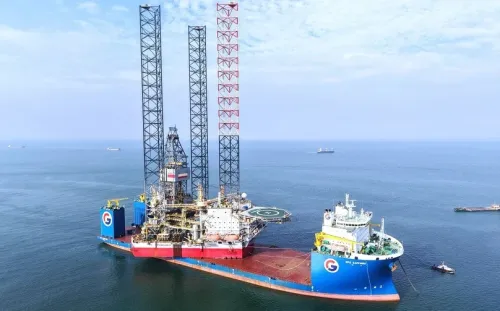
Vietnam regulator confirms foreign ownership limits for PV Drilling, PVTrans

Vietnam regulator confirms foreign ownership limits for PV Drilling, PVTrans

Vietnam’s securities regulator has confirmed foreign ownership limits for two major state-controlled oil and gas companies, leaving significant room for overseas investors to increase holdings in both firms.

The State Securities Commission of Vietnam (SSC) on Tuesday issued notices regarding foreign ownership caps at oilfield services provider PV Drilling (HoSE: VPD), a subsidiary of state-owned Petrovietnam, and shipping major PetroVietnam Transportation Corporation (PVTrans, HoSE: PVT).

According to a document released by PV Drilling, the SSC confirmed that the company’s maximum foreign ownership ratio remains at 50%.

As of the close of trading Tuesday, foreign investors held 8.49% of PV Drilling’s outstanding shares. The confirmation means overseas investors can still acquire an additional 41.51% stake in the company, equivalent to approximately 225.4 million shares.

Separately, PVTrans disclosed that it had received a similar notice from the SSC confirming a maximum foreign ownership limit of 49%.

Foreign investors currently own 13.42% of PVTrans. This leaves 35.58% foreign ownership capacity available, equivalent to roughly 167.2 million shares that overseas investors may still purchase.

The regulator said organizations and individuals involved in preparing the ownership review dossiers remain responsible for the accuracy of the information and compliance with applicable regulations.

PVTrans operates one of Vietnam’s largest fleets of crude oil, petroleum product, chemical, and liquefied gas tankers and plays a key role in the logistics chain of Petrovietnam.

In 2025, it recorded consolidated revenue of VND16 trillion ($607.3 million), up 30% year-on-year and beating the target by 7%. It booked pre-tax profit of VND1.55 trillion ($58.83 million) last year, surpassing the goal by 29%.

PV Drilling is one of Vietnam’s largest offshore drilling contractors, providing drilling rigs and technical services to domestic and international oil and gas operators.

The firm posted consolidated revenue of 10.5 trillion ($399.2 million), pre-tax profit of VND1.1 trillion ($41.83 million), and net profit of VND830 billion ($31.56 million) in 2025, far exceeding the year's targets.

Vietnam’s trade turnover hits $445bln in 5M

Vietnam’s trade turnover hits $445bln in 5M

The figure representing a year-on-year rise of 25%.

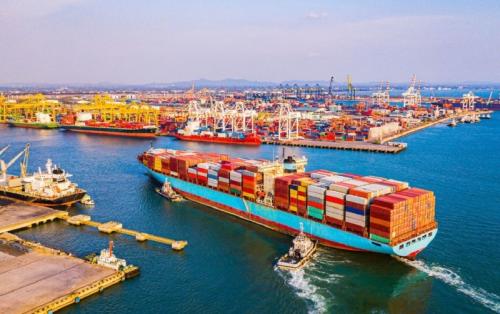
Vietnam’s total trade turnover reached $445.12 billion in the first five months of 2026, up 25% from a year earlier, according to data released by the National Statistics Office on June 3.

Exports rose 19.5% year-on-year to $215.66 billion, while imports jumped 30.8% to $229.46 billion, resulting in a trade deficit of $13.8 billion. In the same period last year, the country recorded a trade surplus of $5.1 billion.

In May alone, total import-export turnover amounted to $99.07 billion, up 3.2% from April and 25.8% higher than a year earlier. Exports reached $46.93 billion, increasing 2.1% month-on-month, while imports climbed 4.3% to $52.14 billion, creating a monthly trade deficit of $5.21 billion.

The foreign-invested sector continued to dominate Vietnam’s export performance, accounting for nearly 80% of total exports with shipments worth $172.16 billion, up 24.7% year-on-year.

Processed industrial goods remained the country’s largest export category, generating $193.71 billion and representing 89.8% of total exports. Agricultural and forestry products contributed $15.79 billion, while seafood exports reached $4.67 billion.

The US remained Vietnam’s largest export market, with turnover of $69.6 billion, while China was the country’s biggest source of imports at $92.6 billion.


HCM City’s great advantages in growing its mechanical engineering industry

HCM City’s great advantages in growing its mechanical engineering industry

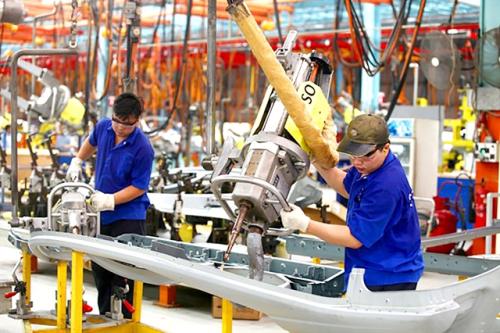
HCM City’s mechanical engineering industry is expected to grow strongly, supported by infrastructure investment, supply chain shifts and innovation, helping cement its role as the country’s leading engineering hub, industry insiders said.

HCM CITY — HCM City’s mechanical engineering industry is poised for strong growth, driven by infrastructure investment, global supply chain shifts, and innovation by businesses, while its long-established industrial base, favourable logistics network, and increasingly supportive policies are expected to help it maintain its position as the country’s leading mechanical engineering hub, industry insiders said.

The city is home to thousands of enterprises operating in precision engineering, machinery manufacturing, steel structures, and supporting industries.

Many city-based firms have participated in major domestic and international projects.

Đại Dũng Metallic Manufacture Construction and Trade Corporation, for example, supplied thousands of tonnes of steel structures for stadiums used during the 2022 World Cup in Qatar.

In recent years, many mechanical engineering enterprises in the city have proactively invested in automation, advanced technologies, and production expansion to integrate more deeply into global supply chains.

In eastern HCM City, several companies that previously focused on supplying products for the domestic oil and gas sector are shifting towards manufacturing equipment for the energy, infrastructure, and heavy industry sectors.

One example is Southern Petroleum Construction Joint Stock Company (Alpha ECG), which has expanded into producing equipment for renewable energy plants, maritime applications, and industrial structures.

Around 90 per cent of the company’s products are now exported to markets like the US, Germany, Australia, Norway, South Korea, and Japan.

Similarly, Minh Việt Engineering and Construction JSC has evolved from a shipbuilding and oil-and-gas mechanical workshop into a manufacturer serving industrial and energy projects with six large factories.

In March, its new factory at the An Ngãi Industrial Cluster in Long Điền Commune reached full capacity, raising output to around 2,500 tonnes per month.

It has orders for until the end of 2026, prompting it to recruit an additional 300 workers.

Hoàng Trung Thao, director of the An Ngãi Factory under Minh Việt Engineering and Construction JSC, told Sài Gòn Giải Phóng (Liberated Saigon) newspaper: “We plan to expand workshops and invest in additional machinery, particularly modern equipment such as welding robots, CNC cutting machines, and precision machining tools.

“At the same time, the company is accelerating workforce training to meet future production requirements.”

Beyond its skilled workforce and manufacturing experience, the city also benefits from a well-developed logistics network, seaport system, and trade connectivity, helping businesses reduce transport costs and expand exports.

Besides, its approval of a specialised mechanical engineering industrial park spanning more than 780 hectares in Bình Cơ and Tân Uyên wards is expected to provide fresh momentum.

According to Huỳnh Kiều Sơn, permanent vice chairman of the HCM City Association of Mechanical and Electrical Enterprises (HAMEE), many member companies are adopting an “order-sharing” model, collaborating on large-scale projects instead of operating independently.

The approach helps reduce pressure on resources, improve responsiveness, and strengthen the competitiveness of domestic enterprises.
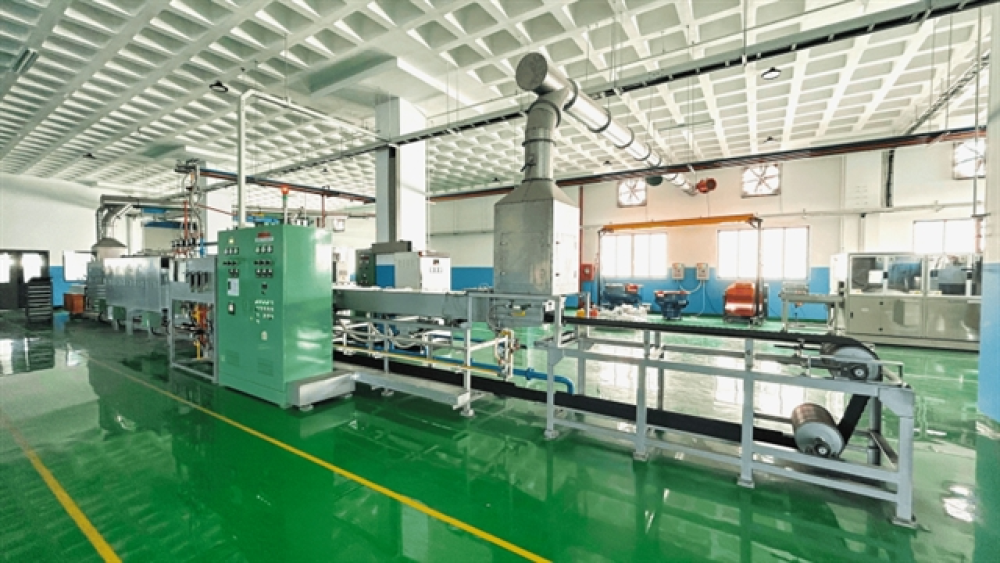
Experts said opportunities are expanding for Việt Nam’s mechanical engineering industry as the Government accelerates industrialisation and major infrastructure projects.

Dr Võ Trí Thành, former vice-president of the Central Institute for Economic Management, said the development of metro systems in HCM City and Hà Nội would create major opportunities for local firms to manufacture specialised equipment, steel structures, and precision components.

On the policy front, the Government issued in April Resolution No. 82/NQ-CP on drafting a Law on Key Industries aimed at institutionalising strategic orientations for industrialisation and modernisation.

The proposed legislation focuses on encouraging domestic manufacturing of key industrial products and strengthening supporting industries.

Another favourable factor is Việt Nam’s growing appeal as a destination amid the restructuring of global supply chains.

According to Thành, if the opportunity is fully utilised, Việt Nam could develop three to five major mechanical engineering conglomerates within the next few years, particularly in precision engineering, which is considered a core factor in industrialisation and modernisation.

Despite the strong potential, businesses still face significant challenges, particularly in accessing investment capital.

Nguyễn Đức Anh, owner of a company manufacturing drilling rig equipment and containers for the oil and gas sector in HCM City, said the industry requires huge investments and long breakeven periods.

Modern machinery and equipment alone could cost tens of billions of đồng, while preferential financing programmes for mechanical engineering enterprises remain limited and difficult to access, he pointed out.

Businesses need more suitable financing channels and stronger connections with factories and buyers to ensure stable demand for their products.

According to HAMEE, although HCM City resumed its interest rate subsidisation programme in late 2023, fewer than 5 per cent of member enterprises have managed to access the preferential loans.

Businesses have urged the city to simplify procedures for accessing capital and prioritise domestically manufactured mechanical products for public works and major projects, measures seen as crucial to encouraging long-term investment.

Industry insiders also stressed the need to strengthen linkages between foreign-invested enterprises and local companies, while improving transparency in component demand, technical standards, and production processes, to help Vietnamese firms participate more deeply in global supply chains.

According to the HCM City Statistics Office, the city’s industrial production index rose 11.2 per cent in the first four months of this year, while the mechanical engineering sector alone grew 13 per cent, reaffirming its important role in the city’s industrial structure.

See all blog