Lumen Vietnam Fund

Blog

LG Innotek selects DEEP C Hai Phong 2 for US$1 billion semiconductor project

LG Innotek selects DEEP C Hai Phong 2 for US$1 billion semiconductor project

Occupying approximately 32 ha Hai Phong Free Trade Zone in Đình Vũ – Cát Hải Economic Zone, currently being developed by Hải Phòng City, the new facility is expected to become one of LG Innotek's key global manufacturing bases for advanced semiconductor solutions.

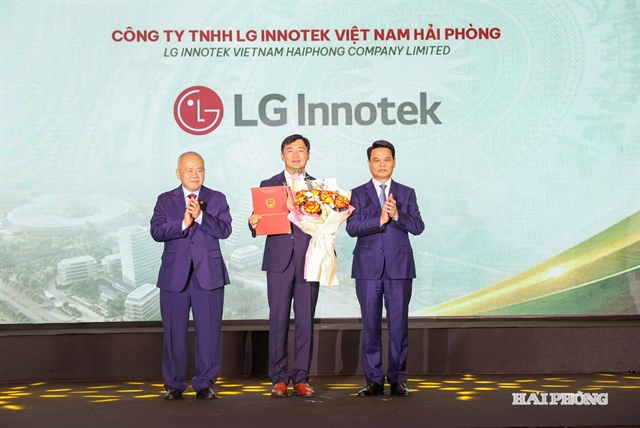
HẢI PHÒNG — LG Innotek has selected DEEP C Hai Phong 2 industrial zone for its new US$1 billion semiconductor substrate manufacturing complex, marking the company's first semiconductor production facility outside South Korea.

The investment certificate for the project was officially presented to LG Innotek Vietnam Hai Phong Co Ltd during a ceremony announcing Prime Minister Lê Minh Hưng’s decisions on Hải Phòng's economic zones and the launch of the Hải Phòng Free Trade Zone on July 30, 2026.

Occupying approximately 32ha, Hai Phong Free Trade Zone in Đình Vũ – Cát Hải Economic Zone is currently being developed by Hải Phòng City. The new facility is expected to become one of LG Innotek's key global manufacturing bases for advanced semiconductor solutions.

The new project at DEEP C Hai Phong 2 is entirely separate from LG Innotek Vietnam Hai Phong's existing camera module manufacturing complex. The investment represents a significant strategic expansion from camera module assembly into semiconductor substrates and packaging materials – critical components in the global semiconductor value chain.

The new facility will manufacture three core product lines designed to support next-generation telecommunications and artificial intelligence applications. These include semiconductor substrates for RF communication modules used in smartphones and wearable devices; substrates connecting memory chips and processors in mobile devices; and high-value substrates for CPUs, GPUs and server systems.

According to the latest implementation schedule, construction is set to begin in the third quarter of 2026, pilot production is expected in the third quarter of 2027, and mass production is scheduled to commence in the third quarter of 2028.

In addition to its manufacturing operations, the project will also include factory, office and warehouse leasing facilities to support the broader semiconductor ecosystem.

Beyond its investment scale, the project's most significant feature lies in its production of high-end semiconductor substrates, often described as the hidden backbone of AI servers, data centres, smartphones, autonomous vehicles and other next-generation technologies that are reshaping industries worldwide.

LG Innotek's decision to establish its $1 billion semiconductor project in Hải Phòng is expected to further strengthen the LG Group's high-tech manufacturing ecosystem in Việt Nam while reinforcing the city's position as an emerging hub in the global semiconductor value chain.

"This is a very encouraging development," said Bruno Jaspaert, CEO of DEEP C Industrial Zones.

"The fact that a global company like LG Innotek once again selected Hải Phòng to be the hometown for its newest investment demonstrates its strong confidence in the city's long-term growth potential.

"We are equally proud that LG has selected DEEP C as the location for this landmark project."

According to Jaspaert, the project's significance extends beyond its $1 billion value.

"The most important message is not the size of the investment itself, but LG's decision to continue investing in Hải Phòng. Companies only expand where they have confidence in the long-term prospects of the location," he said.

Park Hong Keun, general director of LG Innotek Vietnam Hai Phong, described Hải Phòng as one of Việt Nam's most competitive and promising investment destinations.

"Highly skilled human resources, an open investment environment and close cooperation between the government, local authorities and businesses have created strong momentum for the city's sustainable development," he said.

"As a trusted long-term partner of Hải Phòng, LG Innotek will continue expanding its investment, creating quality employment opportunities, attracting talent and contributing to the city's sustainable growth."

For DEEP C, supporting the growth of both LG Innotek and Hải Phòng is particularly meaningful. Jaspaert believes that DEEP C's integrated infrastructure, services and long-term commitment to sustainable industrial development have also contributed to LG's decision to expand its presence in the city.

Free Trade Zone expected to strengthen Hải Phòng's investment appeal

Việt Nam has yet to establish a fully operational free trade zone, making Hải Phòng's pioneering initiative a milestone with significant potential. The new model is expected to enhance the city's competitiveness in attracting international investment by creating a more favourable business environment.

"In my view, the benefits of the Free Trade Zone extend far beyond investor attraction," Jaspaert said.

According to him, an attractive policy framework that helps attract international experts, highly skilled professionals and qualified workers will significantly strengthen Hải Phòng's competitiveness compared to other locations in the region.

Competition for talent is becoming increasingly intense. Creating an environment where highly qualified people choose to live, work and build their careers in Hải Phòng is just as important as attracting investment, he said.

"That is what I value most about the Free Trade Zone, because it is designed not only to support businesses, but also to create a better place for people to live and work.

"If Hải Phòng successfully implements this model, I believe the city will enter a new phase of accelerated growth," he added.

Jaspaert said the free trade zone will give international investors greater confidence to make investment decisions more quickly. When companies think of a Free Trade Zone in Việt Nam, Hải Phòng should become their first choice.

The Hải Phòng Free Trade Zone (Locations 2 and 3), which encompasses Lạch Huyện Port, DEEP C Hai Phong 2 Industrial Park and DEEP C Hai Phong 3 Industrial Park, spans 3,369ha.

The zone was established by the Hải Phòng People's Committee under Decision No 4068/QĐ-UBND dated 13 October 2025, pursuant to the pilot special mechanisms authorised by the National Assembly under Resolution No 226/2025/QH15.


Source: vietnamnews.vn

Photo: Photo courtesy of the firm
Latest Posts

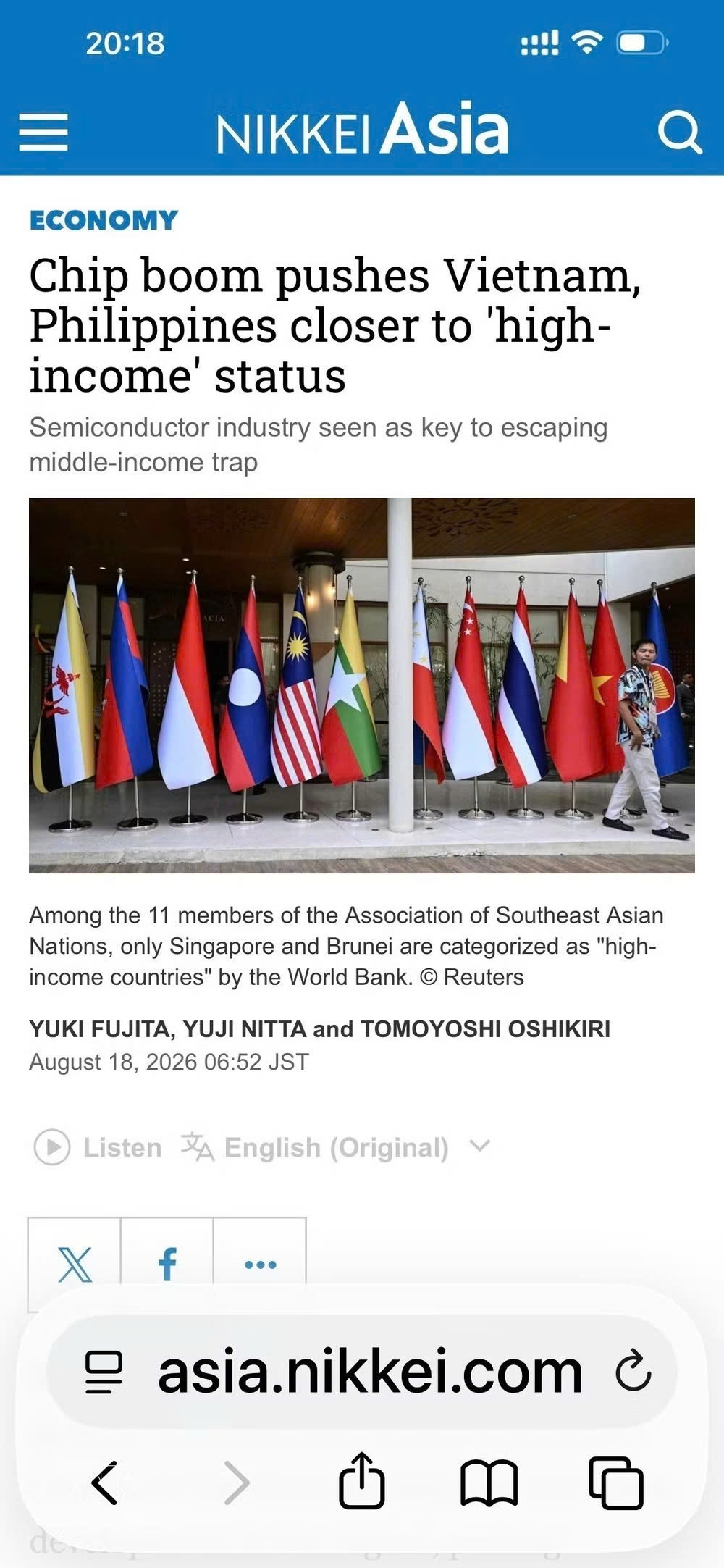
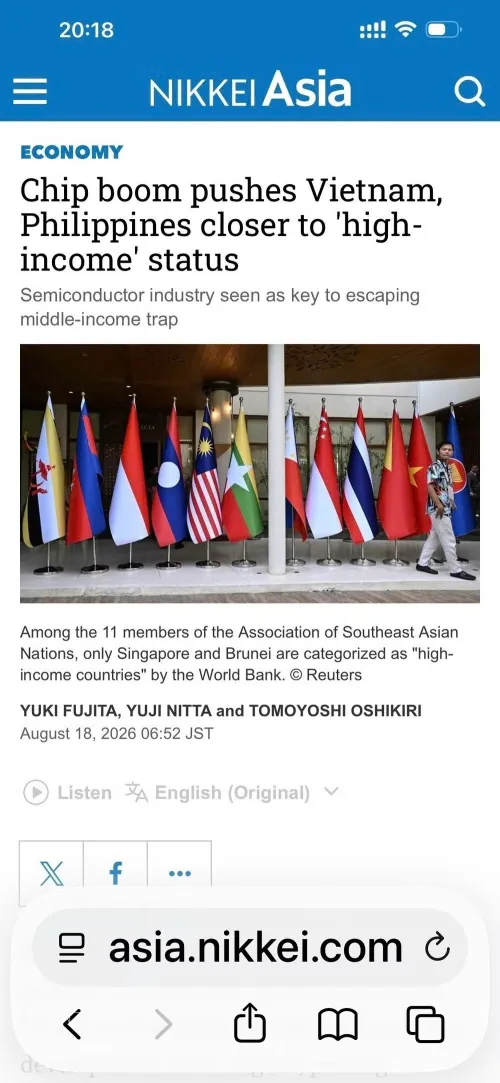
Chip boom pushes Vietnam closer to “high-income” status: Nikkei Asia

Chip boom pushes Vietnam closer to “high-income” status: Nikkei Asia

The rapid development of the semiconductor industry is reshaping Southeast Asia’s economic trajectory, creating opportunities for Vietnam and the Philippines to move closer to the ranks of high-income economies, according to Nikkei Asia.

Vietnam’s semiconductor industry offers the country an opportunity to shift from a growth model heavily reliant on low-cost labour and manufacturing toward more technology-intensive, higher value-added sectors, the paper said.

In the World Bank’s income classification updated in July, Vietnam was placed in the upper-middle-income group. Nikkei Asia said that to further raise income levels, the country needs to gradually reduce its reliance on low-cost labour and develop high-tech industries capable of generating greater added value.

Vietnam has raised incomes through an export-driven growth model. Its network of free trade agreements with countries and regions worldwide has helped attract foreign investment and establish manufacturing hubs for electronic components and electrical equipment.

In June, LG Innotek from the Republic of Korea announced plans to build a semiconductor substrate manufacturing plant in Vietnam with an estimated investment of around US$1 billion.

Vietnam is also seeking to expand its participation in the semiconductor value chain, moving beyond downstream activities such as assembly, packaging and testing into more technology-intensive areas, including chip design and the fabrication of integrated circuits on semiconductor wafers.

Under the country’s semiconductor industry development strategy, Vietnam aims to train more than 50,000 engineers and graduates for the sector by 2030.​

Nikkei Asia said the development of the semiconductor and electronics industries could provide an additional impetus for Vietnam’s economic growth amid rising global demand for products supporting artificial intelligence (AI).

To capitalise on the opportunity, Vietnam needs to continue improving the quality of its workforce and strengthening research and development capacity, while enhancing its ability to participate in higher value-added stages of global supply chains.

Meanwhile, the Philippines is also seeking to expand its semiconductor industry, which remains concentrated mainly in assembly, packaging and testing. Semiconductors and electronic products currently account for more than half of the country’s total merchandise exports. The Philippines is likewise seeking to upgrade its semiconductor industry as global demand for AI-related chips continues to grow.


Capital inflow drives expansion of HCMC’s hospitality and entertainment ecosystem

Capital inflow drives expansion of HCMC’s hospitality and entertainment ecosystem

BIG Investment Group Joint Stock Company (BIG) has announced a $5 million equity investment commitment from Brookland Group & Partners Limited, a global strategic private equity firm.

BIG Investment Group Joint Stock Company (BIG) has announced a $5 million equity investment commitment from Brookland Group & Partners Limited, a global strategic private equity firm.

Brookland Group & Partners Limited, headquartered in Dubai and Singapore, has deployed over $12 billion across 24 jurisdictions. The two parties officially signed their strategic cooperation agreement on August 7.

This marks BIG’s first successful international capital raise, occurring as the company prepares to transition from the UPCoM to the Ho Chi Minh City Stock Exchange (HOSE) by September 2026. This move to Vietnam’s main board will require BIG to adhere to more stringent standards regarding information disclosure, corporate governance, and free-float ratios.

The $5 million investment is structured as equity, meaning it will not incur debt on BIG’s balance sheet or dilute the ownership of existing shareholders. The investment is equivalent to approximately 38% of the group’s charter capital and is more than triple its projected 2025 after-tax profit of VND36.6 billion ($1.4 million).

This capital will serve as the primary funding source for BIG’s expansion into the hotel, F&B, and entertainment sectors in central HCM City. Individual acquisitions and deals will be supported by separate funding arrangements upon completion.

In 2025, the country welcomed 21.2 million international visitors. The Government has set a target of 25 million international arrivals this year and 35 million by 2030, following a steady average growth rate of 10% per year since 2011.

The hospitality market is reflecting this momentum. Real estate consultancy JLL forecasts a sharp increase in hotel transactions this year, primarily within the 4- and 5-star segments in Hanoi and HCM City. According to JLL, foreign investors are seeking yields of 7–9% in Vietnam’s hotel assets—significantly higher than the 3–4% yields found in developed markets such as Japan and Australia.

HCM City, with a population of over 14 million, is striving to become one of Asia’s leading hubs for MICE (Meetings, Incentives, Conferences, and Exhibitions) tourism and the "night economy," with the Saigon River serving as the central axis for nightlife development.

Local tourism authorities acknowledge that the city currently faces a shortage of high-quality venues operating after 10 pm, and lacks large-scale entertainment complexes comparable to those in Singapore and Bangkok.


Dai Quang Minh proposes $5 bln HCMC-Long Thanh railway, targets 2030 completion

Dai Quang Minh proposes $5 bln HCMC-Long Thanh railway, targets 2030 completion

Dai Quang Minh Real Estate Investment JSC has proposed a 46.4-kilometer rail line linking downtown Ho Chi Minh City with Long Thanh International Airport, with an estimated cost of VND134.17 trillion ($5.14 billion) for the first phase, according to a feasibility study currently under review.

The Thu Thiem-Long Thanh railway project is among key infrastructure projects that HCMC plans to break ground on Vietnam’s National Day, or September 2.

The updated study puts the line's length at about 46.44 km, running from the eastern end of Thu Thiem station on the Ben Thanh-Thu Thiem route in HCMC to Cam Duong depot in neighboring Dong Nai city.

About 11 km of the line would run underground, while 34.5 km would be elevated, with the remainder at ground level or on transition sections.

The line would have 18 stations, excluding Thu Thiem station, including 16 elevated and two underground stations. The first phase would build 14 stations to improve investment efficiency.

Six stations would be located in HCMC and eight in Dong Nai, providing connections to residential areas, industrial zones, and Long Thanh airport.

Connecting with wider rail network

The route would follow major transport corridors, including expressways and Ring Road 3, while connecting with six other rail lines to create a mass-transit network serving Long Thanh airport.

It would link with the Ben Thanh-Thu Thiem metro at Thu Thiem station, Metro Line 6 at Ring Road 2 and Phu Huu stations, and Metro Line 10 at Long Truong station.

The project would also connect with the Vung Tau-Ba Ria-Phu My railway at Xom Goc station, as well as an extension of the Ben Thanh-Suoi Tien metro line and the North-South high-speed railway at a station inside Long Thanh airport.

The line is designed to handle nearly 47,000 passengers per hour, with an average capacity of more than 23,400 passengers per hour in each direction.

Trains would have a maximum design speed of 120 kilometers per hour and operate at between 80 km/h and 110 km/h depending on the section.

The project would use GoA4 automated operation, the highest level of automation under European standards, to align with the planned Tham Luong-Ben Thanh-Thu Thiem metro corridor.

BT model proposed

The first phase is expected to have a preliminary investment cost of VND134.17 trillion ($5.14 billion), excluding land clearance expenses. The estimate is lower than an earlier proposal.

The project is expected to be developed under a build-transfer (BT) contract, with the investor responsible for raising capital and receiving payment through a combination of land funds and state budget resources.

Construction is targeted for completion in 2030, creating a direct mass-transit connection between HCMC and Long Thanh International Airport.

HCMC has a long-term plan for more than 1,000 km of urban railway, but currently operates only about 20 km of the Ben Thanh-Suoi Tien metro line.

The city has also begun work on the Ben Thanh-Tham Luong, Ben Thanh-Thu Thiem and Ben Thanh-Can Gio routes.

By 2030, the city aims to expand its urban railway network to 255 km. Other projects under preparation include the New Binh Duong-Suoi Tien line, the first phase of Metro Line 6 from Tan Son Nhat airport to Phu Huu, Thu Dau Mot-Tao Dan, and the Tham Luong-An Ha-Tay Bac urban area section of Metro Line 2.


See all blog