Lumen Vietnam Fund

Blog

Infineon opens new office in Ho Chi Minh City, deepening semiconductor commitment

Infineon opens new office in Ho Chi Minh City, deepening semiconductor commitment

The German company's new office reflects its confidence in Vietnam’s long-term growth potential.

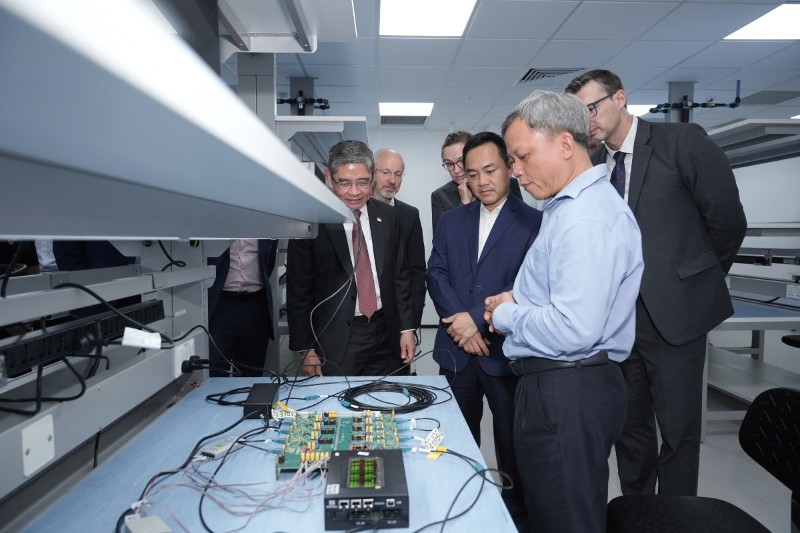
Infineon Technologies, one of Germany’s leading semiconductor solutions providers, officially opened its new office in Ho Chi Minh City on October 5, marking an expansion of its operations in Vietnam and reaffirming its commitment to supporting the country’s ambition to become a leading semiconductor innovation hub in Southeast Asia.

Mr. C.S. Chua, President and CEO of Infineon Technologies Asia-Pacific, said Vietnam is emerging as one of Asia’s promising markets for technological innovation, highly skilled engineering talent and semiconductor development.

The new office reflects Infineon’s confidence in Vietnam’s long-term growth potential, while reinforcing its commitment to supporting local businesses, developing domestic talent and contributing to the country’s semiconductor ecosystem. The company also aims to strengthen Vietnam’s role in its global innovation network.

Speaking at the opening ceremony, Mr. Pham Huynh Quang Hieu, Deputy Director of the Ho Chi Minh City Department of Science and Technology, said the growing presence of research and development centres in the city was a positive signal.

He said the city was gradually shifting from advantages based on market size and human resources towards stronger research capacity, innovation and deeper participation in global technology value chains.

“This demonstrates the city’s growing attractiveness to high-tech investors,” Mr. Hieu said.

Ho Chi Minh City has so far attracted 54 foreign-invested semiconductor projects with total registered capital exceeding $5.1 billion, gradually forming an ecosystem involving companies across multiple stages of the semiconductor value chain.


Source: Hong Vinh

Latest Posts

World Bank upgrades Vietnam 2026 GDP growth outlook to 7.4 percent

World Bank upgrades Vietnam 2026 GDP growth outlook to 7.4 percent

Driven by accelerating manufacturing output and surging exports of artificial intelligence hardware, Vietnam leads growth across regional economies, according to the WB's update.

The World Bank has upgraded its 2026 GDP growth forecast for Vietnam to 7.4 percent in its East Asia and Pacific Economic Update released October 6, marking the largest upward revision in the region at 1.1 percentage points.

Driven by accelerating manufacturing output and surging exports of artificial intelligence hardware, Vietnam leads growth across regional economies, according to the WB's update.

Vietnam stands out as the top performer in the region, with growth accelerating from 8.02 percent in 2025 to 8.18 percent in the first half of 2026. Industrial production, foreign direct investment, and public investment serve as primary catalysts. Merchandise exports surged 22.4 percent year-on-year in August, spearheaded by electronics and machinery, while implemented foreign direct investment hit a five-year peak.

Hardware and components tied to global AI supply chains drive this trade surge, accounting for over 70 percent of Vietnam’s total export growth. Assembly equipment, including servers, computers, and routers, comprises 60 percent of AI-related export value, primarily supplying final demand in the US. AI-related exports have more than doubled compared to average levels between 2020 and 2022.

Beyond manufacturing, Vietnam demonstrates high agility in adopting AI tools across services, healthcare, and education. Vietnam joins China, Malaysia, and the Philippines as regional emerging economies where personal generative AI adoption approaches the global average of 20 percent. Customized small AI models, such as the Vietnamese-tailored VinaLLaMA, and localized AI language learning applications show strong practical utility. In healthcare, AI image diagnostic tools support resource-constrained hospitals, while local hospitality providers leverage AI tools for targeted marketing and dynamic pricing.

However, global headwinds present macroeconomic challenges. Higher world oil prices sparked by Middle East conflicts increased Vietnam’s nominal oil import value by 36 percent. Rising fuel, housing, and utility costs pushed inflation from 2.5 percent early in the year to 4.24 percent in August, with full-year inflation projected at 4.2 percent.

Import growth outpacing exports due to electronic inventory accumulation, rising semiconductor prices, and elevated fuel costs has pressured foreign exchange reserves, which are projected to drop below two months of import cover in 2026. In response to energy price shocks, the government implemented fuel tax cuts and promoted public transit adoption.

To sustain momentum, fiscal expansion remains active. Public investment targets increased by 45 percent, widening the budget deficit to an estimated 3.7 percent of GDP. Over the 2026-2030 period, public investment plans will focus on energy, transportation, and logistics to bring total national investment toward 40 percent of GDP.

The World Bank emphasizes that translating AI potential into long-term productivity gains requires substantial infrastructure investments, particularly expanding power generation and upgrading transmission grids to meet the heavy energy demands of AI data centers.

Besides the World Bank, other international financial institutions have repeatedly upgraded their full-year forecasts for Vietnam. AMRO projects 2026 growth at 7.5 percent, the ADB raised its forecast to 7.8 percent for 2026, the IMF increased its projection to 8.2 percent, UOB upgraded its outlook to 8.5 percent, and Standard Chartered issued the highest forecast at 9.5 percent.


Long Thanh airport launches full-acale operational trials ahead of commercial launch

Long Thanh airport launches full-acale operational trials ahead of commercial launch

ACV plans to commission the mega-airport in three distinct stages, with initial operations from December 2026 through March 2027 running at 6% to 10% of design capacity, handling 20 to 30 flights daily...

In preparation for commercial operations in December 2026, the new International Airport of Long Thanh in southern Dong Nai city is set to conduct three rounds of Operational Readiness and Airport Transfer (ORAT) trials: Phase 1 across September and October 2026, Phase 2 in November, and Phase 3 in December 2026, according to the Airports Corporation of Vietnam (ACV).

These comprehensive trials and drills follow three distinct operational scenarios, focusing on four core areas: passenger services and ground connectivity, baggage handling, airside operations, as well as security, safety, and IT systems. The objective is to identify potential risks, test operations, and verify the overall readiness of systems, infrastructure, and personnel before opening the airport.

Regarding construction progress, Component Project 3—which covers essential airport facilities—comprises 16 contract packages. To date, executed work value has reached nearly 86% of the total contract value. Among these, four packages have been completed, eight are on schedule with several elements exceeding 90% completion.

However, four critical-path packages face scheduling pressures: the passenger terminal, internal airport road networks and utility infrastructure, cargo terminal No. 1, and the multi-story parking facility. Contractors are mobilizing additional resources and re-organizing construction shifts to safeguard the December 2026 operational deadline.

ACV plans to commission the mega-airport in three distinct stages. Initial operations from December 2026 through March 2027 will run at 6% to 10% of design capacity, handling 20 to 30 flights daily—primarily domestic routes and short-haul international services.

Throughput will scale up to roughly 50% between April and October 2027, before reaching full design capacity with a complete international and domestic network in time for the airline industry’s winter schedule later that year.

During a recent working inspection on the Long Thanh International Airport project and its connecting transit routes, Permanent Deputy Prime Minister Pham Gia Tuc instructed ACV to submit a comprehensive project status report before October 7. The report must detail contractor bottlenecks, provide clear completion timelines across all packages, and lay out specific phased-operation schemes along with essential criteria to ensure safe and effective airport commissioning.


Vietnam FDI surge points to changing investor priorities

Vietnam FDI surge points to changing investor priorities

Foreign direct investment (FDI) commitments in Vietnam surged 76.4% in the first nine months of 2026, reflecting strong investor interest, but the bigger question is what is driving the inflows and whether the country can turn them into higher-value growth.

Vietnam attracted US$50.36 billion in registered foreign direct investment between Jan. – Sept. 2026, representing a year-on-year rise of 76.4%, according to the National Statistics Office.

The headline figure is striking. But behind the surge is a more complex story: investors are not simply putting more money into Vietnam; their priorities are also changing as global manufacturers restructure supply chains and competition for new investment intensifies across Southeast Asia.

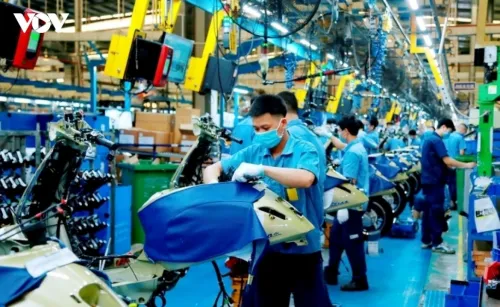
Of the total registered FDI, newly registered capital reached US$29.24 billion from 3,108 projects, with capital more than doubling from the same period last year. Manufacturing and processing remained the largest recipient, accounting for US$13.38 billion, or 45.8% of newly registered capital.

Transport and storage followed with US$5.14 billion, while additional capital injected into existing projects reached US$14.15 billion, up 25.1%.

The composition of the flows suggests that Vietnam’s attraction to foreign investors is increasingly linked to its role in production and supply-chain networks rather than simply its traditional advantage of relatively low costs.

Supply-chain diversification is a key driver

One of the clearest explanations comes from the ongoing restructuring of global supply chains.

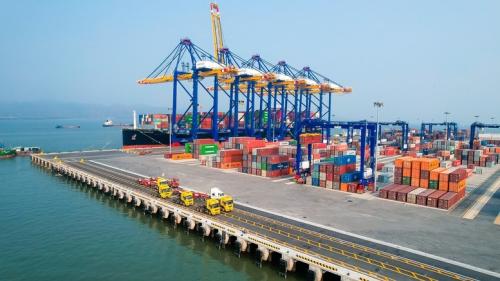
At the Vietnam Industrial Property Forum 2026 held in Ho Chi Minh City in September 2026, Trang Le, country head and head of Research and Consulting at JLL Vietnam, said international companies were continuing to diversify their supply chains to reduce concentration risks and strengthen resilience.

This trend is creating additional demand for manufacturing and logistics facilities in Vietnam, she said, with the country's northern region increasingly attracting technology-intensive investment and higher-value supply chains, while the south has developed stronger advantages in logistics, connectivity and access to the domestic market.

The shift is also changing the type of industries looking at Vietnam. Demand is expanding beyond traditional manufacturing to electronics, electrical equipment, high technology, automobiles, data centres, pharmaceuticals, research and development and modern logistics.

That helps explain why manufacturing and processing accounted for more than half of newly registered and additional FDI combined during the first nine months.

Vietnam's investment environment is also changing

Supply-chain shifts alone, however, do not explain the broader investment momentum. Assoc. Prof. Dr Ho Sy Hung, president of the Vietnam Chamber of Commerce and Industry (VCCI), said recent institutional reforms had opened up greater room for businesses and improved the business environment.

Speaking at the Vietnam New Economy Forum 2026 in Hanoi on October 3, he highlighted reforms under the 2025 Investment Law, including the expansion of a “green lane” mechanism and a shift from pre-inspection to post-inspection, which he said had significantly shortened the time needed to prepare investment projects.

This point is particularly relevant to FDI because investors consider not only where production costs are competitive, but also how quickly a project can obtain approvals, secure infrastructure and begin operations.

JLL Vietnam leader Trang Le has similarly identified implementation speed, infrastructure and land availability, and the quality of the workforce as three important factors influencing investors’ decisions.

In other words, Vietnam’s competitiveness is gradually moving beyond the question of whether the country is cheaper than other destinations. Investors are increasingly asking whether Vietnam can provide the infrastructure, skilled labour and business environment required for sophisticated production.

A strong headline figure, but not the whole story

There is also an important distinction between registered and realised FDI. While registered FDI jumped 76.4%, realised FDI reached an estimated US$21.07 billion in the first nine months, up 12.1% year on year. The figure was nevertheless the highest for the first nine months in five years.

Manufacturing and processing accounted for US$17.4 billion, or 82.6% of realised FDI, indicating that the bulk of foreign capital actually being deployed is closely tied to productive activities. This gap between commitments and realised investment matters.

A surge in registered capital signals strong investor interest and creates a pipeline of potential projects. But the economic impact ultimately depends on whether those commitments are implemented, how quickly projects become operational and how deeply foreign-invested companies connect with the domestic economy.

That may be the next challenge for Vietnam. The country has benefited from the global diversification of production, but competition is becoming tougher. At the Vietnam Industrial Property Forum, Trang Le noted that Vietnam’s share of regional manufacturing FDI had risen sharply during the 2020-2021 period but has since fallen back below 5%, with Indonesia and Thailand strengthening their positions.

This suggests that strong FDI growth in Vietnam should not be interpreted as a guarantee of continued dominance in the regional investment race. Instead, the latest figures may mark a new stage in the competition, one in which the ability to absorb and retain high-value investment becomes as important as the ability to attract it.

For Vietnam, that means improving the speed and predictability of investment procedures, strengthening infrastructure and logistics, developing a higher-skilled workforce and building stronger links between foreign-invested companies and domestic suppliers.

The 76.4% rise in registered FDI therefore tells only part of the story. The more important question is whether the latest wave of foreign investment can help Vietnam move further up global value chains, from being a competitive production base to becoming a deeper ecosystem for technology, innovation and higher-value manufacturing.


See all blog