Lumen Vietnam Fund

Blog

Ho Chi Minh City unveils 12 investment projects worth over $13bn at AEF 2026

Ho Chi Minh City unveils 12 investment projects worth over $13bn at AEF 2026

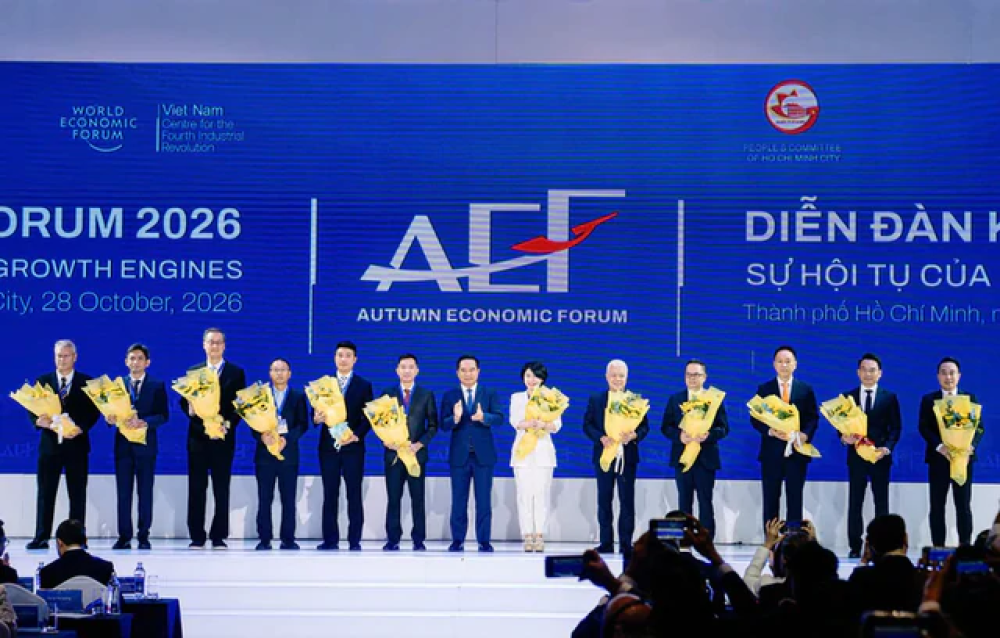
Ho Chi Minh City has unveiled 12 investment projects worth more than US$13 billion, spanning seaports, logistics, urban development, and high technology, at the Autumn Economic Forum 2026 (AEF 2026).

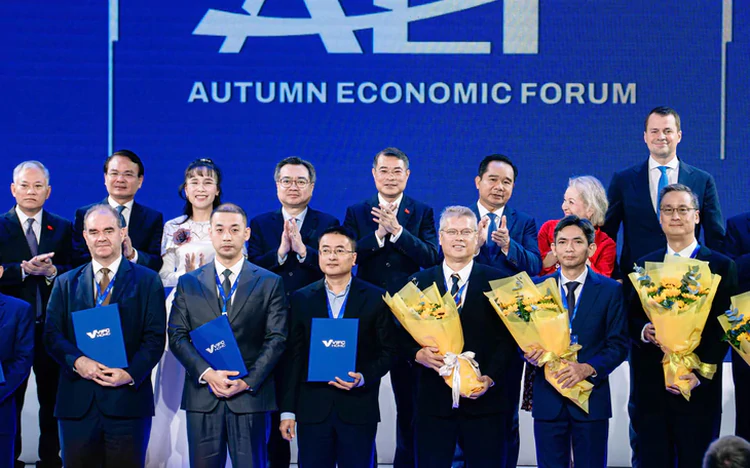
On Wednesday morning, during a high-level dialogue session at AEF 2026, chairman of the Ho Chi Minh City People’s Committee Nguyen Van Duoc presented investment policy approvals or investment registration certificates to investors for 12 domestic and foreign-invested projects.

Major projects include Can Gio International Transshipment Port, a smart complex in Thu Thiem New Urban Area, the International University Urban Area, and Cai Mep Gemadept–Terminal Link Port.

Major seaport, urban development projects

In seaport infrastructure, Can Gio International Transshipment Port has an estimated investment of $4.9 billion. The project involves Vietnam Maritime Corporation, Saigon Port JSC, and Terminal Investment Limited Holding S.A.

Cai Mep Gemadept - Terminal Link Port in Tan Phuoc Ward has an estimated investment of $770 million. Another project in the sector is My Xuan 6 Port, with an investment of about $66.6 million.

In logistics, Swift Logistics has an estimated investment of $987.4 million and is being developed by Singapore-based Tokgistic.

In urban development, Lotte Properties HCMC Co. Ltd. is implementing the Smart Complex project in Thu Thiem New Urban Area, with an estimated investment of $2.29 billion.

The International University Urban Area, developed by Berjaya Vietnam International University Urban Development JSC, has a revised total investment of approximately $6.61 billion.
Industrial, high-tech projects

Ho Chi Minh City also granted investment approvals for the first phase of the Vinh Lap Industrial Park infrastructure construction and business project, with registered capital of more than $379 million.

The project involves Vietnam-Singapore Industrial Park Joint Venture Co. Ltd., Becamex Group, and VSIP Quang Ngai Co. Ltd.

In industrial manufacturing, the GL Cables high-tech power cable manufacturing plant has registered investment capital of approximately $23 million.

Xinyi Glass Vietnam Co. Ltd. will invest approximately $230 million in manufacturing energy-saving float glass, low-emissivity coated glass, laminated safety glass, and specialized automotive glass.

Chang Yue Technology (VN) Co., Ltd. has an investment of approximately $70 million for a project involving the casting of iron, steel and non-ferrous metals, as well as mechanical processing.

In the high-tech sector, II-VI Vietnam Co. Ltd. is developing a project to manufacture thermoelectric semiconductor materials and thermoelectric coolers, with investment capital of $45 million.

ITO Automation Technologies Vietnam Co. Ltd. has an investment of approximately $8 million in manufacturing automation machinery, robots and sensors, and developing data management solutions.

Ho Chi Minh City chairman meets WEF managing director

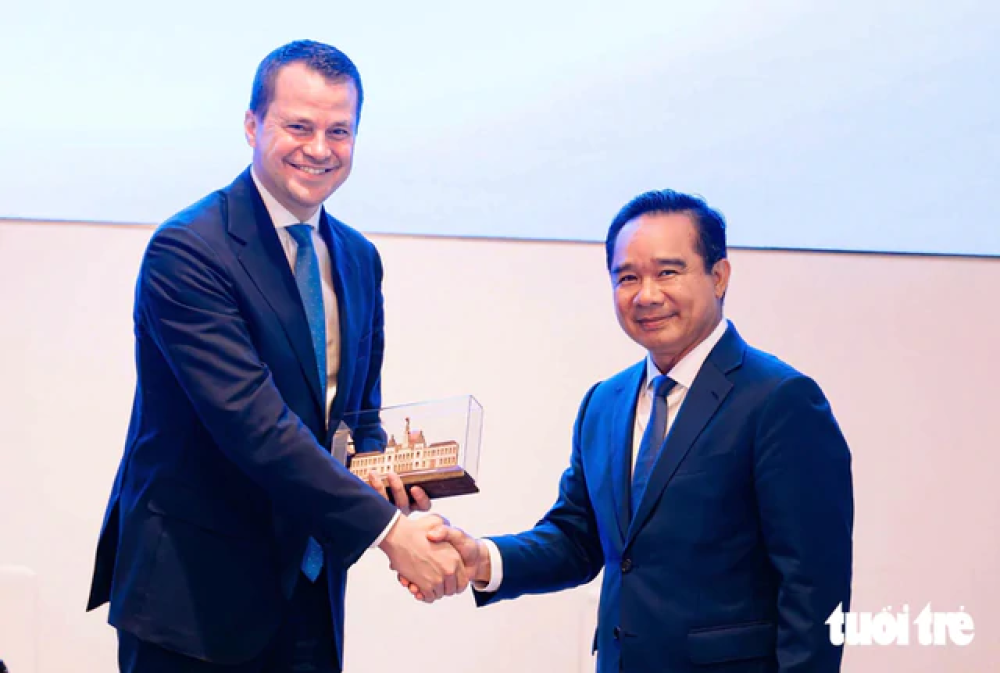
Chairman of the Ho Chi Minh City administration Nguyen Van Duoc met Stephan Mergenthaler, managing director of the World Economic Forum (WEF) on Wednesday, on the sidelines of the Autumn Economic Forum 2026, to discuss directions for strengthening cooperation between the city and the organization.

Duoc thanked Mergenthaler for attending AEF 2026 and praised his personal support and that of the WEF, saying the third edition of the forum had made a promising start and largely achieved its objectives.
With its theme focusing on the convergence of new growth drivers, AEF 2026 had served as a bridge between Vietnam and the international community, among businesses, and between businesses and government, Duoc said.

He added that the forum's discussions and dialogues had been frank and substantive, earning positive feedback from delegates.

Earlier that morning, Ho Chi Minh City leaders presented membership certificates for the city's Center for the Fourth Industrial Revolution to 10 founding members.

Through a message from Vietnamese Prime Minister Le Minh Hung, Vietnam had affirmed that it sought to be not only a destination for foreign direct investment but also a partner in cooperation and investment, Duoc said.

Ho Chi Minh City hoped the WEF would continue to convey this message to the global investment community.

The city believed that connecting the WEF's annual meeting in January in Davos, its summer forum in China and the autumn forum in Vietnam would create a more complete, comprehensive and substantive ecosystem of economic forums, he added.

Mergenthaler expressed pleasure at returning to Ho Chi Minh City and confidence in the city's development prospects, as reflected in the scale and atmosphere of AEF 2026 and Prime Minister Hung's keynote address at the forum.

The continued growth and positive development of AEF marked an important milestone in the city's ambitions, he said.

The WEF was committed to maintaining cooperation with Ho Chi Minh City through C4IR and other joint activities, making practical contributions to the development goals of the city and Vietnam, Mergenthaler said.

He also invited Ho Chi Minh City leaders to attend the WEF Annual Meeting in Davos in January 2027 alongside Vietnamese government leaders, underscoring the long-term and enduring partnership between the two sides.

Regarding the idea of combining AEF 2027 with the APEC Economic Leaders' Meeting hosted by Vietnam in Phu Quoc, Mergenthaler said the WEF was ready to provide support, particularly by connecting participants and convening high-level events within the APEC framework.

If implemented, the combination would build on and strengthen the successful cooperation model established by Ho Chi Minh City, he said.

It would also elevate the relationship between the WEF and the city as APEC draws considerable international attention.

The Autumn Economic Forum 2026 is taking place in Ho Chi Minh City from October 26 to 29 under the theme 'Collaboration in a New Era,' bringing together government officials, business leaders, investors, and international experts to discuss new drivers of economic growth.

Its two main days, Tuesday and Wednesday, are co-branded with the World Economic Forum for the first time.

The forum serves as a platform for Ho Chi Minh City to strengthen international partnerships, showcase its investment potential, and advance its ambition to become a regional financial and economic hub.

Source: Tuoi Tre News
Latest Posts

Vietnam and ASEAN move to elevate position in global value chain

Vietnam and ASEAN move to elevate position in global value chain

At the Autumn Economic Forum 2026 on October 27, Vietnamese and international experts shared experiences to help ASEAN and Vietnam not only attract foreign direct investment (FDI) but also retain higher added value from production and export activities.

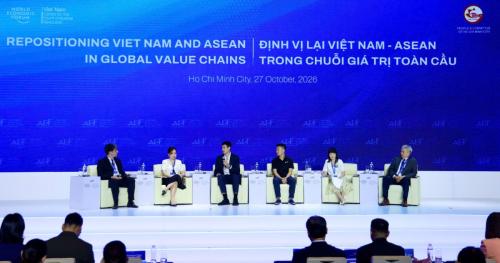
During the discussion session “Repositioning Vietnam - ASEAN in Global Value Chains” on October 27, co-organized by the World Economic Forum (WEF) and the Fourth Industrial Revolution Center in Vietnam (C4IR), in the framework of the Autumn Economic Forum 2026 in Ho Chị Minh City, representatives from businesses, international organizations, and regulatory agencies pointed out that attracting investment in the ASEAN region is just the beginning.

The greater challenge is how domestic enterprises can participate more deeply in the regional production network, enhance added value, and better utilize the capital and technology flows moving into ASEAN.

ASEAN attracts investors but internal connectivity remains limited

According to Mr. Kyriakos Triantafyllidis, Head of Growth and Strategy, Centre for Advanced Manufacturing and Supply Chains, under the World Economic Forum (WEF), ASEAN currently has about 700 million people, with a combined economic scale of $4.3 trillion. By 2025, the region was expected to attract $245 billion in FDI, a 10 percent increase from the previous year.

The proportion of foreign-origin value in Vietnam's exports increased from about 33 percent in 2010 to nearly 50 percent in 2022. This indicates that Vietnam's exports are increasingly dependent on imported materials, components, and inputs.

To create more value domestically, Vietnam needs to enhance the capacity of local enterprises to participate more deeply in supply chains and become tier-1 suppliers for FDI corporations. On a regional scale, intra-ASEAN trade accounts for only about one-fifth of the region's total trade turnover, indicating that member economies still have significant room to strengthen connectivity and production cooperation.

These issues require ASEAN not only to continue attracting investment and expanding exports but also to develop the capacity of local enterprises, strengthen supply chain links within the region, and participate more deeply in high-value stages such as technology, design, and product innovation.

Expert perspectives on trade and investment potential

Mr. Sacha Dray, an Economist at the World Bank in Economic Policy Unit for Vietnam, agreed that ASEAN has a favorable foundation for trade and investment development, with abundant labor, high trade openness, and an extensive network of trade agreements. However, the region has not yet fully exploited the benefits of integration.

In terms of production, ASEAN has deeply participated in the global value chain, from automobile and electric vehicle production in Thailand, assembly in Vietnam, to semiconductor manufacturing, testing, and packaging in Malaysia and Singapore. However, the intra-regional value chain remains limited: global value chain participation based on regional links accounts for only about one-third in ASEAN, compared to 70 percent in the EU.

Specifically, of ASEAN’s total export turnover of about $2 trillion, only 22 percent is consumed within the region, compared to about 60 percent in the EU. This makes ASEAN economies more dependent on external demand, while also limiting the ability to spread benefits among countries in the region.

According to Mr. Dre, the income disparity among member countries - where the gap between the poorest and richest nation reaches up to 70 times, compared to eight times in the EU- also creates uneven market demand and resource allocation. To bridge this gap, he suggested increasing cross-border investment among ASEAN countries, connecting foreign enterprises with local suppliers, and removing non-tariff barriers.

Business views on ASEAN’s appeal

From a business perspective, Ms. Jessica Nguyen, General Director, Country Holding Officer, and Board Chairwoman of ABB Vietnam, believes that ASEAN’s appeal comes from three factors: market size; increasingly developed production capacity; and regional connectivity.

According to her, ASEAN no longer competes solely on low labor costs. Evidence is that Vietnam, Thailand, Malaysia, and Indonesia are investing more in advanced manufacturing, digitization, and developing technical human resources. At the same time, trade agreements and regional connectivity allow businesses to build supply chains across multiple countries instead of being limited to a single market.

Trust in the supply chain is built through quality, traceability, reliability, and product consistency. These are the conditions for Vietnamese suppliers to transition from fulfilling orders to becoming partners with higher technical and management capabilities.

However, after more than 32 years of operation in Vietnam, ABB observed that technology and machinery can be acquired relatively quickly, whereas operational and management capabilities take time to build. “The long-term value that multinational corporations bring is not just automation equipment, but also operational knowledge, global standards, and the ability to build resilient supply chains,”Ms. Nguyen emphasized.

Policy recommendations for supplier development

From a state management perspective, Ms. Pham Quynh Mai, Deputy Director General of the Multilateral Trade Policy Department under the Ministry of Industry and Trade, noted that reducing tariffs is not enough to promote regional trade. ASEAN countries need to address behind-the-border barriers, including customs procedures, standards, certifications, logistics, and differences in rules of origin among trade agreements.

According to her, the time and costs incurred at each stage, from sourcing materials, organizing production, meeting rules of origin to transportation and delivery, all affect the efficiency of the entire supply chain. Therefore, ASEAN needs to enhance information exchange, improve enforcement capacity, and limit the duplication of inspection and certification procedures.

For Vietnam, she proposed building a national supplier development program involving the Ministry of Industry and Trade, local governments, industry associations, and FDI enterprises. This program would help small and medium-sized enterprises access finance for technology investment, production upgrades, and workforce training.

The Autumn Economic Forum 2026, themed “The Convergence of New Global Growth Poles,” took place from October 26 to October 29 in Ho Chi Minh City, directed by Prime Minister Le Minh Hung and chaired by the Ho Chi Minh City People’s Committee in collaboration with C4IR.


HCMC financial centre to issue investment fund regulations in November

HCMC financial centre to issue investment fund regulations in November

Regulations governing the admission of investment funds to the Ho Chi Minh City International Financial Centre (VIFC-HCMC) are expected to be issued in November, paving the way for greater mobilisation of international capital.

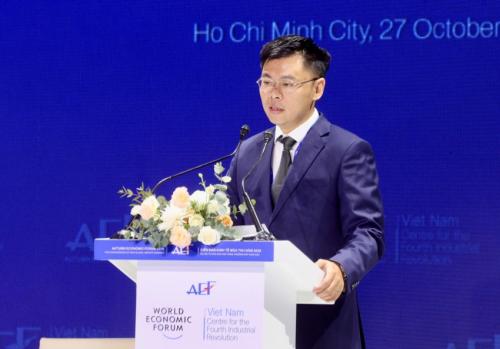
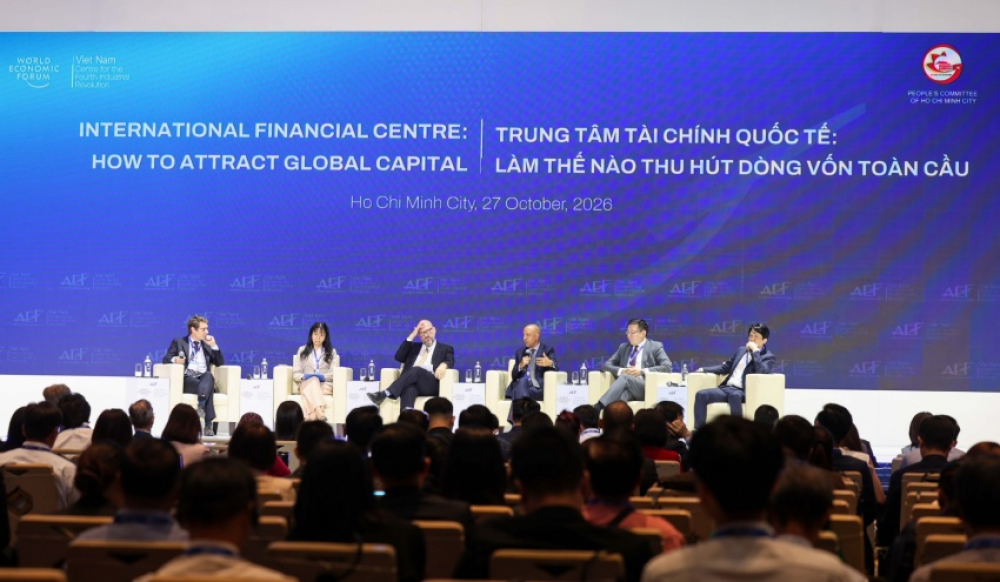
Speaking at the Autumn Economic Forum 2026 on the morning of October 27, Truong Minh Huy Vu, Vice Chairman of Ho Chi Minh City People’s Committee, outlined the development direction for theVIFC-HCMC, highlighting the need to reform how financial resources are mobilised and allocated.

“The legal frameworks governing the IFC’s operations had now been completed. The VIFC-HCMC had also admitted its first 10 members, which operate in the form of holding companies,” Vu said

In the next phase, Vu said, the city will focus on two key areas: setting regulations for investment funds and fund management. “The procedures and regulations for admitting investment funds to Vietnam's IFC are expected to be issued in November,” Vu said.

Under the framework outlined by Vu, investment funds will be classified into three tiers, in line with models adopted by international financial centres such as Singapore, Dubai and Hong Kong. He said that the goal of the IFC was not merely to establish financial activities, but also to channel capital into the real economy.

“In the initial phase, the VIFC-HCMC will focus on mobilising and connecting financial resources to support development needs in the expanded Ho Chi Minh City and the southeastern region,” he said.

According to Vu, in the new development context, financial resources should be understood as more than just flows of money; they must also be linked to new operating methods, models and approaches. “Researching financial products and models attracting global interest is important for Vietnam as a whole, as well as for Ho Chi Minh City and the southeastern region in particular,” he added.

Following the expansion of its development area to include Binh Duong and Ba Ria-Vung Tau, Ho Chi Minh City has gained further advantages in industry, services, trade, the marine economy and logistics. Underground and airspace development also offer new opportunities for growth.

However, to fully realise this potential, the city needs appropriate mechanisms to mobilise resources, particularly financial models capable of connecting domestic and international capital flows with actual investment needs.

Marc Knapper, former US Ambassador to Vietnam, chairman of Knapper Global Advisors and a member of the advisory team for the VIFC-HCMC, said the city had a major opportunity to become one of Asia’s leading financial centres.

However, to realise this ambition, Vietnam needs to clearly define the role of its international financial centre within the country’s long-term economic development strategy.

“Autumn Economic Forum provides valuable opportunities to exchange views on Ho Chi Minh City’s development direction. I am so pleased at attending the event in the city, which is undergoing significant transformation and working towards its goal of becoming Vietnam’s international financial centre,” Knapper said.

He noted that technology and finance were evolving rapidly worldwide. Against this backdrop, the key question was not only how to develop fintech, but also how to build a financial system that was sound, secure and sustainable. Vietnam, he said, was well positioned to take part in this transformation.

Looking back at Vietnam’s development over the past four decades, Knapper said the country had made significant progress through international integration, manufacturing expansion and improvements in living standards. This process had lifted millions of people out of poverty, making Vietnam one of the standout development stories of its time.

“I am impressed by Ho Chi Minh City’s transformation every time he returned, from the energy of its younger generation and its spirit of innovation to the development of new infrastructure and the changing urban landscape. In his view, these changes demonstrated Vietnam’s considerable potential for further growth,” he said.

However, he added that the next phase of Vietnam’s development will bring different demands. Its goal of becoming a high-income country by 2045 will require the mobilisation of substantial financial resources to support economic development, the energy sector and the broader economic transition.

“Not every country managed to move beyond middle-income status and achieve a higher level of development. Against this backdrop, the VIFC-HCMC should be seen as more than a financial project. It should be regarded as part of Vietnam’s broader strategy to build the financial foundations for its future,” he added.

Experts speak about the VIFC-HCMC. Photo: Le Toan

At least 22 banks commit to cutting lending rates

At least 22 banks commit to cutting lending rates

The reductions generally range from 1.5 to 2 percentage points per year compared with banks’ standard lending rates.

At least 22 commercial banks in Vietnam, including wholly foreign-owned Shinhan Bank Vietnam, have committed to reducing lending rates, according to statistics from the Vietnam Banks Association (VNBA).

The reductions generally range from 1.5 to 2 percentage points per year compared with banks’ standard lending rates.

Of these institutions, 15 have announced the scale of their preferential lending packages, with a combined value of more than VND451 trillion (approximately $17 billion). This represents around 2.2% of the banking system’s total outstanding loans, which stand at VND20.72 quadrillion (more than $802 billion).

Banks are primarily prioritising short-term loans with maturities of less than six months to support production and business activities. The main beneficiaries include small and medium-sized enterprises (SMEs), household businesses and companies operating in agriculture, import-export, supporting industries, high technology, logistics, energy and infrastructure.

The commitments are intended to improve access to financing for businesses and support economic growth.


​

See all blog