Lumen Vietnam Fund

Blog

HCMC financial centre to issue investment fund regulations in November

HCMC financial centre to issue investment fund regulations in November

Regulations governing the admission of investment funds to the Ho Chi Minh City International Financial Centre (VIFC-HCMC) are expected to be issued in November, paving the way for greater mobilisation of international capital.

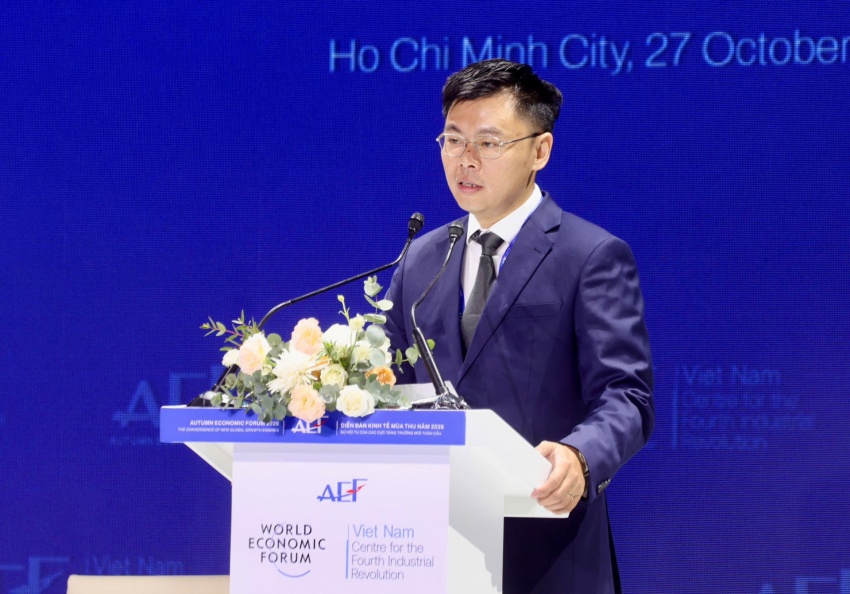
Speaking at the Autumn Economic Forum 2026 on the morning of October 27, Truong Minh Huy Vu, Vice Chairman of Ho Chi Minh City People’s Committee, outlined the development direction for theVIFC-HCMC, highlighting the need to reform how financial resources are mobilised and allocated.

“The legal frameworks governing the IFC’s operations had now been completed. The VIFC-HCMC had also admitted its first 10 members, which operate in the form of holding companies,” Vu said

In the next phase, Vu said, the city will focus on two key areas: setting regulations for investment funds and fund management. “The procedures and regulations for admitting investment funds to Vietnam's IFC are expected to be issued in November,” Vu said.

Under the framework outlined by Vu, investment funds will be classified into three tiers, in line with models adopted by international financial centres such as Singapore, Dubai and Hong Kong. He said that the goal of the IFC was not merely to establish financial activities, but also to channel capital into the real economy.

“In the initial phase, the VIFC-HCMC will focus on mobilising and connecting financial resources to support development needs in the expanded Ho Chi Minh City and the southeastern region,” he said.

According to Vu, in the new development context, financial resources should be understood as more than just flows of money; they must also be linked to new operating methods, models and approaches. “Researching financial products and models attracting global interest is important for Vietnam as a whole, as well as for Ho Chi Minh City and the southeastern region in particular,” he added.

Following the expansion of its development area to include Binh Duong and Ba Ria-Vung Tau, Ho Chi Minh City has gained further advantages in industry, services, trade, the marine economy and logistics. Underground and airspace development also offer new opportunities for growth.

However, to fully realise this potential, the city needs appropriate mechanisms to mobilise resources, particularly financial models capable of connecting domestic and international capital flows with actual investment needs.

Marc Knapper, former US Ambassador to Vietnam, chairman of Knapper Global Advisors and a member of the advisory team for the VIFC-HCMC, said the city had a major opportunity to become one of Asia’s leading financial centres.

However, to realise this ambition, Vietnam needs to clearly define the role of its international financial centre within the country’s long-term economic development strategy.

“Autumn Economic Forum provides valuable opportunities to exchange views on Ho Chi Minh City’s development direction. I am so pleased at attending the event in the city, which is undergoing significant transformation and working towards its goal of becoming Vietnam’s international financial centre,” Knapper said.

He noted that technology and finance were evolving rapidly worldwide. Against this backdrop, the key question was not only how to develop fintech, but also how to build a financial system that was sound, secure and sustainable. Vietnam, he said, was well positioned to take part in this transformation.

Looking back at Vietnam’s development over the past four decades, Knapper said the country had made significant progress through international integration, manufacturing expansion and improvements in living standards. This process had lifted millions of people out of poverty, making Vietnam one of the standout development stories of its time.

“I am impressed by Ho Chi Minh City’s transformation every time he returned, from the energy of its younger generation and its spirit of innovation to the development of new infrastructure and the changing urban landscape. In his view, these changes demonstrated Vietnam’s considerable potential for further growth,” he said.

However, he added that the next phase of Vietnam’s development will bring different demands. Its goal of becoming a high-income country by 2045 will require the mobilisation of substantial financial resources to support economic development, the energy sector and the broader economic transition.

“Not every country managed to move beyond middle-income status and achieve a higher level of development. Against this backdrop, the VIFC-HCMC should be seen as more than a financial project. It should be regarded as part of Vietnam’s broader strategy to build the financial foundations for its future,” he added.
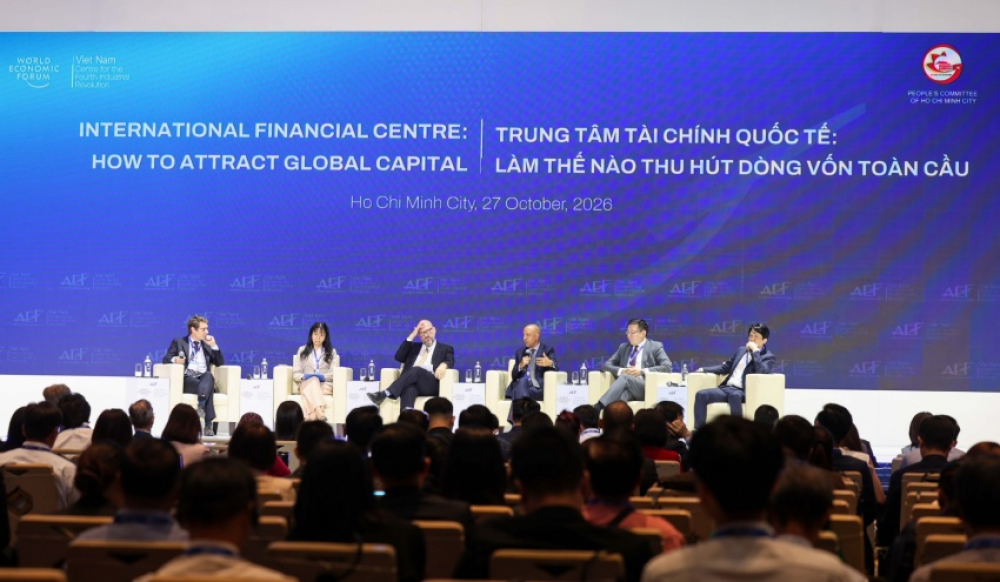
Experts speak about the VIFC-HCMC. Photo: Le Toan

Source: Quynh Chau
Latest Posts

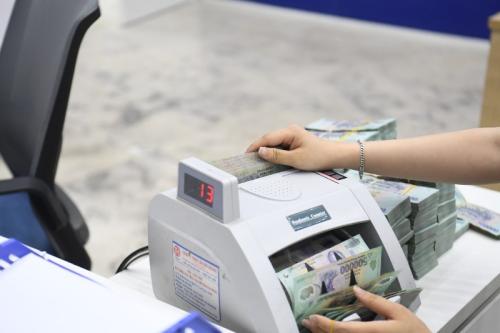
At least 22 banks commit to cutting lending rates

At least 22 banks commit to cutting lending rates

The reductions generally range from 1.5 to 2 percentage points per year compared with banks’ standard lending rates.

At least 22 commercial banks in Vietnam, including wholly foreign-owned Shinhan Bank Vietnam, have committed to reducing lending rates, according to statistics from the Vietnam Banks Association (VNBA).

The reductions generally range from 1.5 to 2 percentage points per year compared with banks’ standard lending rates.

Of these institutions, 15 have announced the scale of their preferential lending packages, with a combined value of more than VND451 trillion (approximately $17 billion). This represents around 2.2% of the banking system’s total outstanding loans, which stand at VND20.72 quadrillion (more than $802 billion).

Banks are primarily prioritising short-term loans with maturities of less than six months to support production and business activities. The main beneficiaries include small and medium-sized enterprises (SMEs), household businesses and companies operating in agriculture, import-export, supporting industries, high technology, logistics, energy and infrastructure.

The commitments are intended to improve access to financing for businesses and support economic growth.


​

Deputy Prime Minister proposes reduction of electricity prices and gasoline tax in November

Deputy Prime Minister proposes reduction of electricity prices and gasoline tax in November

These measures are proposed in the context of needing to reduce energy costs and support production, business activities, and people's livelihoods.

During a meeting on October 27 regarding scenarios for managing gasoline and electricity prices, Deputy Prime Minister Nguyen Van Thang called for a review of the plan to reduce the average retail electricity price over five months, from November 1, 2026, to March 31, 2027, while requesting an assessment of the feasibility of reducing the special consumption tax on gasoline to 0% during the same period.

These measures are proposed in the context of needing to reduce energy costs and support production, business activities, and people's livelihoods.

Regarding electricity prices, the Deputy Prime Minister instructed the Vietnam Electricity (EVN) to urgently calculate and maximize cost savings to enable a reduction in the average retail electricity price over the five-month period from November 1, 2026, to March 31, 2027. The plan must comply with regulations on the mechanism, timing of electricity price adjustments, and related legal provisions.

Once completed, EVN is responsible for submitting the plan to the Ministry of Industry and Trade for review and feedback. The Ministry of Industry and Trade is required to ensure the implementation schedule from November 1 and report to the competent authorities on issues beyond its jurisdiction.

According to current regulations, the average retail electricity price is 2,204.0655 VND/kWh (excluding value-added tax) and has been applied since May 10, 2025. Although regulations allow for the consideration of adjusting the average electricity price at least once every three months based on fluctuations in production and business costs and related factors, the most recent adjustment however occurred in May 2025.

The current adjustment mechanism stipulates different handling thresholds depending on the level of price fluctuation.

Specifically, if the calculated average retail electricity price decreases by less than 1% or increases by less than 2% compared to the current level, EVN does not adjust but must report to the Ministry of Industry and Trade for inspection and supervision.

When the electricity price decreases by 1% or more or increases by 2% to less than 5%, EVN must submit a plan for the Ministry of Industry and Trade to review and provide written feedback before making a decision. For increases from 5% to less than 10%, EVN can adjust accordingly after reporting and receiving approval from the Ministry of Industry and Trade.

Compared to the current average retail electricity price, the aforementioned cost is about VND111.37/kWh lower, equivalent to 5.32%. However, EVN stated that by the end of 2025, there will still be over VND17,506 billion (nearly $678,000) in costs not accounted for in the production and business costs of electricity. Most of this amount is unrecognized exchange rate differences and payments to power plants, arising from the remainder of 2021 and the period 2022–2025.

For cases where electricity prices need to increase by 10% or more, the Ministry of Industry and Trade will lead inspections, reviews, and consultations with relevant ministries and agencies before compiling and reporting to the Government for consideration. When necessary, the Ministry of Industry and Trade will coordinate with the Price Steering Committee before submitting to the Government.

Regarding the basis for calculating electricity prices, the results of the inspection of production and business costs for electricity in 2025, recently announced by EVN, show that total costs reached over VND601.68 trillion (more than $23.28 billion).

After deducting income from the liquidation, transfer of fixed assets, recovered materials, and activities related to renting electric poles, the production and business cost of electricity is determined to be VND2,092.70 /kWh, according to EVN's report.

For the gasoline tax plan, the Ministry of Finance is tasked with leading and coordinating with the Ministry of Industry and Trade, the Ministry of Justice, and related agencies to review the legal basis, authority, and fully assess the impact and feasibility of reducing the special consumption tax on gasoline to 0%.

Previously, the Government extended policies on environmental protection tax and value-added tax for gasoline, diesel, kerosene, mazut, and aviation fuel under Resolution No. 19/2026/QH16 until December 31, 2026. Accordingly, the environmental protection tax on gasoline, diesel, kerosene, mazut, and aviation fuel remains at 0 VND/liter.

Regarding value-added tax, these items are not subject to declaration or payment of value-added tax but are still eligible for input value-added tax deduction. Meanwhile, the special consumption tax on gasoline is still applied under the Special Consumption Tax Law No. 66/2025/QH15, with a tax rate of 10% for mineral gasoline, 8% for E5 gasoline, and 7% for E10 gasoline.

Reducing the special consumption tax on gasoline to 0% is therefore not an unprecedented measure.

From late March to the end of June 2026, this tax was reduced to 0% to support market stabilization. If approved this time, the policy will continue to be applied for five months, alongside the plan to reduce electricity prices.


Ho Chi Minh City seeks to attract high-quality investment

Ho Chi Minh City seeks to attract high-quality investment

To attract high-quality foreign investment, particularly in high-tech industries and data centres, Ho Chi Minh City needs to secure a stable electricity supply while developing renewable energy infrastructure.

Speaking at the CEO 500 programme, part of the Autumn Economic Forum 2026 in Ho Chi Minh City on October 26, Jian Lu, vice president of Windey International Energy Holding, said the development of emerging technology industries is driving growing demand for green and flexible energy solutions.

"AI data centres have substantial electricity requirements, calling for efficient power supply solutions that can be deployed quickly," Lu said.

According to Lu, integrated systems combining wind, solar, and energy storage could meet a large proportion of an AI data centre's electricity needs, and can be brought into operation more quickly than conventional power plants.

Windey is also exploring the use of low-cost wind power to produce green methanol and green ammonia to meet clean energy demand in industry and transport.

Lu forecast that the cost of producing electricity from integrated wind, solar, and energy storage systems could fall by nearly half over the next five years, driven by advances in materials, manufacturing processes, and technology.

Alongside renewable energy development, the company is also focusing on establishing closed-loop recycling systems for solar panels, wind turbine blades, and energy storage batteries to reduce environmental impacts and promote sustainability throughout the energy value chain.

According to Pham Quoc Anh, executive chairman of Pacifico Energy Vietnam, energy infrastructure must be developed ahead of demand to attract high-quality foreign investment.

Anh said the city needs to focus on addressing two key issues in energy infrastructure development to enhance its competitiveness in attracting high-quality foreign investment.

First, the city needs to plan offshore areas and transmission infrastructure for offshore wind power. It should work closely with central ministries and agencies to study and designate offshore wind development zones at an early stage, ensuring compatibility with maritime transport, oil and gas, fisheries, tourism and other uses of marine space.

In particular, integrated planning is needed for offshore wind power collection substations, subsea cable corridors and landfall points, while exploring opportunities to share transmission infrastructure across multiple projects.

“Early planning will help avoid fragmented investment, minimise impacts on marine and coastal areas, and enable more efficient and sustainable offshore wind power development,” Anh said.

The second priority is to prepare electricity supplies to accommodate a new generation of foreign investors, particularly in high-tech manufacturing and data centres.

Anh pointed out that industrial park developers, high-tech manufacturers and data centre investors need to advance assurance of access to a stable, high-quality electricity supply before making investment decisions. Meanwhile, power developers, particularly those supplying electricity on-site or close to consumption centres, need to identify customers in advance and secure long-term power purchase agreements to raise financing.

To address this challenge, Pacifico Energy has proposed that Ho Chi Minh City study a pilot mechanism or platform to consolidate electricity demand from strategic ventures and connect them with energy solution providers.

On this basis, the city could help eligible parties prepare framework agreements in advance covering capacity, supply timelines and commercial terms. Once the projects formally proceed, these agreements could be finalised into direct power purchase agreements or other contractual arrangements permitted under the law.

“This approach could help both power generators and industrial investors shorten preparation times, reduce uncertainty and accelerate investment decisions,” Anh added.

Pacifico Energy is a US-headquartered energy group developing integrated energy infrastructure to support data centres and AI, including a 7.65 GW gas-fired power project in the United States, the largest of its kind to receive a permit in the country.

The group has been operating in Vietnam since 2017, bringing solar and wind power projects into operation while continuing to expand its investment in offshore wind power.

Pacifico Energy is developing a 500 MW offshore wind power project in the waters off Ho Chi Minh City, with an estimated total investment of approximately $2 billion. The project's survey campaign commenced on October 13.


See all blog