Lumen Vietnam Fund

Blog

Green fuel transition gains momentum as E10 goes nationwide

Green fuel transition gains momentum as E10 goes nationwide

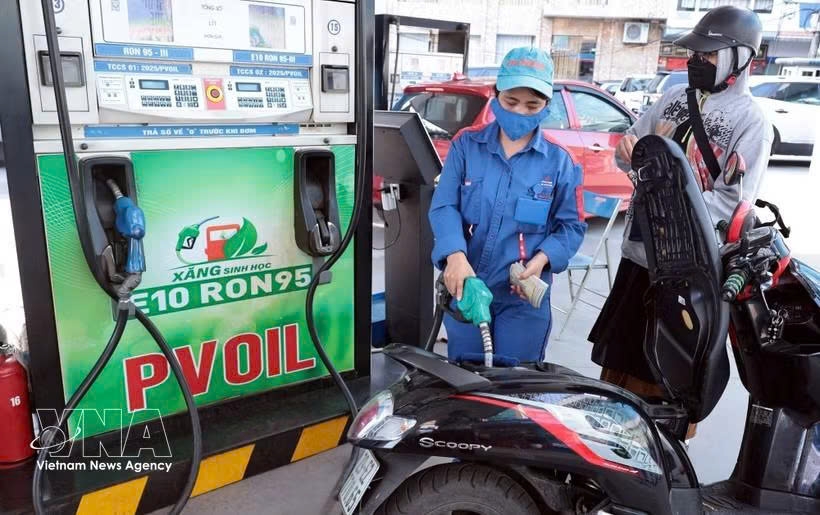
Starting June 1, E10 biofuel will officially be distributed nationwide under the Ministry of Industry and Trade (MoIT)’s roadmap, marking a major step in Vietnam’s green energy transition strategy, greenhouse gas emission reduction efforts and commitment to achieving net-zero emissions by 2050.

Under the ministry's Circular No. 50/2025/TT-BCT, all unleaded petrol sold on the domestic market from June 1 must be blended with ethanol to produce E10 for petrol-powered vehicles nationwide. Meanwhile, E5RON92 petrol will continue to be available until the end of 2030.

Expectations mixed with concerns​

Nguyen Duc Thanh, a ride-hailing driver in Hanoi’s Hoang Mai ward, said he previously used E5 petrol and is not overly concerned about switching to E10. His main concerns are fuel prices and consumption efficiency.

​People need sufficient information to feel confident, Thanh said.​

Consumer hesitation largely stems from the earlier rollout of E5 as when many users questioned the quality of biofuels.​

However, according to MoIT, most vehicles currently operating in Vietnam are compatible with E10. Authorities cited technical studies and international experience showing that around 90% of petrol-powered vehicles can use E10 without requiring engine modifications.​

Nguyen Phu Cuong, a resident of Hanoi's Long Bien ward, said transparency and fuel quality control are the most important factors. People will accept the transition if they clearly see the benefits and receive guarantees from authorities. If fuel quality differs between stations, it will be difficult to build trust.

Many vehicle owners in Hanoi also expect E10 adoption to help improve air quality, which remains a major issue in the capital. Environmental experts say ethanol-blended fuel enables cleaner combustion and reduces carbon monoxide and unburned hydrocarbon emissions compared to conventional petrol.

According to authorities, the introduction of E10 will be accompanied by tax and fee adjustments to make it more competitively priced than traditional fossil fuel. The MoIT is proposing revisions to environmental protection and excise taxes to encourage consumers to switch to biofuel.

In Hanoi, many fuel distributors said they have completed upgrades to storage tanks and fuel pumps in preparation for E10 sales from the start of June.

The ministry noted that E10 is already widely used in more than 60 countries, including the US, Japan, the Republic of Korea, Thailand and Brazil.

​Preventing speculation and fraud

Representatives from Hanoi’s market surveillance sub-department said market management teams will coordinate with the municipal Department of Industry and Trade, quality standards authorities and economic police to inspect E10 implementation at fuel retail outlets from June 1. Inspections will focus on fuel quality, price listing, supply stability and acts such as hoarding or selling fuel products that do not meet regulations.

Authorities will strictly handle cases involving fuel speculation, improper fuel sales or arbitrary suspension of sales that disrupt market supply.

Market surveillance officers stressed that the transition to E10 must be implemented in a synchronised manner to prevent profiteering during the policy transition period.

Energy experts described the rollout of E10 as an inevitable trend as Vietnam accelerates its emissions reduction and green transition agenda.

Dr. Ngo Tri Long, an economic expert, said E10 carries not only environmental significance but also positive implications for national energy security. By increasing the ethanol ratio in petrol, Vietnam can reduce dependence on imported fossil fuel while promoting domestic ethanol production.

Technical experts also noted that most modern engines can use E10 normally if the fuel meets quality standards. However, owners of older vehicles or cars with deteriorating fuel systems are advised to conduct regular maintenance checks to avoid corrosion of rubber components or the dissolution of residue inside fuel tanks.

According to specialists, E10 offers clear environmental benefits by helping reduce CO2 emissions, fine dust particles and other toxic pollutants from transport exhaust, a major source of urban pollution in cities such as Hanoi and Ho Chi Minh City.

They added that if implemented methodically, E10 could serve as a stepping stone toward wider adoption of higher-ethanol biofuels such as E15 and E20 in the future.

However, analysts stressed that the biggest challenge remains building public confidence. International experience shows that reasonable pricing, stable quality and transparent market management are essential for biofuels to gain broad consumer acceptance.


Source: VNA

Photo: VNA
Latest Posts

Vietnam has potential to become Southeast Asia’s renewable energy hub: Suzlon

Vietnam has potential to become Southeast Asia’s renewable energy hub: Suzlon

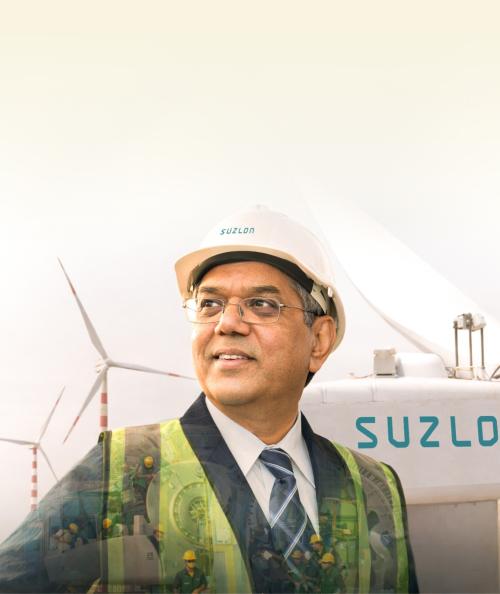
Speaking with Vietnam Economic Times / VnEconomy on the sidelines of the APAC Wind Energy Summit 2026 in Hanoi, Mr. Girish Tanti, Vice Chairman of Suzlon Group, said Vietnam is not only a promising market but also has the potential to become a regional hub for renewable energy development, services, and supply chains.

Nearly seven months have passed since Suzlon first began actively exploring opportunities in Vietnam. How would you assess the current outlook for Vietnam’s wind energy market, particularly in light of the revised Power Development Plan VIII and the country’s long-term energy transition goals?

Vietnam, within Asia, stands out, in terms of its bold targets-almost 24 gigawatts of renewable energy already operational, and 7 gigawatts of wind operational in the country, and set out a very strong goal for energy green transition by 2035, to adoption of renewable energy.

It is the fastest growing renewable energy market in the region, and Suzlon being one of the pioneers in Asia, we have opened up several markets in Asia, with product portfolio ranging from 2 megawatt to almost 6 megawatt now, largely focused on onshore wind.

We see Vietnam market for onshore, near shore also pretty interesting, that is something that is more likely to happen in the immediate future, and we are very confident that we should be able to make a meaningful contribution to Vietnam's growth from here.

Does Suzlon view Vietnam primarily as a potential market for wind turbine sales, or does the Group see Vietnam as a strategic manufacturing and service hub for Southeast Asia in the future?

Vietnam being the largest market in Southeast Asia has a very unique position, because it is an early starter with probably the largest, almost 7 gigawatts installed wind fleet. It is very uniquely placed to play a regional role.

Any company that is focused around renewable energy operating out of Vietnam, will use Vietnam as a regional player, so we too will not just focus on the supply of wind turbines, but also the full scale service of wind turbines, and then using it as a base for the rest of Asia.

If market conditions are favorable, would Suzlon consider establishing its first manufacturing facility or technical service center in Vietnam during the 2027-2030 period?

I think we are in the first phase of kick-starting our build-out in Vietnam, so we are in that stage where we are connecting with all the key developers and customers to see how we can develop long-term portfolio projects with our customers.

And as the outcome of that come out, I think the first phase service business will pick up, then we will have new turbine sales, and with that then we will look at how we can build the supply chain ecosystem in Vietnam, not just for Vietnam, but for the rest of the region.

Suzlon played an important role in helping India develop a strong domestic wind energy manufacturing ecosystem. Based on that experience, what lessons could Vietnam learn to build its own wind power supply chain and supporting industries?

I think Vietnam has a beautiful opportunity right now, we can replicate some of the things we did in India.

First and foremost for any market to grow and develop in a strong way, you need a stable policy.

Vietnam now has a good vision and a stable policy in place, which is very critical.

The second important element is to make sure that you have the right infrastructure to be able to build this.

So your grid infrastructure, your port infrastructure, all the other infrastructure to allow renewable energy adoption.

The third is, you know, having the market development, creating the demand for adoption of renewable energy and energy transition, that is another third important area.

And when we look at building the ecosystem for manufacturing, I think it's important that you do a phased manner adoption of local development of things, otherwise it can hamper your growth.

So while the growth is coming out, not to slow down your growth, it's important that we build out ancillary industries and ecosystems across Vietnam, which can benefit from the growth of the renewable sector also.

Many wind farms in Vietnam are now entering the operational phase and require professional maintenance services. How does Suzlon evaluate the potential of the operations and maintenance (O&M) market in Vietnam?

So you have 77 gigawatts of already installed capacity of wind. Suzlon today operates close to about 21.5 gigawatts globally, around 17 nations that we have this fleet.

Within Asia itself, the largest part of this fleet is there. So very strong competency and we are close to Vietnam geographically also. So I think in India, Vietnam cooperation is very good. So there is a good partnership relationship between the two countries. I think we can leverage that to build a whole ecosystem, which can be of mutual benefit on that.

And definitely the service business is an important piece, and Suzlon has been very strong on the service side. Because we strongly believe it's not just installing the turbines, it's making sure that the green electrons delivered over the life of the project, which ultimately gets investors to kind of reinvest into renewable energy.

Today we see almost 90% of Suzlon's business comes from repeat business, which is primarily because they are happy with Suzlon's performance.

Chinese wind turbine manufacturers have expanded rapidly across Asia with highly competitive pricing. How does Suzlon differentiate itself and compete in markets such as Vietnam?

Cost competitive and affordability of energy is very critical. Suzlon's unique proposition is that, like if you see our current 5 megawatt and 6 megawatt project, which we launched at this conference for the Asian market, the Blue Sky platform, both of these are very uniquely designed to meet the energy profile and the grid requirement of this region and the climate requirement.

The 5 megawatt is largely for the low wind conditions to extract the maximum energy. And you have a 6 megawatt, which is a high wind turbine, which can extract energy from higher 8, 9 meters per second of that.

So I think with this combination of two turbines, today effectively we are able to provide almost 90% coverage of any wind sites that exist in Asia to fit this turbine.

So the competitiveness is coming purely not just from cost, but it is the value delivery.

So from a cost per kilowatt hour, there is a little, at times people just look at the capital cost, but you must also see the life cycle cost, LCOE as we call it.

I think Suzlon product is very competitive on the life cycle cost of a turbine, means a unit cost of generation of electricity from Suzlon will be competitive to any other product. And these two products are powerhouses. They are very strong on performance.

Suzlon is entering a new phase of global growth and business transformation. Within Suzlon’s long-term international strategy, what role do you envision Vietnam playing over the next five to ten years?

We are entering a new phase of Suzlon 2.0, where we are growing the global markets in a big way. We will also grow beyond wind.

So the idea is to do wind solar storage and make firm renewable energy. So we will work with partners and develop plans of not just one or two years from project to project, but build relationships for a decade and help them build their energy portfolio of wind solar storage together.

Technical partner, operational partner, end-to-end service. And Vietnam is uniquely placed with its strong ahead-of-the-curve build-up of renewable energy. So we will be leveraging that for the Asia market build-up.


ADB plans $4.6bln financing package for Vietnam through 2029

ADB plans $4.6bln financing package for Vietnam through 2029

The Asian Development Bank plans to support Vietnam with a portfolio of 27 projects worth approximately $4.6 billion through 2029.

The Asian Development Bank (ADB) plans to support Vietnam with a portfolio of 27 projects worth approximately $4.6 billion through 2029, focusing on infrastructure, energy, urban development, agriculture, and public sector efficiency.

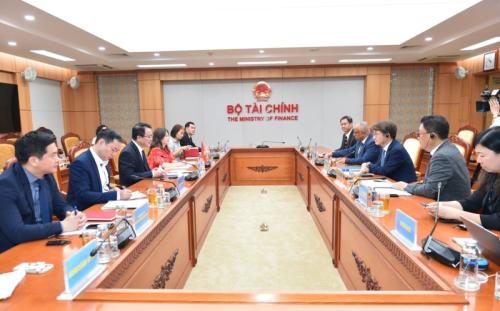
The plan was discussed during a meeting on June 15 in Hanoi between Deputy Minister of Finance Tran Quoc Phuong and Mr. Kim Dongil, Executive Director at ADB representing a constituency that includes Vietnam and some other Asian countries.

During the meeting, both sides reviewed future cooperation priorities, including budget support lending, large-scale infrastructure projects, and initiatives aimed at expanding ASEAN power grid connectivity.

According to ADB, the proposed project pipeline aligns with Vietnam’s key development priorities and is designed to support sustainable economic growth. The two sides agreed that future cooperation should focus on large-scale, high-impact projects capable of generating broad economic benefits rather than dispersing resources across smaller initiatives.

Deputy Minister Phuong noted that Vietnam’s financing needs remain substantial as the country pursues ambitious development goals. He emphasized that investment resources will be directed toward growth-driving sectors and regions with strong capacity to absorb capital effectively.

For his part, Mr. Kim Dongil reaffirmed ADB’s commitment to expanding its operations and financial support through 2030. He said the bank stands ready to assist Vietnam in achieving its socio-economic development objectives and expressed confidence that cooperation between the two sides will continue to deepen in the years ahead.


Automechanika 2026 highlights Việt Nam’s new energy vehicle boom

Automechanika 2026 highlights Việt Nam’s new energy vehicle boom

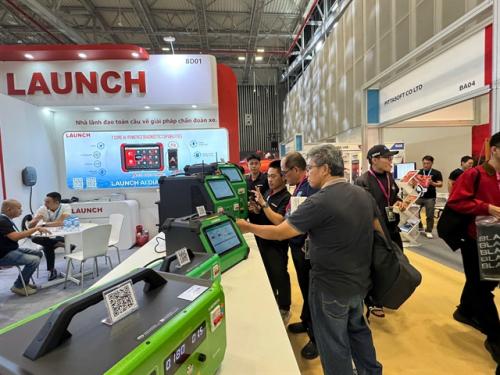
Over 400 businesses from 17 countries and regions have participated at the Automechanika HCM City 2026 exhibition on Thursday at HCM City’s Saigon Exhibition and Convention Center.

HCM CITY — Over 400 businesses from 17 countries and territories are participating at the Automechanika HCM City 2026 exhibition on Thursday at HCM City’s Saigon Exhibition and Convention Center, featuring the latest solutions and technologies across various sectors of the automotive industry.

The three-day event is co-organised by German based Messe Frankfurt Group, Chan Chao International Co Ltd and Yorkers Exhibition Service Vietnam.

The exhibited solutions and technologies cover various sectors, including parts & components, electrics & electronics, accessories & customising and others.

Key exhibitors at the event include leading carmakers from Việt Nam and China, as VinFast and BYD Oway, along with original equipment (OE) and aftermarket manufacturers and suppliers from Italy, Japan, Germany and Korea.

It also offers visitors an overview of the latest trends across the entire automotive value chain, including Việt Nam's rapidly growing new energy vehicle (NEV) market.

Fiona Chiew, general manager of Messe Frankfurt (HK) Ltd, said: “Việt Nam’s transition to EVs and hybrids is driving change for the domestic automotive sector, with both national and global carmakers making their impact on the market.”

According to the event organiser, EV and hybrid vehicle sales in Việt Nam reached 162,039 units in the first quarter of 2026, up over 36 percent year-on-year, creating expanding opportunities and challenges within the value chain.

The rapid growth of the electric and hybrid vehicle market is creating new demand for components, diagnostic equipment, charging infrastructure, repair services and technical workforce, while also opening up room for growth across the entire automotive supply chain.

She also mentioned that the event serves as a comprehensive platform for international and Vietnamese businesses to connect, share ideas and forge partnerships.

The event also provides visitors with numerous activities, including a Collision Repair Training Workshop, an Automotive Mobility Solutions Conference and B2B activities.


See all blog