Lumen Vietnam Fund

Blog

Government calls on business leaders to drive innovation and long-term growth

Government calls on business leaders to drive innovation and long-term growth

​Vietnamese entrepreneurs must dare to think big and establish long-term visions built on four core pillars including nurturing ambition, honing capacity, upholding responsibility, and pioneering innovation to master global value chains.

​

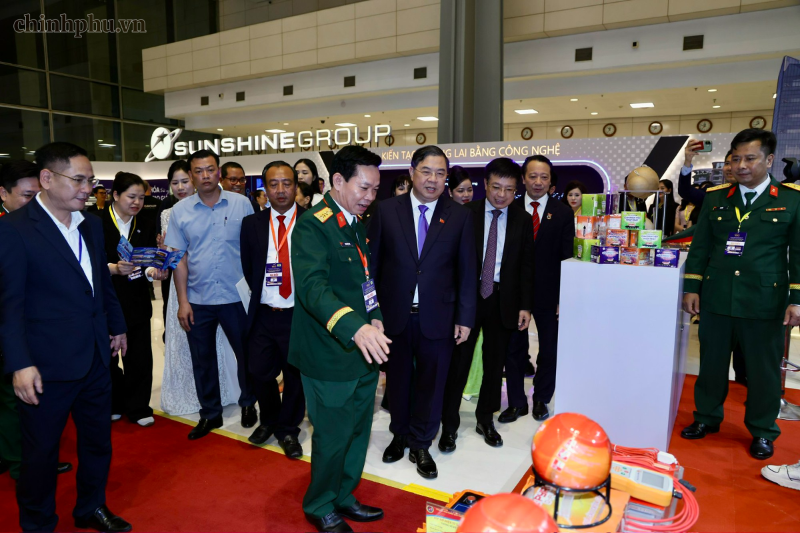
Speaking at the award ceremony honoring "The 2026 Outstanding Vietnamese Entrepreneurs - Thanh Giong Cup," held on October 11 to celebrate Vietnam Entrepreneurs’ Day (October 13), Standing Deputy Prime Minister Pham Gia Tuc stressed this imperative while congratulating 100 outstanding business leaders receiving the award.

He expressed deep appreciation for the persistent efforts and vital contributions of the business community to national socio-economic development, social welfare, and the international prestige of Vietnam.

Mr. Tuc stressed that the Thanh Giong Cup recognizes exceptional business achievements while promoting legitimate wealth creation, corporate ethics, business culture, and a spirit of service to the nation. Within the national economic structure, Party and State documents consistently confirm that enterprises form the core force and primary growth engine, reflecting the core principle that a strong economy requires strong enterprises, and business growth brings national prosperity, he said.

However, he also pointed out persistent bottlenecks within the corporate sector. According to the Standing Deputy Prime Minister, the number of large-scale enterprises capable of leading key industries remains limited, competitive capacity across sectors remains uneven, and integration between domestic firms and foreign direct investment enterprises remains weak.

Furthermore, he said, foreign value chain participation falls short of expectations, while barriers in accessing capital, land, technical infrastructure, technology, and high-quality human resources continue to present major challenges.

As 2026 marks the first year of the Five-Year Socio-Economic Development Plan (2026-2030), this foundational period will prove decisive for accelerated growth. To unlock social resources and transform the investment climate, he urged state management agencies to innovate their mindset and management approaches. Operational capacity must transition toward a constructive and service-oriented model centered on citizens and businesses, measuring performance through business community satisfaction, tangible results, and public trust, he added.

He assked government authorities across all levels to focus on three primary tasks.

First, agencies must perfect legal frameworks and build a transparent, equitable investment environment while resolving legal hurdles for enterprises.

Second, authorities need to establish proactive support mechanisms that help domestic businesses expand scale, enhance internal capacity, and strengthen supply chain integration.

Third, the government must create new growth drivers and development spaces for Vietnamese firms to expand confidently into regional and global markets.

Faced with strategic opportunities and fierce global challenges, the Standing Deputy Prime Minister outlined four strategic requirements for business leaders.

“Entrepreneurs must nurture greater ambition by aiming beyond domestic processing to build internationally recognized Vietnamese brands that master core technology and lead global value chains. They must hone capacity by prioritizing investment in science, technology, advanced management models, and human resources,” he said.

“Business leaders must also demonstrate higher social responsibility through strict legal compliance and sustainable job creation, while pioneering research and development, digital transformation, and green transitions as investments in long-term competitiveness.”

Source: Song Ha

Latest Posts

Vietnam’s electronics import surge reflects AI demand, production expansion

Vietnam’s electronics import surge reflects AI demand, production expansion

Vietnam’s merchandise imports rose 36.7% in the first nine months of 2026, significantly outpacing export growth as electronics companies increased component inventories and expanded production capacity.

The sharp rise in imports reflects the combined impact of investment cycles, input prices and Vietnam’s growing role in global electronics supply chains, including products related to artificial intelligence.

AI boom drives imports

Vietnam’s merchandise imports reached $453.72 billion in the nine-month period, up 36.7% from a year earlier, according to the National Statistics Office. Exports totalled $434.30 billion, a year-on-year increase of 24.5%, bringing total trade to $888.02 billion, up 30.4%.

The country recorded a merchandise trade deficit of $19.42 billion over the nine-month period, although it posted a surplus of $1.27 billion in September alone.

Foreign-invested enterprises generated $350.41 billion in exports, up 29.4% year-on-year and accounting for 80.7% of the national total. By contrast, exports by domestic companies reached $83.89 billion, rising just 7.5%. The figures indicate that export growth remains heavily concentrated in the foreign-invested sector.

On the import side, foreign-invested firms recorded $335.55 billion, up 42% year-on-year, while domestic businesses imported $118.17 billion, an increase of 23.5%. The gap in growth rates suggests that import demand among foreign-invested businesses, which make up a large share of electronics and high-tech manufacturing, is expanding faster than that of domestic enterprises.

According to the Ministry of Industry and Trade (MoIT), machinery, equipment, raw materials and fuels used in domestic production and export processing account for around 90.5% of total imports.

Pham Van Quan, deputy director of the ministry’s Industry Agency, said the trend should also be viewed in a positive light. He said additional equipment imports could reflect efforts to expand production lines, prepare manufacturing capacity, and meet peak consumer demand at the end of the year.

Investors have assessed Vietnam’s reforms by merging localities, ministries and agencies, improving institutions and cutting administrative procedures, as moving in a positive direction, Quan said.

As a result, they have confidently scaled up production, importing additional equipment and expanding production lines in preparation for the peak consumption season in the fourth quarter. This is a peak period for manufacturing businesses, he added.

Trinh Thu Hien, deputy director of the ministry’s Agency of Foreign Trade, identified three main factors behind the increase in imports, particularly in the electronics and semiconductor sectors.

The first is rising global raw material prices. She said prices of some chips and solid-state drives (SSDs) had increased by 300% to 500%. As a result, even if import volumes remained at the previous year’s level, the value of imports could still rise sharply because of higher prices.

Second, electronics companies are increasing inventories and stockpiling raw materials to meet demand for AI-related products. Some materials have become scarce, with supply shortages occurring at times, prompting certain factories and companies to extend inventory coverage from around six weeks to 12 weeks. Meanwhile, the inventory value of some businesses has risen from $100 million to $700 million.

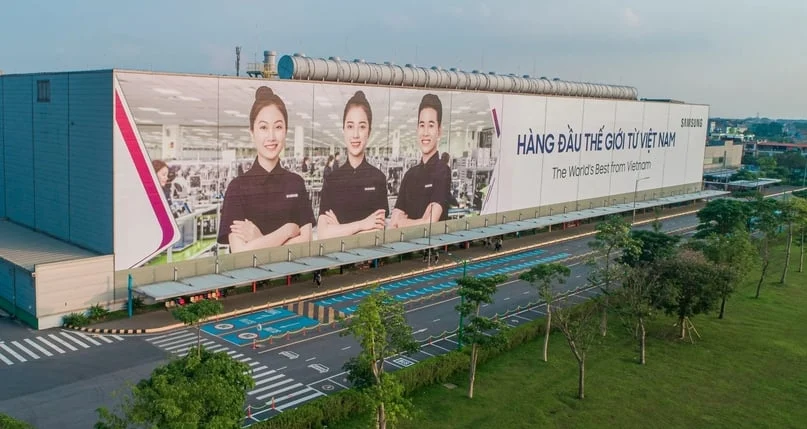
The third factor is production expansion by electronics and semiconductor companies. Hien cited Samsung’s increased investment in Thai Nguyen province, Intel’s relocation of a factory from Costa Rica to Vietnam, and BYD’s expansion and upgrading of its investment in Phu Tho province.

Vietnam benefits from AI supply chains, but domestic value added remains limited

The World Bank Group’s October 2026 East Asia and Pacific Economic Update said the wave of high-tech manufacturing and exports serving AI demand is supporting growth in several economies participating in global supply chains.

The WB raised its forecast for Vietnam’s GDP growth in 2026 by 1.1 percentage points from its previous projection to 7.4%. This was the largest upward revision among economies in Asia and the Pacific.
According to the report, in the 12 months ending in April 2026, six economies - China, Indonesia, Malaysia, the Philippines, Thailand and Vietnam - exported a combined $1.4 trillion worth of AI-related goods. Over the same period, the U.S. imported around $739 billion worth of these products, with approximately one-third originating in East Asia and the Pacific.

Vietnam’s exports of AI-related goods have more than doubled compared with the 2020-2022 average. The country primarily participates in downstream equipment assembly, with computers, servers and routers accounting for around 60% of its AI-related goods exports. A significant share of these exports serves final demand in the U.S.

However, export growth has been accompanied by substantial import demand. According to the WB, Vietnam’s imports grew faster than exports in 2026, partly because companies increased their inventories of electronics, semiconductor prices rose and fuel costs remained high.

This indicates that Vietnam’s technology manufacturing and exports remain closely linked to overseas supplies of components and raw materials.

Alongside the growth opportunities, the WB also highlighted risks if expectations for AI’s economic returns are not met, potentially triggering financial market adjustments and affecting investment.

Franziska Ohnsorge, WB chief economist for Asia, said Vietnam is deeply integrated into AI-related supply chains. If the trend of strong AI demand continues, Vietnam will have significant opportunities to benefit and sustain high growth. However, this is also a risk factor because if the AI trend reverses, Vietnam’s growth could be affected.

Despite strong growth in electronics trade, domestic value added remains limited. According to the government’s assessment in Notice No. 481/TB-VPCP dated September 14, 2026, Vietnam’s electronics industry remains heavily dependent on imported components, raw materials and technology, while domestic companies have limited participation in supply chains.

Following a meeting last month with the Vietnam Electronic Industries Association and several major electronics and semiconductor import-export companies, Standing Deputy Prime Minister Pham Gia Tuc instructed the Ministry of Industry and Trade to work with businesses reporting large gaps between import and export turnover, particularly those with substantial trade deficits. The aim is to clarify the structure and purpose of their imports and the extent to which these imports support production and exports.

The ministry was also tasked with reviewing the list of priority supporting-industry products for the electronics sector, focusing on components and materials with strong demand and potential for domestic production.

Another task is to develop a program to connect and develop Vietnamese suppliers for domestic and foreign electronics, semiconductor and technology firms, based on individual product supply chains, technical standards and business requirements.

At the same time, the government has called for stronger links between foreign-invested enterprises and domestic businesses, alongside support to help Vietnamese companies improve technological capabilities and quality management and participate in higher-value-added, technology-intensive stages of production.

At the MoIT’s regular press briefing, Hien, deputy director of the Agency of Foreign Trade, said the ministry’s measures focused on improving institutional and policy frameworks, developing markets and supporting businesses. In the longer term, the goal is to strengthen the capabilities of Vietnamese enterprises and increase the domestic value added of products manufactured in Vietnam.


Finance Ministry outlines inflation scenarios for 2026 at 4.5% and 4.8%

Finance Ministry outlines inflation scenarios for 2026 at 4.5% and 4.8%

Inflationary pressures are expected to persist in the final months of this year, with risks stemming from international energy markets, supply chain uncertainties, and rising public investment and consumer spending.

The Ministry of Finance has outlined two inflation scenarios for 2026, forecasting average consumer price index (CPI) growth of 4.5% and 4.8%, respectively.

According to the ministry's report presented at a meeting of the Price Management Steering Committee on October 9, price movements varied across the first three quarters of the year. Seasonal consumer demand, particularly during holidays and the Lunar New Year, alongside fluctuations in international fuel and raw material prices, significantly influenced domestic prices.

Deputy Minister of Finance Tran Quoc Phuong said global fuel and energy prices had risen sharply since March, while disruptions to transportation and logistics had pushed up input costs, putting additional pressure on domestic prices.

In the first nine months of 2026, average CPI increased 4.52% year on year, while core inflation rose 4.26%.

Inflationary pressures are expected to persist in the final months of the year. Risks stemming from international energy markets, supply chain uncertainties, and rising public investment and consumer spending towards year-end could complicate efforts to keep prices under control.

However, the impact may be partly offset by tax and fee exemptions and reductions, flexible monetary policy, abundant domestic food supplies and the recovery of production following natural disasters, Mr. Phuong said.

The Ministry of Finance’s two full-year inflation scenarios represent a reduction of 0.2 percentage points from its forecasts released in early September.

Meanwhile, the State Bank of Vietnam expects average CPI growth of between 4.5% and 5%, while forecasts from international organisations range from 4.2% to 5.5%.


​

Vietnam targets AI-powered productivity growth through embodied AI

Vietnam targets AI-powered productivity growth through embodied AI

Under the national AI strategy, Vietnam aims to build an AI economy accounting for about 6% of GDP, and achieve $5 billion in AI product exports.

Vietnam is positioning embodied artificial intelligence (AI) as a breakthrough tool to address labour shortages, improve workplace safety and enhance the quality of economic growth, a senior official said at the recent Vietnam Embodied AI Conference.
​

Speaking at the event, themed “A New Productivity Era of Embodied AI: Vietnam – A Southeast Asian Pillar”, Mr. Do Duc Thinh, Deputy Director of the National Innovation Centre (NIC), said Vietnam sees embodied AI as an important driver of productivity growth.

The application of automation in key industries, including electronics, textiles and garments, food processing, seaports and agriculture, is expected to contribute directly to the national target of raising labour productivity by 10–15% by 2030. It could also create opportunities for Vietnamese businesses to join global value chains in components, precision engineering, specialised chips and integrated software.

Vietnam has moved early to establish a legal framework for these technologies. Resolution No. 57-NQ/TW, issued in December 2024, identified science, technology and innovation as core national priorities.

The Law on Artificial Intelligence, effective from March 1, 2026, establishes a three-tier risk management system covering high-, medium- and low-risk AI. It also provides support for testing new models, data infrastructure and AI businesses.

Meanwhile, Decision No. 21/2026/QD-TTg added robotics and automation to the list of 10 strategic technology groups prioritised for development.

Under the national AI strategy, Vietnam aims to rank among Southeast Asia’s top three AI research hubs, build an AI economy accounting for about 6% of GDP, achieve $5 billion in AI product exports and develop eight Vietnamese-language AI models.

The country also plans to train 10,000 highly skilled AI workers, including 1,500 core-technology specialists, and establish at least 10 advanced AI training and research centres.

See all blog