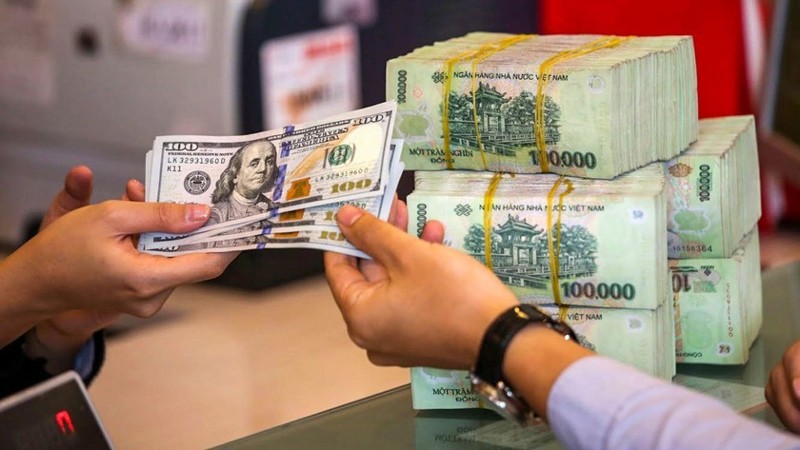
Vietnam’s merchandise imports rose 36.7% in the first nine months of 2026, significantly outpacing export growth as electronics companies increased component inventories and expanded production capacity.
The sharp rise in imports reflects the combined impact of investment cycles, input prices and Vietnam’s growing role in global electronics supply chains, including products related to artificial intelligence.
AI boom drives imports
Vietnam’s merchandise imports reached $453.72 billion in the nine-month period, up 36.7% from a year earlier, according to the National Statistics Office. Exports totalled $434.30 billion, a year-on-year increase of 24.5%, bringing total trade to $888.02 billion, up 30.4%.
The country recorded a merchandise trade deficit of $19.42 billion over the nine-month period, although it posted a surplus of $1.27 billion in September alone.
Foreign-invested enterprises generated $350.41 billion in exports, up 29.4% year-on-year and accounting for 80.7% of the national total. By contrast, exports by domestic companies reached $83.89 billion, rising just 7.5%. The figures indicate that export growth remains heavily concentrated in the foreign-invested sector.
On the import side, foreign-invested firms recorded $335.55 billion, up 42% year-on-year, while domestic businesses imported $118.17 billion, an increase of 23.5%. The gap in growth rates suggests that import demand among foreign-invested businesses, which make up a large share of electronics and high-tech manufacturing, is expanding faster than that of domestic enterprises.
According to the Ministry of Industry and Trade (MoIT), machinery, equipment, raw materials and fuels used in domestic production and export processing account for around 90.5% of total imports.
Pham Van Quan, deputy director of the ministry’s Industry Agency, said the trend should also be viewed in a positive light. He said additional equipment imports could reflect efforts to expand production lines, prepare manufacturing capacity, and meet peak consumer demand at the end of the year.

Investors have assessed Vietnam’s reforms by merging localities, ministries and agencies, improving institutions and cutting administrative procedures, as moving in a positive direction, Quan said.
As a result, they have confidently scaled up production, importing additional equipment and expanding production lines in preparation for the peak consumption season in the fourth quarter. This is a peak period for manufacturing businesses, he added.
Trinh Thu Hien, deputy director of the ministry’s Agency of Foreign Trade, identified three main factors behind the increase in imports, particularly in the electronics and semiconductor sectors.
The first is rising global raw material prices. She said prices of some chips and solid-state drives (SSDs) had increased by 300% to 500%. As a result, even if import volumes remained at the previous year’s level, the value of imports could still rise sharply because of higher prices.

Second, electronics companies are increasing inventories and stockpiling raw materials to meet demand for AI-related products. Some materials have become scarce, with supply shortages occurring at times, prompting certain factories and companies to extend inventory coverage from around six weeks to 12 weeks. Meanwhile, the inventory value of some businesses has risen from $100 million to $700 million.
The third factor is production expansion by electronics and semiconductor companies. Hien cited Samsung’s increased investment in Thai Nguyen province, Intel’s relocation of a factory from Costa Rica to Vietnam, and BYD’s expansion and upgrading of its investment in Phu Tho province.
Vietnam benefits from AI supply chains, but domestic value added remains limited
The World Bank Group’s October 2026 East Asia and Pacific Economic Update said the wave of high-tech manufacturing and exports serving AI demand is supporting growth in several economies participating in global supply chains.
The WB raised its forecast for Vietnam’s GDP growth in 2026 by 1.1 percentage points from its previous projection to 7.4%. This was the largest upward revision among economies in Asia and the Pacific.
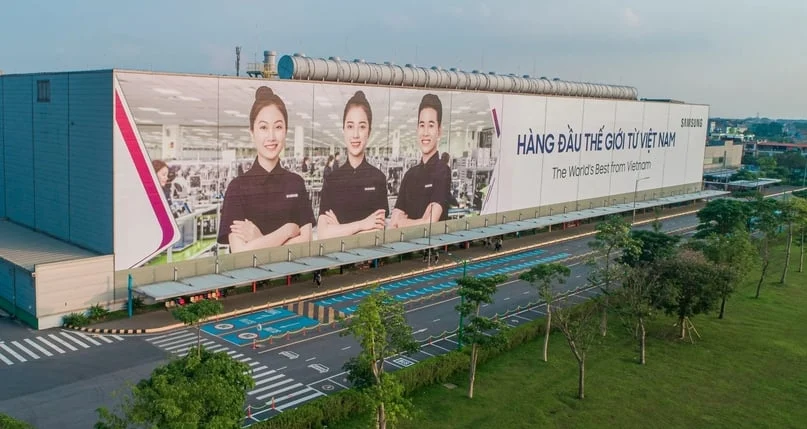
According to the report, in the 12 months ending in April 2026, six economies - China, Indonesia, Malaysia, the Philippines, Thailand and Vietnam - exported a combined $1.4 trillion worth of AI-related goods. Over the same period, the U.S. imported around $739 billion worth of these products, with approximately one-third originating in East Asia and the Pacific.
Vietnam’s exports of AI-related goods have more than doubled compared with the 2020-2022 average. The country primarily participates in downstream equipment assembly, with computers, servers and routers accounting for around 60% of its AI-related goods exports. A significant share of these exports serves final demand in the U.S.
However, export growth has been accompanied by substantial import demand. According to the WB, Vietnam’s imports grew faster than exports in 2026, partly because companies increased their inventories of electronics, semiconductor prices rose and fuel costs remained high.
This indicates that Vietnam’s technology manufacturing and exports remain closely linked to overseas supplies of components and raw materials.
Alongside the growth opportunities, the WB also highlighted risks if expectations for AI’s economic returns are not met, potentially triggering financial market adjustments and affecting investment.
Franziska Ohnsorge, WB chief economist for Asia, said Vietnam is deeply integrated into AI-related supply chains. If the trend of strong AI demand continues, Vietnam will have significant opportunities to benefit and sustain high growth. However, this is also a risk factor because if the AI trend reverses, Vietnam’s growth could be affected.
Despite strong growth in electronics trade, domestic value added remains limited. According to the government’s assessment in Notice No. 481/TB-VPCP dated September 14, 2026, Vietnam’s electronics industry remains heavily dependent on imported components, raw materials and technology, while domestic companies have limited participation in supply chains.
Following a meeting last month with the Vietnam Electronic Industries Association and several major electronics and semiconductor import-export companies, Standing Deputy Prime Minister Pham Gia Tuc instructed the Ministry of Industry and Trade to work with businesses reporting large gaps between import and export turnover, particularly those with substantial trade deficits. The aim is to clarify the structure and purpose of their imports and the extent to which these imports support production and exports.
The ministry was also tasked with reviewing the list of priority supporting-industry products for the electronics sector, focusing on components and materials with strong demand and potential for domestic production.
Another task is to develop a program to connect and develop Vietnamese suppliers for domestic and foreign electronics, semiconductor and technology firms, based on individual product supply chains, technical standards and business requirements.
At the same time, the government has called for stronger links between foreign-invested enterprises and domestic businesses, alongside support to help Vietnamese companies improve technological capabilities and quality management and participate in higher-value-added, technology-intensive stages of production.
At the MoIT’s regular press briefing, Hien, deputy director of the Agency of Foreign Trade, said the ministry’s measures focused on improving institutional and policy frameworks, developing markets and supporting businesses. In the longer term, the goal is to strengthen the capabilities of Vietnamese enterprises and increase the domestic value added of products manufactured in Vietnam.