Lumen Vietnam Fund

Blog

Draft proposal for signing Vietnam–EFTA free trade agreement completed

Draft proposal for signing Vietnam–EFTA free trade agreement completed

On tariffs, European Free Trade Association (EFTA) members have offered immediate liberalisation of more than 90% of tariff lines, representing 99.5% of Vietnam’s exports to the bloc.

The Vietnamese Ministry of Industry and Trade has completed a draft submission on signing a free trade agreement (FTA) between Vietnam and the European Free Trade Association (EFTA), which comprises Switzerland, Norway, Iceland and Liechtenstein.

The dossier has been sent to the Ministry of Justice for appraisal.

Negotiations for the Vietnam–EFTA FTA, known as VEFTA, began in 2012. After more than 14 years and 21 official negotiating rounds, the two sides have concluded negotiations on the agreement’s full content. The Ministry of Industry and Trade has now finalized the draft submission for the Government to consider the signing of the deal.

The proposed agreement covers trade in goods and services, investment, rules of origin, technical barriers to trade, sanitary and phytosanitary measures, trade facilitation, government procurement, intellectual property, competition, SMEs and sustainable development.

On tariffs, EFTA members have offered immediate liberalisation of more than 90% of tariff lines, representing 99.5% of Vietnam’s exports to the bloc. EFTA also commits to eliminating tariffs immediately on all industrial products, including seafood.

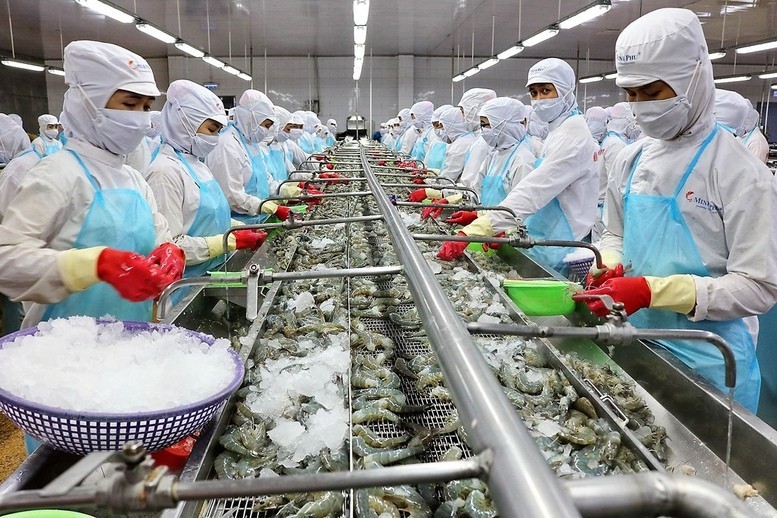
As a result, key Vietnamese exports such as textiles and garments, footwear, seafood, computers, electronic products and components, machinery and equipment would receive immediate tariff elimination. EFTA also offers tariff reductions for several major Vietnamese agricultural products, including rice, honey and fruit and vegetables.

Vietnam, meanwhile, has offered to eliminate tariffs on more than 86% of tariff lines, equivalent to 99.9% of imports from EFTA, either immediately or through reduction schedules ranging from three to 15 years.


Source: Đỗ Mến

Photo: VGP

Latest Posts

HCM City’s industrial production expands, nine-month figure estimated up 11.1%

HCM City’s industrial production expands, nine-month figure estimated up 11.1%

Ho Chi Minh City's industrial production index (IIP) through September 2026 is estimated to increase by 11.1% year-on-year, marking the highest level in the past three years, with the full-year figure projected to grow by 12.2%.

This growth stems notably from the chemical-pharmaceutical-rubber-plastics sector (up 15.6%) and key mechanical engineering (up 14.7%).

Despite persistent market hurdles, the city's IIP for the nine-month period is estimated to increase by 11.1% year-on-year, compared to a 6.9% rise in the same period of 2025. This represents the highest growth rate in three years. The full-year IIP for 2026 is set to expand by approximately 12.2%, up from 8.9% in 2025.

Within this growth performance, a notable highlight is the mechanical engineering sector, one of the city's key industrial pillars, which records a high growth rate, with the nine-month index estimated to soar by 14.7% and the full-year 2026 figure projected to reach 19.1%.

This strong expansion results from investment demand for machinery and equipment serving industrial production and construction, particularly public investment infrastructure projects.

Additionally, numerous enterprises have stepped up the adoption of automation and smart manufacturing, gradually integrating into the supply chains of FDI firms in the automotive, electronics, and industrial equipment sectors.

Alongside mechanical engineering, the chemical-pharmaceutical-rubber-plastics sector posts an estimated nine-month IIP surge of 15.6%. This shows the recovery of domestic and export demand for engineering plastics, packaging, production chemicals, and medical devices.

Nevertheless, this sector depends heavily on imported raw materials and faces rising pressure from circular economy requirements, carbon emission reduction, extended producer responsibility (EPR), and traceability.

According to businesses, to achieve the target of double-digit industrial growth for the full year, Ho Chi Minh City must focus on promptly resolving difficulties regarding orders and raw material supply, lowering input costs, and ensuring stable power supply for production.

To support businesses, it has planned to build enterprise linkage chains by industry clusters, value chains, and supply chains across the area.

The Ho Chi Minh City Department of Industry and Trade organized the 2026 supporting industry supplier matchmaking conference, enabling domestic enterprises to connect with major manufacturing conglomerates, secure orders, and upgrade their capacity to meet supply chain requirements.


Billions of dollars flow into industrial and hi-tech parks in HCMC

Billions of dollars flow into industrial and hi-tech parks in HCMC

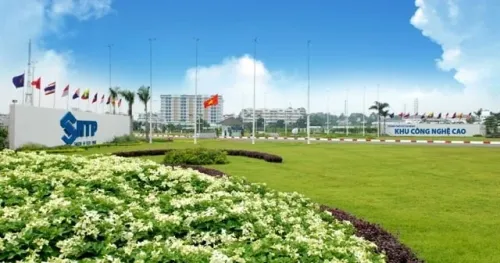
As foreign direct investment (FDI) into Ho Chi Minh City continues to grow strongly, its industrial parks and hi-tech park are attracting a growing number of large-scale projects focused on data centers, artificial intelligence, high-tech manufacturing and digital infrastructure.

Investment attraction at the city's export processing zones (EPZs), industrial parks (IPs) and Saigon Hi-Tech Park (SHTP) continued to see a number of large-scale projects in the first nine months of the year. New investment is increasingly flowing into areas linked to digital infrastructure, data centers, AI and high-tech manufacturing.

Total domestic and foreign investment attracted to the EPZs and IPs reached about $5.7 billion in the nine-month period, equivalent to 131.15% of the full-year target and up 29.13% from the same period in 2025. FDI alone reached $4.27 billion, up 62.22% year-on-year.

The Ho Chi Minh City Export and Industrial Zones Authority (HEPZA) has licensed 100 new projects with total registered capital of $3.14 billion, while 120 existing projects registered capital increases totalling $1.13 billion.

One of the most notable projects is a $2.1 billion FDI data center project at Tan Phu Trung Industrial Park, aimed at developing high-performance computing infrastructure for AI and big-data processing.

HEPZA said the project could generate demand for digital infrastructure, energy, telecommunications, technology services and highly skilled workers. It also reflects a broader trend of investment becoming increasingly linked to infrastructure supporting the digital economy.

Meanwhile, the Vinh Lap Industrial Park Phase 1 project was approved by the HCMC People's Committee, including approval of the investor, with an area of 497.19 hectares and registered capital of $379.69 million.

The project is planned as a multi-sector industrial park, with a focus on attracting high-tech industries and the potential to develop into a green, circular industrial park. It is also included in HCMC's list of projects targeted for investment attraction during 2026-2030.

Hi-tech park draws investment into new links of technology ecosystem

At SHTP, the management board issued new investment registration certificates for four projects with total registered capital of $1.23 billion in the first nine months, reaching 87.9% of its full-year target for new investment.

Two of the projects were FDI projects with combined capital of $589.785 million. Five others registered capital increases totalling $57.52 million.

The largest was the Evolution hyperscale wholesale data center, with registered capital of $508.785 million. It was the largest FDI project licensed at SHTP during the first nine months.

Another project, Techtronic Tools Vietnam's factory, has registered capital of $81 million and will focus on manufacturing smart electronic equipment.

SHTP said one project would strengthen infrastructure capacity for digital activities, while the other would expand high-tech manufacturing and create demand for links with local suppliers.
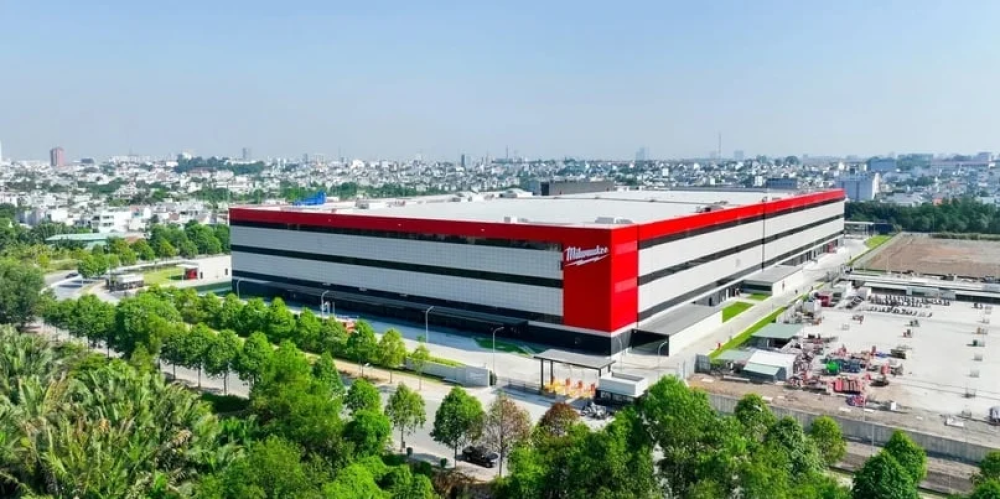
Also licensed this year was the Starmason hyperscale data center complex, backed by a domestic investor, with registered capital of about $480.262 million. Meanwhile, Tam Anh High-Tech Center has registered capital of $160 million, adding a new direction in high-tech services related to biomedical sciences.

SHTP said the projects, once implemented and brought into operation as scheduled, could generate additional demand for technology services, highly skilled workers and business linkages, helping develop the science, technology and digital transformation ecosystem. Their specific contribution to economic growth, however, will need to be assessed based on actual operating results.

Moving towards a technology ecosystem

Investment at SHTP is also continuing to expand beyond new projects. As of the end of September, the hi-tech park had 165 valid projects with total registered capital equivalent to over $13.86 billion. FDI projects accounted for 57 of them, with combined registered capital of more than $11 billion, or about 79.4% of the total.

Investors including Intel, Samsung, TTI, Nipro, Jabil and Nidec have a presence at the park, providing a foundation for SHTP to attract further high-tech projects, strengthen supply-chain linkages and expand opportunities for domestic companies to participate.

In the third quarter, SHTP met with 32 delegations from domestic and foreign businesses, international organizations and industry associations to introduce its investment environment, assess investor needs and explore cooperation opportunities in strategic technology fields.

SHTP said it was also reviewing its land bank and infrastructure conditions and finalizing a list of new projects for investment attraction. A key focus is attracting investors to participate in HCMC's Strategic Technology Development Center, with priority areas including AI, data centers, semiconductor chips and digital technologies.

With its nine-month results, SHTP needs about $170 million more to reach its target of $1.4 billion in newly registered investment capital for 2026. Average registered capital per project stood at about $307.5 million, above the target of $25 million per project. The goal of attracting at least one project with capital of more than $500 million has also been met with the Evolution project.

At the EPZs and IPs, HEPZA said nine-month investment attraction had already exceeded the full-year target. In the fourth quarter, the authority will focus on supporting approved projects and resolving bottlenecks to accelerate their implementation, while approaching strategic investors.

Future investment attraction will focus on high technology, core technologies, research and development, innovation and projects capable of creating supply-chain linkages with domestic businesses, HEPZA said.

The scale of investment is not the only notable feature of FDI flows into HCMC's industrial and hi-tech parks. Projects linked to data, AI, digital infrastructure and high technology are becoming increasingly prominent, reflecting areas that park authorities have identified as priorities for future investment attraction.


Textile and garment sector targets US$47-47.5 billion export revenue for 2026

Textile and garment sector targets US$47-47.5 billion export revenue for 2026

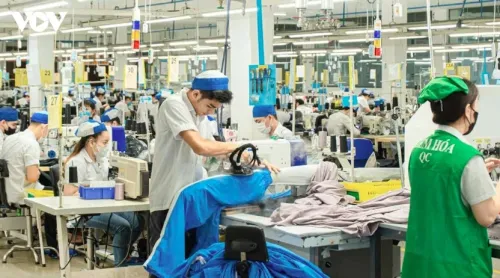
Vietnam’s textile and garment industry is targeting full-year export revenues between US$47 billion and US$47.5 billion in 2026 thanks to steady growth momentum and sufficient order volumes through the end of the year.

During the first eight months of the year, the sector generated US$32 billion in export revenue, marking a 3% year-on-year increase, according to the Vietnam Textile and Apparel Association (Vitas).

Preliminary data through September 15 showed total turnover of US$33.66 billion, comprising US$28.4 billion from garments, US$3.37 billion from yarns, and US$1.85 billion from raw materials and accessories.

Vitas Chairman Vu Duc Giang attributed the milestone to the sector's resilience amid global market fluctuations, boosted by three strategic pillars.

First, the industry has comprehensively diversified markets and products, with Vietnamese goods now reaching 137 countries and territories.

The US remains the primary export destination, accounting for roughly 40% of market share, followed by the EU, the Republic of Korea (RoK), Japan, China, ASEAN, and emerging markets in the Middle East and Africa.

Second, companies have accelerated the adoption of technology, automation, and AI in management and production to optimize operational efficiency. Third, enhanced supply chain integration has stepped up stronger cooperation across domestic enterprises.

Apart from diversification and technology, flexibility is seen as a core advantage, with Vitas affirming that domestic producers are fully prepared to handle short-lead, small-batch orders with high quality standards.

With enterprises actively negotiating agreements for early 2027 alongside their current production schedules, the path toward the yearly target is well-supported.

However, Vitas noted that the sector faces numerous challenges, including shifting trade policies and increasingly stringent environmental, labor, and sustainability requirements in major importing markets, thus requiring domestic producers to actively adapt to sustain growth in the time to come.


See all blog