Lumen Vietnam Fund

Blog

Central Vietnam province Quang Tri adjusts two wind power projects worth nearly $140 mln

Central Vietnam province Quang Tri adjusts two wind power projects worth nearly $140 mln

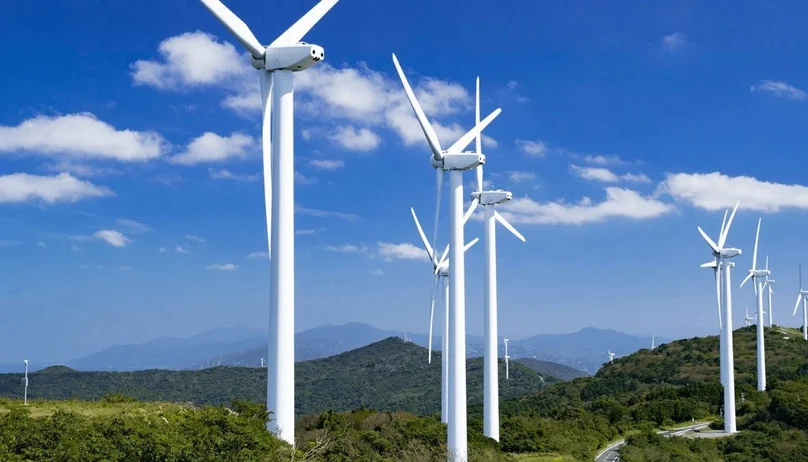
Quang Tri province authorities have approved adjustments to the investment plans and investors for the TNC Quang Tri 1 and 2 wind power plant projects, with a combined capacity of 100 MW and total investment capital after the adjustments exceeding VND3.63 trillion ($139.97 million).

Under the adjustment decision issued by the provincial People’s Committee, TNC Quang Tri 1 Wind Power JSC is the investor of the TNC Quang Tri 1 Wind Power Plant, which has a capacity of 50 MW and is expected to generate about 128.48 million kWh of electricity annually.

The project will use about 32.5 hectares of land, including 17.5 ha of land allocated for a fixed term and 15 ha for temporary use. Total investment capital has been increased to VND1.81 trillion ($69.77 million), including VND362 billion contributed by the developer and nearly VND1.45 trillion in mobilized capital.

TNC Quang Tri 2 Wind Power Joint Stock Company is the investor of the TNC Quang Tri 2 Wind Power Plant, which has a capacity of 50 MW and is expected to generate 128.83 million kWh of electricity annually.

The project will also use about 32.5 hectares of land, with total investment capital after the adjustment set at VND1.821 trillion ($70.2 million), including VND364.2 billion in investor-contributed capital and nearly VND1.46 trillion in mobilized capital.

The two projects have a combined expected annual electricity output of about 257.31 million kWh.

Quang Tri initially gave in-principle approvals to both projects in 2020, with adjustments made in July 2022 and September 2025.

Under the initial investment plan, TNC Quang Tri 1 had a capacity of 50 MW and was expected to use 22.37 hectares of land, including 17.37 hectares of land for fixed-term use and 5 hectares for temporary use, with total investment capital of more than VND1.805 trillion ($69.6 million).

Meanwhile, TNC Quang Tri 2 also has a capacity of 50 MW, with a planned land area of 22.37 hectares, including 17.37 hectares of land for fixed-term use and 5 hectares for temporary use. The project's initial total investment was more than VND1.167 trillion ($44.99 million).

Following several adjustments, total investment capital for TNC Quang Tri 1 and 2 increased to VND1.81 trillion ($69.77 million) and VND1.821 trillion ($70.2 million), respectively.

At the same time, the planned land area for each project increased from 22.37 hectares to 32.5 hectares, mainly due to an increase in temporary land use from 5 hectares to 15 hectares.

Previously, in July 2026, Quang Tri province also adjusted the investment plan for the SCI Tan Thanh Wind Power Plant, invested by SCI Quang Tri JSC. The project's investment capital was increased to VND1.83 trillion ($70.58 million), while its capacity was raised from 30 MW to 42 MW and its scheduled operation was pushed back to the end of 2027.

Beyond delays, the investor selection process has also exposed several shortcomings. The Quang Tri provincial Inspectorate said 13 of 14 wind power projects had their requests for expressions of interest approved without sufficient legal grounds regarding land, while five projects lacked detailed planning schemes or zoning plans at a scale of 1:2,000 at the time of approval.

Some dossiers also applied investor experience criteria that were not in line with regulations, potentially affecting competition and transparency.

However, the provincial Inspectorate assessed that the projects were consistent with the Power Development Plan VIII and other relevant planning schemes, and found no signs of policy abuse or serious violations by the investors.

It recommended that relevant agencies draw lessons from the issue and review applicable regulations to ensure that energy projects are implemented in accordance with the required procedures in the future.


Source: Dinh Duy, Minh Hue
Latest Posts

Ministry clarifies proposal to ease conditions for foreign investors

Ministry clarifies proposal to ease conditions for foreign investors

The Ministry of Finance (MoF) is seeking comments on a draft amendment to the Investment Law, which proposes easing market access conditions for foreign investors.

The Ministry of Finance (MoF) is seeking comments on a draft amendment to the Investment Law, which proposes easing market access conditions for foreign investors.

During the consultation process, the proposal has received feedback from various ministries, agencies and businesses. Many have suggested that consideration be given to regulations governing sectors in which foreign investors would be permitted to own up to 100% of charter capital.

The State Bank of Vietnam (SBV) said that allowing 100% foreign ownership in sectors such as financial services, accounting, auditing and travel agency services would mean that foreign capital inflows and outflows would be larger and more sensitive to global interest rate and exchange rate movements, thereby increasing the risk of capital-flow reversals.

In response, the MoF said that, among the 91 conditional market-access sectors and subsectors, 10 currently only require the establishment of a joint venture but do not impose any foreign ownership cap. This means foreign investors are already entitled to own up to 99.9% of charter capital in these sectors.

Therefore, removing the joint-venture requirement would not materially change the scale of foreign capital flows into these sectors. Instead, it would primarily remove barriers to market access and reduce compliance costs, in line with the tasks set out in the Politburo's Resolution No. 10-NQ/TW and the Prime Minister's Decision No. 2014/QD-TTg dated September 12, 2026.

According to the Ministry of Finance, Clause 3a of Article 8 of the revised draft has also been amended to establish a general principle.

It stipulates: “Based on socio-economic conditions and State management requirements in each period, the Government shall consider and decide on the relaxation of market access conditions in sectors and industries subject to restricted market access for foreign investors as provided for in laws and resolutions of the National Assembly, ordinances and resolutions of the Standing Committee of the National Assembly, Government decrees and international investment treaties, ensuring publicity, transparency, consistent application and non-discrimination among investors.”

Compared with the first draft, the MoF has therefore removed the provision specifying “100% foreign ownership” of foreign investors.

For sectors in the finance and banking fields, the MoF said that any consideration of easing market access conditions, if applicable, must involve consultation with the SBV in its capacity as the sectoral regulator. It must also be subject to a comprehensive impact assessment, including its potential effects on the scale and structure of capital flows and on financial-system safety.

The ministry has asked the SBV to coordinate during the drafting of the detailed implementing decree.

Safeguards to prevent discretionary application

Commenting on the draft amended law, the Ministry of Industry and Trade proposed adding principles and criteria to prevent discretionary application of the provisions.

The Vietnam Association of Foreign-Invested Enterprises (VAFIE) also proposed making it clear that the Government may only make decisions based on a published list of sectors and a set of criteria. Any decision should clearly state its legal basis, scope, duration and conditions, and should be published on the National Single Window for Investment and subject to periodic review.

According to VAFIE, such a mechanism would allow Vietnam to pursue selective market opening while eliminating the potential for a “request-and-grant” mechanism.

The MoF said that, following revisions, Clause 3a of Article 8 of the draft law no longer refers to the concepts of “strategic investment projects with major impacts on socio-economic development” or “other projects.”

Instead, the relaxation of market access conditions would be determined on a sector-by-sector basis, regardless of whether a project is identified as strategic.

According to the ministry, the revised draft has established multiple layers of safeguards to eliminate the risk of discretionary application.

The draft law dossier has now been submitted to the Ministry of Justice for appraisal.


Market upgrade opens door to long-term global investment: VinaCapital CEO

Market upgrade opens door to long-term global investment: VinaCapital CEO

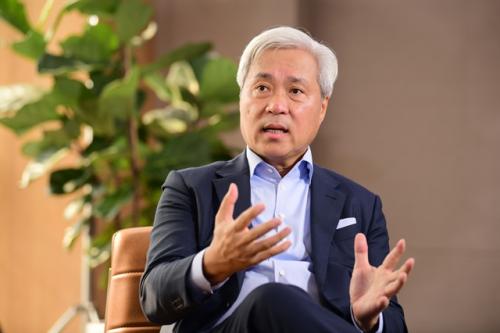
Don Lam, CEO and founding partner of VinaCapital, discusses Việt Nam’s stock market upgrade, the reforms needed to retain global institutional investors and the role of long-term capital in helping domestic companies become regional leaders.

Don Lam, CEO and founding partner of VinaCapital, spoke to Việt Nam News after receiving the 11th ASEAN Entrepreneurs Award at the World Knowledge Forum 2026 in Seoul. He discusses Việt Nam’s stock market upgrade, the reforms needed to retain global institutional investors and the role of long-term capital in helping domestic companies become regional leaders.

FTSE Russell has confirmed that Việt Nam will be reclassified from frontier to secondary emerging market status from September 21. From an investor’s perspective, how significant is this change, and what could it mean for international capital flows into Việt Nam?

This is a significant milestone for Việt Nam’s capital market, reflecting years of progress in accessibility, regulatory standards, trading infrastructure and transparency. More importantly, it is validation from the international investment community of the reforms Việt Nam has undertaken in recent years.

From an investor’s perspective, the biggest impact may not be immediate capital inflows, but the broadening of Việt Nam’s investor base. As a secondary emerging market, Việt Nam becomes investable for a much larger pool of global institutional investors and funds that previously could not or would not invest in frontier markets. This will raise Việt Nam’s profile in global asset allocation and strengthen its position in international capital markets.

Additional inflows, both passive and active, are likely over time. But the longer-term opportunity is to attract a more diverse and stable investor base. This can deepen liquidity, strengthen market resilience and support more efficient valuations for high-quality Vietnamese companies. Ultimately, we see the upgrade not as an end destination, but as a new starting point for the continued development of Việt Nam’s capital market.

An upgrade in market classification can attract attention and passive capital, but keeping investors for the long term is a different challenge. What does Việt Nam still need to improve to become a more attractive market for global institutional investors?

The upgrade is an important milestone, but the real challenge is turning greater international interest into sustained, long-term institutional investment. For that, Việt Nam needs to keep improving the factors that make a market that is not only accessible but investable over the long term.

First is predictability. Global institutions need confidence in transparency, disclosure, investor protection and consistent policy implementation. A clear and stable regulatory framework is essential for long-term capital.

Second, Việt Nam needs greater market depth and liquidity. This means a broader pool of high-quality listed companies, more diversified investment products and stronger domestic institutional participation. A deeper market gives global investors more opportunities to allocate capital at scale and stay invested through market cycles.

Finally, Việt Nam needs more companies that meet global standards of governance, transparency and sustainable growth. Ultimately, institutional investors are looking for businesses they can invest in for the long term, not simply a market they can enter.

The FTSE Russell upgrade opens the door. The next step is to make Việt Nam a market where global institutions want to stay.

After more than three decades working in Việt Nam, what makes you most optimistic about the country’s next stage of development?

Việt Nam is entering a new stage of development, one increasingly driven by productivity, technology, innovation and a stronger private sector.

The country has built a solid foundation: macroeconomic stability, a resilient manufacturing base, rising domestic consumption and deepening integration with the global economy. At the same time, regulatory reforms are improving transparency and predictability, while greater policy emphasis on science, technology, innovation and private sector development is creating new engines of growth.

Việt Nam’s stock market upgrade and the development of the Việt Nam International Financial Centre are also important signals of the country’s ambition to deepen its capital markets and strengthen its financial infrastructure.

Together with continued investment in infrastructure and a strong network of free trade agreements, these developments point to a more productivity- and innovation-led growth model. That, in my view, creates a strong foundation for sustainable growth and long-term investment.

Việt Nam has a rapidly expanding private sector, but many domestic companies still struggle to access long-term capital. What needs to change to help Vietnamese businesses scale up and compete regionally?

To help Vietnamese businesses scale up and compete regionally, businesses need better access to long-term equity capital, while also becoming more investment ready. Heavy reliance on bank financing, particularly short-term funding, can limit their ability to invest and grow over the long term. A deeper equity market and stronger institutional investor base would provide more flexible and sustainable sources of capital.

At the same time, stronger governance, greater financial transparency, professional management and a clear long-term strategy are essential for companies to attract institutional capital and compete at scale. Việt Nam also needs more consolidation and M&As to help businesses build scale, strengthen capabilities and gain access to technology and regional markets.

This is where investment funds can play an important role. For more than two decades, VinaCapital has provided long-term capital to Vietnamese businesses while working alongside them to strengthen governance, improve operations, pursue growth opportunities and connect with international partners.

Ultimately, helping Vietnamese businesses scale is about more than raising capital. It is about building companies with the scale, capabilities and governance to compete effectively and become regional leaders.

As this year’s ASEAN Entrepreneurs Award recipient, what do you think still needs to change within ASEAN to make it easier for home-grown companies to scale across borders and become truly regional businesses?

ASEAN's diversity is both a strength and a challenge. Each market has its own regulations, business culture and consumer preferences, so companies cannot simply replicate a successful model from one country to another. To build truly regional businesses, entrepreneurs need the time, capital and flexibility to adapt their strategy to each local market.


Vietnam seeks effective, substantive ties with Saudi Arabia

Vietnam seeks effective, substantive ties with Saudi Arabia

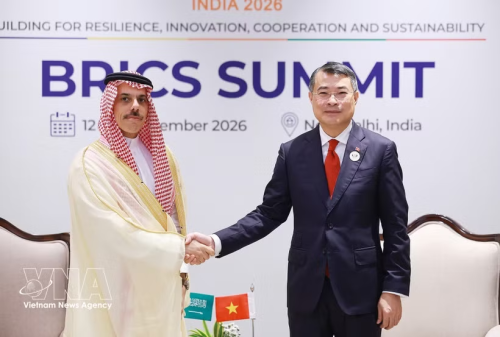
Affirming that Saudi Arabia is one of Vietnam’s most important partners in the Middle East, PM Hung expressed his pleasure at the positive development of bilateral relations in recent years, and voiced his wish to work with Saudi Arabia to further develop the bilateral relationship in a more effective and substantive manner, for the benefit of the two countries' people.

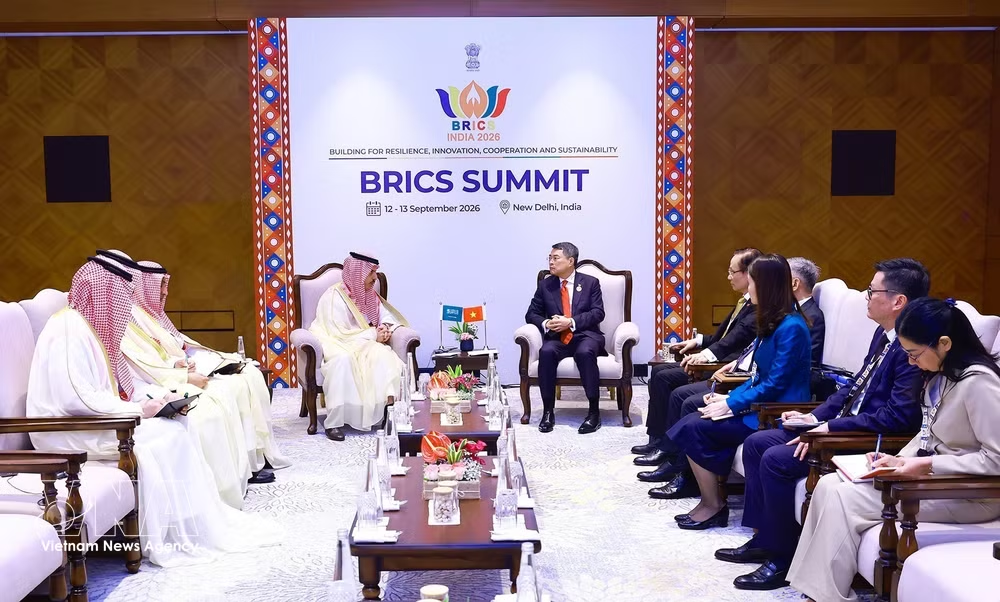
New Delhi (VNA) – Prime Minister Le Minh Hung received Saudi Arabian Minister Foreign Affairs Prince Faisal bin Farhan Al Saud on September 13 on the sidelines of the 18th BRICS Summit in New Delhi, India.

The PM congratulated Saudi Arabia on its achievements in political, socio-economic and other fields, which have helped enhance the country’s role and position in the region and the world. He conveyed greetings from General Secretary of the Communist Party of Vietnam Central Committee and President To Lam’s greetings and invitation to King Salman bin Abdulaziz Al Saud to pay a visit to Vietnam at an early date.

Affirming that Saudi Arabia is one of Vietnam’s most important partners in the Middle East, PM Hung expressed his pleasure at the positive development of bilateral relations in recent years, and voiced his wish to work with Saudi Arabia to further develop the bilateral relationship in a more effective and substantive manner, for the benefit of the two countries' people.

Prince Faisal bin Farhan Al Saud, head of the Saudi Arabian delegation to the summit, said that he is impressed by Vietnam’s development achievements. He noted that although bilateral relations have made important strides, they have yet to match the potential and strengths of the two countries. Prince Faisal affirmed that Saudi Arabia attaches importance to Vietnam’s role and wishes to further develop bilateral ties in a more substantive and effective manner.

​PM Hung proposed that the two countries continue to strengthen political trust through exchanges of delegations at all levels, particularly high-level visits, and step up energy cooperation. Vietnam supports Saudi Arabia’s proposal to establish a bilateral working group to discuss in detail cooperation in energy reserves and specific joint projects.

The PM also called on the two sides to promote trade cooperation and market opening, and asked Saudi Arabia to lift its temporary suspension of imports of Vietnam’s farmed seafood, support Vietnam in developing its Halal industry, and increase investment in Vietnam in such fields as energy, technology and infrastructure.

Strongly agreeing with the directions put forward by the Vietnamese leader, Prince Faisal bin Farhan Al Saud pledged that he will immediately coordinate with the Vietnamese Ministry of Foreign Affairs and relevant Saudi Arabian agencies to translate these orientations into practical outcomes.

He added that he will coordinate with his country’s Ministry of Energy to soon discuss energy cooperation with Vietnam, and proposed that the two governments facilitate stronger direct connectivity between their businesses.

See all blog