Lumen Vietnam Fund

Blog

Vietnam seeks effective, substantive ties with Saudi Arabia

Vietnam seeks effective, substantive ties with Saudi Arabia

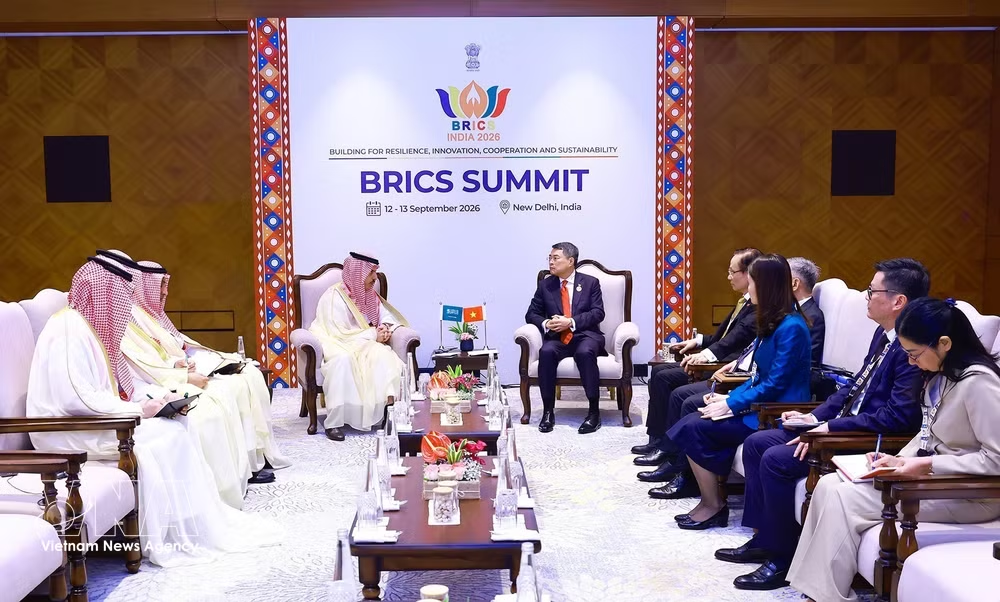
Affirming that Saudi Arabia is one of Vietnam’s most important partners in the Middle East, PM Hung expressed his pleasure at the positive development of bilateral relations in recent years, and voiced his wish to work with Saudi Arabia to further develop the bilateral relationship in a more effective and substantive manner, for the benefit of the two countries' people.

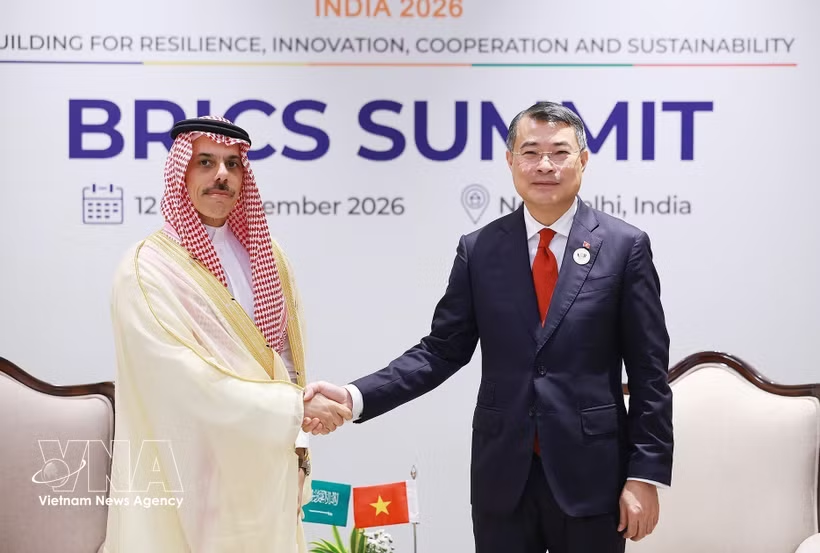
New Delhi (VNA) – Prime Minister Le Minh Hung received Saudi Arabian Minister Foreign Affairs Prince Faisal bin Farhan Al Saud on September 13 on the sidelines of the 18th BRICS Summit in New Delhi, India.

The PM congratulated Saudi Arabia on its achievements in political, socio-economic and other fields, which have helped enhance the country’s role and position in the region and the world. He conveyed greetings from General Secretary of the Communist Party of Vietnam Central Committee and President To Lam’s greetings and invitation to King Salman bin Abdulaziz Al Saud to pay a visit to Vietnam at an early date.

Affirming that Saudi Arabia is one of Vietnam’s most important partners in the Middle East, PM Hung expressed his pleasure at the positive development of bilateral relations in recent years, and voiced his wish to work with Saudi Arabia to further develop the bilateral relationship in a more effective and substantive manner, for the benefit of the two countries' people.

Prince Faisal bin Farhan Al Saud, head of the Saudi Arabian delegation to the summit, said that he is impressed by Vietnam’s development achievements. He noted that although bilateral relations have made important strides, they have yet to match the potential and strengths of the two countries. Prince Faisal affirmed that Saudi Arabia attaches importance to Vietnam’s role and wishes to further develop bilateral ties in a more substantive and effective manner.

​PM Hung proposed that the two countries continue to strengthen political trust through exchanges of delegations at all levels, particularly high-level visits, and step up energy cooperation. Vietnam supports Saudi Arabia’s proposal to establish a bilateral working group to discuss in detail cooperation in energy reserves and specific joint projects.

The PM also called on the two sides to promote trade cooperation and market opening, and asked Saudi Arabia to lift its temporary suspension of imports of Vietnam’s farmed seafood, support Vietnam in developing its Halal industry, and increase investment in Vietnam in such fields as energy, technology and infrastructure.

Strongly agreeing with the directions put forward by the Vietnamese leader, Prince Faisal bin Farhan Al Saud pledged that he will immediately coordinate with the Vietnamese Ministry of Foreign Affairs and relevant Saudi Arabian agencies to translate these orientations into practical outcomes.

He added that he will coordinate with his country’s Ministry of Energy to soon discuss energy cooperation with Vietnam, and proposed that the two governments facilitate stronger direct connectivity between their businesses.

Source: VNA

Photo: VNA

Latest Posts

Market upgrade opens door to long-term global investment: VinaCapital CEO

Market upgrade opens door to long-term global investment: VinaCapital CEO

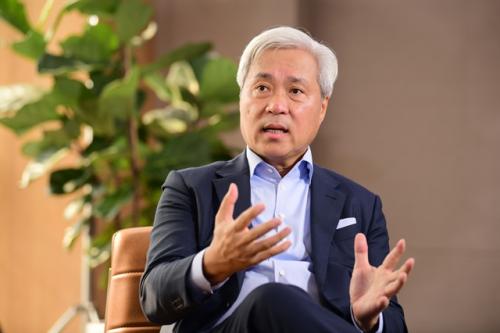
Don Lam, CEO and founding partner of VinaCapital, discusses Việt Nam’s stock market upgrade, the reforms needed to retain global institutional investors and the role of long-term capital in helping domestic companies become regional leaders.

Don Lam, CEO and founding partner of VinaCapital, spoke to Việt Nam News after receiving the 11th ASEAN Entrepreneurs Award at the World Knowledge Forum 2026 in Seoul. He discusses Việt Nam’s stock market upgrade, the reforms needed to retain global institutional investors and the role of long-term capital in helping domestic companies become regional leaders.

FTSE Russell has confirmed that Việt Nam will be reclassified from frontier to secondary emerging market status from September 21. From an investor’s perspective, how significant is this change, and what could it mean for international capital flows into Việt Nam?

This is a significant milestone for Việt Nam’s capital market, reflecting years of progress in accessibility, regulatory standards, trading infrastructure and transparency. More importantly, it is validation from the international investment community of the reforms Việt Nam has undertaken in recent years.

From an investor’s perspective, the biggest impact may not be immediate capital inflows, but the broadening of Việt Nam’s investor base. As a secondary emerging market, Việt Nam becomes investable for a much larger pool of global institutional investors and funds that previously could not or would not invest in frontier markets. This will raise Việt Nam’s profile in global asset allocation and strengthen its position in international capital markets.

Additional inflows, both passive and active, are likely over time. But the longer-term opportunity is to attract a more diverse and stable investor base. This can deepen liquidity, strengthen market resilience and support more efficient valuations for high-quality Vietnamese companies. Ultimately, we see the upgrade not as an end destination, but as a new starting point for the continued development of Việt Nam’s capital market.

An upgrade in market classification can attract attention and passive capital, but keeping investors for the long term is a different challenge. What does Việt Nam still need to improve to become a more attractive market for global institutional investors?

The upgrade is an important milestone, but the real challenge is turning greater international interest into sustained, long-term institutional investment. For that, Việt Nam needs to keep improving the factors that make a market that is not only accessible but investable over the long term.

First is predictability. Global institutions need confidence in transparency, disclosure, investor protection and consistent policy implementation. A clear and stable regulatory framework is essential for long-term capital.

Second, Việt Nam needs greater market depth and liquidity. This means a broader pool of high-quality listed companies, more diversified investment products and stronger domestic institutional participation. A deeper market gives global investors more opportunities to allocate capital at scale and stay invested through market cycles.

Finally, Việt Nam needs more companies that meet global standards of governance, transparency and sustainable growth. Ultimately, institutional investors are looking for businesses they can invest in for the long term, not simply a market they can enter.

The FTSE Russell upgrade opens the door. The next step is to make Việt Nam a market where global institutions want to stay.

After more than three decades working in Việt Nam, what makes you most optimistic about the country’s next stage of development?

Việt Nam is entering a new stage of development, one increasingly driven by productivity, technology, innovation and a stronger private sector.

The country has built a solid foundation: macroeconomic stability, a resilient manufacturing base, rising domestic consumption and deepening integration with the global economy. At the same time, regulatory reforms are improving transparency and predictability, while greater policy emphasis on science, technology, innovation and private sector development is creating new engines of growth.

Việt Nam’s stock market upgrade and the development of the Việt Nam International Financial Centre are also important signals of the country’s ambition to deepen its capital markets and strengthen its financial infrastructure.

Together with continued investment in infrastructure and a strong network of free trade agreements, these developments point to a more productivity- and innovation-led growth model. That, in my view, creates a strong foundation for sustainable growth and long-term investment.

Việt Nam has a rapidly expanding private sector, but many domestic companies still struggle to access long-term capital. What needs to change to help Vietnamese businesses scale up and compete regionally?

To help Vietnamese businesses scale up and compete regionally, businesses need better access to long-term equity capital, while also becoming more investment ready. Heavy reliance on bank financing, particularly short-term funding, can limit their ability to invest and grow over the long term. A deeper equity market and stronger institutional investor base would provide more flexible and sustainable sources of capital.

At the same time, stronger governance, greater financial transparency, professional management and a clear long-term strategy are essential for companies to attract institutional capital and compete at scale. Việt Nam also needs more consolidation and M&As to help businesses build scale, strengthen capabilities and gain access to technology and regional markets.

This is where investment funds can play an important role. For more than two decades, VinaCapital has provided long-term capital to Vietnamese businesses while working alongside them to strengthen governance, improve operations, pursue growth opportunities and connect with international partners.

Ultimately, helping Vietnamese businesses scale is about more than raising capital. It is about building companies with the scale, capabilities and governance to compete effectively and become regional leaders.

As this year’s ASEAN Entrepreneurs Award recipient, what do you think still needs to change within ASEAN to make it easier for home-grown companies to scale across borders and become truly regional businesses?

ASEAN's diversity is both a strength and a challenge. Each market has its own regulations, business culture and consumer preferences, so companies cannot simply replicate a successful model from one country to another. To build truly regional businesses, entrepreneurs need the time, capital and flexibility to adapt their strategy to each local market.


HCMC Friendship Dialogue 2026 underscores pivotal role of local diplomacy

HCMC Friendship Dialogue 2026 underscores pivotal role of local diplomacy

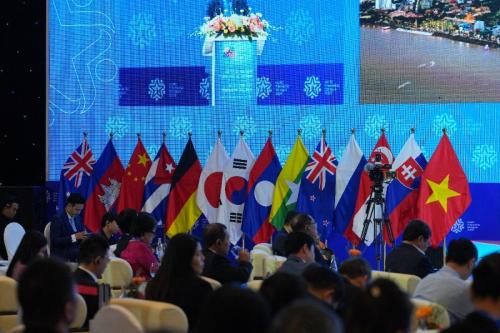
The Mayors’ Conference held within the framework of the 3rd Ho Chi Minh City Friendship Dialogue 2026 adopted a joint declaration, affirming the increasingly important role of local diplomacy within the nation’s overall foreign policy.

The 3rd Ho Chi Minh City Friendship Dialogue 2026 (FD 2026) was held from September 10 to 12, theming “Local Diplomacy: Driving Force for Innovation and Sustainable Growth.”

The event gathered nearly 500 delegates, including leaders from central ministries and sectors, Ho Chi Minh City officials, and 35 international delegations spanning four continents.

During the Mayors’ Conference, which was held in the framework of the FD 2026, a Joint Declaration was adopted, recognizing the growing role of subnational and local diplomacy in the implementation of national foreign policies.

Furthermore, participants agreed to assign focal agencies from Ho Chi Minh City and participating international localities to collaborate on concrete action plans in preparation for the 4th Ho Chi Minh City Friendship Dialogue scheduled for 2028.

In his opening address, Standing Vice Chairman of the Ho Chi Minh City People’s Committee Nguyen Loc Ha stated that the presence of international delegates reflects friendship, trust, and solidarity.

He noted that the gathering demonstrates a shared desire to strengthen connectivity, share development opportunities, foster innovation, enhance competitiveness, and jointly address challenges for sustainable growth.

Amid increasingly complex global developments, Mr. Ha highlighted that urban centers play a crucial role in shaping new growth drivers. Cities serve as focal points where strategic resources, knowledge, technological breakthroughs, and dynamic economic activities converge.

However, the municipal leader emphasized that no single city or locality can tackle modern development issues entirely on its own. Therefore, international cooperation is not merely an option, but a foundational requirement that determines the sustainable development capacity of every nation.

Looking ahead, Ho Chi Minh City has affirmed that strengthening internal resources, enhancing economic autonomy, and building national resilience must proceed in tandem with expanding comprehensive and deep-level international cooperation.

Through platforms like the Friendship Dialogue, the southern economic hub aims to reinforce its role as a key gateway for international integration, innovation, and sustainable development.


Canadian seafood imports surge 40% as lobster, snow crab gain favor in Vietnam

Canadian seafood imports surge 40% as lobster, snow crab gain favor in Vietnam

Vietnam’s seafood imports from Canada have jumped nearly 40% over the past two years, fueled by rising demand for competitively priced lobster, snow crab and oysters.

The country imported $61 million worth of Canadian seafood in 2025, up from $49 million in 2024 and $44 million in 2023, according to Vietnam Customs.

The upward trend has continued this year, with imports reaching $43.2 million in the first eight months, a 28.2% increase from the same period last year.

The growth comes as seafood businesses in Nova Scotia, Canada’s leading seafood-exporting province, look to expand into new markets.

Lobster is the province’s flagship seafood product, accounting for more than half of its total export value in 2025.

With exports of live lobster down 19%, Nova Scotia is increasingly seeking opportunities in markets including Vietnam.

Canadian snow crab and lobster are now widely available at seafood retailers across Vietnam.

A manager at a seafood shop on Ly Tu Trong Street in Ho Chi Minh City’s Ben Thanh Ward said consumers are attracted to Canadian products because of their relatively competitive prices and consistent quality.

Canadian lobsters weighing 500–600 grams sell for around VND950,000–1.1 million (US$37–38) per kilogram, while those weighing at least one kilogram cost about VND1.3–1.4 million.

That is considerably cheaper than Australian lobster, priced at around VND3.5 million per kilogram, and domestic green lobster, which sells for about VND1.5 million.

Live Canadian snow crab is priced at around VND1.4–1.5 million per kilogram, roughly 30% less than some other imported crab varieties.

Canadian oysters cost more than VND400,000 per kilogram, compared with as much as VND1 million for certain French varieties.

Tran Van Truong, CEO of seafood chain Hai San Hoang Gia, said stable and competitive pricing has helped make Canadian seafood affordable to a broader range of consumers.

Preferential tariffs have also helped keep prices down. Canadian lobsters that meet the requirements of the Comprehensive and Progressive Agreement for Trans-Pacific Partnership are subject to a 0% import tariff in Vietnam.

Jason Hollett, Nova Scotia’s deputy minister of agriculture and deputy minister of fisheries and aquaculture, said Vietnam is currently the province’s seventh-largest seafood export market.

He made the remarks while leading a delegation of Canadian seafood businesses to Vietnam in September to meet local companies and explore business opportunities.

Provincial authorities said Nova Scotia’s premium seafood products account for 29% of Canada’s total seafood export value worldwide.

Snow crab is Nova Scotia’s largest seafood export to Vietnam by volume, with exports valued at around CAD35 million (US$25.3 million) in 2025, while lobster exports were worth about CAD8 million (US$5.8 million).


See all blog