Lumen Vietnam Fund

Blog

ASEAN must become active force in shaping new rules of era: Vietnamese PM

ASEAN must become active force in shaping new rules of era: Vietnamese PM

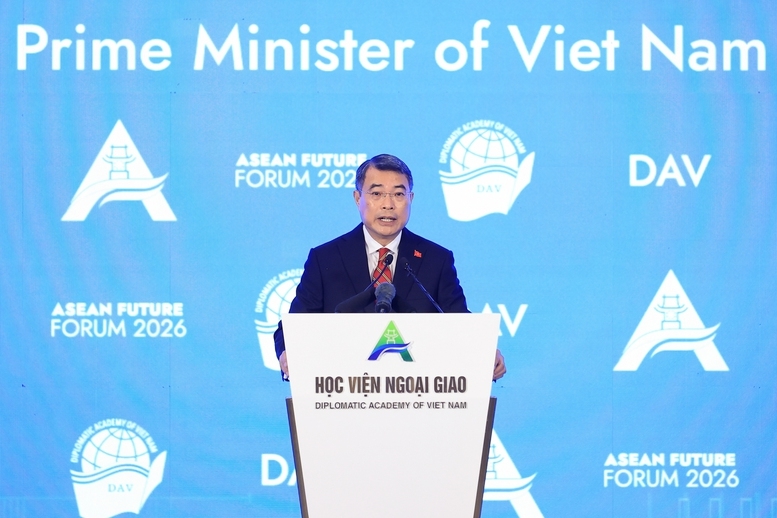
In his keynote address to the ASEAN Future Forum 2026 which opened in Hanoi on June 9, Vietnamese Prime Minister Le Minh Hung stressed that ASEAN should continue upholding the values that have underpinned its success - solidarity, resilience and unity in diversity, while embracing greater innovation in both thinking and action.

ASEAN must evolve from a participant in global trends into an active force shaping the rules and standards of a rapidly changing world, Prime Minister Le Minh Hung said at the opening of the ASEAN Future Forum (AFF) 2026 in Hanoi on June 9, as quoted by the Vietnam News Agency.

In his keynote address, PM Hung said ASEAN is at a pivotal moment in its development as the foundations of the global economy, technology and power structures are being reshaped.

He noted that ASEAN’s greatest achievement over nearly six decades lies not only in its population of almost 700 million people or its position as one of the world’s most dynamic growth centers, but also in its ability to overcome differences, build trust and foster cooperation to create a resilient and united community while preserving diversity.

According to the Vietnamese PM, if the past six decades were devoted to building ASEAN’s identity, the coming decades will be about shaping ASEAN’s future amid profound global transformation. Technology is redefining competitiveness, artificial intelligence is transforming productivity, data is reshaping power, and green transition is creating new development models.

In such an environment, advantages will belong not only to countries with abundant resources but also to those capable of helping establish new rules and standards of the era, he said. Vietnam believes ASEAN must become an active contributor to that process rather than simply adapting to global trends.

To realize this ambition, the PM said, ASEAN should continue upholding the values that have underpinned its success - solidarity, resilience and unity in diversity, while embracing greater innovation in both thinking and action. The bloc should remain firm in its principles while becoming more agile in its responses to emerging challenges and opportunities.

As ASEAN implements its Community Vision 2045, PM Hung proposed three strategic directions for the bloc.

First, ASEAN should not only participate in global trends but also help shape them. In an increasingly fragmented and competitive world, the grouping needs a stronger voice in building new norms, rules and cooperative frameworks while resolving differences in accordance with international law. ASEAN should serve as a center for dialogue, a hub for cooperation and an anchor of trust, thereby contributing to peace, stability and development in the region and beyond.

Second, ASEAN must move beyond its role as a manufacturing hub and become a center of innovation. While its workforce and strategic location have made it a key link in global supply chains, the future belongs to economies that create, innovate and lead technological development.

ASEAN should strive to become a place where technology is developed, not merely consumed, and where value chains are created rather than simply passed through. This requires stronger investment in science and technology, innovation, digital transformation and high-quality human resources, as well as efforts to build a distinctive ASEAN digital and technology ecosystem that contributes to global standards-setting.

Third, ASEAN must become not only a community of nations but a genuine community of people. PM Hung stressed that the ultimate objective of development is improving people’s quality of life rather than achieving growth figures alone.

Innovation that widens inequality cannot be regarded as progress, while growth that is not inclusive cannot be sustainable, he said. ASEAN’s success should therefore be measured not only by GDP but also by opportunities for young people, the role of women, protection of vulnerable groups and the extent to which citizens feel they are part of the ASEAN community.

PM Hung underscored that ASEAN’s greatest contribution over the past six decades has been demonstrating that differences do not have to lead to division, unity does not diminish diversity, and integration does not erase identity.

In the decades ahead, he said, ASEAN must continue proving that a united and resilient community can play an active role in shaping peace, cooperation and development at both regional and global levels.

Reaffirming that Vietnam’s future is closely linked to ASEAN’s future, the PM pledged that Vietnam will continue working alongside fellow member states with a future-shaping aspiration, helping build a peaceful, stable and prosperous region.


Source: Van Nguyen

Photo: VGP
Latest Posts

Hanoi's tourism maintains strong growth

Hanoi's tourism maintains strong growth

The capital city welcomes nearly 15 million visitors in the first five months of 2026.

Hanoi's tourism sector continued its strong recovery and expansion in the first five months of 2026, welcoming nearly 15 million visitors and generating close to VND63 trillion ($2.4 billion) in tourism revenue.

According to city authorities, international arrivals reached approximately 4.06 million during the period, an increase of 28.1% compared with the same period in 2025. Total tourism revenue rose 20.6% year-on-year, reflecting robust demand from both domestic and international travelers.

Building on this momentum, Hanoi aims to attract over 9 million international visitors and more than 27 million domestic tourists in 2026, with total tourism revenue projected to reach VND160 trillion.

To achieve these targets, the capital plans to diversify and upgrade its tourism offerings by leveraging its geographical advantages and regional transport connectivity. Moving beyond traditional city-center sightseeing tours, Hanoi is working with tourism businesses to develop new travel experiences and expand its tourism portfolio.

Among the new products scheduled for launch are the Muong Coc community-based tourism model, expanded night tourism experiences, rural and agricultural tourism programs, and experiential tours linking traditional pottery villages with safe vegetable-growing communities.

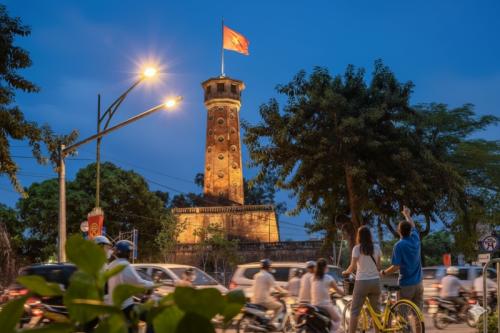
A key focus is the development of the city's nighttime economy. Rather than simply extending business hours, Hanoi is seeking to create a comprehensive overnight tourism ecosystem centered on culture, heritage and urban experiences.


Foxconn, Brookfield partner on 1GW renewable energy project in Vietnam

Foxconn, Brookfield partner on 1GW renewable energy project in Vietnam

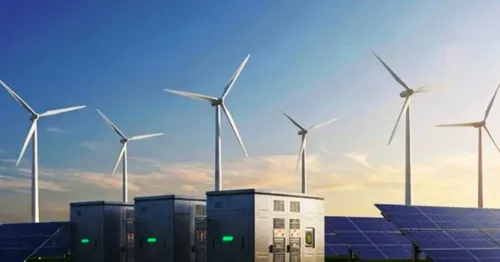
VOV.VN - Hon Hai Technology Group (Foxconn) and Brookfield, a global investment firm, have partnered to develop up to 1 gigawatt (GW) of utility-scale wind, solar and battery storage capacity in Vietnam to supply electricity to Foxconn’s manufacturing operations and supply chain partners in the country.

The strategic collaboration marks Foxconn’s latest step toward greening its production footprint in Southeast Asia. It is the first time Foxconn has directly engaged in renewable energy development in Vietnam, although no timeline has been set for achieving the 1GW target.

Under the agreement, the Foxconn-Brookfield alliance will focus on large-scale solar and wind projects, as well as battery energy storage systems (BESS). The electricity generated will supply Foxconn factories and key suppliers operating in Vietnam.

Foxconn said both companies will co-invest in and directly manage the renewable energy projects. On Brookfield’s side, funding will be channelled through its Catalytic Transition Fund, which invests in net-zero-aligned projects in emerging markets.

Notably, the projects will be backed by long-term power purchase agreements (PPAs), ensuring a stable supply of clean electricity for industrial zones.

The partnership underscores Vietnam’s growing role as a regional and global manufacturing hub, where renewable energy is increasingly becoming a magnet for foreign industrial investment.

Brookfield Asia Pacific Head of Energy Daniel Cheng said: “Brookfield’s partnership with Foxconn underscores the scale of corporate demand for renewable power in Vietnam, one of Asia’s fastest-growing economies.

As global manufacturers increasingly turn to renewables for its cost-competitiveness, speed to market and energy security benefits, we’re seeing strong and rising demand for long-term supply from across the region. Policy momentum around Southeast Asia is also providing a second-order tailwind for renewables development and our Catalytic Transition strategy, which has been very active over the past 12 months.”

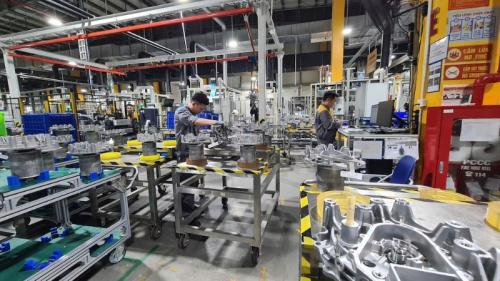
Foxconn has steadily expanded its manufacturing footprint in Vietnam in recent years amid ongoing shifts in global supply chains.

Foxconn Chief Investment Officer James Tu said: “We are pleased to be a strategic partner to Brookfield to secure long-term access to renewable energy for our operations and supply chain in Vietnam. This initiative where we’re investing and managing alongside Brookfield ensures stable and cost-effective power supply for our continued growth in the region.”


Vietnam auto market sees strong supply growth as domestic production surges

Vietnam auto market sees strong supply growth as domestic production surges

In the first five months of the year, domestic manufacturers produced an estimated 232,100 vehicles, up 26.7% year-on-year.

The number of new vehicles entering Vietnam’s automotive market rose sharply in May 2026, driven by robust growth in domestic production, which continued to outpace imports.

According to the National Statistics Office under the Ministry of Finance, an estimated 76,837 new vehicles, including both locally assembled and imported models, were supplied to the market in May, up 13.2% from April's total of 67,880 units.

Domestic automakers produced an estimated 53,700 vehicles during the month, an increase of 4.7% from April and 40% higher than the same period last year. The figure marked the highest monthly production level recorded so far in 2026, surpassing the previous peak of 51,700 units in January.

In the first five months of the year, domestic manufacturers produced an estimated 232,100 vehicles, up 26.7% year-on-year.

Vehicle imports also recorded strong growth. Vietnam imported an estimated 23,137 completely built-up (CBU) vehicles in May, with a total value of $548 million. Compared with April, imports increased 39.5% in volume and 26.5% in value.

While import volumes were broadly unchanged from May 2025, the value of imported vehicles rose 29.2%, suggesting a shift toward higher-priced models and premium vehicle segments.

During the first five months of 2026, Vietnam imported approximately 95,427 CBU vehicles worth $2.3 billion. The figures represented a modest increase of about 10% in volume and a substantial 26.7% rise in value compared with the same period last year, reflecting continued demand for imported vehicles and higher-value automotive products.


See all blog